How Custom Medals Are Made — The Complete 12-Step Process
Every MedalOrigin medal goes through 12 precision stages — all in our Huizhou factory. No outsourcing. From mold steel to finished medal, here's exactly what happens, with the same technical detail we share with our factory auditors.
Complete Manufacturing Process
Every MedalOrigin medal goes through 12 precision stages. Our factory in Huizhou, Guangdong handles every step in-house — no outsourcing means faster turnaround and consistent quality.
Design & Artwork
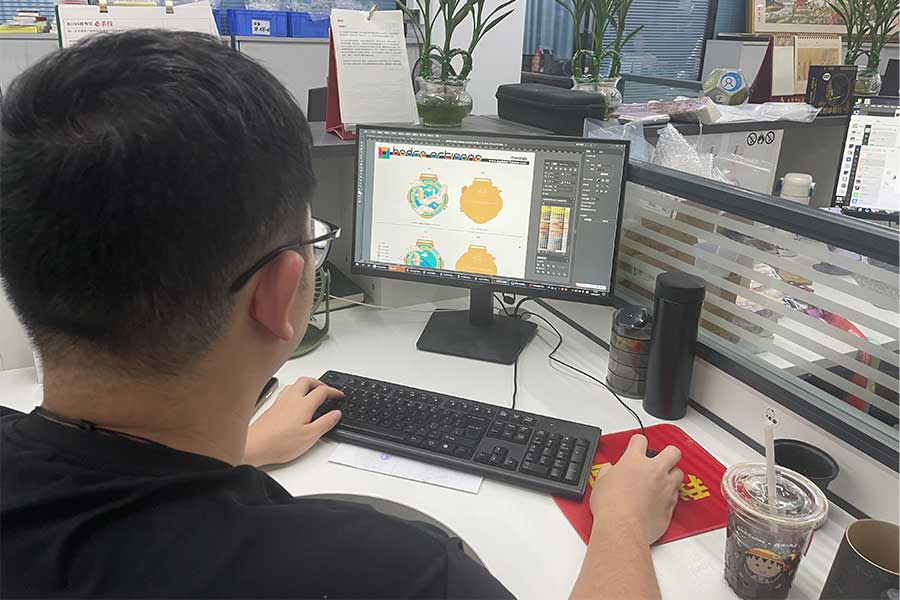
Our design team works from your concept, logo, or reference image using Adobe Photoshop, Illustrator, or CorelDRAW. Every design includes 3D renderings so you can preview your medal from every angle before production starts. The design file specifies: exact dimensions, Pantone color codes for each enamel area, plating finish selection, attachment hardware type, ribbon color and length, and any variable data fields (names, dates, bib numbers) for laser engraving. Turnaround: 24 hours. Free. Unlimited revisions.
Mold Making
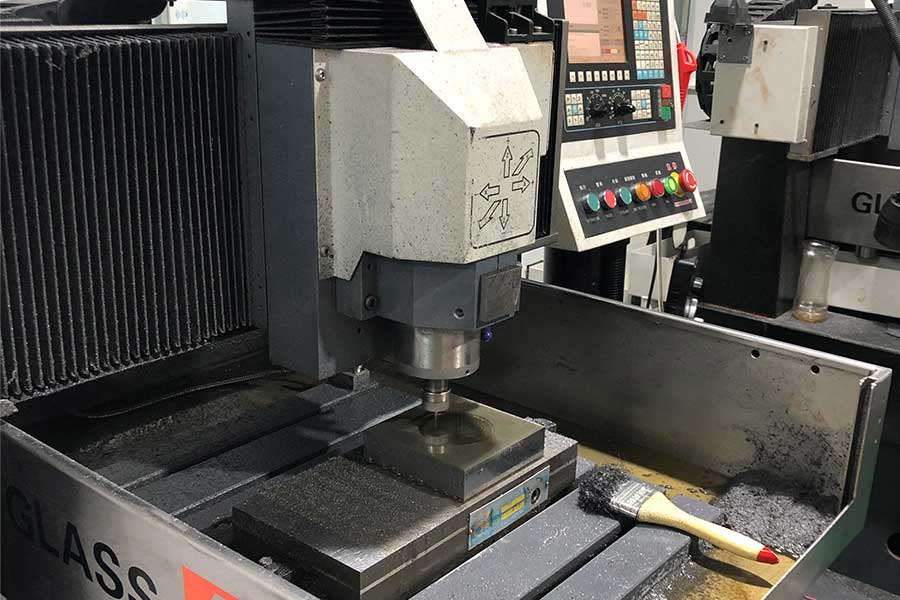
The approved design is converted into a 3D mold using Beijing Jingdiao CNC software. The mold is carved from mold steel and consists of: mold frame, mold core, support pillars, sliders, ejector pins, and water inlet. Spark erosion (electrical discharge machining) creates the matte surface texture on medal surfaces — an electrode discharges against the mold steel, producing thousands of microscopic pits that give the medal its premium tactile finish. Heat treatment then increases mold hardness and wear resistance, critical for maintaining edge sharpness across production runs of 10,000+ pieces.
Die-Casting (Zinc Alloy)
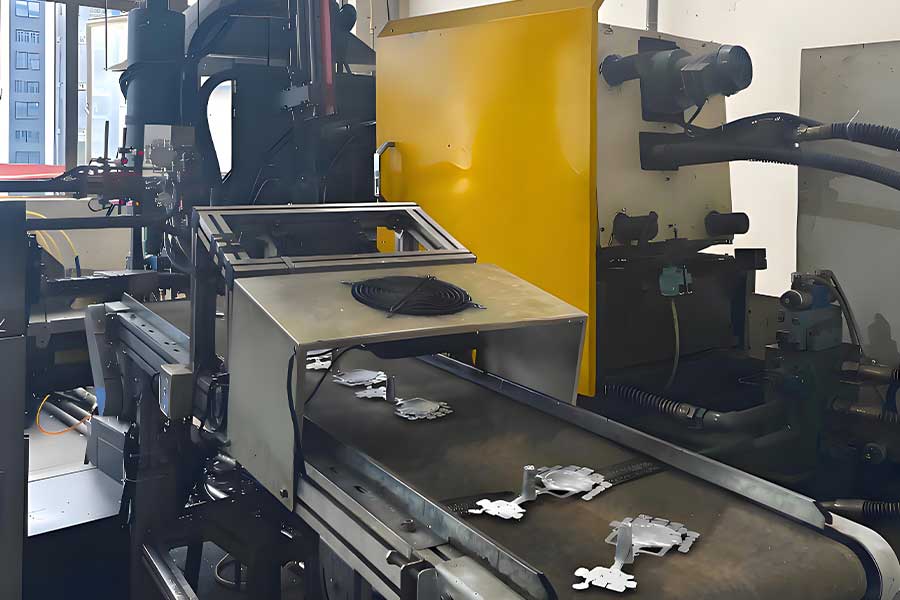
Zinc alloy ingots (Zamak 3, 5, or 7 grade) are melted at 385°C (725°F) and injected into the mold under high pressure using an 88-ton die-casting machine. Zinc alloy (density 6.7 g/cm³) flows exceptionally well, enabling intricate 3D details and openwork (hollow/cut-out) designs. Minimum wall thickness: 2mm. The four water inlets on round medals are evenly spaced for uniform cavity filling. Each shot cycle takes 15–30 seconds. After ejection, the medal (still attached to its sprue and runner system) moves to deburring.
Deburring & Polishing
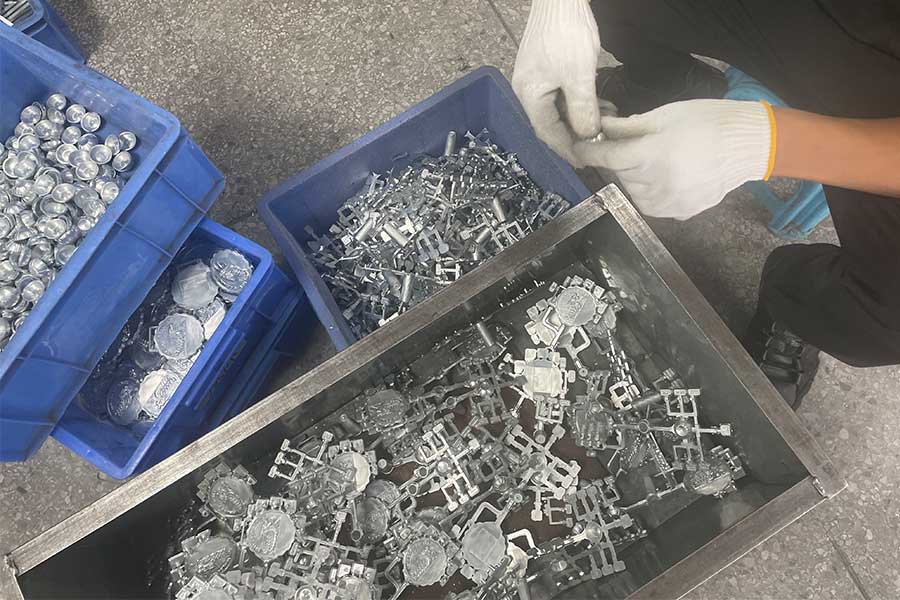
After casting, each medal goes through water gate removal (cutting off the sprue) and edge trimming. Then it enters our wet-type eco-friendly polishing machine — first the edges are polished, then the face. This two-pass approach ensures uniform surface smoothness without rounding off sharp design details. Polishing prepares the surface for electroplating: any roughness, casting lines, or tool marks at this stage will be visible under the plating. Our polishing team averages 8+ years of experience — they know exactly how much pressure to apply for each medal shape.
Riveting & Assembly
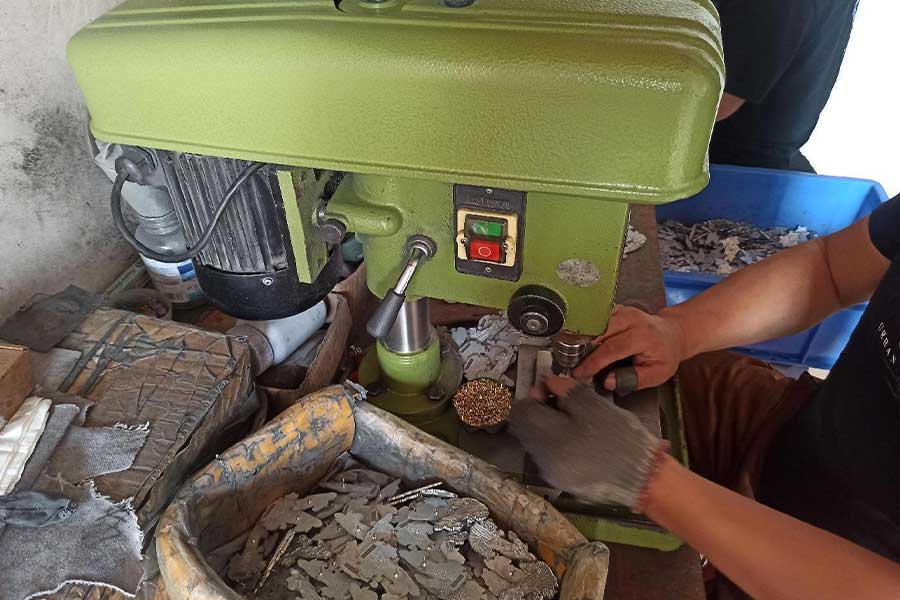
Attachment hardware is riveted onto the medal body at this stage — before surface treatment, so the rivet gets the same plating as the medal body. Options: spur pins (most common for ribbon attachment), safety pins, or simple pins depending on your design. This is also where connecting rings are attached: D-rings (standard), dog clips (quick-release), or jump rings (for ribbon mounting). The riveting machine applies calibrated pressure — too little and the pin loosens over time, too much and it deforms the medal body.
Surface Treatment — Electroplating
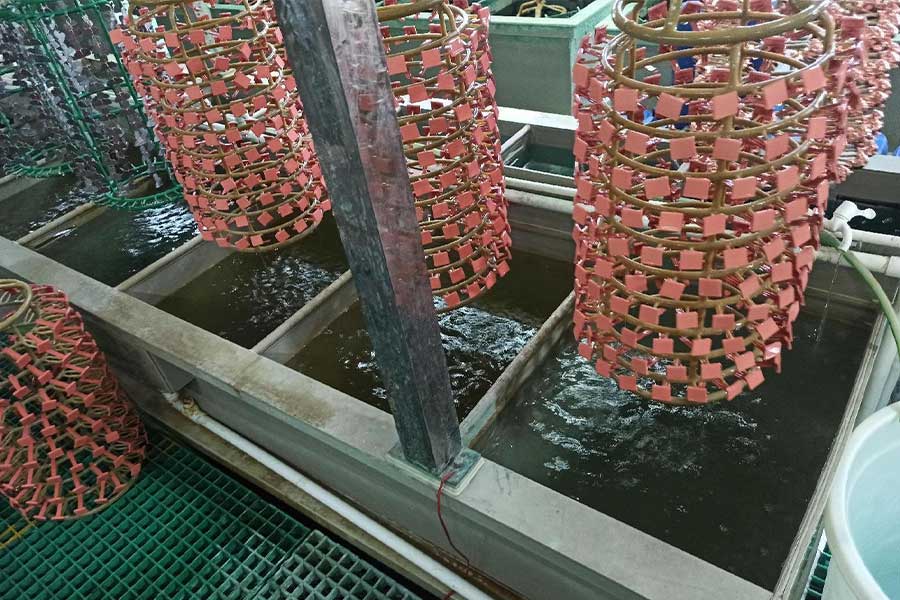
The most critical aesthetic step. Polishing oil is removed via degreasing, then the medal goes through ultrasonic cleaning. Next: alkaline copper plating (~500 seconds) as a conductive base layer, followed by acid copper plating (20–60 minutes) for gloss enhancement, then final color plating. Available finishes: gold (imitation), silver (nickel), copper, rose gold, chrome, black nickel, platinum (white gold), matte variants of all colors, and antique finishes (antique gold, antique silver, antique copper, matte black). Special: rainbow vacuum plating and two-tone plating (gold + nickel most common). After plating: tunnel oven drying at 100°C for 40 minutes, then anti-tarnish spray for gold and copper finishes.
Color Filling — Enamel
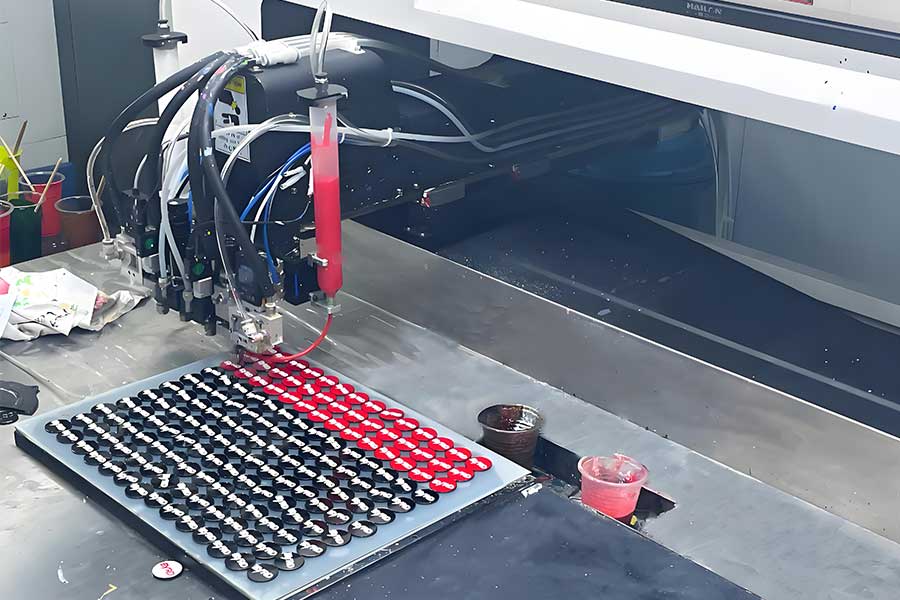
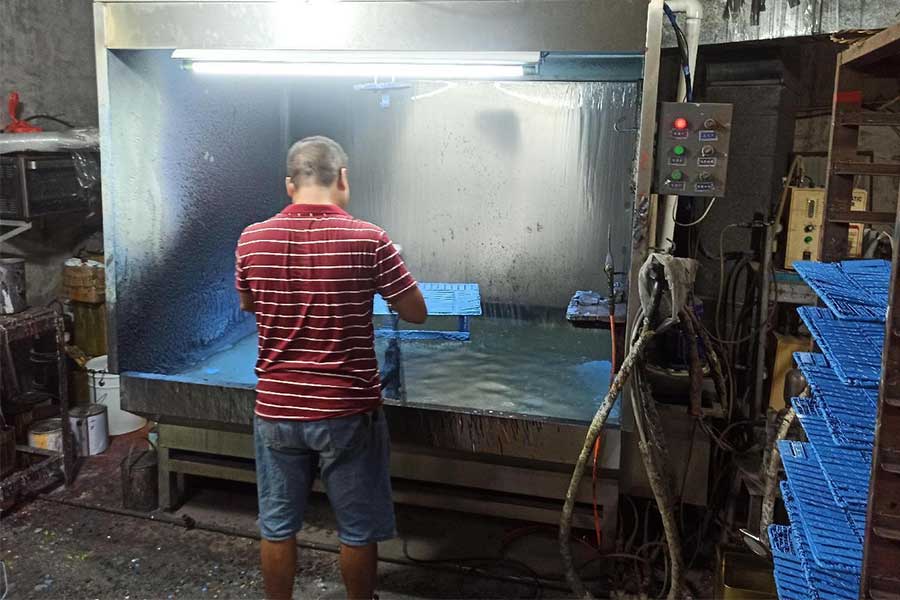
Our most versatile decoration step. Options: Soft Enamel — thin paint that flows into recessed areas, dries slightly concave, leaving visible metal lines. Minimum fill width: 0.3mm. Imitation Hard Enamel — thick paste applied first, then the entire medal surface is polished flat after curing. Result: ceramic-smooth, color flush with metal lines. Minimum: 0.5mm. Glass/Translucent Enamel — glossy, semi-transparent. Glitter — sparkle powder applied to semi-dried enamel at the 60–70°C stage. Glow in the Dark — luminous powder added after full enamel cure. Baking parameters: low temp 60–70°C for 60–90 min (semi-cure, allows layering multiple colors), high temp 100°C for 60 min (full cure). Pantone color matching on every order.
Printing
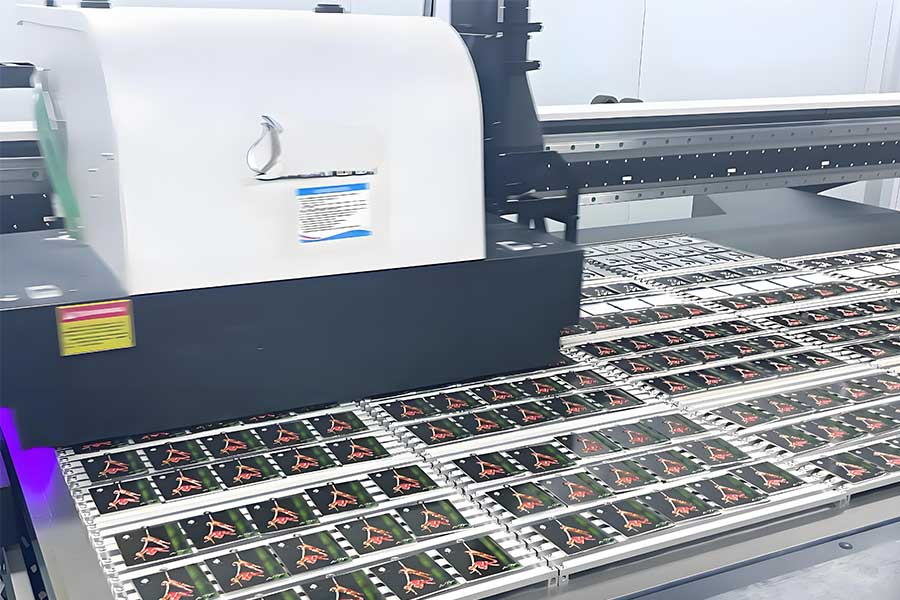
For designs requiring gradients, fine text, or photographic detail that enamel cannot achieve: UV Printing — 4-color process (CMYK), works on flat and 3D surfaces with up to 7mm height difference, instant UV-curing means no drying time. Offset Printing — highest quality on flat surfaces, requires a printing plate (adds setup cost), best for large quantities. Silkscreen Printing — spot colors only (no gradients), extremely precise registration, higher per-unit cost. Pad Printing — works on uneven and curved surfaces, low setup cost, ideal for small logos and text. Laser Engraving — for variable data: participant names, bib numbers, finish times, event dates. Permanent, works on plated and painted surfaces.
Laser Engraving
For variable data — sequential numbering, participant names, finish times, or custom messages — laser engraving provides permanent, precise marking. The laser removes a microscopically thin layer of plating or paint, exposing the base metal beneath. This creates high-contrast text that won't rub off, fade, or peel. We can engrave on flat and curved surfaces. Common applications: bib numbers on race medals, athlete names on sports awards, event dates on commemorative pieces, and sequential numbering for limited-edition runs. Setup requires a data file (Excel or CSV) — we'll provide the template.
Final Assembly
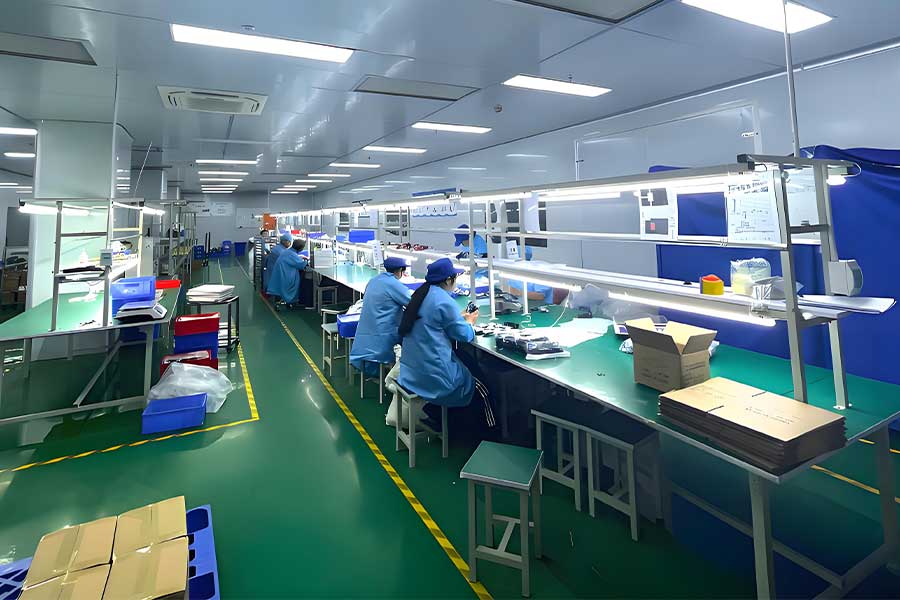
Magnets (2–20mm diameter), accessories, and custom ribbons are attached. Ribbons are joined using ultrasonic welding or sewing. Standard adult ribbon: 860–900mm × 20–30mm, 4-fold or 3-fold construction. Children's ribbon: 800mm × 20mm. Attachment methods: heat-transfer printed ribbon (most common, full color), woven ribbon (premium, textured), sublimated ribbon (photographic quality), or simple satin ribbon with no print. The ribbon attachment point on the medal should be specified during design — typically a slot at the top, 20–30mm wide.
Quality Control — Three Stages
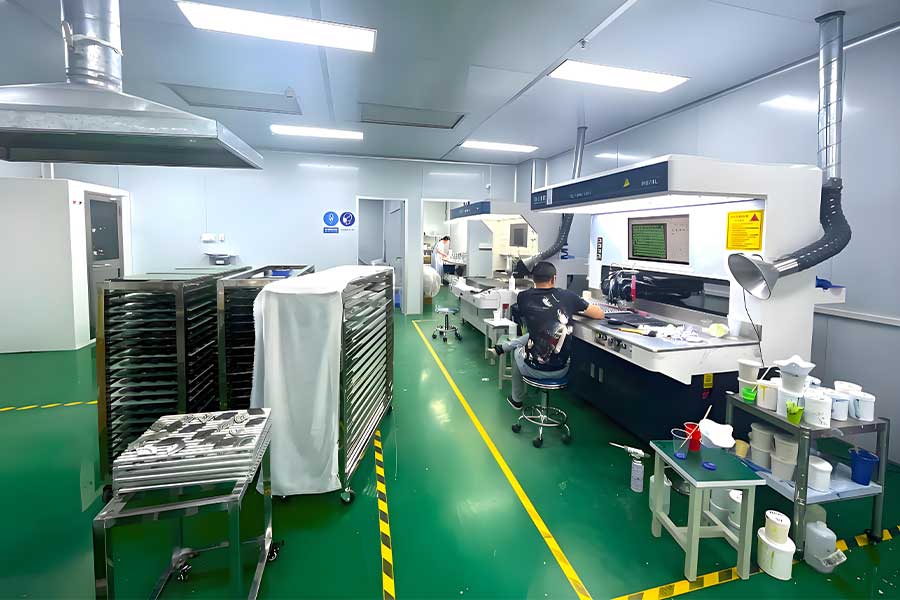
Stage 1 — Incoming material inspection: zinc alloy ingot composition, plating solution chemistry, enamel paint viscosity. Stage 2 — In-process QC after each major step: post-casting (checking for cracks, water marks, air holes, incomplete fill), post-plating (checking for bubbles, flow lines, color consistency, adhesion), post-enamel (checking for impurities, pinholes, color accuracy vs Pantone, fill completeness). Stage 3 — Pre-shipment final inspection: every medal individually checked. Common defects we catch and reject: ejector pin cracks (insufficient pins or uneven distribution), water marks (mold surface roughness or low injection pressure), air holes (poor mold venting), plating bubbles (insufficient pre-cleaning), enamel impurities (spray booth cleanliness), paint pinholes (moisture in compressed air lines or incorrect thinner ratio).
Packaging & Shipping
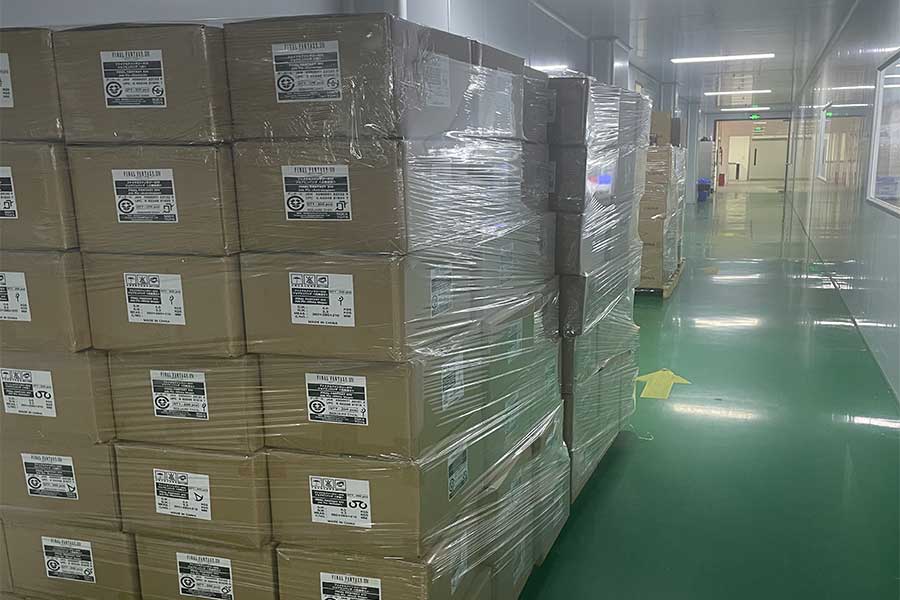
Each medal is individually packaged per your requirements: PP/OPP bags (standard, clear), zip-lock bags (reusable), velvet pouches (premium presentation), paper cards (retail-ready), paper boxes (gift-ready), velvet boxes (luxury), acrylic cases (display-grade), or blister packs (retail hanging). Bulk orders are palletized and shipped to 50+ countries worldwide. Every shipment includes full customs documentation. For U.S. and EU buyers, we provide harmonized tariff codes and certificates of origin. Most clients choose air freight (5–10 days) or sea freight (20–35 days for large orders). Tracking number provided on dispatch.
Why In-House Manufacturing Matters
No Outsourcing = No Finger-Pointing
When mold making, die-casting, plating, and enamel filling happen in different factories (common in the industry), quality problems become blame problems. The plating shop blames the casting shop. The casting shop blames the mold maker. You wait. When all 12 steps happen under our roof, there's one throat to choke — ours. If a plating issue traces back to polishing, we fix it internally, not across three companies and two provinces.
Faster Turnaround, Fewer Surprises
Outsourced supply chains add transit time between each step — 2–3 days here, 1–2 days there. That's an extra week or more that in-house production simply doesn't have. More importantly, every handoff between factories is a chance for specifications to drift. Our production manager walks 50 meters from die-casting to plating, not a 3-hour truck drive. Problems are caught the same day, not when the medals come back from the subcontractor a week later.
Consistent Quality Across Repeat Orders
Reordering six months later? If your mold was stored properly (we archive every mold), and the same plating line, same enamel team, and same QC inspector handle your reorder, the medals match. When subcontractors change between orders — which they do, based on who's cheapest that month — consistency suffers. We've had clients reorder the same medal design three years apart and the new batch matched the originals because we controlled every variable.
Questions About Our Process?
We're happy to walk you through any stage in more detail. Your medals are only as good as the process behind them.
Ask About Our Process