Your event date is fixed. Everything else in a medal order is negotiable — size, finish, quantity — but the date is not. That makes lead time the constraint you plan backwards from, and it is the question buyers ask us most. We ship from our Huizhou factory to more than 50 countries, so here is the honest timeline, stage by stage, including where the time actually goes and where a rush order can and cannot help. It pairs with our medal manufacturing process breakdown.
What we’ll cover:
- The full timeline from artwork to delivery, stage by stage
- How much of the lead time is production versus shipping
- Rush production: what can be compressed and what cannot
- Air, sea and DDP shipping compared for event deadlines
- How to plan backwards from your event date
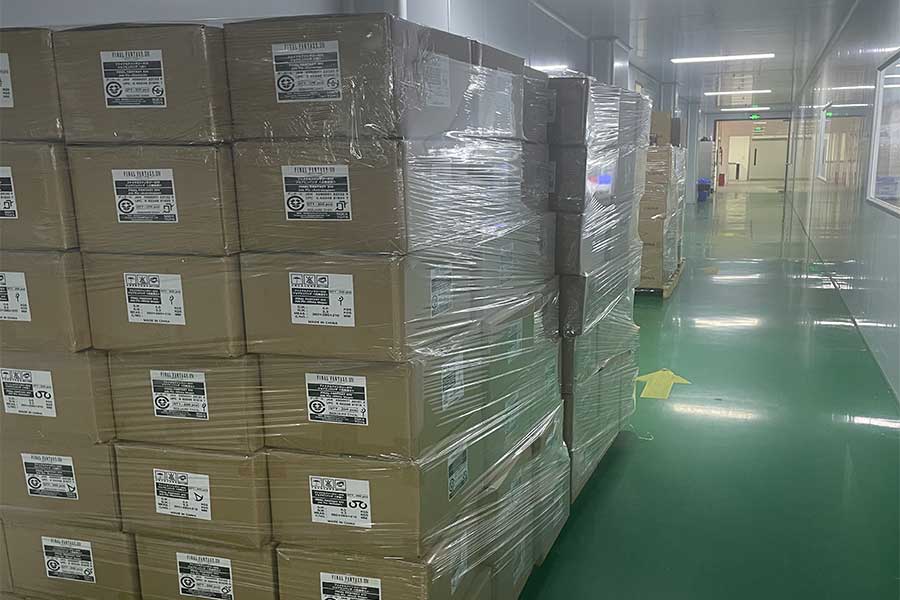
[Image: process-12-shipping.jpg — Packed cartons of custom medals on the factory loading dock ready for export]
The Full Timeline, Stage by Stage
Most buyers think of lead time as one number. It is really three: artwork and sampling, production, and transit. Only the middle one is the factory’s to control.
| Stage | Typical duration | What happens | Can it be rushed? |
|---|---|---|---|
| Artwork & design | 24 hours | We turn your brief into a production-ready file | Already fast — usually same-day |
| Sample approval | 3–7 days | Mould cut, trial shot, sample couriered for sign-off | Partly — courier time is the floor |
| Mould cutting | 3–5 days | Steel mould machined on CNC, heat-treated | Limited — quality risk if compressed |
| Die-casting | 1–2 days | Zinc shot into the mould on an 88-ton press | Yes — capacity dependent |
| Deburring & polishing | 1–2 days | Edges cleaned, faces polished to plating standard | Limited |
| Plating | 1–2 days | 9-bath sequence: alkaline copper ~500s, acid copper 20–60min | Limited — bath times are chemical, not optional |
| Colour filling | 1–2 days | Enamel dispensed per colour, then cured | Partly — cure schedule is fixed |
| Curing | 60–90min + 60min | 60–70°C semi-cure, then 100°C full cure | No — under-curing causes later failure |
| Assembly & ribbon | 1–2 days | Riveting, ultrasonic ribbon welding | Yes |
| QC | 1 day | Three-stage inspection across the run | No — skipping it defeats the point |
| Packing | 1 day | Boxing, polybagging, carton build | Yes |
| Transit | 3–35 days | Depends entirely on method chosen | Only by paying for faster freight |
Production totals 7–15 days for a standard order, which is our published window. Add sample approval and transit on top of that.
The stages that cannot be compressed are the chemical and thermal ones. Plating baths run on timed immersion, and enamel has to complete its cure cycle. Rush a cure and the paint fails months later, after the medals are in recipients’ hands — which is the worst possible time to discover a defect.
Where the Time Actually Goes
Buyers are often surprised that production is not the biggest block. Here is how a typical 500-piece order to the United States splits out.
| Phase | Days | Share of total |
|---|---|---|
| Artwork + sample approval | 4–8 | ~20% |
| Mould cutting | 3–5 | ~15% |
| Casting through packing | 5–9 | ~30% |
| Transit (air express) | 3–5 | ~15% |
| Transit (sea freight) | 25–35 | ~65% of a sea-freight order |
Two conclusions follow. First, sample approval is not a formality you can skip — it is a fifth of the timeline, and approving fast is one of the few levers fully in your hands. Second, shipping method is the single largest variable in the whole schedule, larger than anything the factory does.
That is why we ask for the event date before we quote. A 45-day lead time and a 25-day lead time can be the same medal from the same factory — the difference is sea versus air.
Rush Production: What Can and Cannot Move
We can compress a standard order, but it is worth knowing which stages genuinely flex.
| Stage | Normal | Rushed | Limit |
|---|---|---|---|
| Artwork | 24h | 24h | Already minimal |
| Sample approval | 3–7 days | 2–4 days | Courier transit is the floor |
| Mould cutting | 3–5 days | 2–3 days | Fast machining risks tool accuracy |
| Casting + finishing | 5–9 days | 3–5 days | Needs free press capacity |
| QC | 1 day | 1 day | Not compressible |
| Production total | 7–15 days | 5–8 days | Chemical stages set the floor |
The honest answer is that rush production buys you roughly 40% off the production window, not 90%. It also depends on whether press and plating capacity is free when you order — a factory running at capacity cannot rush you past the queue.
What rush cannot fix is a late decision. If you approve artwork two weeks before your event and choose sea freight, no amount of factory urgency saves the order. Our pricing breakdown covers how rush fees are structured, and the bulk custom medals page covers volume orders.
[Image: process-11-packing.jpg — Finished custom medals being individually polybagged and boxed before export]
Shipping Methods Compared
This is the decision that most often decides whether medals arrive on time. The trade-off is time against cost, and the gap is large.
| Method | Transit time | Relative cost | Best for | Customs handling |
|---|---|---|---|---|
| Express courier (DHL/FedEx/UPS) | 3–5 days | Highest | Urgent orders, samples, under ~200kg | Door-to-door, duties often prepaid |
| Air freight | 7–12 days | High | Mid-size orders, tight deadlines | Airport to airport or door-to-door |
| Sea freight (LCL) | 25–35 days | Low | Non-urgent, shared container | Port to port or door-to-door |
| Sea freight (FCL) | 25–35 days | Lowest per unit | Large volumes, full container | Port to port or door-to-door |
| DDP (delivered duty paid) | Depends on mode | Higher, all-inclusive | Buyers who want one landed price | Seller handles duty and clearance |
DDP deserves a note because it changes the planning conversation. Under DDP terms the seller handles freight, import duty and customs clearance, and quotes you one delivered price. For buyers without an in-house customs process — or without an importer of record set up — that removes the most common source of delay. Hesank and several other China-based medal suppliers have moved toward DDP for exactly this reason, and we offer it on request.
The alternative is FOB, where you arrange freight from the Chinese port yourself. It is cheaper if you already have a freight forwarder and import regularly, and more work if you do not.
For event medals specifically, the practical rule is: if your event is less than 30 days out, sea freight is off the table. Air express or air freight is the only realistic route, and the cost difference is the price of the deadline.
Planning Backwards From Your Event Date
Work backwards, not forwards. Here is a realistic schedule for a 500-piece order with a fixed event date.
| Weeks before event | Action |
|---|---|
| 8–10 weeks | Finalise design, get quotes, confirm size and finish |
| 7 weeks | Approve artwork, place order, pay deposit |
| 6 weeks | Approve physical sample |
| 4–5 weeks | Production runs; medals ready to ship |
| 4 weeks | Ship by sea freight (if 4+ weeks remain) |
| 1–2 weeks | Ship by air freight (if 1–2 weeks remain) |
| 3–5 days | Express courier only (last resort) |
| 1 week before | Buffer — keep this, do not spend it |
That one-week buffer is not padding. Customs holds, weather delays and courier backlogs all happen, and a medal order that arrives the day before an event leaves you no room to inspect or fix anything.
Two planning notes specific to medals. First, ribbons are produced in parallel with medals, not after them, so they do not extend the timeline — but a custom-woven ribbon does add 5–7 days if it needs its own design approval. Second, reorders are significantly faster because the mould already exists. A repeat order of the same design skips 3–5 days of mould cutting and 3–7 days of sampling, which is why recurring events should keep the same design and simply re-order. Our where to buy guide explains why buying direct from the factory matters here — a trader cannot hold your mould or rush your reorder.
If you send us your event date and quantity, we will tell you which shipping method still works and what it costs, before you commit.
Data to confirm: Freight rates, transit times and duty thresholds move constantly. Confirm current shipping costs and customs requirements with the factory or your forwarder before finalising a schedule.
FAQ
How long does it take to make custom medals? Production runs 7–15 days for a standard order, covering mould cutting, die-casting, finishing, plating, colour filling, assembly and QC. Add 3–7 days for sample approval and then transit time on top — 3–5 days by express courier or 25–35 days by sea freight.
Can you rush a custom medal order? Yes, but expect roughly 40% off the production window rather than 90%. Chemical and thermal stages — plating bath times, enamel cure cycles — cannot be shortened without causing failures later. Rush also depends on free press and plating capacity when you order.
Is air or sea shipping better for event medals? It depends on your deadline. Sea freight takes 25–35 days but costs far less; air freight takes 7–12 days and express courier 3–5 days at the highest cost. If your event is under 30 days away, sea freight is not viable and air is the only realistic option.
What is DDP shipping for custom medals? Delivered Duty Paid means the seller handles freight, import duty and customs clearance, and quotes you one landed price. It removes customs as a delay risk, which matters most for buyers without an in-house import process. FOB is the alternative, where you arrange freight yourself and usually pay less if you import regularly.
Do ribbons add to the production lead time? No — ribbons are produced in parallel with the medals, so they do not extend the schedule. The exception is a fully custom-woven ribbon that needs its own design approval, which adds about 5–7 days.
How far in advance should I order medals for an event? Aim for 8–10 weeks before the event for a sea-freight order, or 4–5 weeks for air freight. Keep a one-week buffer before the event for customs or courier delays, and never plan to receive medals the day before — you lose the chance to inspect them.
Are reorders faster than first orders? Yes, meaningfully. The mould already exists, so a repeat order skips 3–5 days of mould cutting and 3–7 days of sample approval. Recurring events should keep the same design and re-order rather than redesigning each year.
What happens if my medals are held at customs? Most holds are cleared with the right paperwork — commercial invoice, packing list and the correct HS code. This is where DDP terms help most, because the seller manages clearance. Under FOB you or your forwarder handle it, which is why having a forwarder lined up before shipping matters.
Related product page: custom spin medals for events — custom spinning medals with a rotating centre — same Zamak die-cast base, MOQ 100 per design.
Also relevant: medal packaging — pouches, boxes and cases that survive the shipping timeline.