Medal Materials Guide — Choose the Right Foundation
Material choice affects everything: 3D detail capability, weight, durability, plating quality, and cost. Compare the five materials we work with daily and find the right one for your project.
Material Comparison at a Glance
Five materials. Each has a specific set of capabilities. For 90% of custom medal projects, zinc alloy is the answer — but here's the full picture so you can decide.
| Material | Density | Process | Min. Thickness | 3D / Openwork | Relative Cost | Best For |
|---|---|---|---|---|---|---|
| Zinc Alloy | 6.7 g/cm³ | Die-casting | 2mm | Excellent | $$ | 3D relief, openwork, complex shapes — the industry standard. 90% of custom medals use this. |
| Brass | 8.9 g/cm³ | Stamping+Cutting | >3mm | Limited | $$$ | Premium weight and feel. Military medals, challenge coins, executive awards where heft matters. |
| Iron | 7.8 g/cm³ | Stamping+Cutting | >4mm | Limited | $ | Budget-conscious projects. Simple 2D shapes. Large quantity runs where per-unit cost is the priority. |
| Aluminum | 2.7 g/cm³ | Stamping+Cutting | — | Limited | $$ | Lightweight applications. Anodized color finishes. Modern, minimalist aesthetic. |
| Stainless Steel | — | Stamping | — | None | $$$ | Maximum corrosion resistance. Marine environments, outdoor permanent displays, medical/military spec. |
★ Zinc Alloy — Why It's the Industry Standard
Zinc alloy dominates custom medal manufacturing for three reasons that compound each other.
First, melting point. At just 385°C (725°F), zinc alloy melts at a temperature low enough for energy-efficient production but high enough for a durable finished product. Compare this to aluminum (660°C) or steel (1,370°C+). Lower melting point means faster cycle times (15–30 seconds per shot), less mold wear, and lower energy costs — savings that flow through to your per-unit price.
Second, flow characteristics. Molten zinc alloy at injection pressure fills intricate mold cavities completely, capturing details down to 0.1mm relief. This is why zinc alloy medals can have sharp 3D sculpting, deep relief, and true openwork (cut-out/hollow) designs — capabilities that stamping processes (used for brass, iron, aluminum) simply cannot achieve. If your medal design has a 3D building, a sculpted figure, or cut-out elements, zinc alloy die-casting is your only option among these five materials.
Third, plating adhesion. Zinc alloy accepts electroplating better than any other medal material. The alkaline copper base layer bonds to zinc alloy's surface at a molecular level, creating a foundation that keeps gold, silver, nickel, and other finishes looking new for years. Brass and iron require additional surface preparation steps and still don't achieve the same adhesion quality. This is why zinc alloy medals from 2015 still look display-ready — and why budget iron medals from two years ago may show plating wear.
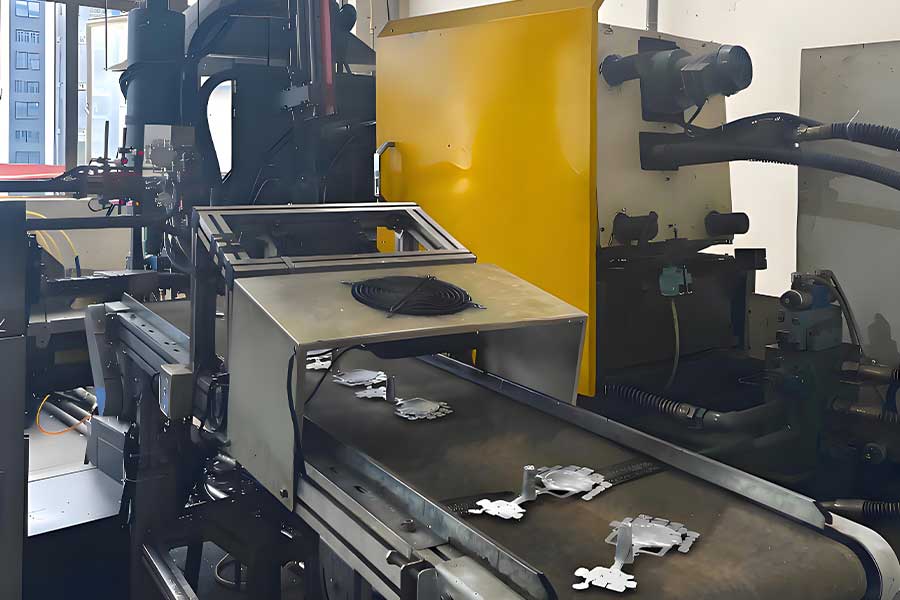
Zinc Alloy Technical Specs
- Melting point: 385°C (725°F)
- Density: 6.7 g/cm³ — substantial feel without being heavy
- Common grades: Zamak 3, 5, 7 (we use all three, selected by design complexity)
- Min. wall thickness: 2mm — thinner risks cracking during ejection
- Die-casting cycle: 15–30 seconds per shot
- Best plating adhesion of all five materials
- Supports: soft enamel, hard enamel, glass enamel, glitter, glow-in-the-dark
- Supports UV printing on 3D surfaces (≤7mm height difference)
- Supports openwork (cut-out/hollow) designs — unique to die-casting
- Corrosion-resistant in normal indoor display conditions
Surface Treatment Options — After You Choose the Material
Material is half the decision. The surface treatment determines how your medal looks and feels. We offer three main categories, each with distinct characteristics.
Electroplating — Best Quality, Widest Range
Highest cost, best result
- Available in mirror, matte, antique, and rainbow finishes
- 20+ color options: gold, nickel/silver, copper, rose gold, chrome, black nickel, platinum/white gold — plus matte and antique variants of each
- The 9-stage plating line (degrease→ultrasonic clean→alkaline copper 500s→acid copper 20-60min→color plate→dry 100°C/40min→anti-tarnish spray→unrack) is what separates durable plating from plating that wears off in a year
- Two-tone plating available: gold body + nickel highlights is the most popular combination
Electrophoresis — Mid-Range, Full Coverage
Mid-range cost
- Paint particles deposited by electric voltage — fully coats recessed areas that spray painting misses
- Common colors: antique gold, antique silver, antique bronze, antique copper, matte black, gloss black
- More affordable than electroplating, more uniform coverage than spray painting
- Best for antique and matte looks where the slight texture adds character
Spray Painting — Economical, Specific Colors
Most economical
- High-pressure spray application of epoxy paint — excellent adhesion and durability
- Used when specific colors (white, blue, green, red) cannot be achieved with electroplating or electrophoresis
- Matte, non-metallic appearance
- Best for medals where the base metal color isn't the feature — solid-color bodies, team-color backgrounds
Need Help Choosing?
Not sure which material or finish is right for your event? Tell us about your project — the event type, how many medals, your preferred weight and finish — and we'll recommend the best combination based on 15 years of seeing what works.
Get Material Recommendation