Medal Design Guide — You Bring the Idea, We'll Create the Design
Don't have a finished design file? That's normal — most of our clients don't. Send us a sketch, a logo, a reference photo, or just describe your event. Our design team delivers a professional medal design with 3D renderings in 24 hours. Free.
Our Free Design Service — What You Get in 24 Hours
Six full-time designers. Industry-standard tools. Manufacturing-aware design. Here's what's included at no charge.
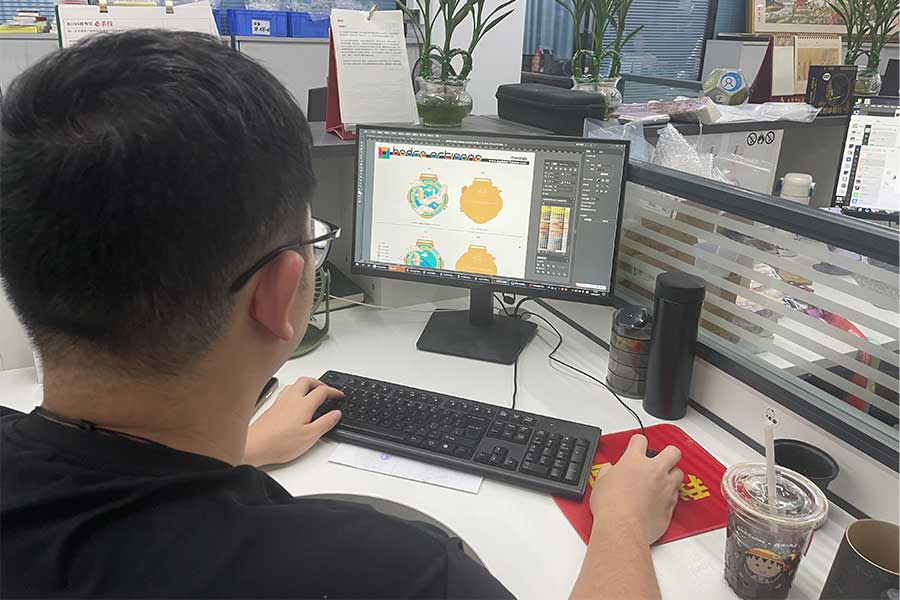
24-Hour Turnaround, Unlimited Revisions
Submit your idea today — even just a rough sketch or a voice note describing your event. Receive a professional medal design tomorrow morning. Not happy with the first concept? We revise until you are. Most clients approve on the second or third round because we ask detailed questions upfront. No charge for any revision round. Ever.
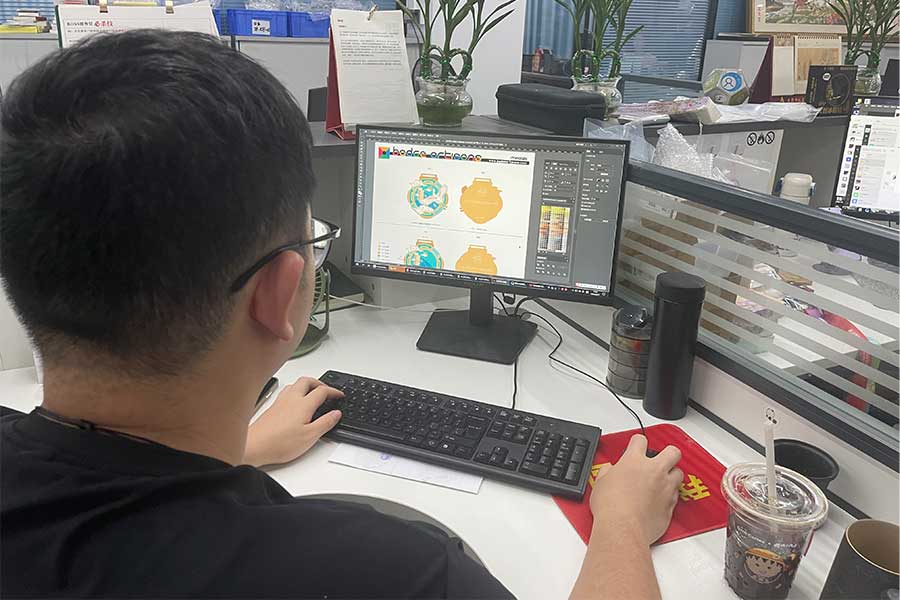
Production-Ready Files, Not Mockups
We design in Adobe Illustrator, Photoshop, and CorelDRAW — the same tools your printer, promotional products distributor, or future supplier expects. Your final design file includes: exact dimensions, Pantone color codes for each enamel area, specified plating finish, attachment hardware details, and ribbon specifications. This isn't a rough concept — it's a manufacturing blueprint.
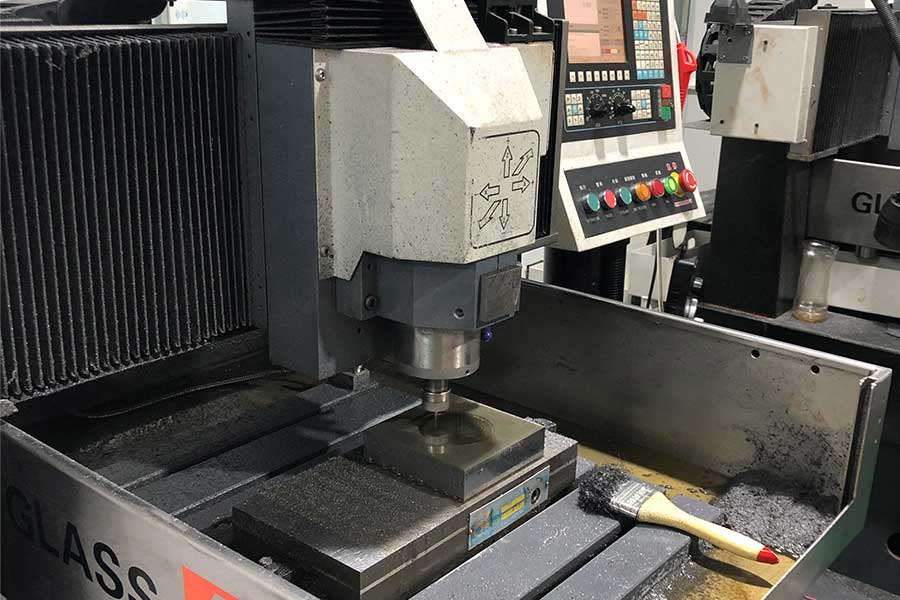
3D Renderings from Every Angle
Before we cut steel, you'll see exactly what your medal looks like. Our 3D renderings show front, back, side, and angled views — with accurate lighting that simulates how plating reflects light. This is the step where most design adjustments happen. See that the 3D text is too shallow? We deepen it. Want the building silhouette more prominent? We adjust the relief height. All before any mold is made.
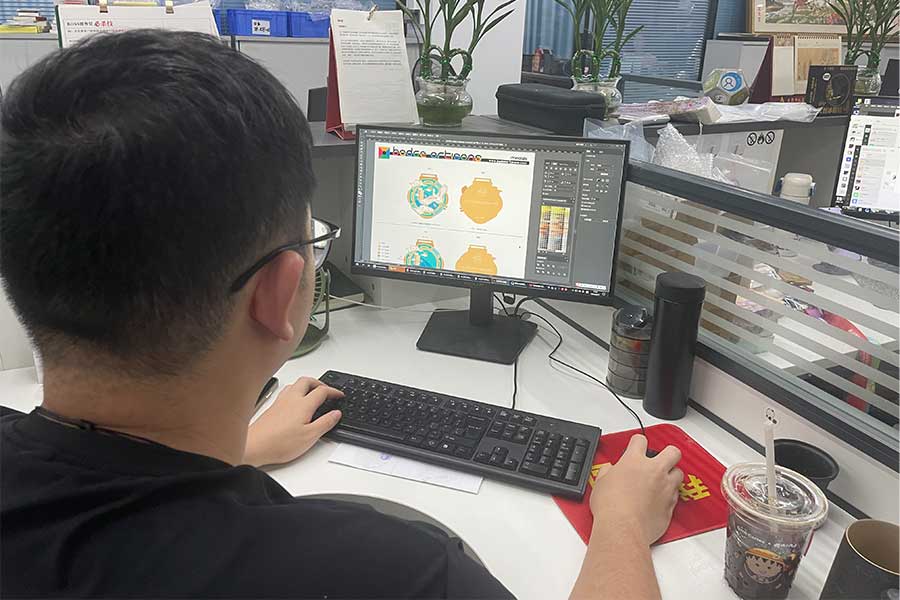
Manufacturing-Aware Design
Our designers aren't just graphic artists — they understand the factory floor. They know that soft enamel needs a minimum 0.3mm fill width, that zinc alloy walls thinner than 2mm risk cracking during ejection, that certain plating colors look different on curved vs flat surfaces, and that openwork designs require structural bridges. They'll flag potential production issues and suggest alternatives before they become expensive mold modifications.
Mold-Ready Within Hours of Approval
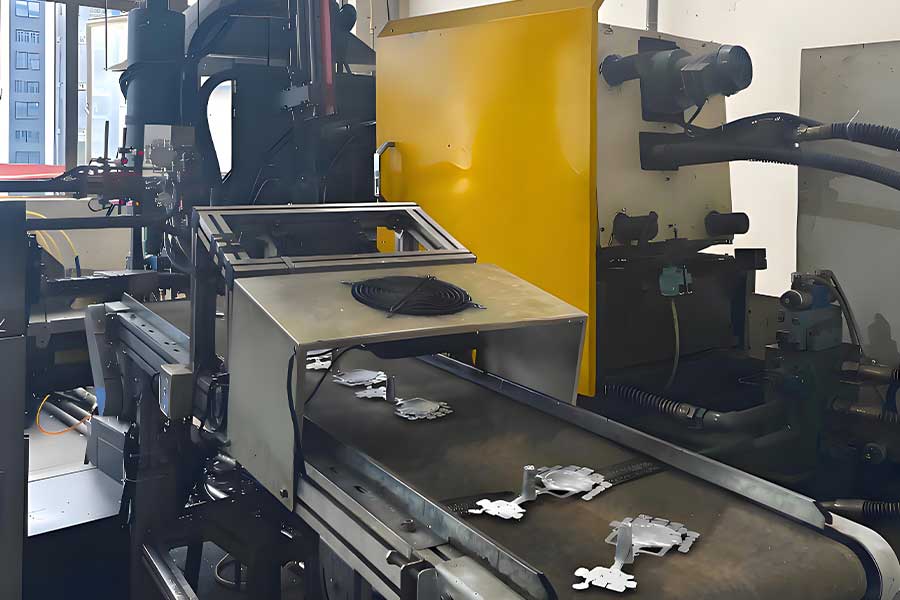
Once you approve the final design, it converts directly to Beijing Jingdiao CNC toolpaths. No translation step between 'design file' and 'mold file' — they're the same software ecosystem. This is why we can move from design approval to mold cutting in the same day, and why our 3D renderings match the finished medal so precisely.
Pantone Color Matching on Every Order
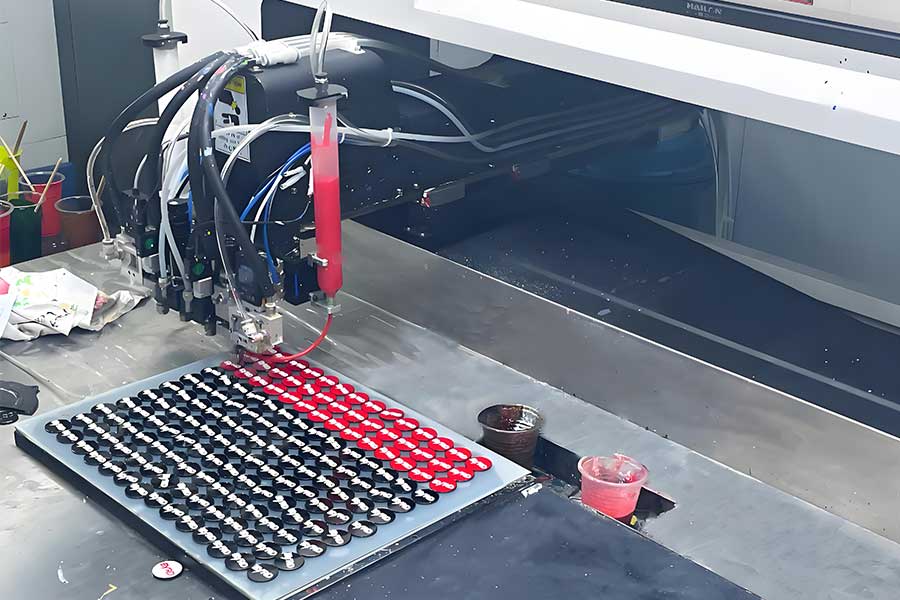
We stock 10 base enamel colors and mix to your exact Pantone specification. Your brand's red is not our default red — it's PMS 186 C if that's what your brand guide says. We match enamel colors to the same Pantone standard used across printing, textiles, and manufacturing. Consistent color across your medals, your event signage, and your brand materials.
Medal Design Tips — 9 Things That Make the Difference
Based on thousands of medal designs. These aren't design-school rules — they're what we've learned on the factory floor.
Text Size: Bigger Than You Think
Minimum text height for engraving: 1.5mm. For enamel text: 2mm. That sounds tiny, but on a 2-inch medal, 2mm text is very small. Sans-serif fonts (Arial, Helvetica) work best at small sizes — serifs blur together when the enamel flows. Avoid thin scripts entirely. If you have a lot of text (event name, date, location, sponsor), consider putting some on the back of the medal where there's more space.
Design for the Material, Not the Other Way Around
If you want 3D relief sculpture or openwork cutouts, you need zinc alloy die-casting — stamping can't do either. If your design is flat and simple (logo + text on a circle), iron stamping is the most economical. Start with 'what process can make this shape?' not 'here's a beautiful design, figure out how to make it.' Our designers will guide you, but knowing the constraint upfront saves revision rounds.
Color Count Affects Cost Directly
1–3 enamel colors is standard pricing. 4–6 adds a small per-color surcharge. 7+ is priced per additional color. Black counts as one color. The metal color (gold, silver, copper) comes from plating — not enamel. So a gold-plated medal with red, blue, and black enamel is a 3-color job, not 4. Glitter, glow-in-the-dark, and translucent effects each count as one process step (and one color) on top of the base enamel.
The Ribbon Attachment Point
Include a clearly marked attachment point, typically at the top center of the medal. Standard ribbon slot width: 20–30mm. Consider how the medal hangs — an off-center attachment point will make the medal tilt. If your design is asymmetrical, the attachment point should be at the visual center of gravity, not the geometric center. We'll flag this in design review if it looks off.
Thickness = Perceived Value
Zinc alloy minimum: 2mm (absolute minimum, structural). Standard medals: 2.5–4mm — this is the sweet spot for most events. Thicker medals (4–6mm) feel substantially more premium and cost more — often used for overall winner, special recognition, or limited-edition pieces. Giant medals (5 inches+): 4–6mm minimum or they'll feel flimsy. The thickness number on a spec sheet doesn't communicate heft — holding the sample does. We'll send you one.
Plating Choice Affects What Design Details Survive
Gold and silver plating hide minor surface imperfections. Matte finishes are more forgiving than mirror finishes — mirror shows every tiny casting mark. Antique finishes (antique gold, silver, copper) add depth by darkening recessed areas, which actually enhances 3D relief visibility. If your design has fine 3D details, antique or matte finishes will show them better than mirror finishes.
Contrast Sells the Design
Light metal (gold, silver) + dark enamel (navy, black, deep red) = highest contrast, most legible. Dark metal (black nickel, antique bronze) + light enamel (white, cream, light blue) = elegant, understated. Similar tones (gold + yellow, silver + light blue) = subtle, harder to read at a distance. Gold plating + red/blue/black enamel is the classic combination for a reason — it looks great in photos and in person.
The Back Is Free Real Estate
The medal back is included in your mold — use it. Common back-side elements: event name and date, sponsor logos, a motivational message ('Finisher', 'Champion', 'I Earned This'), city skyline or course map, or a blank area for laser-engraved participant names and times. Laser engraving on the back is the most cost-effective way to personalize each medal with variable data.
File Formats — What to Send Us
Best: vector files — .AI, .CDR, .EPS, .PDF (Adobe Illustrator or CorelDRAW). These scale infinitely without quality loss. Acceptable: raster files — .PSD, .PNG at 300dpi or higher at actual print size. Also fine: a clear photo of a medal you like, a hand-drawn sketch, a PowerPoint slide with your logo and notes, or just an email describing your event and color preferences. We'll work with whatever you have.
What to Send Us — Any of These Will Get Us Started
You don't need finished artwork. The design service exists precisely because most clients don't have it.
Ready to Design Your Medal?
Send whatever you have — a logo, a sketch, a photo, or just an idea. Our design team will create a production-ready medal design with 3D renderings within 24 hours. Free. Unlimited revisions. No obligation.
Want to understand the manufacturing process behind your design? See our 12-step manufacturing guide or compare medal materials.
Get Your Free Design Now