“Wholesale sports medals” is one of the most searched phrases in our inbox, and it is also one of the most misunderstood. Buyers arrive expecting a single magic price, and leave understanding that wholesale is a channel, not a number. This guide is the explanation we would give on a call — the same numbers, in writing.
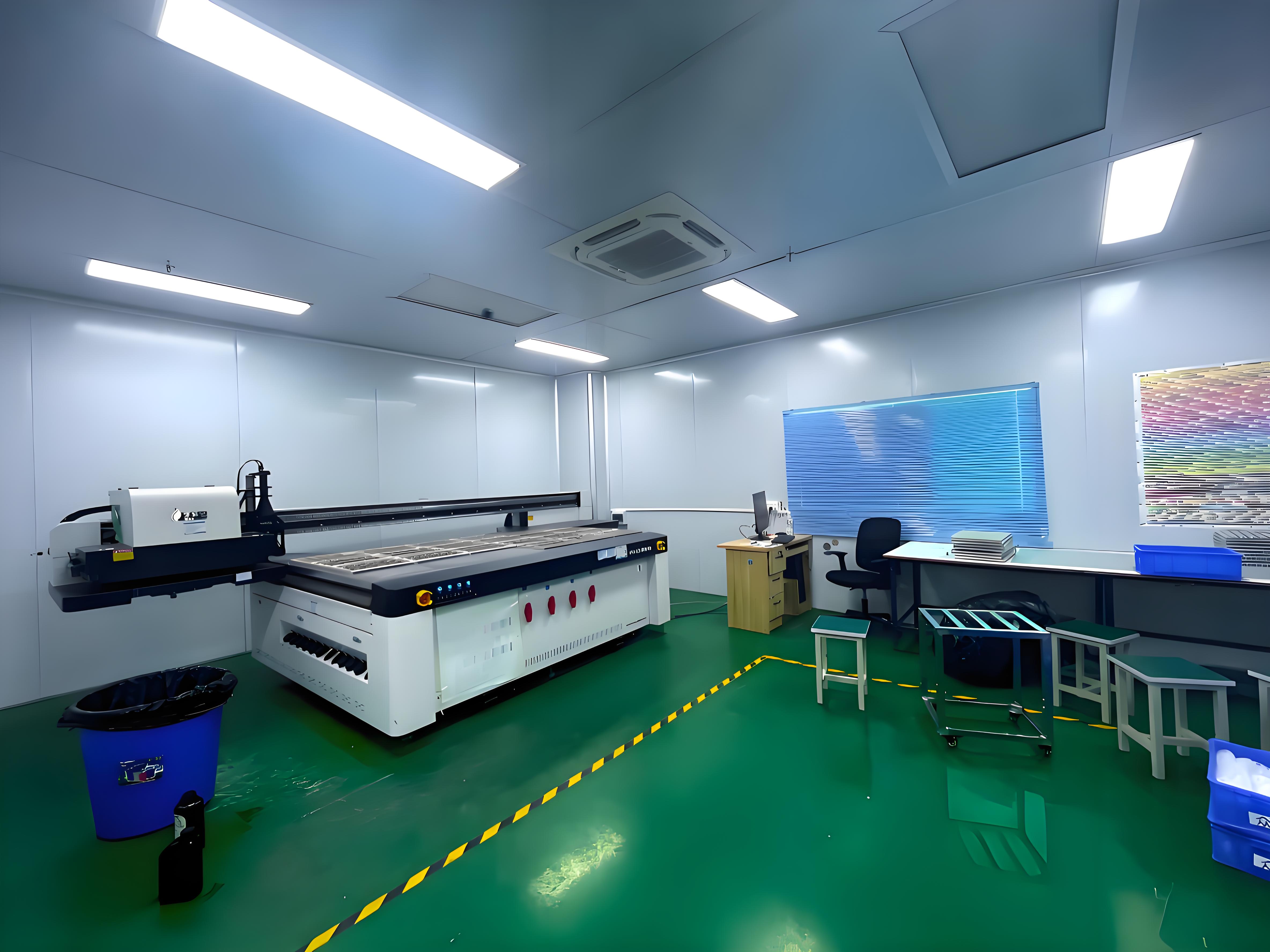
We manufacture custom sports medals for leagues, tournament organizers, schools, and distributors, running our own die-casting line in Huizhou, Guangdong. That means the pricing structure below is not a trader’s markup sheet; it is how a factory actually builds a quote.
Factory-Direct Terms at a Glance
If you are comparing suppliers, ask for these numbers first. Each one is something a factory can state and a trader usually cannot.
| Term | Our number | Why it matters to a wholesale buyer |
|---|---|---|
| MOQ | 100 pcs per design | Low enough to test a design before committing to a season’s stock |
| Daily capacity | 30,000+ pcs per day | Overlapping client orders do not push you out of the calendar |
| Free design proof | Within 24 hours | You see real artwork before any deposit |
| Sampling | 7–10 days | A physical sample before mass production starts |
| Mass production | 7–15 days after sample approval | A window you can plan an event date around |
| QC | Three stages — after casting, after plating, after assembly | What separates a factory from an assembler |
| Plating line | 9 steps, alkaline copper ~500 s, acid copper 20–60 min | The base layer is where cheap medals fail |
| Tooling | Mold archived under your account | Reorders cost less than the first run |
| Ribbon standard | 860–900mm × 20–30mm, ultrasonic welded or stitched | The attachment is the first thing to fail on a medal |
What we’ll cover:
- Factory-direct terms at a glance — MOQ, capacity, lead time, and QC
- What “wholesale” really means when a factory says it
- Who actually buys sports medals wholesale — and why
- Per-sport quantity planning, from 5K runs to school sports days
- What drives the unit price of a sports medal
- How placement sets (gold/silver/bronze) are priced at volume
- The specifications that matter, and the craft parameters behind them
- Ribbons, packaging, and lead time against your event calendar
- How to verify a real factory before you wire a deposit
What “Wholesale Sports Medals” Actually Means
There are three different things sold under the label “wholesale,” and only one of them is true wholesale.
| What you are buying | Who sells it | What you get | Resale rights |
|---|---|---|---|
| Retail / trophy-shop pricing | Local trophy shop, online store | Finished medal, marked up | None |
| Bulk pricing | Factory or trader | Volume discount on a large order | Usually none |
| Wholesale (trade channel) | Factory, under a dealer account | Tiered pricing, tooling on file, neutral packaging | Yes, typically |
An event organizer ordering 500 medals is a bulk buyer — they get a volume price but no resale arrangement. A trophy shop or promotional-products distributor ordering 500 medals to resell is a wholesale buyer — the price has to leave room for their margin, the packaging has to be neutral, and the tooling needs to stay on file for reorders.
What Each Channel Can Actually Prove
Price is only half the comparison. The part that decides whether a wholesale relationship survives a second season is what the supplier can prove — and this is where the three channels separate cleanly.
| Factory-direct | Trader / sourcing agent | Domestic distributor | |
|---|---|---|---|
| Owns your tooling | You — mold archived under your account | Usually neither party you can reach | Rarely |
| Can name the plating steps (9-step line, alkaline copper ~500 s, acid copper 20–60 min) | Yes | Rarely | Rarely |
| Can quote minimum enamel fill width (soft 0.3mm / imitation hard 0.5mm) | Yes | Rarely | Rarely |
| Designs to a minimum wall thickness (2mm on zinc alloy) | Yes | Rarely | Rarely |
| Can state daily capacity (30,000+ pcs) | Yes | Vague or none | Not applicable |
| Three-stage QC they can describe by name | After casting, after plating, after assembly | Usually cannot | Usually cannot |
| Neutral / unbranded packaging for resale | Yes — standard request | Sometimes | No — their brand is the point |
| Drop-ship straight to your customer | Yes | Sometimes | No |
A supplier who cannot answer the middle rows is not lying about the price — they simply do not control the process that produces it. That is the gap worth checking before you wire a deposit.
Most of the confusion comes from marketplace listings that relabel bulk pricing as wholesale. If a page advertises “wholesale sports medals” but never names a MOQ, a plating base layer, or a daily capacity, you are probably looking at a trader’s retail-minus-a-bit pricing. For the full conceptual breakdown, see our bulk vs wholesale custom medals guide.
Who Buys Sports Medals Wholesale — and Why
Four buyer types drive almost all wholesale sports medal volume. Each one cares about a different line on the quote.
Sports clubs and leagues. A single club may order 60–200 medals a season for age-group championships. Their priority is design consistency year over year and a reliable reorder. Because the mold stays on file, the second season costs less than the first.
Tournament and event organizers. A marathon, a multi-sport games, or a regional championship orders in the hundreds to low thousands. Their priority is a hard deadline — the medals must exist on race day — plus a ribbon in event colors that matches the branding everywhere else.
Schools and youth programs. Sports days, interschool meets, and after-school leagues order in the hundreds across many small categories. Their priority is per-unit cost and safety (no sharp edges, secure ribbon attachment) rather than premium finishes.
Distributors and trophy shops. These buyers order across many clients and need neutral packaging, cumulative volume tiers, and the ability to drop-ship. Their margin lives in the gap between the factory price and what their client pays.
If you recognize yourself in one of these four, the rest of this guide is written for you.
Per-Sport Quantity Planning
One of the most common mistakes we see is under-ordering and then paying for a rushed top-up. Here is how volume typically breaks down by sport type. These are planning ranges, not rules — your bracket structure decides the real number.
| Sport / event | Typical order size | What usually drives the quantity |
|---|---|---|
| Marathon / half marathon | 500–5,000 pcs | Every finisher gets a medal, so quantity = registration cap |
| 5K / 10K fun run | 200–2,000 pcs | Finisher medals plus age-group placement sets |
| Youth soccer / football league | 150–800 pcs | Placement per age group, plus participation medals |
| Swimming / track & field meet | 100–600 pcs | Placement medals across many events and heats |
| Martial arts / BJJ tournament | 100–500 pcs | Placement per division and belt level |
| School sports day | 200–1,000 pcs | Every child gets something, so participation medals dominate |
| Multi-sport games | 500–3,000 pcs | Placement plus participation across all disciplines |
A practical rule: order your placement medals as a set (see the next section) and your participation medals in one block. Mixing them into a single line item is how buyers accidentally under-order the gold.
If you are not sure where you land, the sports medals design guide walks through sport-specific design choices that affect quantity — for example, whether you use one shared design with different plating or a unique design per sport.
What Drives the Unit Price of a Sports Medal
Four cost levers decide your wholesale unit price. Understanding them is how you negotiate a real quote instead of a round number.
| Cost lever | Effect on unit price | How to influence it |
|---|---|---|
| Tooling / mold | Fixed, one-time — dominates small orders | Reuse across seasons; it stays on file under your account |
| Material | Zinc alloy, brass, or iron; differs by density and price | Match material to finish and volume, not to prestige |
| Plating & finish | 9-step electroplating; more steps, more cost | Standard gold/silver/bronze plating is cheapest at volume |
| Enamel color count | Each color is a separate fill step | Cap colors; a 5-color medal costs more than a 2-color medal |
Tooling is the reason wholesale pricing curves the way it does. On a 100-piece order, the mold cost is spread across very few pieces. On a 2,000-piece order, the same mold cost is nearly invisible. This is why the steepest price drop happens between 100 and about 500–1,000 pieces, and why the curve flattens after that — from there, material and labor dominate, not tooling.
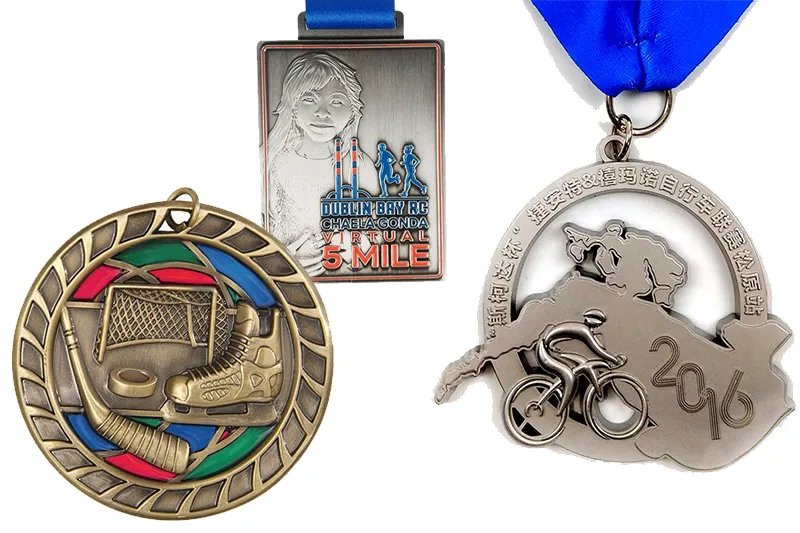
The material choice is the second-biggest swing. Zinc alloy (Zamak 3/5/7) is the workhorse for sports medals: it has a density of 6.7 g/cm³ and a melting point of 385℃, which lets it fill fine detail and 3D relief cleanly at a minimum wall thickness of 2mm. Brass (8.9 g/cm³) feels heavier and more premium but costs more and is harder to die-cast. Iron (7.8 g/cm³) is the most economical for large-volume events but rusts if the plating is compromised.
For a deeper comparison of how the three materials behave, see zinc alloy vs brass medals.
Placement Sets: Pricing Gold, Silver, and Bronze at Volume
A tournament that awards 1st, 2nd, and 3rd place does not need three molds. It needs one design and three plating runs.
The standard approach: one mold, one design, three finishes — gold plating for 1st, nickel (silver) for 2nd, copper for 3rd. This keeps tooling at a single charge while producing three visually distinct awards. The enamel colors stay identical across all three, so the set reads as a family.
At volume, placement sets have a useful property: the plating difference is cheap relative to the tooling difference. A three-finish set costs marginally more per piece than a single finish, but costs dramatically less than three separate designs.
A quantity trap to avoid: organizers often order equal numbers of each placement. In reality, the distribution is roughly 1 gold : 1 silver : 2 bronze for a single-event bracket, but many events simply order a 1:1:1 split and keep spares. If your event has multiple age groups, multiply the set by the number of groups, then add a 5–10% buffer for re-awards and breakage.
Specifications That Matter for Sports Medals
Sports medals live hard lives — worn in rain, dropped on pavement, carried in pockets. The specifications that decide whether a medal survives are not the decorative ones.
Size and thickness. Standard sports medals run 40–70mm in diameter, with 2–3mm thickness. Thicker is not automatically better; what matters is that the wall thickness stays at or above the 2mm die-casting minimum so the medal does not warp or fail at the edges.
Plating base layer. Every plated medal gets a base copper layer before the finish color. On our line, the alkaline copper step runs about 500 seconds, followed by an acid copper stage of 20–60 minutes to build gloss. A factory that cannot name its plating steps is a factory you should not trust with a deadline.
Enamel depth. Soft enamel (烤漆 / color filling) has a minimum fill width of 0.3mm — below that, color will not sit reliably in the recess. Imitation hard enamel needs 0.5mm. If your artwork has hairline color areas, the design has to be simplified before it goes to the mold, not after.
Curing. Enamel is cured in two stages: a low-temperature pass at 60–70℃ for 60–90 minutes (partial cure, used when colors are added in sequence), and a final high-temperature pass at 100℃ for 60 minutes to fully cure. Skipping the full cure is how enamel chips in the field.
Ribbon attachment. The ribbon is where most medals fail first. We use ultrasonic welding or stitched attachment (four-fold, three-fold, or single-loop cut), with standard ribbon dimensions of 860–900mm × 20–30mm. For youth programs, the shorter 800mm × 20mm format keeps the medal at chest height for smaller wearers.
QC. Three inspection stages — after casting, after plating, and after assembly — are what separate a factory from an assembler. Ask any supplier to describe theirs.
Ribbons and Packaging at Wholesale
Ribbons and packaging are where wholesale buyers quietly lose margin, because they are easy to under-specify.
Ribbons. A sports medal’s ribbon carries the event branding. Custom printed ribbons, neck ribbons, and lanyards are ordered alongside the medals so the colors match the medal’s enamel. If you resell, confirm whether the ribbon can carry your client’s branding rather than a generic pattern. See custom medal ribbons for the full range.
Packaging. Standard packing is individual poly bags, which protect the plating in transit. Upgrades run from velvet pouches and paper cards through to velvet boxes and acrylic display cases. For distributors, the key question is whether packaging can be neutral — no factory name on the box — so your client never sees past you.
Drop-shipping. If you resell, ask directly whether the factory will ship straight to your customer or whether you consolidate. Both are workable; not knowing the answer is what costs you.
Lead Time Against Your Event Calendar
The single most expensive mistake in wholesale sports medals is ordering late. Production is not the bottleneck — the sample approval is.
| Stage | Typical duration |
|---|---|
| Quote | Within 24 hours |
| Free design proof | Within 24 hours |
| Sampling | 7–10 days |
| Sample approval | Your call — this is the variable |
| Mass production | 7–15 days |
| Shipping | Express 3–7 days after production, or sea freight |
The variable that breaks calendars is sample approval. If your event has a fixed date, work backwards from the shipping window, not the production window, and build in a buffer for one round of artwork changes. Our own line runs 30,000+ pieces per day, which is what keeps a 7–15 day production window realistic even when several client orders overlap — but no capacity saves an order that was placed three weeks too late.
If your event date is fixed and you are ordering for the first time, treat the sampling stage as non-negotiable rather than optional.
How to Verify a Real Wholesale Sports Medal Factory
Five questions separate a factory from a reseller, quickly.
- What is your minimum order per design? A real factory has a real MOQ. Ours is 100 pcs per design — low enough to test a design before committing to a season’s stock.
- What is your plating base layer, and how long is the alkaline copper step? A manufacturer names it. A trader deflects.
- Can you hold my tooling for reorders? Factories can. Traders usually cannot, because they do not own the mold.
- What is your QC process? Real answers name stages. Ours runs after casting, after plating, and after assembly.
- What is your daily capacity? A number you can probe is a good sign. Ours is 30,000+ pcs per day.
Two more signals worth checking: certifications (we hold ISO 9001, BSCI, Disney, Reach, RoHS, and Sedex) and whether the supplier will show you the production floor rather than a showroom.
If you want your quotes normalized onto the same basis — same design, same quantity, same finish, same packaging — send us the details and we will quote it direct. Start from custom medals or our bulk custom medals page.
Data to confirm: Confirm current MOQ, tooling charges, and volume break points before quoting to a client, as these shift with metal prices and capacity.
Plan Your First Wholesale Order — A 4-Step Checklist
If you are placing your first wholesale sports medal order, these four steps keep the quote comparable and the calendar realistic.
- Fix your bracket and counts first. Per-sport quantity planning decides whether you need 100 or 5,000 pieces — and whether placement sets or participation medals dominate. Order placement as a set and participation in one block so you never under-order the gold.
- Choose the material to the finish, not to prestige. Zinc alloy vs brass is the swing that moves weight, relief and cost most after tooling. Iron wins on large-event economy; brass reads premium.
- Agree the placement-set ratio before artwork. One mold, three platings — gold, nickel, copper. The usual split is roughly 1 gold : 1 silver : 2 bronze, plus a 5–10 % buffer. Event medals follow the same one-mold logic for conference and tournament awards.
- Send specs for a same-basis quote. Tooling, material, plating, enamel color count and packaging — normalized onto the same basis as every supplier you compare, so the numbers line up line by line. Start from bulk custom medals or our medal manufacturing process.
Where to Go Next
Eight pages that fill in the detail this guide summarizes:
- Custom medals — the full medal range, from sports and school awards to corporate recognition; start here if the design is still open.
- Bulk custom medals — how volume ordering works, including quantity tiers and how one mold is shared across several finishes.
- Custom sports medals — sport-specific medal options, sizes, and finishes for leagues, clubs, and tournaments.
- Custom medal ribbons — ribbon widths, lengths, print methods, and attachment options, ordered alongside the medals.
- Medal manufacturing process — the twelve production steps from mold making to packing, with the process parameters behind each one.
- Bulk vs wholesale custom medals — the difference between a bulk buyer and a wholesale buyer, and which terms you should be asking for.
- Custom sports medals tournament guide — sport-by-sport design choices, including whether to use one shared design or one per sport.
- Custom medal pricing explained — how tooling, material, plating, and enamel color count combine into a unit price.
Send us your design, quantity, finish, and packaging and we will quote it on the same basis as every other supplier you are comparing — so the numbers line up line by line.
FAQ
Is “wholesale” the same as “bulk” for sports medals? No. Bulk is about quantity and volume discounts. Wholesale is a trade channel with resale rights, usually under a dealer agreement. An organizer buying 500 medals is a bulk buyer; a trophy shop buying 500 to resell is a wholesale buyer, and the two need different terms.
What is the minimum order for wholesale sports medals? Our MOQ is 100 pcs per design. That is lower than most buyers expect from a direct factory, which is why going direct often beats a trader even at moderate quantities.
How much do wholesale sports medals cost? Unit price depends on tooling, material, plating, and enamel color count — not on a flat rate. The steepest price drop happens between 100 and about 500–1,000 pieces as tooling is amortized. Send your spec for a real number rather than a range.
Can I order a gold/silver/bronze placement set with one mold? Yes. One design with three plating finishes — gold, nickel (silver), and copper — keeps tooling at a single charge while producing three distinct awards. Order roughly 1 gold : 1 silver : 2 bronze, then add a 5–10% buffer.
Can I resell wholesale sports medals under my own brand? Yes, with a dealer arrangement. Confirm three things first: neutral or unbranded packaging, tooling held on file under your account, and whether the factory will drop-ship to your customer.
How long does a wholesale sports medal order take? Sampling runs 7–10 days, mass production runs 7–15 days after sample approval, and express shipping adds 3–7 days. The variable that breaks event deadlines is sample approval, so plan backwards from your event date and leave room for one artwork revision.
Related product page: medals with a rotating centre — custom spinning medals with a rotating centre — same Zamak die-cast base, MOQ 100 per design.