A regatta is not one race. It is dozens of races run back to back over a single weekend, across boat classes that range from a single sculler to an eight, and the awards table at the end has to reflect all of that without turning into a spreadsheet nobody can read. We have produced custom sports medals for rowing clubs, school boat clubs, and multi-lane regattas from our own die-casting factory in Huizhou since 2010, and the questions organisers bring us are always the same three: one medal design or many, how many pieces to order, and whether the artwork will actually cast. This guide answers all three from the production floor.
If you are new to ordering regatta awards, the short version is this: rowing medals are the same die-cast zinc alloy product as any other sports medal, but the structure of a regatta — many events, many categories, crew sizes that change the medal count per win — creates quantity and design decisions that a single 5K race never has to make. Get the event structure right, choose between a one-design and a per-race approach deliberately, and plan the timeline backwards from the first race. Get any of those wrong and you either overspend on moulds or run short on the day.
[Image: rowing-regatta-medals-guide.jpg — Die-cast rowing medals with crossed-oar relief, club-colour enamel and custom-printed neck ribbons laid out on a dock]
Why a Regatta Orders Medals Differently
Most sports award a fixed number of medals: gold, silver, bronze, and you are done. A regatta does not work that way. The same weekend might contain a junior single sculls, a senior coxless four, a masters eight, and a mixed double, each with its own final, each with its own podium. A rowing club that hosts 30 events is not ordering 30 medals; it is ordering 30 podiums, and every one of those podiums has a different crew size behind it.
That single structural fact drives everything else. It decides whether a one-design medal is enough, it decides the total quantity, and it decides how much of your budget goes into moulds versus metal. We have seen organisers spend a third of a regatta budget on separate tooling they did not need, and we have seen organisers order a hundred medals short because they counted entries instead of counting crews. Both problems are avoidable with a little arithmetic before the artwork ever reaches us.
One Design or One Medal Per Race
This is the first decision, and it is a budget decision as much as a design one. There is no single right answer; there is only the answer that fits how much distinction your regatta actually needs.
| Approach | How it works | Best for | Trade-off |
|---|---|---|---|
| One design, one mould | Same medal for every event; distinction comes from ribbon colour, enamel colour, or engraving | Club regattas, school regattas, multi-event weekends on a fixed budget | Lowest tooling cost; relies on colour and engraving to carry the distinction |
| One design, per-event ribbon | Same cast medal, a different printed ribbon per event or category | Regattas with 10-40 events that still want each win to read differently | Almost no extra tooling; ribbon artwork is the differentiator |
| Multiple designs | A separate mould per event group (e.g. sculling vs sweep, junior vs senior) | Large championships, national or regional regattas with sponsor expectations | Higher upfront tooling; strongest visual separation |
| Podium set per event | Gold, silver, bronze in one shared design, plated in three colours | Every regatta that awards a top three | One mould covers three places; plating does the work |
The economics behind this table are simple. A medal is a die-cast product, and die-casting starts with a mould — a fixed cost that does not shrink with quantity. Order 100 pieces of one design and the mould cost is spread across 100; order 100 pieces of five designs and you pay for five moulds. That is why our minimum order quantity is 100 pieces per design: it is the smallest run that lets a single mould’s fixed cost be absorbed sensibly. A club with 30 events can usually cover all of them with one or two moulds plus colour variation, rather than 30. If you want the full breakdown of how mould and quantity interact, our guide to how to order custom medals in bulk walks through the same arithmetic.
How Many Medals Does a Regatta Actually Need?
The mistake we see most often is counting entries instead of counting podiums. Entries tell you how many athletes are racing; podiums tell you how many medals you hand out. They are different numbers, and the gap is the crew size.
Start with the event list, not the entry list. For each event, you have three places (gold, silver, bronze), and each place is a full crew. A coxless four that wins gold needs four gold medals, not one. An eight needs eight. This is why a small-looking regatta can burn through a surprising number of medals.
| Boat class | Crew size (rowers + cox) | Medals for a full podium (gold + silver + bronze) |
|---|---|---|
| Single sculls (1x) | 1 | 3 |
| Double sculls (2x) | 2 | 6 |
| Coxless pair (2-) | 2 | 6 |
| Coxless four (4-) | 4 | 12 |
| Coxed four (4+) | 5 | 15 |
| Quadruple sculls (4x) | 4 | 12 |
| Eight (8+) | 9 | 27 |
Multiply the last column by the number of events and you have your real baseline. A regatta with 30 events averaging a coxed four works out to roughly 450 medals for podiums alone — before a single spare, before any participation medals, and before the heats-versus-finals question.
Two more multipliers matter. First, heats: if a regatta medals heat winners as well as final winners, the count can roughly double, so decide early whether heats carry awards. Second, spares: every organiser should add 1-2 pieces per event. Ties, last-minute crew substitutions, a scratched boat replaced by an alternate crew, and a medal that gets dropped in the boat park all happen, and a 2% spare buffer costs far less than a frantic late re-order. A practical rule is to order podium medals plus participation medals in one batch, so the whole regatta ships together and there is no colour mismatch between two production runs.
Designing a Rowing Medal That Casts Cleanly
Rowing motifs are beautiful on paper and occasionally difficult in metal, because the sport’s most recognisable symbols are built from thin lines. Crossed oars, a scull with visible riggers, water ripples, a lane marker, a club crest inside a laurel — all of them push against the physical limits of zinc alloy die-casting, and all of them can be made to work once you know the three limits.
The first limit is minimum line width: 0.3mm. Any raised or recessed line thinner than 0.3mm will not fill reliably, and it will come out of the mould broken or blurred. The shafts of crossed oars are the classic offender; we usually thicken them slightly so the final medal still reads as elegant without failing on the press.
The second limit is minimum relief height: 0.4mm. That is the smallest step a raised element can stand above the surface and still read as a distinct layer once plating and enamel go on. If your water ripples or blade detail are meant to sit proud of the background, that step must be at least 0.4mm.
The third limit is minimum wall thickness: 2mm. Thin, isolated protrusions — the tip of an oar blade, the thin arm of a cox’s seat, a delicate rigger — need enough metal behind them to fill the mould and survive handling. Where a shape is too fine, we thicken it or bridge it to the main body with a small connector so the piece stays strong. This is standard die-cast design-for-manufacturing practice, and it is the reason a factory can tell you in one look whether your artwork will cast. Our medal design guide covers the same rules for other sports shapes.
Zinc Alloy Die-Casting: What We Actually Run
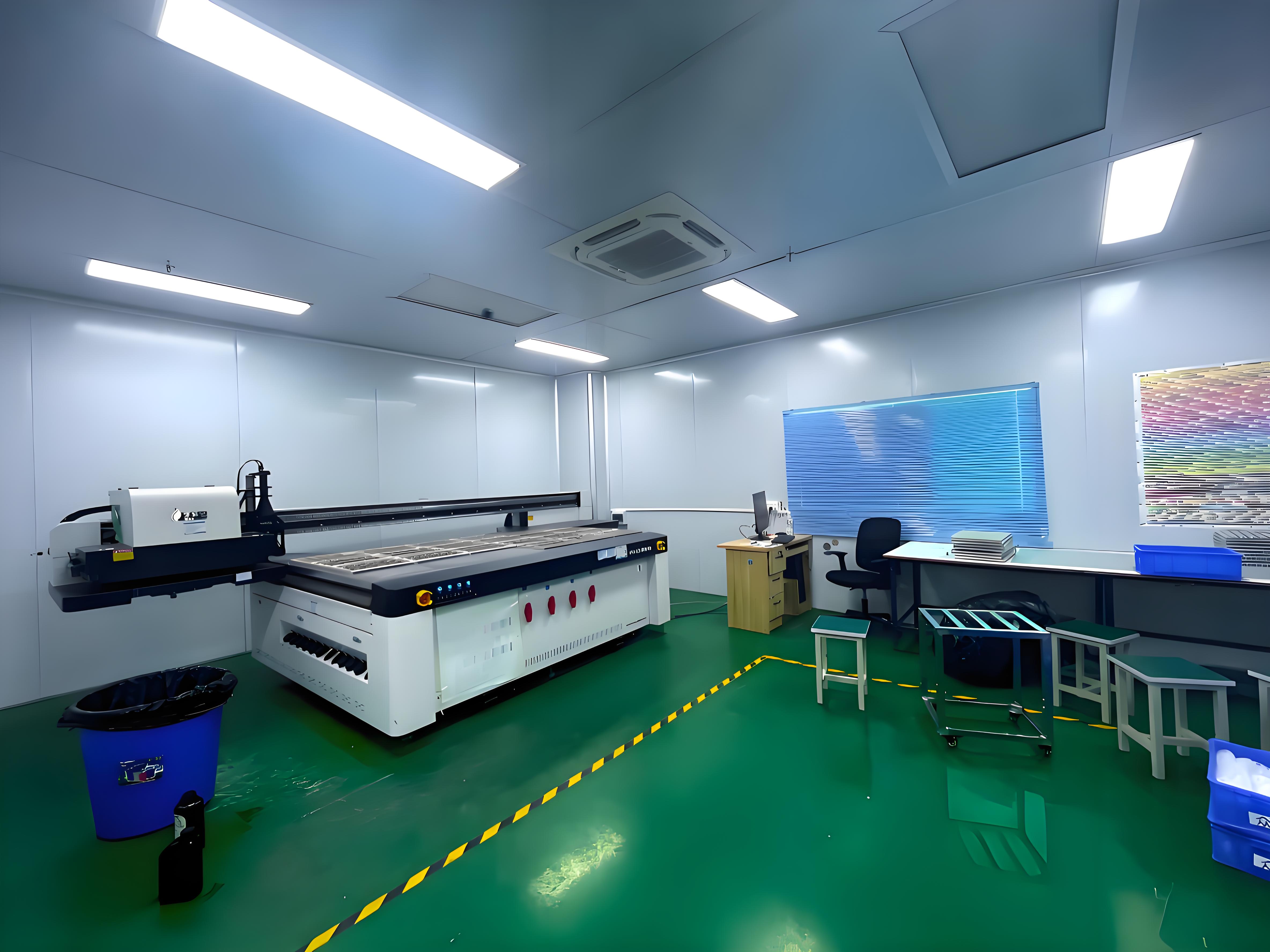
Every medal we make starts the same way: as a steel mould, and then as molten zinc alloy shot into that mould under pressure. We run Zamak 3, 5 and 7 — the standard zinc alloys for precision die-casting — through an 88-tonne die-casting machine. The alloy melts at 385°C, and its low melting point and high fluidity are exactly why it reproduces fine relief and sharp edges so well; that fluidity is what lets a 0.3mm line survive at all.
The tooling side is just as concrete. The mould is cut from mould steel, with the cavity shaped by milling, turning, drilling and EDM (spark erosion) — the same spark erosion that gives some medals their fine matte texture. Round medals are gated at four evenly spaced points around the rim so the metal fills the cavity evenly and the piece does not warp. After casting, parts are de-gated, de-burred, and polished, then finished.
For a rowing medal, this matters in two visible ways. First, the relief on a club crest or a crossed-oar motif holds its edge because the alloy filled the cavity cleanly at 385°C. Second, the piece has enough mass to feel substantial in the hand without being heavy enough to drag on a ribbon — the balance that makes a regatta medal feel like an award rather than a token.
Plating and Enamel for Club Colours
Rowing clubs live on colour: blade colours, club blazers, boat liveries. A regatta medal is one of the few objects that can carry all of that in one piece, and it does so through plating and enamel.
Plating is a nine-step process in our line: de-waxing, ultrasonic cleaning, alkaline copper plating (about 500 seconds) as the base coat, acid copper plating (20-60 minutes) for gloss, electroplating colour, drying in a tunnel oven (100°C for 40 minutes), clear lacquer, and unloading. The alkaline copper step is what gives the final finish its adhesion; skip it or shorten it and the plating blisters later. We plate in gold, nickel, copper, rose gold, chrome, black nickel and white gold, with matte finishes, two-tone, and vacuum rainbow also available.
Enamel is where club colours come in. We use soft enamel for a depth of about 0.3mm — slightly recessed, with the metal lines standing proud, which suits bold, readable colour on a medal that will be photographed at a distance. Imitation hard enamel is filled to about 0.5mm and polished flat, giving a smooth, ceramic-like surface where the colour and the metal edge sit level. For a rowing medal, soft enamel often wins for a large area of club colour, while imitation hard enamel suits a crisp crest or a fine club monogram. The comparison between the two is the same one we explain in our enamel medals range.
Ribbons and Cords: What Survives a Boat
A regatta medal’s ribbon is not decoration; it is the part that has to survive being worn around a neck while the wearer is still wet, then carried home in a kit bag. Rowing has its own practical preferences here.
Neck ribbons are the default for podium ceremonies, and we print them with the regatta name, the club, the event, and the year. Standard woven ribbon runs 860-900mm long by 20-30mm wide, which hangs correctly on an adult; for junior crews we use a shorter 800mm by 20mm ribbon so the medal sits at chest height rather than swinging. Club colours, stripes, and a woven logo are all possible, and the ribbon is often the cheapest way to make one cast design read as many different events — a different ribbon per event turns a single mould into a whole regatta’s worth of awards.
For rowers who want the medal off the neck — during a ceremony on a dock, or when a cox is moving around a boat — a cord or a shorter ribbon is more practical. Ribbons and cords are a category in their own right, and our medal ribbons range covers woven ribbon, lanyard, cord and attachment options.
Engraving: Boat Class, Event and Date
Rowing is full of details worth engraving, and because those details change per event, engraving is where a one-design strategy earns its keep. Laser engraving handles variable content piece by piece, so we can mark the back of each medal with the event, the boat class, the placing, the date, and — for named awards — a recipient or a crew name.
The usual layout is a clean back face with the regatta name and year, plus the event and placing. For a named trophy event, the individual names can go on as well, provided the organiser supplies the list. Because laser engraving is done after plating and enamel, the engraved area is bare metal and reads clearly against a coloured or plated background. Our engraving methods guide explains when laser, pad printing, or a moulded letter is the better choice.
MOQ, Moulds and the Cost of Choice
The single biggest lever on a regatta medal budget is how many designs you commission, because each design needs its own mould. Our MOQ is 100 pieces per design, and that number exists to make the mould’s fixed cost sensible rather than to create an artificial barrier.
The practical consequence for a regatta is this: if you want 30 visually distinct medals for 30 events, you are paying for 30 moulds. If you want 30 events to feel distinct without 30 moulds, use one design and vary the ribbon, the enamel colour, or the engraving — all of which change with almost no tooling cost. The middle path, one design per event group (sculling, sweep, junior, senior), is often the sweet spot for a regional championship. To understand how these choices move the final number, our guide to custom medal pricing breaks down what drives unit cost.
Working Backwards From Regatta Day
Regattas have a fixed date, so the timeline runs backwards from the first race, not forwards from the order. Our standard flow is: quote within 24 hours, free design within 24 hours, sample in 7-10 days, approval, then bulk production in 7-15 days, then inspection and shipping. Design revisions are unlimited and handled by our own in-house team.
Worked backwards for a regatta, that means you should allow roughly two to three weeks of production time before your event, plus transit. If your regatta falls on a date where clubs across the region are all ordering at once — late spring and early autumn are the peaks — place the order earlier rather than later. Our daily capacity is 30,000+ pieces, which is a lot of metal, but capacity only helps if the order is in the queue in time. Every order passes a three-stage QC process before it ships, and we target 100% conforming delivery, because a medal that arrives the day after the regatta is worth nothing. If you are planning the whole season, our shipping and lead-time guide maps the same timeline against real event dates.
Packaging deserves a mention here too, because a hundred medals in one box will scratch each other in transit. Individually bagged medals, or medals in protective sleeves, arrive with clean faces. Our medal packaging options cover the standard protection levels for bulk regatta orders.
Frequently Asked Questions
Should a regatta use one medal design or a separate medal for each race?
Most regattas are best served by one or two cast designs plus per-event variation. One design keeps tooling cost low; you then distinguish events with ribbon colour, enamel colour, or engraving. Separate moulds per race only make sense for large championships where the visual separation is worth the extra tooling.
How many medals does a regatta need?
Count podiums, not entries. Each podium is three places, and each place is a full crew, so an eight that wins gold needs eight medals. Multiply the crew size of each event by three, add up all events, then add 1-2 spare pieces per event for ties and substitutions. Participation medals, if you offer them, are added on top of that.
What is the minimum order quantity?
100 pieces per design. Because each design needs its own steel mould, a smaller run would make the fixed tooling cost dominate the unit price. If you want several visually different awards, it is usually cheaper to use one design and vary the ribbon, enamel colour, or engraving.
Can the medals show our club colours and crest?
Yes. Plating sets the metal colour (gold, nickel, copper, rose gold, chrome, black nickel and more), and enamel carries the club colour — soft enamel for a recessed, high-contrast look, or imitation hard enamel for a smooth, flat surface. Crests and crossed-oar motifs are cast in relief, subject to a 0.3mm minimum line width and 0.4mm minimum relief height.
How long does production take, and when should we order?
Allow roughly 7-15 days for bulk production plus 7-10 days if you need a physical sample first. Quote and design are each returned within 24 hours. Work backwards from your regatta date and order early if your event falls in a peak season, because clubs across the region order at the same time.
Can each medal be engraved with the event and crew name?
Yes. Laser engraving handles variable content piece by piece, so we can mark the event, boat class, placing, date, and named crew on the back of each medal, provided you supply the list.
Ordering Regatta Medals With Us
Rowing awards reward planning more than they reward decoration. Decide the design strategy first, count podiums rather than entries, keep your artwork inside the die-cast limits of 0.3mm line width, 0.4mm relief and 2mm wall thickness, and work backwards from the first race. Do those four things and the awards table at the end of the regatta will be right the first time.
We have been making die-cast medals in Huizhou since 2010, with a 30,000+ piece daily capacity, 15+ years of production experience, and customers in more than 50 countries. Quote and design are free and returned within 24 hours, MOQ is 100 pieces per design, and every order passes three-stage QC before it ships.
Start your regatta medal order
Related Reading
- Custom sports medals: a tournament organiser’s guide
- Wholesale sports medals: a buyer’s guide
- Custom medal size and thickness guide
- What to do with your race medals
See also: spinner award medals — custom spinning medals with a rotating centre — same Zamak die-cast base, MOQ 100 per design.
Also relevant: sports medals — the wider range for club leagues and multi-sport programmes.