A marathon medal is a badge of pride. Runners hang them, post them, and compare them against other races. So the design matters more than the metal it’s made from. As a factory making custom race medals for events across the US, UK, and Australia, we see the orders coming in a season ahead. Here’s what 2026 is actually asking for — not what design blogs guess.
What we’ll cover: the four trends driving marathon medal orders this year, which ones are worth the budget, and how each one plays in photos.
[Image: race-medals.jpg — Assorted custom marathon and race medals with ribbons and varied shapes]
The 2026 Trends, at a Glance
Race directors are spending on interactivity and shape, not just color. The shift is toward medals people film and photograph.
| Trend | What it is | Cost impact | Participant impact |
|---|---|---|---|
| Spinners & moving parts | Rotating center element | +30–50% | High — people film the spin |
| Die-cut custom shapes | Medals cut to the route or city | +mold cost | High — feels bespoke |
| LED light-up elements | Powered glow for night races | +$0.80–$1.50/unit | High after dark, zero in daylight |
| Sustainable materials | Recycled zinc, reduced packaging | ~neutral | Medium — values-driven |
| Full-color sublimated ribbons | Photo-quality sponsor marks | Low | Medium — completes the medal |
Most 2026 orders combine two of these — a die-cut shape with a spinner, or a custom shape with a sublimated ribbon. The days of the plain round medal with a stamped logo are ending for marquee races.
Spinners and Moving Parts Are the New Standard
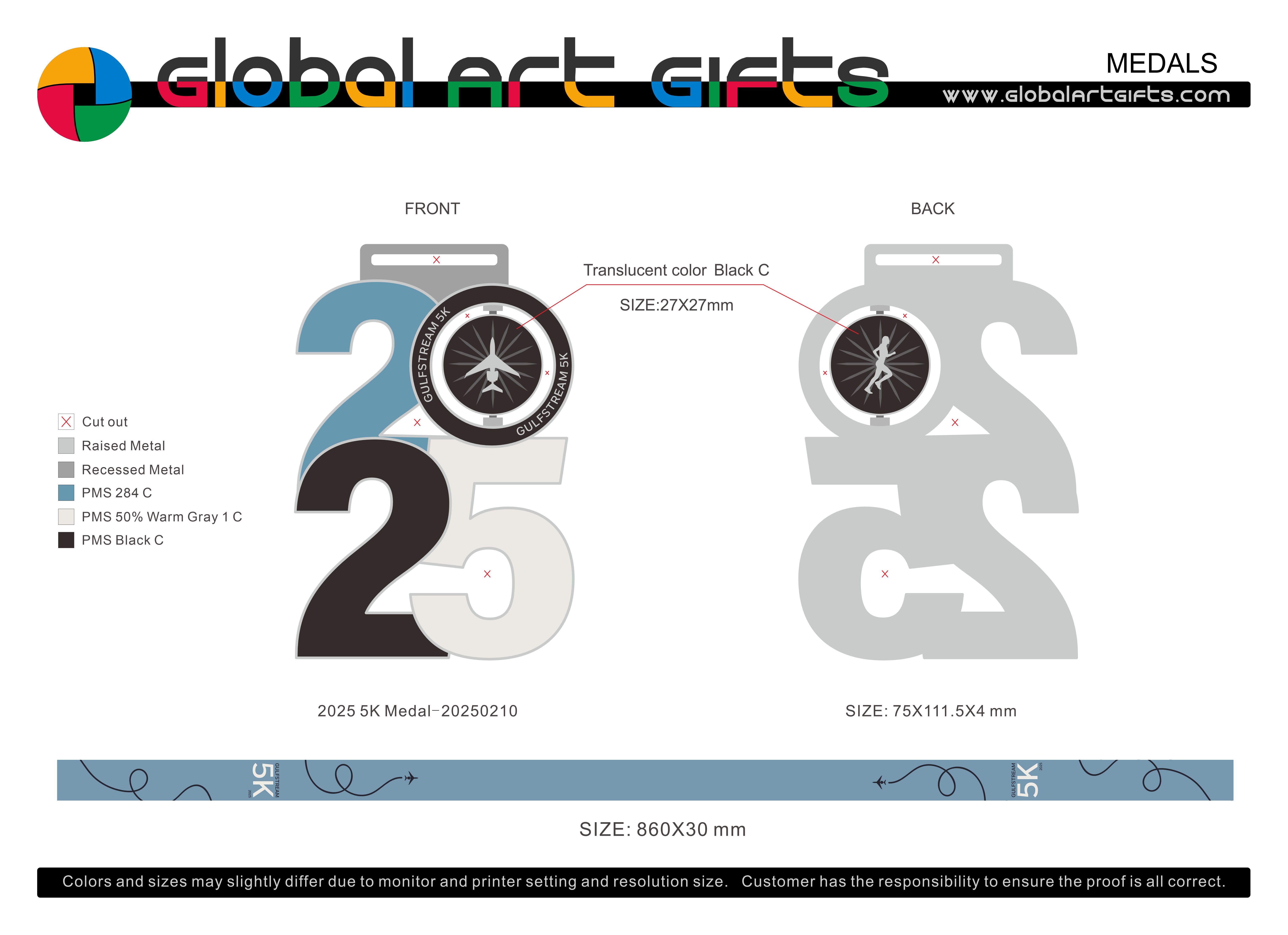
The spinner has crossed over from novelty to default for big races. A rotating center element — a compass, a gear, a route map — gives runners a reason to keep touching the medal, and every time they spin it they film it.
That’s the real value. A static medal gets photographed once and shelved. A spinner gets played with and posted, which is earned promotion for the race. We broke down the mechanics in our spinning medal design guide — the key is a balanced rotor on a precision rivet post, not a wobbly add-on.
The premium is 30–50% over a single-piece medal because you’re cutting two molds and adding an assembly step. For a flagship marathon that’s a rounding error against the social reach. For a small local 5K, it’s worth weighing.
Die-Cut Shapes Over Circles
Runners have a drawer full of round medals. A die-cut shape that traces the city skyline, the route outline, or a local landmark is instantly different.
Shaped medals cost more because the mold is cut to the outline, but the perceived value jumps. A medal shaped like the event’s bridge or skyline reads as designed for this race, not ordered from a catalog. We see this most with destination marathons that want the medal to be a souvenir of the place, not just the race.
The metal is the same die-cast zinc alloy as every medal — melted at 385°C and cast on an 88-ton press. The difference is entirely in the mold. If you’re going shaped, the materials guide still applies — zinc is the workhorse here because it holds fine detail through the cast.
Sustainable Materials Move Mainstream
A few seasons ago, “eco medal” was a niche. Now a meaningful share of race directors ask about it, driven by participant expectations and sponsor mandates.
What’s real: recycled zinc alloy in the casting, and reduced or plastic-free packaging. What’s mostly marketing: medals sold as “fully biodegradable” — metal isn’t. We’re honest with buyers about this. A recycled-zinc medal with a minimal recyclable box is a genuine, defensible step. It costs about the same as a standard medal and gives the race a story for its sustainability messaging.
Don’t overpay for a green label. Ask what’s actually recycled and what the packaging is made from. The honest answer should be specific.
Full-Color Sublimated Ribbons Finish the Medal
The medal gets the glory, but the ribbon is what carries the sponsors. Full-color sublimation on polyester webbing is now standard for any race with multiple sponsor logos — the design is dyed into the fiber at 200°C for 45–60 seconds, so it won’t crack, peel, or fade.
It’s cheap relative to its impact: below 200 pieces, sublimation is actually cheaper than screen printing because there are no screens to set up. And it handles gradients, photos, and five sponsor marks in one pass. We covered the full ribbon decision in our ribbon procurement guide.
A shaped, spinning medal with a faded ribbon is a half-finished product. The ribbon completes it.
Trend vs Budget: What’s Actually Worth Paying For
Not every race needs every trend. Here’s our factory-floor take on where the money goes furthest.
The die-cut shape gives the biggest bang per dollar — it’s a one-time mold cost that changes how the medal reads in every photo. The spinner is next if your race lives on social media. LED is only worth it for races with a night component; a noon road race will never see the light. Sustainable materials are cheap and worth doing regardless. The sublimated ribbon is a low-cost finish that elevates everything else.
Our race medal guide walks through the full ordering timeline — seven to fifteen days after sample approval, with a 100-piece minimum. For a fall 2026 race, that means locking your design sooner than feels comfortable. Peak production for the marathon season fills up fast.
FAQ: Marathon Medal Trends 2026
What’s the biggest marathon medal trend for 2026? Interactive elements — spinners and moving parts. Runners film themselves spinning the medal, which turns the award into free promotion for the race. Die-cut custom shapes are a close second.
Are sustainable medals actually sustainable? Partially. Recycled zinc alloy and reduced or plastic-free packaging are genuine and cost about the same as standard. Be skeptical of “biodegradable medal” claims — metal isn’t biodegradable. Ask what’s actually recycled and what the packaging is made from.
How much do shaped medals cost versus round ones? The premium is in the mold, not the per-unit cost. A die-cut mold is cut to the outline, which costs more upfront, but the per-unit casting cost is close to a round medal. At high quantity the difference shrinks on a per-unit basis.
When should I order for a fall 2026 marathon? Sooner than feels comfortable. Production runs seven to fifteen days after sample approval, plus shipping. Fall marathon season fills production slots, so lock the design months ahead rather than weeks.
Do LED elements make sense on a marathon medal? Only for races with a night component. In daylight an LED is invisible, so you pay an electronics premium for nothing. For evening or glow runs, it’s a strong feature. Most daytime marathons are better served by a spinner or die-cut shape.
What’s the minimum order for custom marathon medals? 100 pieces per design, the same as all our medals. Volume pricing kicks in at 300, 500, and 1,000+ pieces, which matters for larger races.
Recommended Reading
- Custom Race Medals: The Complete Guide for Event Directors — full ordering timeline and decision framework
- Custom Spinning Medals: Design Guide for Interactive Awards — the spinner trend in depth
- Custom Medal Ribbons & Accessories: Procurement Guide — sublimated ribbons and hardware