If you are entering your first marathon, this is one of the first things you want to know: do you get a finisher medal just for finishing?
Short answer — at most large marathons, yes. Finisher medals are standard at the big city races, and they are a core part of why people enter. But the picture is more varied than that, and knowing the difference saves you disappointment. We make custom race medals for events of every size, so we see both ends of this.
What we’ll cover:
- Which races give finisher medals and which do not
- Why finisher medals became standard at large races
- What changes at smaller and trail events
- Cost per medal and what drives it for race directors
- What to check before you register
The Short Answer
| Race type | Finisher medal? | Notes |
|---|---|---|
| Major city marathon | Almost always | Part of the entry promise |
| Mid-size marathon | Usually | Standard expectation now |
| Half marathon | Often | Common but not universal |
| 10K / 5K | Sometimes | Often for charity or themed runs |
| Trail ultra | Usually, but different | Often buckles instead of medals |
| Virtual race | Usually, mailed | Shipped after you submit proof |
| Local fun run | Rarely | Usually no finisher medal |
| Time-trial or qualifier | Sometimes | Depends on the organizer |
The pattern is size and entry fee. Large races with significant entry fees build the finisher medal into the price because runners expect it. Small local events with low or no entry fee often cannot justify it.
If the medal matters to you, the reliable move is to check the race website’s “what you get” section before registering. Reputable races list it plainly.
Why Finisher Medals Became Standard
Finisher medals are not a tradition from the early days of marathon running. They became standard as mass-participation running grew and races competed for entrants.
Three forces drove it:
Entry competition. When several large marathons compete for the same runners, the medal is one of the few tangible differences between them. Races invest in distinctive, often oversized designs for exactly this reason.
The finisher framing. Medals reward completion rather than placement, which suits a field where the vast majority of entrants are not competing for podium positions. A finisher medal gives almost every participant a shareable outcome.
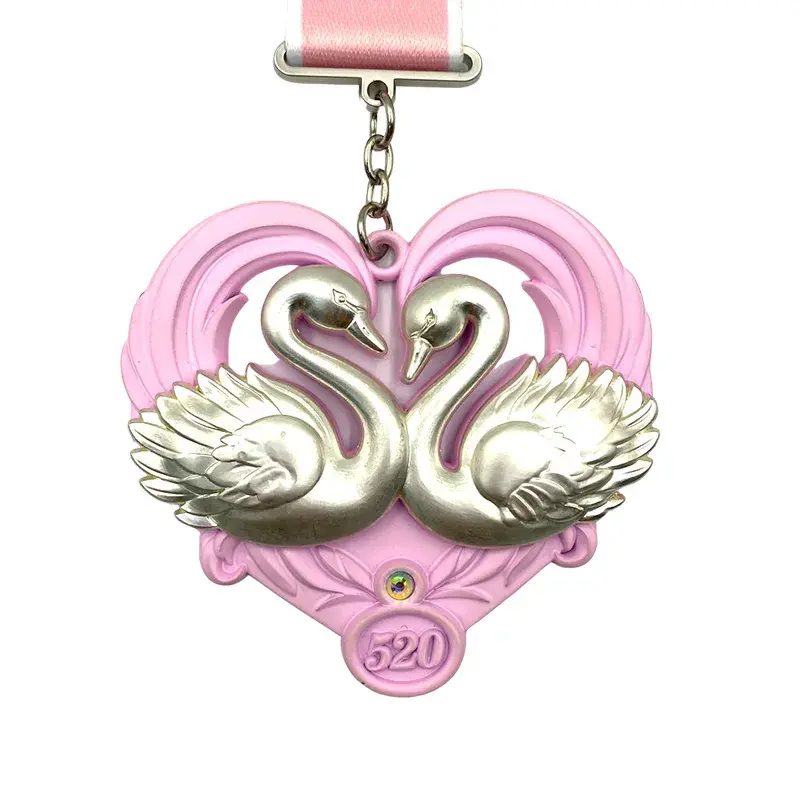
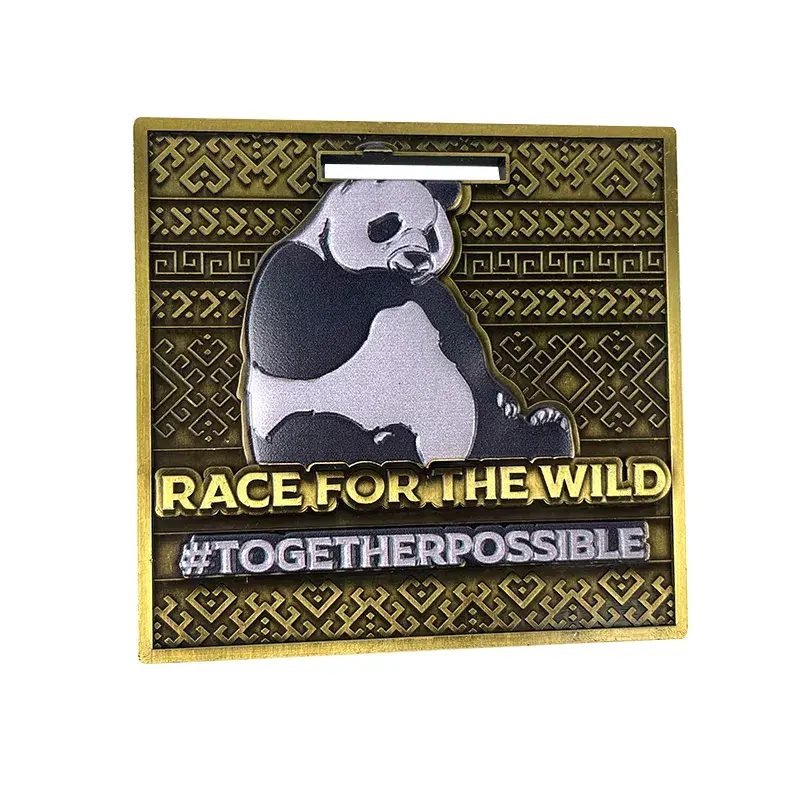
Social sharing. Since the medal is photographed and posted, races treat it as marketing. That is why designs get elaborate and why some races have moved toward heavier, more distinctive pieces.
From a manufacturing view, this shows up in the briefs we receive. Race directors increasingly specify a heavier medal, deeper relief, and a distinctive shape — design choices that raise the piece count and the tooling complexity, but pay off in photos. Our race medal design guide covers what makes a finisher medal memorable.
What Changes at Smaller Events
Smaller races face a straightforward budget problem: finisher medals for every entrant scale linearly with participation.
| Event size | Finisher medal economics |
|---|---|
| 50-200 runners | Often not viable unless entry fee supports it |
| 200-500 runners | Possible; simple design, single finish |
| 500-1,500 runners | Common; this is where finisher medals become standard |
| 1,500-10,000 runners | Expected; design becomes a marketing asset |
| 10,000+ runners | Expected; often oversized or mechanical |
A 200-runner event giving every finisher a die-cast medal is making a real statement about entry fee versus costs. Some do it deliberately, treating the medal as the reason to enter. Others skip it and put the budget into timing, hydration, or venue. For how enamel color and medal size affect race medal pricing, see our race medal cost breakdown.
For directors in that middle range, the lever is design simplicity. One shared design, a moderate size, and a single finish is far cheaper than a large medal per entrant. Our minimum is 100 pcs per design, which most races clear easily.
Trail and Ultra Events: The Buckle Alternative
Trail and ultra races often award a buckle rather than a medal, particularly at the 100-mile distance. That is a tradition rather than a cost decision — buckles are worn on belts and read as a marker of a specific achievement.
If you are organizing a trail event and wondering which to choose, the honest answer is that a medal and a buckle serve different functions. A medal is worn and displayed; a buckle is used. Some events do both — a buckle for finishers of the longest distance and medals for shorter distances on the same day.
We produce medals, so we are not a neutral voice on buckles. What we can say is that a die-cast medal with a belt-attachment is not a substitute for a machined buckle, and buyers who try to approximate one with the other tend to be disappointed.
Cost Per Medal for Race Directors
For directors planning a finisher medal, the cost drivers are the same four as any custom medal.
| Lever | Effect | Note for races |
|---|---|---|
| Quantity | Largest | 500 vs 2,000 changes unit price materially |
| Material | Modest | Zinc dominates; brass for higher-end tiers |
| Size | Moderate | Larger piece means more metal per unit |
| Enamel colors | Moderate | Each color adds a fill-and-bake step |
| Finish | Small | Antique vs shiny sits in the same band |
| Shape | Moderate | Custom shapes need custom tooling |
The two surprising entries are size and shape. Race directors often want a large, irregularly shaped piece for photo appeal, and both raise cost. A 60mm custom-cut shape costs meaningfully more than a 50mm round one.
The efficiency move for races is to keep one design and vary the ribbon by event or year. That gets you a distinctive finisher medal without multiplying tooling. Ribbon options are covered in our medal ribbon guide, and the volume pricing picture is on our bulk custom medals page.
We run production in 7-15 days after sample approval, sampling in 7-10 days, with a design proof back within 24 hours of receiving artwork. Our line produces 30,000+ pcs per day, so a large race order is a normal run.
What to Check Before You Register
For runners:
- Read the “what you get” page. It lists finisher medal details at most large races.
- Check for a cutoff. Some races give finisher medals only within a time limit.
- Virtual races ship. If you are in a virtual event, expect the medal by post after submitting proof, often weeks later.
- Ultra distances may be buckles. Not a downgrade — a different award tradition.
For directors:
- Decide the finisher-medal promise before setting the entry fee. It is one of the largest per-entrant costs.
- Lock the design early. Artwork rounds are the longest part of the timeline, not production.
- Order ribbon and medal together. Mismatched ribbon and plating is the most common presentation complaint.
- Add a buffer. Late registrations and no-shows both affect counts.
If you are organizing a race and want finisher medal pricing at your expected field size, send us your runner count and rough design direction and we will quote it.
Data to confirm: Confirm current MOQ, lead times, and tooling charges with the factory before setting entry fees, as these drive the per-entrant cost directly.
FAQ
Do all marathons give finisher medals? No. Most large city marathons do, and it is usually listed on the race website. Smaller local events and some low-fee races may not. Always check the “what you get” section before registering.
Do half marathons give finisher medals? Often, but not universally. Half marathon finisher medals are common at larger events and less consistent at small local races.
What is a finisher medal versus a placement medal? A finisher medal is given to everyone who completes the distance. A placement medal is given to top finishers, usually gold, silver, and bronze. Large races often award both.
Do trail ultras give medals or buckles? Usually buckles, especially at 100-mile distances. It is a tradition rather than a cost decision. Some events award buckles for the longest distance and medals for shorter ones on the same day.
How much does a finisher medal cost per runner? It depends mainly on quantity, size, and shape. The largest lever is quantity — 500 versus 2,000 pieces changes unit price materially. Large or custom-cut shapes also raise cost compared with a round standard size.
How far ahead should a race order finisher medals? Start 10-12 weeks before race day. Artwork rounds are usually the longest step, then sampling runs 7-10 days and production 7-15 days after approval.
Related: custom hard enamel medals — custom hard enamel medals — the finish most buyers compare against soft enamel.