Every UIL meet ends the same way: a results sheet, a table full of custom medals, and a bin of ribbons that has to be sorted, labeled, and handed out before the buses leave. The awards are the last thing anyone thinks about and the first thing students remember. For the coach or academic coordinator who has to order them, the job is not really design — it is logistics. How many places, how many ribbons per event, which events get medals and which get ribbons, and how to get all of it on campus before the meet date.
We are Badge Artisans (众沐), a custom medal and trophy factory in Huizhou, Guangdong, founded in 2010. We have spent more than 15 years making UIL medals, meet ribbons, and academic award sets for schools and districts across Texas and the wider United States, and we ship to more than 50 countries. This guide is the version of the conversation we have with UIL coaches and district buyers every season — the decisions that actually move the order, the numbers that actually matter, and where a factory-direct order saves real budget without cutting the award students wear around their neck.
What we will cover:
- Why a UIL meet order is a different animal from a general school awards order
- The full award stack: place medals, participant ribbons, team trophies, academic sets
- Sizing and materials for UIL medals, and how to keep them affordable
- Ribbons — the true volume item — and how to spec them so they do not fall apart
- How to calculate quantities per meet without over-ordering
- What a factory-direct process looks like from quote to delivery
- Packaging, quality control, and the certifications your district may ask for
Why a UIL Meet Order Is Not a School Awards Order
A school’s end-of-year awards ceremony is a single, predictable event. One design, one quantity, one date, and the awards are handed out once. A UIL meet is the opposite. It is a repeating event with a fixed calendar, a wide spread of events, and a place structure that multiplies the award count fast.
That difference shows up in three places.
The award list is long. A meet is not “top student in math.” It is dozens of contests — academic events and athletic events running on the same day — each with its own finishing places and its own participants who all expect something to take home.
The quantities are unpredictable until the last minute. Entries grow and shrink. A district may tell you 400 participants in the spring and then hand you 520 on the day. Any UIL order has to be planned with a buffer, because re-ordering a single batch of medals in the middle of a season is expensive and slow.
The date is immovable. A UIL meet date is set by the league calendar, not by your purchasing department. If the medals are not on campus a week early, they are late. That is the single most common reason schools move away from a local print shop and start buying factory direct — the factory controls its own production schedule and can tell you honestly whether a date is achievable.
We make UIL medals and meet ribbons as a combined program precisely because the two items are ordered together, on one purchase order, against one date. Splitting medals and ribbons across two suppliers means two timelines, two sets of shipping, and two chances for something to arrive late.
The UIL Award Stack: What Actually Gets Handed Out
Before you request a quote, it helps to map the whole award stack. Most UIL buyers think they need “medals and ribbons.” In practice there are four or five distinct line items, and each has a different cost logic.
| Award | Who receives it | Quantity driver | Typical format |
|---|---|---|---|
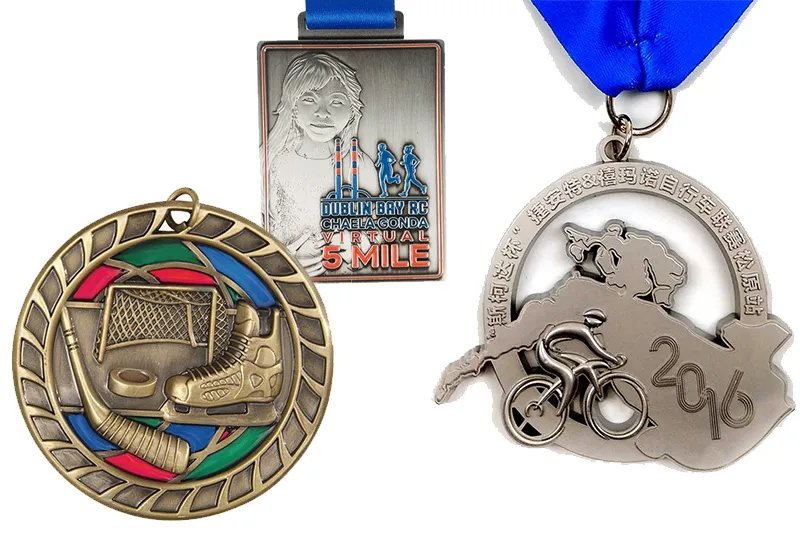
| Place medals | Top finishers per event | Places × number of events | Die-cast metal medal on ribbon |
| Participant / event ribbons | Everyone who competes | Participants × events | Printed or woven ribbon |
| Place ribbons | Lower finishing places | Places × events | Printed ribbon |
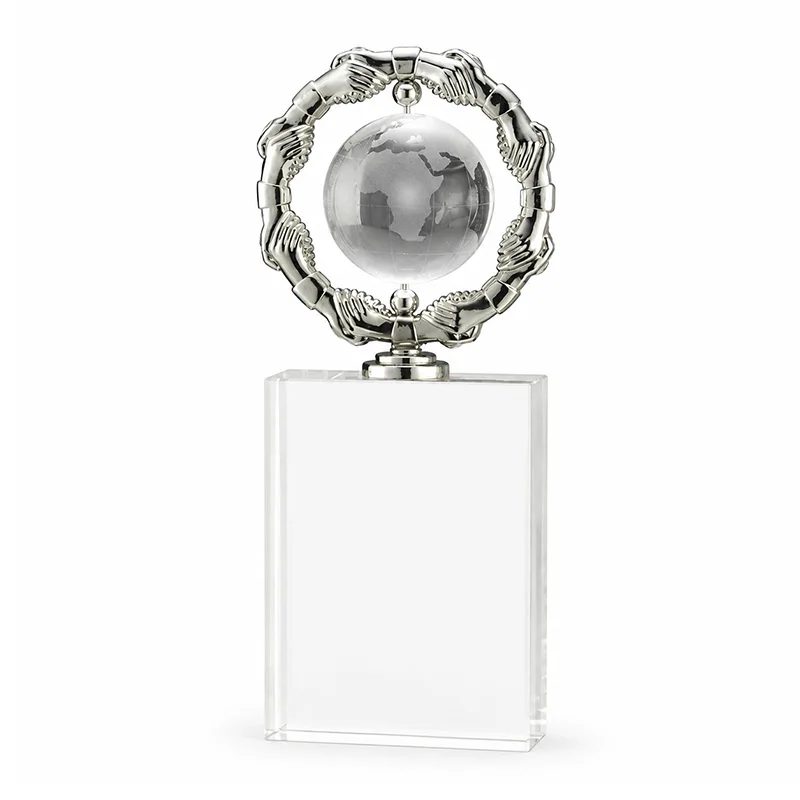
| Team trophies | Winning schools / teams | One per division | Metal trophy or cup |
| Academic awards | Subject and contest winners | Places × academic events | Medal, or medal with printed detail |
| Special awards | Outstanding performer, sweepstakes | One or a few | Larger medal, heavier finish |
The important insight is that medals scale with places, ribbons scale with participants. A meet with ten events and five places needs 50 medals. The same meet with 200 participants needs ribbons in the hundreds. That is why the ribbon line usually costs more than the medal line in a UIL order, even though each ribbon is far cheaper than each medal. Buyers who budget only for medals get surprised by the ribbon total.
If you are also ordering for a school’s wider academic program, our academic medals guide for schools walks through the ceremony side of the same purchase. For a UIL meet, though, everything is driven by the event count.
Medals for UIL Meets: Sizing, Materials, Finishes
A UIL place medal has one job: it has to read clearly at arm’s length, feel substantial in the hand, and survive being worn all day by a teenager. Three decisions control all of that — size, material, and finish.
Size and weight
Size in a UIL order should track the level of the meet, not the prestige of the individual event. A district meet and a state-level meet can carry different sizes, and that is a useful way to make the higher-level award feel earned without changing the design.
| Meet level | Medal diameter | Weight feel | Ribbon width |
|---|---|---|---|
| Elementary / middle school meet | 40-45 mm | Light | 20 mm |
| High school district meet | 45-50 mm | Mid | 20-25 mm |
| Regional / area meet | 50-55 mm | Mid to heavy | 25 mm |
| State-level or championship | 55-65 mm | Heavy | 25-30 mm |
| Academic sweepstakes / special | 55-70 mm | Heavier | 30 mm |
Two practical notes from our production floor. First, heavier is not automatically better — a 65 mm medal on a light ribbon will swing and flip while a student walks, and a light medal on a heavy ribbon hangs better. Match the two. Second, for younger students keep the piece light and confirm the edges are deburred and polished as part of the cast finishing, because small hands and sharp edges are a bad combination.
Materials
Almost every UIL medal we make is die-cast zinc alloy, with brass, iron, and aluminum used for specific cases. The choice affects weight, cost, and how crisp the detail comes out.
| Material | Density | Forming method | Where it fits a UIL order |
|---|---|---|---|
| Zinc alloy (Zamak 3/5/7) | 6.7 g/cm³ | Die-casting | The default for detailed place medals |
| Brass | 8.9 g/cm³ | Stamping (hard above 3 mm) | Heavy, premium medals and trophies |
| Iron | 7.8 g/cm³ | Stamping (hard above 4 mm) | Cost-controlled flat designs |
| Aluminum | 2.7 g/cm³ | Stamping / anodizing | Light, large-format medals |
Zinc alloy is the workhorse for UIL because die-casting reproduces fine detail — a mascot, a school crest, an event name, a place number — in one shot, with a minimum wall thickness of 2 mm so the medal stays rigid without becoming a brick. If you want a genuinely heavy award for a state champion, brass is the step up. If you need a large, light medal that will not tire a young student, aluminum is the answer.
If your meet mixes academic and athletic awards, keep one material and one plating family across both so the table of awards looks like a single set.
Finishes
Finish is where a UIL medal gets its identity, and it is also where the cost is. A gold, silver, and bronze place set is the standard, but there are decisions inside that:
- Plating colour — gold, silver, bronze, antique gold, antique silver, black nickel, copper. Antique finishes hide fingerprints and wear better on a medal that is handled a lot.
- Enamel fill — soft enamel sits in the recessed areas and lets the metal outline stay raised; it is the most common UIL look. Imitation hard enamel and glass enamel are polished flat and feel smoother and more premium.
- UV printing — full-colour printing that covers a relief up to 7 mm, useful when a design needs a photo or a multi-colour crest that enamel cannot reproduce economically.
One production constraint worth knowing before you finalize artwork: colour fill has a minimum width. Soft enamel needs a colour-fill width of at least 0.3 mm, and imitation hard enamel or glass enamel needs 0.5 mm. If a designer draws hairlines thinner than that, the enamel will not fill cleanly and the artwork has to be adjusted. We flag this during free design review so it never becomes a delay.
Relief depth matters too. The minimum relief depth is 0.4 mm, and we recommend 0.6-0.8 mm for a UIL medal so the raised lettering and the enamel areas read clearly even on a busy design.
Ribbons: The Real Volume Item in a UIL Order
If medals are the award students show their parents, ribbons are the award that touches the most hands. Every participant in every event walks away with something, and that is what makes the ribbon line the biggest quantity in the order.
Event ribbons vs place ribbons
UIL buyers usually need two ribbon types, and they should be quoted separately.
Place ribbons carry a finishing position — first through sixth, or whichever places your meet awards. They are printed with the place and usually the event or meet name.
Participant or event ribbons carry no place. They are the “you competed” award, printed with the meet name and often the event. These are the highest-volume item on the order.
Some meets combine the two — a single ribbon design with a place printed in a designated area — which reduces design count and tooling, but makes sorting on the day harder. If your volunteers are sorting ribbons into piles by event, two clear designs are faster to handle than one clever hybrid.
Ribbon sizing and construction
Our standard woven ribbon is 860-900 mm long and 20-30 mm wide. For younger students we make a shorter, narrower version at 800 × 20 mm so the ribbon hangs correctly on a smaller neck rather than dropping to the waist.
| Ribbon spec | Standard | Notes for UIL |
|---|---|---|
| Length | 860-900 mm | 800 mm for elementary students |
| Width | 20-30 mm | 20 mm district, 25-30 mm championship |
| Attachment | Metal ring, clip, or pin bar | Ring for medals, pin bar for rosette style |
| Printing | Woven or printed | Woven for durability, printed for multi-colour events |
| Finish | Heat-cut or stitched ends | Heat-cut is standard; stitched for premium |
The detail that matters most is the attachment and the end finish. A heat-cut end resists fraying better than a raw cut, and a properly swaged metal ring will outlast the ribbon itself. On a ribbon that gets worn all day and then hung on a bedroom wall, that construction is the difference between a keepsake and a tangle.
We cover ribbon construction in more depth in our guide to medal ribbon materials and printing, including how woven and printed ribbons differ in durability and how to choose between them when a design has a lot of colour.
Colours and readability
A UIL ribbon has to be readable from a few feet away, in a gym or on a field, by a volunteer who is sorting hundreds of them. That puts a premium on contrast. A light ribbon colour with dark text always beats a dark ribbon with light text when the lighting is bad, and a simple two-colour scheme always beats a busy one when the ribbon is small.
A useful rule from our own production experience: choose the ribbon colour to signal the award category and the text to carry the information, so a stack of ribbons can be sorted at a glance.
Academic UIL Awards: Building the Academic Set
UIL academic contests need their own award logic, because the recipient profile is different. Academic winners often receive their medal in a classroom or a ceremony rather than on a podium, and the award is frequently kept and displayed rather than worn once.
For academic awards we generally recommend:
- A slightly larger medal than the athletic place medal, so it reads as a serious academic honor
- An antique or satin finish rather than a high-gloss one, because it photographs better and shows less handling wear
- Printed or engraved detail for the subject name, so one design can serve many subjects without new tooling
- A paper card or velvet pouch for presentation, since academic awards are often handed out in a formal setting
The tooling point is the one that saves the most money. Ten academic subjects do not need ten molds. One academic design with the subject carried by printing or engraving covers all of them at a single tooling cost. This is the same principle we use in school ceremony orders, and it applies directly to a UIL academic set.
If your program hands out both athletic and academic awards at the same meet, keep a shared visual language — same material, same plating family, same ribbon colour family — and let size and finish separate the two tiers. Consistency across the set is what makes a UIL awards table look deliberate rather than assembled.
How to Calculate Quantities Without Over-Ordering
The most common UIL ordering mistake is over-ordering medals and under-ordering ribbons. Here is the calculation we walk buyers through.
Start with the event list. For each event, note:
- How many finishing places get a medal (often three, sometimes six)
- How many participants compete (your entry count, plus a buffer)
- Whether the event gets a team trophy
Then total it up:
- Medals needed = places awarded × number of medal events
- Place ribbons needed = (ribbon places) × (number of events)
- Participant ribbons needed = total entries × a growth buffer
A worked example makes it concrete. Suppose a district meet has 20 events, each awarding medals to the top three, place ribbons to places four through six, and a participant ribbon to everyone.
| Line item | Calculation | Quantity |
|---|---|---|
| Place medals | 3 places × 20 events | 60 |
| Place ribbons | 3 places × 20 events | 60 |
| Participant ribbons | 400 entries + buffer | 450 |
| Team trophies | 1 per division | 4 |
| Total | 574 items |
Notice that the participant ribbons alone are almost four times the medal count. That is the pattern in nearly every UIL order, and it is why a quote that focuses only on medals is not a real quote.
On the buffer: because entries move, we recommend planning participant ribbons at roughly 10-15% above your best estimate. Ribbons are inexpensive to add at the front of an order and awkward to add mid-season. For medals, the buffer should be smaller — you do not want a stack of unused medals — but you should always have a handful of spares, because a tie or a correction happens.
And if the season has multiple meets on the same calendar, order the whole season at once. Our bulk custom medals program is built around exactly this: one tooling cost, one production run, staged delivery across the season. It is meaningfully cheaper than three separate small orders, and it removes the mid-season re-order risk entirely.
Factory Direct: How the Pieces Are Actually Made
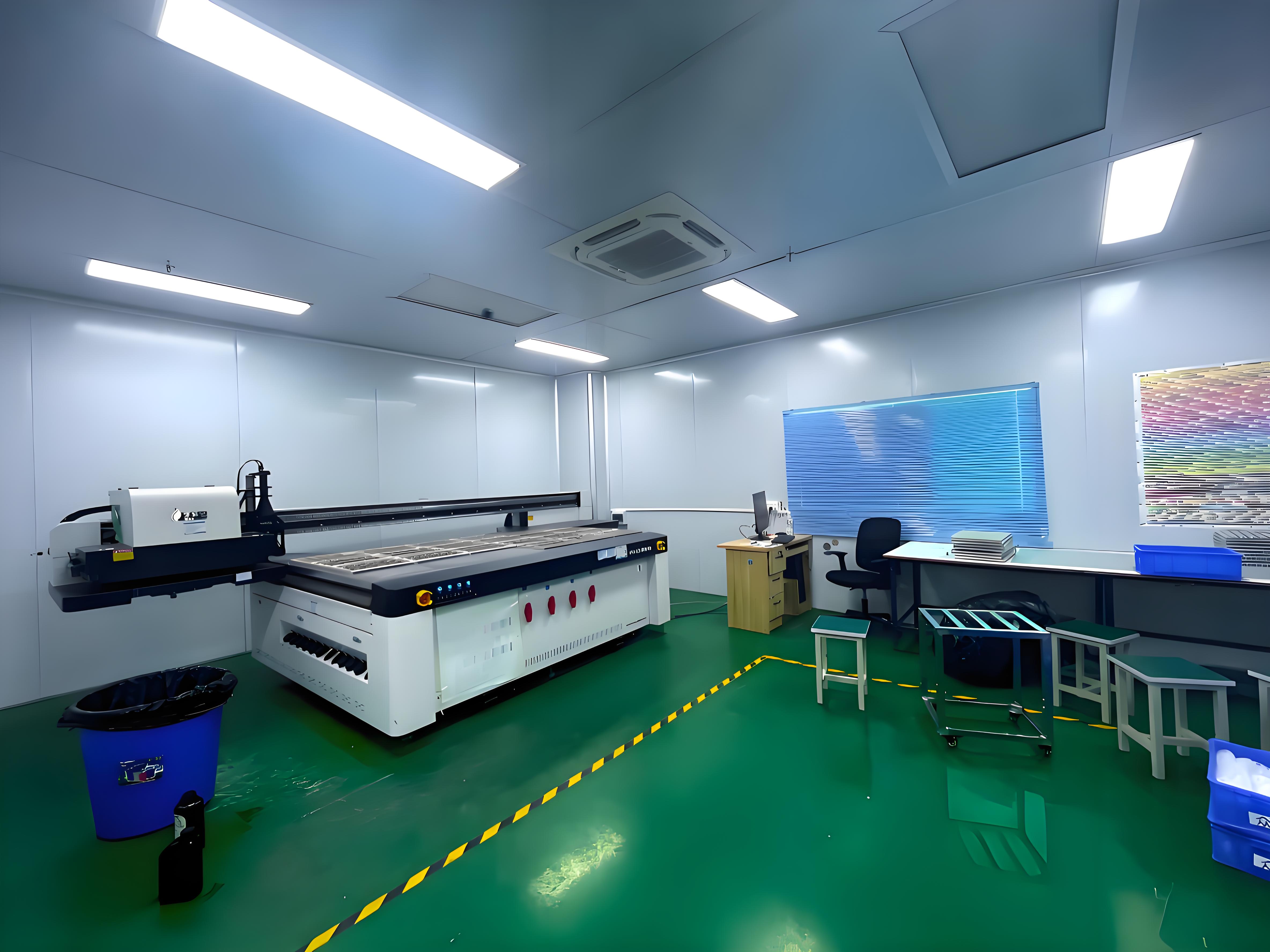
Understanding the production process is what turns a UIL buyer from someone comparing quotes into someone who can tell which quote is realistic. Here is what happens to your order in our Huizhou factory.
Die-casting
Medals are die-cast on an 88-ton press, with zinc alloy heated to 385 °C and injected into the steel mold. The mold itself starts as a 3D drawing, then goes through engraving, mold making, and heat treatment. The matte texture on many of our medals is created by EDM spark erosion, and round medals get four evenly spaced gates so the metal fills the cavity evenly — that is what keeps the rim clean and the detail sharp on a circular design.
Because die-casting reproduces detail directly from the mold, the artwork has to be production-ready before the mold is cut. That is why we insist on reviewing artwork at the design stage rather than after tooling — a line that is too fine for enamel, or a relief that is too shallow, is cheap to fix on screen and expensive to fix in steel.
Plating
Our plating line runs nine steps, and each one exists for a reason:
- Dewax / degrease
- Ultrasonic cleaning
- Alkaline copper — roughly 500 seconds
- Acid copper — 20-60 minutes
- Colour electroplating
- Drying in a tunnel oven at 100 °C for 40 minutes
- Sealing oil spray
- Unhang
The copper layers build the base that the colour plating bonds to, which is what gives a UIL medal its even, durable finish rather than a patchy one. The tunnel oven cure is what keeps the finish from clouding later. When a cheap medal tarnishes after a season, it is usually because one of these steps was compressed.
Enamel, relief, and printing
After plating, the recessed areas are filled with enamel, or the surface is UV-printed. As noted above, soft enamel needs a 0.3 mm minimum colour-fill width and hard or glass enamel needs 0.5 mm. Relief depth runs from a 0.4 mm minimum up to a recommended 0.6-0.8 mm for clarity. UV printing can cover a relief of up to 7 mm, which is what makes it useful for full-colour crests and photographic elements.
Ribbon assembly
The finished medal is hung on its ribbon, and this is where the accessory spec matters. The standard woven ribbon is 860-900 × 20-30 mm, and we make a 800 × 20 mm version for younger students. Attachment hardware — rings, clips, pin bars — is chosen to match how the award will be worn. For anything that needs a magnetic closure rather than a pin, we make round magnets from Φ2 mm up to Φ20 mm.
What Actually Drives the Cost
When you compare UIL medal quotes, the differences almost always come down to four things, in this order of impact:
- Plating — the largest cost driver in any medal. More colours and more exotic finishes cost more.
- Painting / enamel — every additional enamel colour adds a fill step. Complex multi-colour designs are the second-biggest lever.
- Electrophoresis — a lower-cost finishing route, useful when a design does not need a premium plating look.
- Size and weight — more metal and more press time per piece.
Two practical ways to control a UIL budget without cheapening the award:
- Reduce enamel colours on the participant award. Participant medals and ribbons do not need the same colour depth as a championship medal. A simpler fill on the volume item saves real money across hundreds of pieces.
- Keep one mold across places. Gold, silver, and bronze place medals should share a single design and a single mold, differing only in plating. Three molds for three places is money spent on nothing students will notice.
The Ordering Timeline: Quote to Delivery
A UIL order lives or dies on the calendar, so here is the process end to end.
| Stage | What happens | Time |
|---|---|---|
| Inquiry | You send the event list, quantities, and artwork | Quote returned within 24 hours |
| Free design | We prepare production artwork and flag any spec issues | Artwork in 24 hours, unlimited revisions |
| Sampling | A physical sample is made for your approval | 7-10 days |
| Approval | You sign off on the sample | — |
| Bulk production | Full run with in-line QC | 7-15 days |
| Inspection & shipping | Final QC and dispatch | Per shipping method |
Two things to note. First, MOQ is 100 pieces per design, which fits a single-event order as easily as a full-season order. Second, the sampling stage is not optional for a new UIL design — approving a physical sample before the bulk run is the cheapest insurance in the whole process. We run a three-stage QC with 100% qualified delivery, and the sample is the first of those stages.
Payment terms are T/T 30% deposit with 70% on completion, which is standard for factory-direct orders.
If this is your first time ordering direct from a factory, our step-by-step guide to how to order custom medals in bulk covers the paperwork, the artwork file requirements, and the questions to ask before you commit — all of it written for school and district buyers rather than for resellers.
Packaging and Presentation
UIL awards are usually handed out in a hurry at the end of a meet, so packaging has to be practical first. That said, the right packaging turns a good award into a memorable one, and it costs very little at factory-direct volume.
| Packaging | Best for | Why |
|---|---|---|
| PP / OPP / ziplock bag | Bulk participant ribbons and medals | Cheapest, protects in transit, fast to hand out |
| Velvet pouch | Place medals | Soft protection, feels like a real award |
| Paper card | Academic medals | Carries the event and place in print |
| Paper box | Individual awards | Good middle ground for ceremonies |
| Velvet box | Championship and sweepstakes | Presentation-grade |
| Acrylic box | Special awards, trophies | Display-ready |
| Blister | Retail-style presentation | Fixed display angle |
For a UIL meet, a practical split is bulk bagging for participant items and velvet pouches or paper cards for place medals. It keeps the sorting fast on the day while still making the top awards feel special. We ship to more than 50 countries, including the US, Canada, the UK, Australia, and Russia, and packaging choice is one of the details we confirm at the quote stage because it affects both cost and shipping weight.
Quality Control and the Certifications Districts Ask For
School and district purchasing departments increasingly require compliance documentation alongside the quote, and it is worth knowing what a factory can actually provide before you ask.
We hold BSCI, Disney, ISO9001, Reach, RoHS, TUV Rheinland, Sedex, and USJ certifications. For a district buyer, the two that usually matter most are ISO9001, which speaks to a consistent quality system, and the material-safety certifications, which speak to what is actually in the metal and the finish that ends up around a student’s neck.
On quality specifically, our process runs three QC stages with 100% qualified delivery. In practice that means the first-article check on the sample, in-line inspection during the bulk run, and a final inspection before packing. If a batch does not pass, it does not ship — which is the entire point of buying direct rather than through a middleman who cannot see the production floor.
We produce 30,000+ pieces per day, so a UIL order is never competing for capacity with a much larger client. That matters in meet season, when several districts are all ordering at once.
Mistakes UIL Buyers Make
After 15+ years of UIL and school orders, the same handful of mistakes come up again and again. Avoiding them saves both money and stress.
Ordering medals and ribbons from different suppliers. Two timelines, two shipping costs, and a real risk that the ribbons arrive before the medals or vice versa. One order, one factory, one delivery date.
Designing the participant award like the championship award. The participant item is the volume item. Simpler is better and cheaper, and students are not comparing it to the gold medal.
Skipping the sample. Approving a digital proof is not the same as holding the physical piece. Weight, edge finish, and enamel depth only show up in your hand.
Under-buffering participant ribbons. Entries move. A 10-15% buffer on the cheapest line item in the order is the best insurance you can buy.
Ignoring the calendar. A UIL meet date cannot move. Working backward from the meet date, add sampling at 7-10 days and bulk at 7-15 days, and start the order accordingly.
Letting artwork go to tooling with sub-minimum detail. Colour fills thinner than 0.3 mm (soft enamel) or 0.5 mm (hard enamel), and relief shallower than 0.4 mm, will not reproduce cleanly. Catch it at design review, not after the mold is cut.
FAQ
How many medals and ribbons do we need for a UIL meet?
It depends entirely on your event list and entry count, and the two scale differently. Medals scale with finishing places: places awarded × number of medal events. Ribbons scale with participation: your total entries plus a growth buffer of roughly 10-15%. In a typical 20-event meet with three medal places and 400 entries, that works out to about 60 medals, 60 place ribbons, and 450 participant ribbons. The ribbon line is usually the larger quantity by far, which is why it should be quoted separately from the start.
Can you make custom UIL meet ribbons with our meet name and event printed on them?
Yes. Ribbons are printed with whatever your meet needs — the meet name, the event, the place, the school, the year. Our standard woven ribbon is 860-900 mm long and 20-30 mm wide, with a shorter 800 × 20 mm version for younger students. We can produce place ribbons and participant ribbons as separate designs so your volunteers can sort them quickly on the day, or as a single hybrid design if you prefer fewer line items.
What is the minimum order for custom UIL medals?
Our MOQ is 100 pieces per design. That covers a single-event order, a full district meet, or a season’s worth of awards. Because tooling is shared across places — the gold, silver, and bronze versions of a place medal come from one mold — you are not paying for separate tooling per place. If your program runs several meets in a season, ordering them together at one time usually brings the per-piece cost down further.
How long does it take to get UIL medals and ribbons before our meet?
Plan backward from the meet date. We return a quote within 24 hours and free artwork within 24 hours, with unlimited revisions. Sampling takes 7-10 days, and bulk production takes 7-15 days after you approve the sample. Add shipping time on top. For a UIL meet, we recommend starting the order at least six to eight weeks ahead so there is room for an artwork revision or a sample adjustment without touching the meet date.
What materials and finishes do you use for UIL academic awards?
Most UIL medals are die-cast zinc alloy (Zamak 3/5/7) at a density of 6.7 g/cm³, which reproduces fine detail and holds a rigid shape at a minimum wall thickness of 2 mm. Brass at 8.9 g/cm³ is the heavier, premium option; aluminum at 2.7 g/cm³ is the light choice for large medals. For academic awards we often recommend an antique or satin finish, because it photographs well and shows less handling wear, plus printed or engraved subject detail so one design serves many subjects at a single tooling cost.
Do you provide design help and certifications for school district purchasing?
Both. Design is free — you send a sketch, a logo, or just a description, and we prepare production artwork within 24 hours with unlimited revisions, flagging any detail that falls below the enamel or relief minimums before it goes to tooling. On the compliance side we hold BSCI, Disney, ISO9001, Reach, RoHS, TUV Rheinland, Sedex, and USJ certifications, and we run three-stage QC with 100% qualified delivery. We ship to more than 50 countries and have been producing from our Huizhou factory since 2010.
Planning Your UIL Award Order
If you are ordering UIL meet awards this season, the fastest way to get a real number is to send us your event list, your estimated entry count, and whatever artwork you have — a logo, a sketch, or even a description of the design. We will come back with a quote within 24 hours and free production artwork within another 24, covering medals, ribbons, and academic award sets on a single purchase order.
Design and revisions are free, MOQ is 100 pieces per design, and bulk production runs 7-15 days after sample approval. If your district needs compliance documentation, tell us at the quote stage and we will include the certifications your purchasing department asks for.
Send your meet details and we will tell you honestly whether your date is achievable — and if it is not, we will say so before you commit rather than after. That is what buying factory direct is supposed to mean.
Related reading: spinning medals for sports programmes — our spinning medal range: a moving inner disc on a die-cast body, 100-piece minimum.
Related product page: kids and youth medals — lighter blanks, deburred edges and shorter ribbons for younger students.