We can’t hand you a fixed price list, and don’t trust any factory that does. Custom medals carry too many variables — material, size, finish, enamel, quantity — so a flat number before anyone sees your design is a guess dressed up as a quote. What we can give you is the logic behind every line item, so you know what you’re paying for and where to cut. We cast bulk custom medals in Huizhou, and we’ve watched buyers overpay for years. This is the breakdown we wish you’d had before the first quote.
What we’ll cover: the four cost lines in every medal quote, why the mold fee is bigger than you think and how it shrinks, which materials and finishes move the price and which don’t, the real cost of rush production, and the quantity tiers that change your per-unit price.
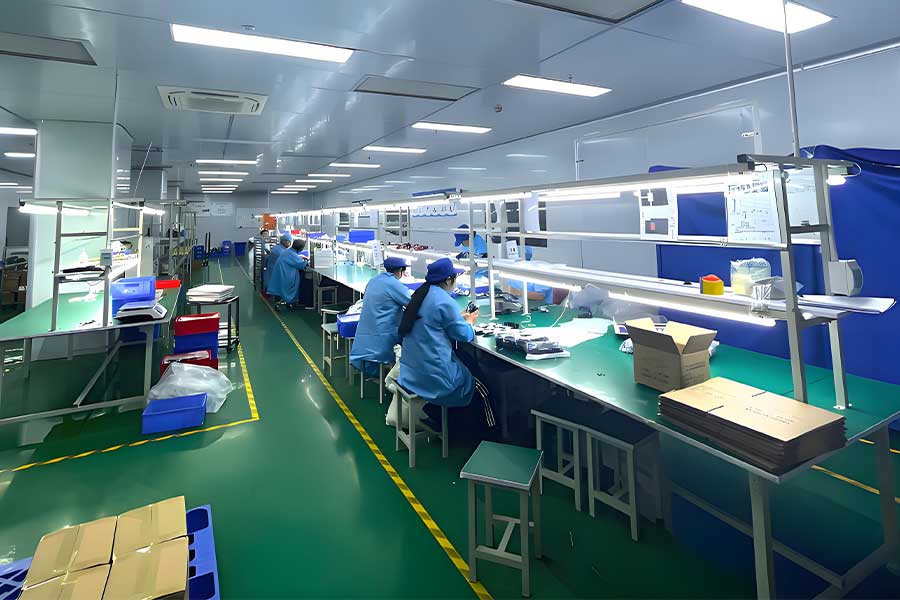
[Image: factory-workshop-02.jpg — Medal casting workshop floor in Huizhou with a technician inspecting freshly cast zinc alloy medals]
Where Your Medal Budget Actually Goes
Every custom medal quote stacks four cost lines. Once you see them, a price stops being a number and starts being a story.
- Mold fee — one-time tooling charge, paid once per design.
- Material and casting — the metal itself, per unit.
- Surface finish and enamel — plating or paint plus the color fill, per unit.
- Assembly, packaging, QC — riveting, ribbon, box, inspection, per unit.
Line one is fixed. Lines two through four scale with your quantity. That’s the whole math, and it explains why a 100-piece order and a 5,000-piece order of the same medal land at wildly different per-unit prices.
The Mold Fee Is the Cost People Misunderstand
Mold cost isn’t the steel. It’s the labor and the machinery that shape it, and it’s the biggest line item on any small order.
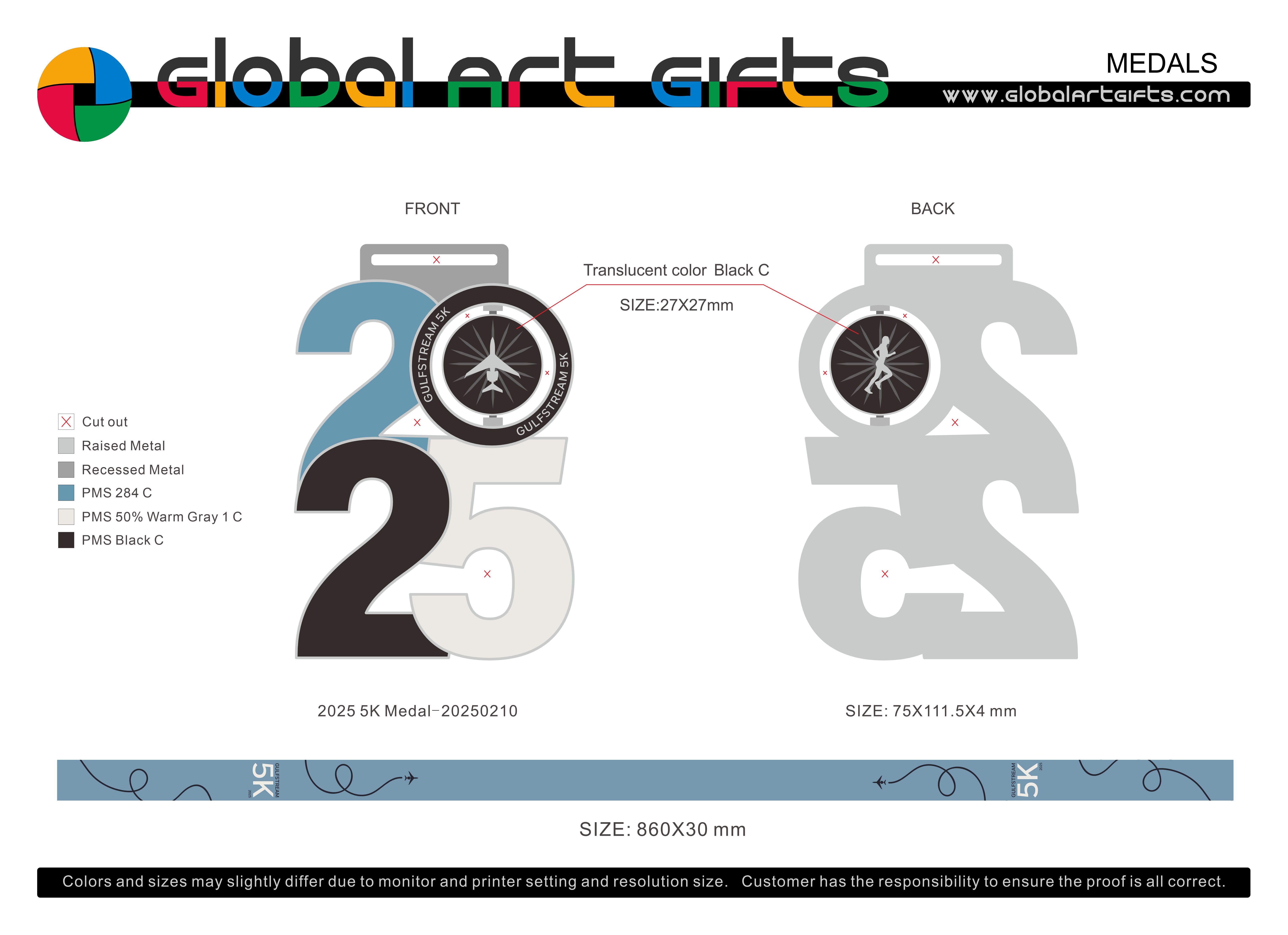
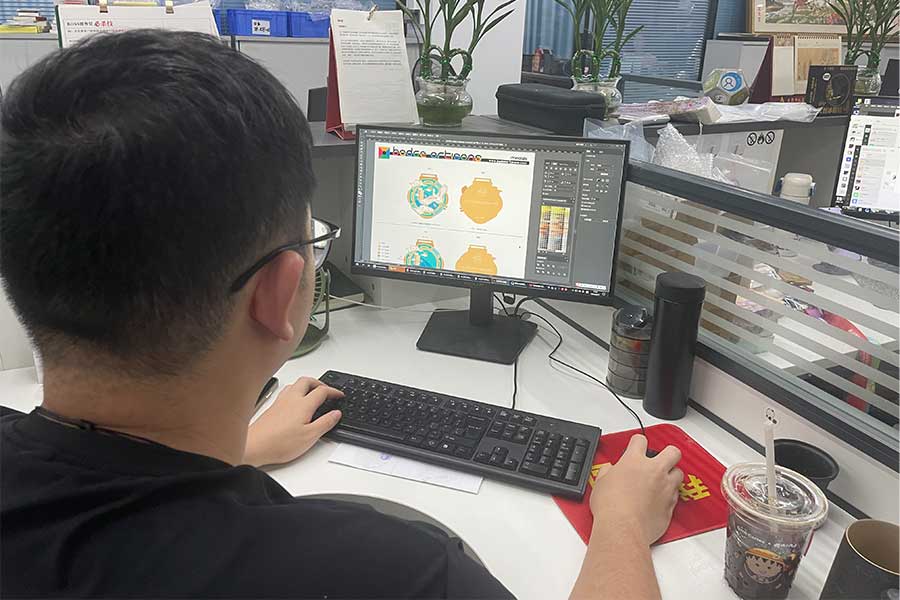
Your design gets programmed and carved into a hardened steel block on a CNC 3D machine — we run Beijing Jingdiao units for this step — then the die is heat-treated to harden it, and only after a trial shot passes does it ever touch a production press. Add the engineering review before cutting starts, and you have a fixed cost that runs the same whether 100 medals or 100,000 come through it. At the 100-piece MOQ, that fixed cost sits heavy on every unit. At 5,000, it’s a rounding error. It’s also the reason reorders cost less: the die already exists, so your second run of the same design skips the mold line entirely.
So don’t bargain down the mold fee on a small order. Get the die right the first time — a re-cut die costs more than a careful design review. If you want the full 12-step sequence, our medal manufacturing process page walks through it.
Material Cost, Frame by Frame
After the mold, material is the biggest line, and it’s mostly a density story. Heavier metal means more grams per medal, and you pay for grams.
| Material | Density (g/cm³) | How it’s made | Relative cost | When to pick it |
|---|---|---|---|---|
| Zinc alloy | 6.7 | Die-casting | $$ | The default — sharp 3D detail, most events |
| Brass | 8.9 | Stamping | $$$ | Heavy, weighty hand-feel |
| Iron | 7.8 | Stamping | $ | Budget-friendly, simple shapes, high volume |
| Aluminum | 2.7 | Stamping | $$ | Light, modern, anodized colors |
| Stainless steel | — | Stamping | $$$ | Corrosion resistance, marine settings |
Zinc alloy melts at 385°C and flows into a mold like warm honey, which is why it carries fine text and 3D detail that stamped metal can’t. Brass costs more because you’re buying more grams — a 3mm brass medal simply weighs more than the same medal in zinc. Iron is the budget workhorse, but the edges come out softer, so skip it if your logo has fine lines. The full comparison lives on our medal materials guide.
Surface Finish and Enamel: The Lines That Move Fastest
Two medals out of the same mold can differ in price by 30% or more, and the difference is all in finish and color.
Finish cost runs plating above painting above electrophoresis, in that order. Plating is the slow one: every medal gets an alkaline copper strike of roughly 500 seconds before the color layer, then acid copper for 20–60 minutes to build gloss, then a tunnel oven pass at 100°C for 40 minutes, then a lacquer seal to stop oxidation. That sequence is why plated medals cost more — it’s time on the line, not markup. Painting is the budget route for colors plating can’t hit, and electrophoresis sits in between, covering recessed areas cheaply.
Color filling adds another split. Soft enamel is thin and fluid, bakes down with visible metal lines between colors, and needs only a 0.3mm recess — it’s the affordable default. Imitation hard enamel is thick and bakes glass-smooth like ceramic, but it demands a 0.5mm recess and more curing time, so it costs more.
[Image: process-07-plating.jpg — Gold and nickel plating line with medals hanging in electroplating baths for a polished finish]
Quantity Tiers and What Each Does to Your Unit Price
Quantity is the one lever you fully control, and here’s what actually changes inside the factory at each tier.
| 100–300 pcs | 300–1,000 pcs | 1,000–5,000 pcs | 5,000+ pcs | |
|---|---|---|---|---|
| Typical buyer | First event, pilot run | Regional events, annual awards | Race series, corporate programs | Multi-event, national programs |
| Mold cost per unit | Heavy | Moderate | Small | Negligible |
| What changes in the factory | Tooling dominates the quote | Setup amortized, efficiency begins | Full runs, batched plating, fewer changeovers | Continuous line time, bulk material pricing |
| Unit price direction | Baseline | Drops noticeably | Drops again | Lowest per unit |
The mechanics come down to line time. A zinc alloy die-cast shot takes about 15–30 seconds per mold cycle, and that never changes with your order size. What changes is utilization — a 500-piece order means hours of setup for a few hours of casting, while a 10,000-piece order keeps the press busy for days. That’s the real reason volume pricing exists, and it’s why your cheapest per-unit price always lives at the top of the tier ladder.
Timeline, Rush Fees, and the Hidden Costs
The date on your calendar is a cost line too, and most first-time buyers discover it late.
Standard flow at MedalOrigin: free design proof in 24 hours, sample in 7–10 days, mass production in 7–15 days after sample sign-off, then shipping. A comfortable order runs four to six weeks door to door. Rush is possible — we’ve turned orders around in as little as two weeks — but you’ll pay a 20–30% surcharge on production, plus air freight instead of sea. Plan backward from your event date and you almost never need it.
And the “hidden” costs aren’t hidden at all: packaging, ribbon printing, and a second enamel color are line items on every quote. Ask for them up front.
If you want a range for your design, send us the details through our contact page — we’ll come back with a real number within 24 hours, not a guess.
FAQ: Custom Medal Pricing Questions
How much do custom medals cost per piece? Indicatively, a zinc alloy medal in the standard 2.5–3 inch size with two to three enamel colors lands around $2–$4 per piece at 500 units. That’s a working range, not a quote — your exact price depends on size, finish, and quantity, so confirm the number with your supplier before you budget.
What does the mold fee actually cover? It covers CNC 3D die engraving, heat treatment to harden the steel, and the trial shot that verifies the die before production. It’s a one-time cost per design, and it’s why reorders skip that charge entirely.
Why is the mold fee so heavy on a small order? Because the mold is a fixed cost spread across however many pieces you order. At the 100-piece MOQ, it’s a large share of each unit. At 5,000 pieces, it’s negligible. Ordering more quantity is the only lever that dilutes it.
How much can I save by ordering a higher quantity? Per-unit savings step down at roughly the 300, 1,000, and 5,000 tiers as setup is amortized and line time improves. A 5,000-piece order of the same medal typically costs meaningfully less per unit than a 300-piece order — the savings are real, but they’re a curve, not a cliff.
Is brass worth the higher material cost? Only if the weight matters. Brass at 8.9 g/cm³ has a heft zinc alloy can’t match, which reads as quality in a hand. For a small executive batch it’s worth it. For a 2,000-piece fun run, zinc alloy gives you the same design at a fraction of the cost.
What’s the real cost of a rush order? Rush production typically adds a 20–30% surcharge, and air freight over sea freight adds more on top. Our fastest turnaround is about two weeks, but every day you cut adds a line to the invoice.
Recommended Reading
- How to Order Custom Medals in Bulk: MOQ, Pricing & Timeline — the full procurement workflow
- Custom Medal Design Tips: What Manufacturers Wish You Knew — artwork rules that avoid re-cut dies