Adults design youth sports medals. Kids wear them. Those two perspectives do not always agree, and the gap shows up in a lot of well-intentioned medals that children politely accept and never look at again.
We cast a large volume of kids medals for leagues and clubs, so we see both what gets ordered and what gets requested again the following season. Here is what actually lands with children.
What we’ll cover:
- What kids notice in the first five seconds
- Color and symbol choices that work by age
- Size and weight, and the safety dimension
- Personalization that means something to a child
- What adults overthink
What Kids Notice First
Children evaluate a medal faster and more physically than adults do. The first five seconds are almost entirely about size, weight, and color.
| What they notice | Why it matters | Design implication |
|---|---|---|
| How big it is | Size reads as importance | Do not go too small |
| How heavy it is | Weight in the hand equals value | Keep solid but not heavy |
| Color brightness | Bright colors register instantly | High-contrast enamel |
| Raised shapes | Texture is explored by touch | Bold relief, smooth edges |
| Whether it spins or moves | Novelty features are magnetic | Use sparingly and safely |
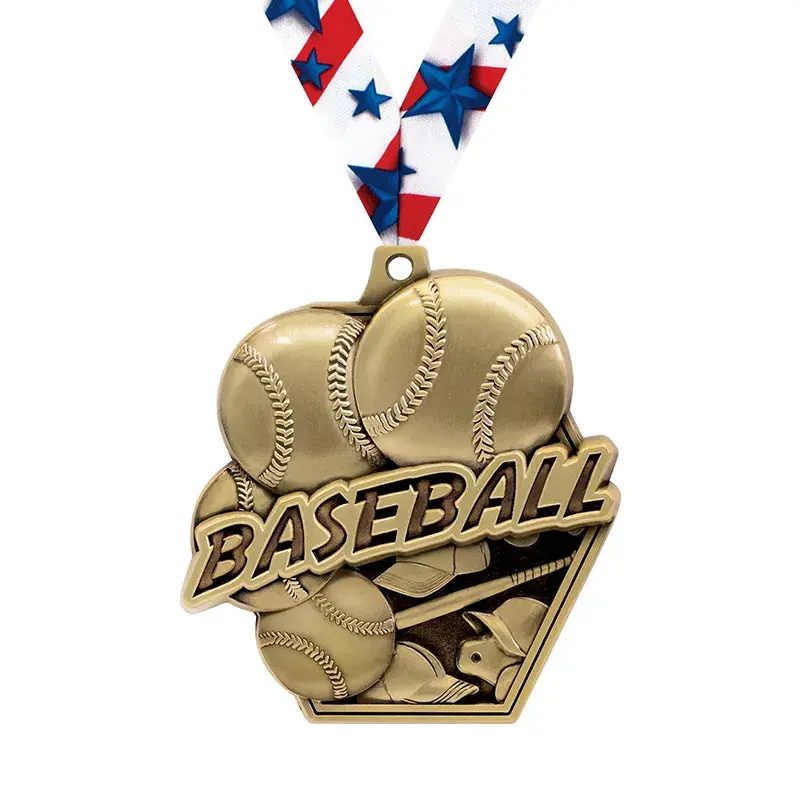
The mistake adults make most often is going too small and too subtle. A restrained, tasteful 35mm medal with a muted antique finish is a sophisticated object that a nine-year-old will not care about. A 45mm medal with a bright symbol and a color they can name is what gets shown to a parent.
That does not mean abandoning quality. It means accepting that a child’s idea of quality is different from an adult’s, and designing for the wearer.
Color and Symbols by Age
Age changes what a child responds to, and it changes quickly.
| Age | Color preference | Symbol that works | Avoid |
|---|---|---|---|
| 4-6 | Bright primaries, high contrast | Simple animal, star, ball, smiley | Abstract shapes, fine text |
| 7-9 | Bright plus team color | Sport equipment, mascot, number | Detailed scenes |
| 10-12 | Team colors, two-tone | Sport-specific icon, position | Babyish imagery |
| 13-15 | Team colors, darker tones | Sport icon, achievement motif | Anything cutesy |
| 16-18 | Muted, mature palette | Sport icon, school mark | Childish color schemes |
Two rules emerge from that table. First, the symbol must be nameable. A child who can say “that’s my basketball” has a relationship with the medal. An abstract design does not produce that.
Second, the cutesy trap is real and it bites around age ten. A design that works beautifully for a seven-year-old will embarrass a twelve-year-old. If your league spans that range, consider two designs rather than one — the tooling cost is the price of not making half your players feel patronized.
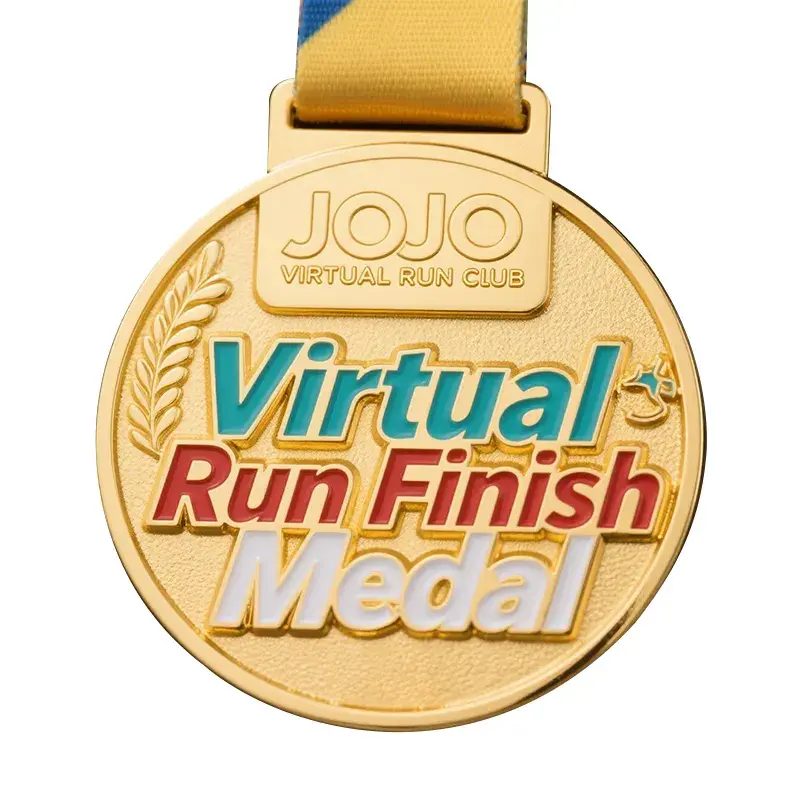
Color is also where you get the most effect for the least cost. Soft enamel fills two to four colors cleanly with a 0.3mm minimum, which is enough to produce something vivid without pushing up the price. Going past four colors adds cost and production time with diminishing visual return. Our medal materials guide explains the enamel specifications.
Size, Weight, and Safety
This is the section that matters most, because it is both a design question and a safety one.
| Age | Size | Weight | Edge treatment |
|---|---|---|---|
| Under 6 | 35-40mm | Light | Rounded, deburred |
| 6-8 | 40-45mm | Light | Rounded, deburred |
| 9-12 | 45-50mm | Light to mid | Standard |
| 13-15 | 45-55mm | Mid | Standard |
| 16-18 | 50-60mm | Mid | Standard |
Two hard safety points:
Edges. Die-cast parts come out of the mold with burrs. Our twelve-step process includes deburring and polishing before plating specifically to remove them. For a medal going around a young child’s neck, that is a safety step, not a finishing touch. Confirm your manufacturer does it.
Ribbon and attachment. Standard ribbon is 860-900mm long and 20-30mm wide. For under-8 age groups, consider a shorter length and a safety or breakaway clasp. It is an inexpensive specification and it is the one attachment choice with a real physical safety dimension. Our kids medals safety and design guide covers the full safety picture.
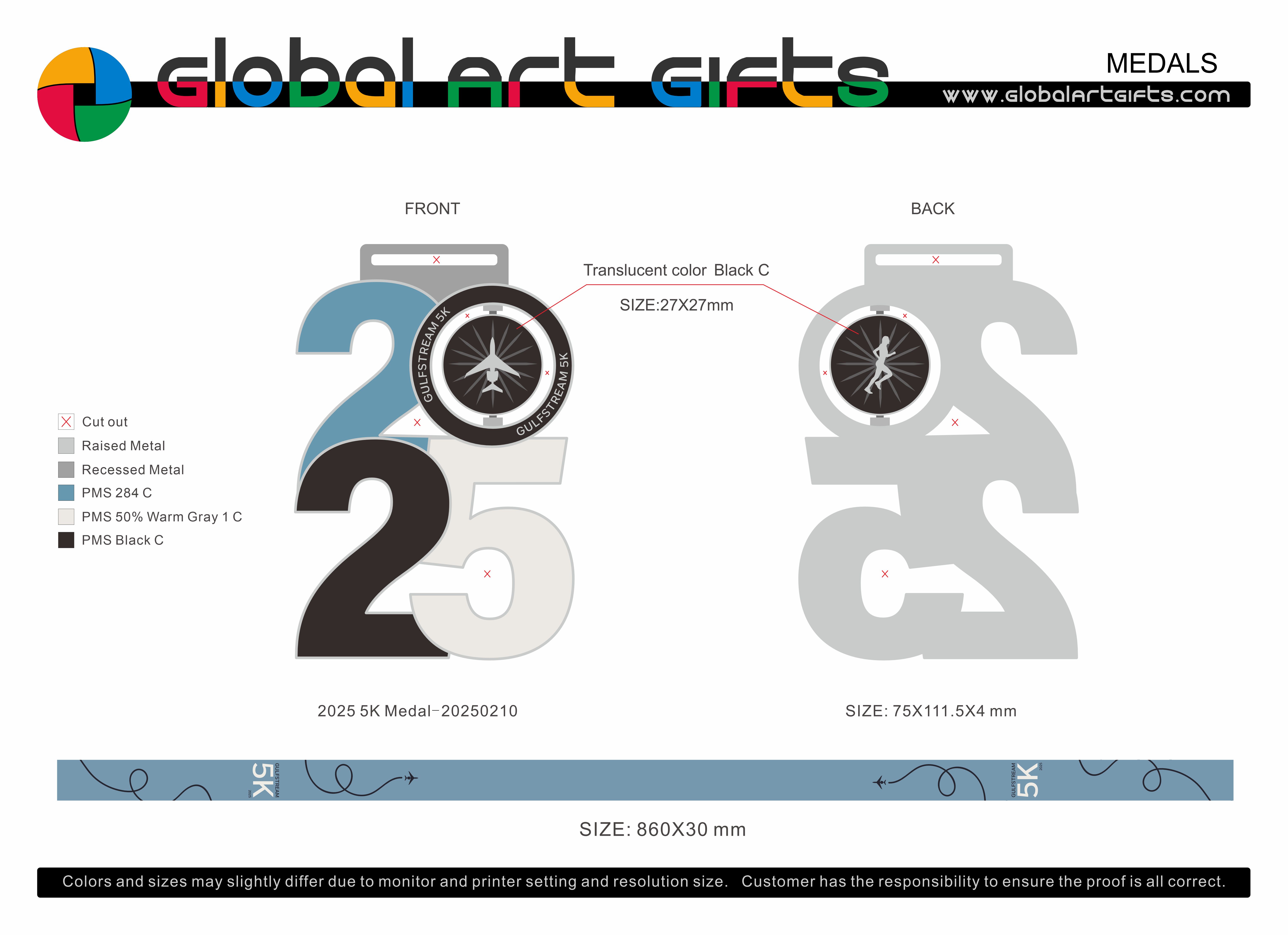
For under-six groups, we generally steer leagues away from spinner and LED types. They introduce small moving parts and, in the LED case, a battery — neither of which belongs on a piece worn by a small child at play.
Personalization That Means Something
A child’s response to a medal changes markedly when their name is on it.
| Personalization | Effect on a child | Cost impact |
|---|---|---|
| Their name | High — it becomes theirs | Small per piece |
| Their number | High, especially ages 9-14 | Small per piece |
| Team name | Moderate — reinforces belonging | Low if in the mold |
| Sport and season | Moderate | Low if in the mold |
| Their position | High for team sports | Small per piece |
| Just the year | Low on its own | Low |
The rule for keeping this affordable: cast what appears on every medal, and engrave what varies. A league crest, sport icon, and season should be in the mold. A child’s name and number should be laser engraved afterward. That split is what lets one physical design become hundreds of individualized pieces without multiplying tooling.
Laser engraving handles small text at high volume well. If you have 300 players and want each name engraved, plan for that step in your timeline — it happens after production and before shipping.
What Adults Overthink
Four things that generate a lot of discussion and very little difference for the wearer:
Detail density. Adults want a full illustrated scene. Children want one bold, nameable symbol. The detailed scene fills in at production thickness and reads as mush. Our design guide covers what survives at medal scale.
Prestige finishes. An antique finish is a considered adult aesthetic. For young children, bright enamel in a clear color is more effective. Save the antique finish for the older age groups.
Perfect symmetry. Children do not audit the design. A slightly playful asymmetric layout often lands better than a textbook-balanced one.
Weight as value. Children like a solid medal, but a genuinely heavy 70mm piece is uncomfortable on a small neck and, past a point, a safety consideration rather than a reward.
Our minimum is 100 pcs per design, so a single large team can order direct, and we hold tooling on file so a league can reuse the same design season after season with only the year changed. Production runs 7-15 days after sample approval, with sampling at 7-10 days and a proof back within 24 hours of artwork. Volume pricing for league-size orders is on our bulk custom medals page.
If your league is designing a youth medal, send us the age range and player count and we will suggest a design direction and quote it.
Data to confirm: Confirm current MOQ, ribbon length options, and safety fitting availability with the factory before finalizing a youth order, as age-appropriate safety conventions vary by market.
FAQ
What do kids like most in a sports medal? Bright color, a bold raised symbol they can name, and enough size to feel important. Personalization with their name or number has an outsized effect relative to its cost.
What size medal is right for a child? 35-40mm for under-6s, 40-45mm for ages 6-8, 45-50mm for 9-12, and 45-55mm for teenagers. Keep the piece light and confirm the factory deburrs and polishes the cast edges.
Are spinner medals safe for young children? We do not recommend them for under-6s. They introduce small moving parts. Spinners suit older children where the mechanism relates to the sport.
Should kids’ medals have their names engraved? Yes, where budget allows. Having their own name on the medal changes how a child responds to it, and laser engraving is a small per-piece cost. Plan for the extra step in your timeline.
Is one design enough for a league spanning ages 5 to 15? It can work if the design is a bold, neutral symbol rather than something cutesy. If your league spans a wide range, two designs is usually better — a design for younger players and one for teenagers, since what works at seven embarrasses at twelve.
How far ahead should a youth league order? Start 8-10 weeks before the season ends. Design proofs come back within 24 hours of artwork, sampling runs 7-10 days, and production runs 7-15 days after approval. Engraving names adds a step.
See also: enamel-filled die-cast medals — our hard enamel medal line: Pantone colour matching, 0.3 mm minimum fill and 100-piece minimum.