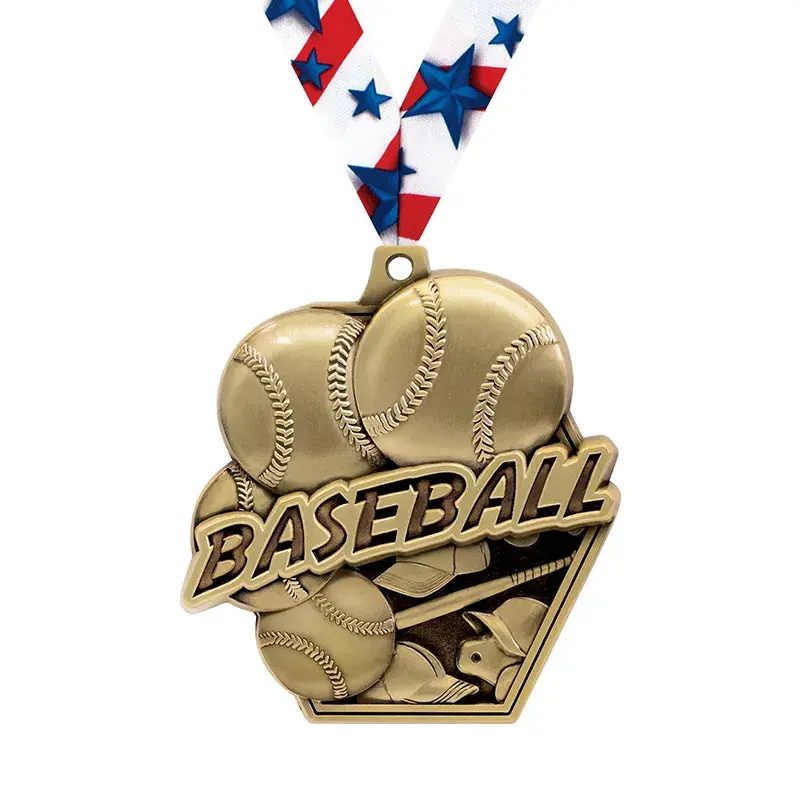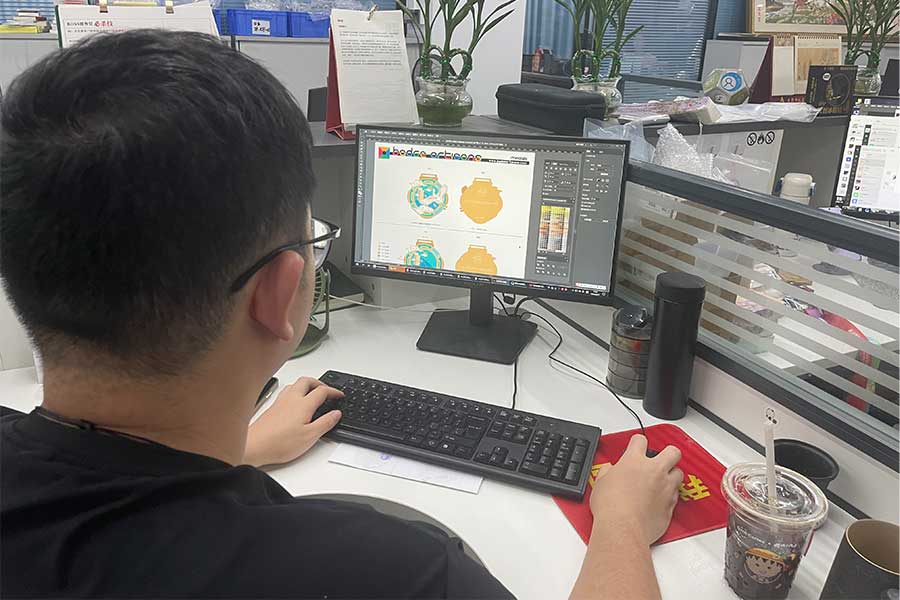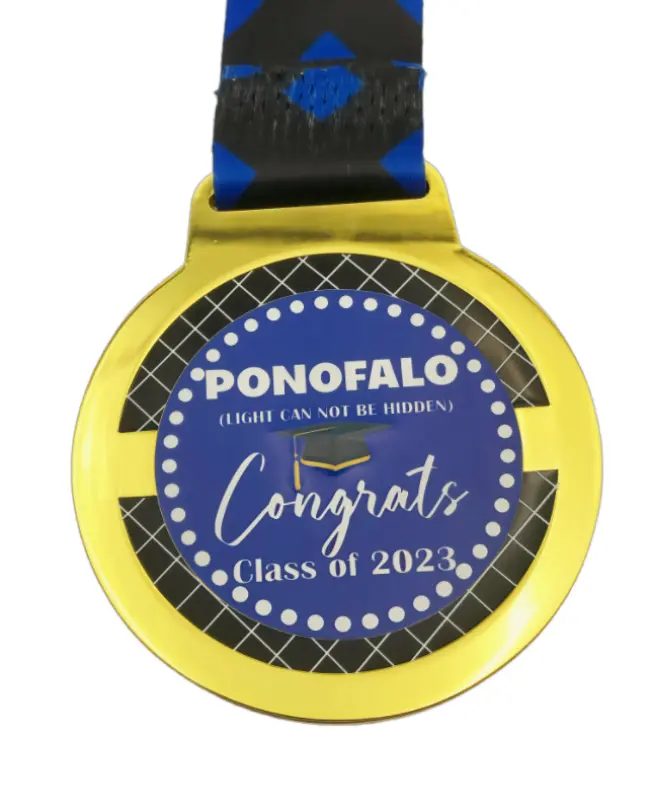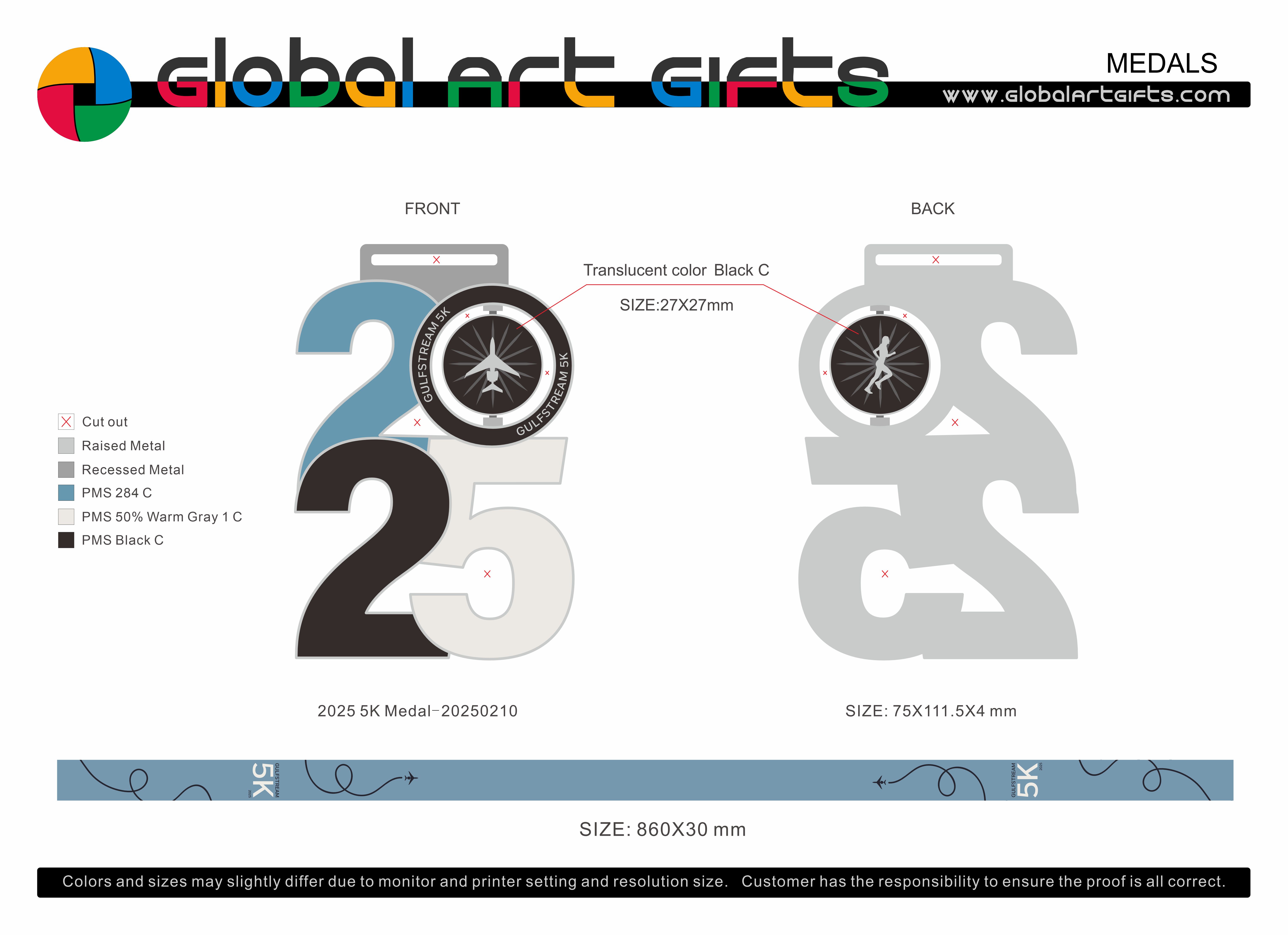
“Custom medals for awards” is a phrase that hides a decision. Before you can price a medal, you have to choose its type — and type means material, plating, enamel, and shape all at once. We cast custom medals in our Huizhou factory every day, for running clubs, school boards, and corporate recognition programs. Here’s how we walk a buyer through the choice.
What we’ll cover:
- The five award medal types and who each one actually suits
- How material and finish change the perceived value of the same design
- Which medal shapes work for trophies, ribbons, and display frames
- Where buyers overspend without getting a better medal
[Image: race-medals.jpg — Custom award medals in gold, silver, and antique bronze finishes]
The Five Award Medal Types, and Who Each Suits
Most buyers arrive asking about “a medal.” What they need is a decision framework, because the same event can justify five different products. The question isn’t which medal is better. It’s which one matches how your recipients will treat it.
| Type | Right for | Typical size | Wear or display |
|---|---|---|---|
| Sports medal | Leagues, tournaments, season-end banquets | 50–65mm | Worn, then stored |
| Race finisher medal | 5K, marathon, triathlon | 60–80mm | Worn at the finish line, displayed after |
| Achievement medal | School awards, academic honors | 50–60mm | Presented on stage, kept in a box |
| Recognition medal | Employee milestones, service awards | 60–70mm | Displayed on a desk or shelf |
| Participation medal | Youth sports, mass-participation events | 45–55mm | Worn, then usually given away |
The size ranges aren’t rules, they’re patterns we see hold up across thousands of orders. A race finisher medal runs large because it gets photographed on the runner’s chest and needs to read from a distance. A participation medal runs smaller because the volume is high and the per-piece budget is usually tight.
The type you pick also decides what happens after the event. A recognition medal meant for a desk gets ordered with a display stand or a velvet box. A participation medal for a kids’ fun run doesn’t need either. Get the type right first and half the spec writes itself.
School competitions that award places across many events — academic meets, speech and debate, district athletics — sit slightly outside that table. They need place medals for the podium, ribbons for heats and participants, and often a pin for the letter jacket, all in school colors and all delivered against a fixed meet date. We build those combined orders on our UIL medals and meet ribbons program, which covers the whole meet on one purchase order.
[Image: sports-medals.jpg — A range of custom sports medals in different sizes and finishes]
Material: What Sets the Floor on Cost and Feel
Material is the first real decision because it sets both the price floor and how the medal feels in the hand. We work in five metals, but three cover almost every award medal order.
| Zinc Alloy (Die-Cast) | Brass (Stamped) | Iron (Stamped) | |
|---|---|---|---|
| Right for | 3D detail, cutouts, complex shapes | Weight and heritage feel | Simple flat shapes, large volume |
| Density | 6.7 g/cm³ | 8.9 g/cm³ | 7.8 g/cm³ |
| Process | Die-casting, 88-ton press | Stamping | Stamping |
| 3D relief | Excellent | Low | Low |
| Relative cost | $$ | $$$ | $ |
Zinc alloy is our default for award medals, and the reason is technical, not commercial. Zamak 3, 5, and 7 melt at 385°C and flow into a mold cavity easily. That flow is what lets an 88-ton die-casting machine capture fine 3D relief — your emblem with real depth, cutouts, and lettering you can feel with a thumb — in a single shot. No other metal gets you sculpted detail this cheaply.
Brass is heavier at 8.9 g/cm³ and reads more upscale. But it’s stamped, not cast, so it can’t hold deep relief. You’re paying for weight and warmth, which is why we steer brass toward military and commemorative pieces rather than a league medal.
Iron is the budget answer. Cheapest of the three, fine for flat or simple shapes at high volume. The trade-off is that if the plating wears through, iron rusts. For an award that sits in a display case, that’s rarely a problem. For something handled daily, think twice.
If you’re weighing all five metals including aluminum and stainless steel, our medal materials guide breaks down each one.
Plating and Enamel: Where Perceived Value Comes From
Two medals can share the same design and the same zinc alloy, and still read as completely different products. Plating and enamel are why. Buyers usually assume the antiques cost more. They don’t.
| Imitation Gold | Nickel (Silver) | Antique Bronze / Tin | |
|---|---|---|---|
| Right for | 1st place, classic award | 2nd place, silver tier | Heritage, military, vintage events |
| Look | Bright mirror gold | Bright silver | Dark, aged, matte |
| Application | Full electroplating | Full electroplating | Electrophoresis or barrel plating |
| Relative cost | $$ | $$ | $ |
A mirror finish is real electroplating, built tank by tank. We degrease and strip the raw casting, plate a base layer of alkaline copper for roughly 500 seconds, then run acid copper for 20 to 60 minutes to build the shine, and only then lay the final color. That’s a genuine metal layer on top of the casting.
Antique bronze and antique tin take the cheaper road. Electrophoresis and barrel plating coat the recesses in a single pass, which is why a vintage look can actually reduce your finishing cost. The aged surface also hides scratches and handling marks far better than a bright mirror, which matters for a medal that gets worn and pocketed.
Enamel is the colored fill sitting inside your design’s recessed areas, and this is where color count quietly drives the invoice:
| Soft Enamel | Imitation Hard Enamel | |
|---|---|---|
| Right for | Colorful awards, texture you can feel | Smooth, ceramic-like surface |
| Min. fill width | 0.3mm | 0.5mm |
| Surface | Recessed, raised metal lines | Ground flat and polished |
| Relative cost | $ | $$ |
Soft enamel fills recesses as narrow as 0.3mm and cures slightly sunken. Imitation hard enamel needs a wider 0.5mm recess, goes on thicker, and then gets ground flat and polished to a ceramic-like top. You pay more for that surface, and for the extra labor.
Because every color is a separate fill-and-bake cycle, color count compounds. A four-color design means four passes through filling and baking, plus added handling at each step. If you want to cut cost without the medal looking cheaper, dropping one color usually does more than switching metal. Our enamel medals page covers the full color range.
[Image: process-07-plating.jpg — Award medals travelling through a plating line for a bright gold finish]
Shape and Attachment: Matching the Award to How It’s Presented
Shape is the decision buyers make last and regret most often. A shape that looks striking in a mockup can fight the ribbon, the box, or the display frame it’s meant for.
Three patterns hold up well:
- Round — the safe default. Balances on a ribbon, fits every standard box, photographs cleanly. If you have no strong concept, go round.
- Custom silhouette — your logo or mascot cut as the medal’s outline. This is where die-casting earns its keep, because zinc alloy handles undercuts and thin sections that stamping can’t. Add depth and it stands out on a crowded results table.
- Rectangular or shield — reads formal and institutional. Good for academic and service awards, less so for a mass-participation fun run.
Attachment follows shape. A standard ribbon loop takes a ribbon up to 30mm wide, which covers nearly every event. A medal headed for a display hanger wants the loop centered and the medal balanced so it hangs straight rather than tilting. And a medal going into a velvet box or a presentation frame should be sized to fit the insert, not ordered first and housed later.
We’ve had buyers come back to reorder after discovering their 80mm finisher medal wouldn’t fit the box they’d already bought. Size the medal and its housing together. Our medal packaging page lists standard insert sizes, and our display hangers page covers what hangs well.
[Image: custom-shaped-medals.jpg — Custom silhouette medals cut to a mascot outline]
Where Award Medal Buyers Overspend
Three patterns show up again and again in quotes we field. None of them buy you a better medal.
Choosing brass when zinc with good plating would do. If your design has 3D relief, brass can’t reproduce it anyway. You’d be paying a metal price increase for a design the metal can’t deliver.
Adding colors that don’t carry information. Each extra enamel color is a fill-and-bake pass. If the fifth color is a background tone nobody notices, cut it and put the savings into plating.
Ordering below the setup threshold. Loading the mold, mixing enamel, and warming the plating tanks costs roughly the same whether you run 100 pieces or 10,000. Our minimum is 100 pieces per design, and our floor runs over 30,000 pieces a day. Pushing a small order into the low hundreds spreads that setup thinner and drops your per-piece price — often enough to fund the upgrade you were debating.
That’s the honest version of the decision. Pick the type that matches how the medal will be used, take zinc with a clean plating, keep the enamel to colors that do work, and spend your remaining budget on quantity rather than a fancier metal.
We’ve been running this line since 2010, every order passes a three-stage QC check, and production ships in 7 to 15 days after you approve the sample. If you’d like a quote and a free design proof — we turn those around within 24 hours — start with our contact page.
[Image: factory-workshop-03.jpg — Medal production floor with multiple die-casting and finishing lines]
FAQ: Custom Medals for Awards
What’s the most common type of award medal? The sports medal and the race finisher medal are the two highest-volume types we produce. Sports medals typically run 50 to 65mm and suit leagues and season-end banquets. Race finisher medals run larger, 60 to 80mm, because they’re photographed on a runner’s chest and need to read from a distance.
Which material is best for an award medal? Zinc alloy suits most award medals. Zamak 3, 5, and 7 melt at 385°C and flow easily into a mold cavity, so an 88-ton die-casting press can produce fine 3D relief in one shot — the cheapest route to sculpted detail. Choose brass when weight and heritage feel matter more than relief, and iron when flat shapes and budget lead.
Is antique finish more expensive than bright gold? No, and this surprises most buyers. Bright imitation gold and nickel need full electroplating, including roughly 500 seconds of alkaline copper base and 20 to 60 minutes of acid copper. Antique bronze and tin use electrophoresis or barrel plating in a single pass, so a vintage look can cost less than a mirror finish.
Does adding colors really change the price? Yes. Every enamel color is a separate fill and bake cycle, so a four-color design requires four passes with handling between each. Dropping an unnecessary color is one of the most effective ways to reduce per-piece cost without making the medal look cheaper.
What’s the minimum order for custom award medals? Our minimum is 100 pieces per design. Because setup costs are roughly fixed, unit price falls as quantity rises — pushing an order from 100 into the low hundreds is usually the single biggest lever on per-piece price.
How fast can I get a quote and a sample? We send a quote within 24 hours and a free design proof the same day, with unlimited revisions. A sample takes 7 to 10 days, and full production ships in 7 to 15 days after you approve it.
Recommended Reading
- Types of Custom Sports Medals: Which Fits Your Event? — the sports medal decision in full
- Zinc Alloy vs Brass Medals: Which Material Is Right for Your Event? — material choice explained side by side
- Custom Medal Pricing: Mold Fees, Quantity & Cost Drivers — how mold and quantity set your unit cost
Data to confirm: size ranges and relative cost tiers reflect manufacturing direction rather than a fixed price list. Actual per-piece pricing depends on artwork complexity, color count, and order quantity.
Related reading: spinning medals for sports programmes — medals with a rotating centre, including 3D inner elements and custom plating.