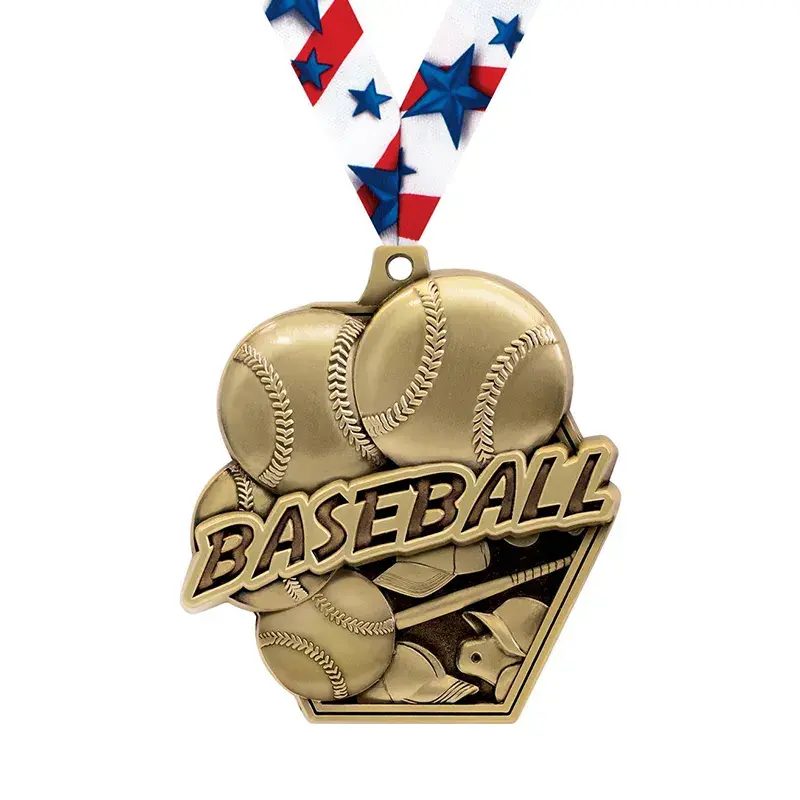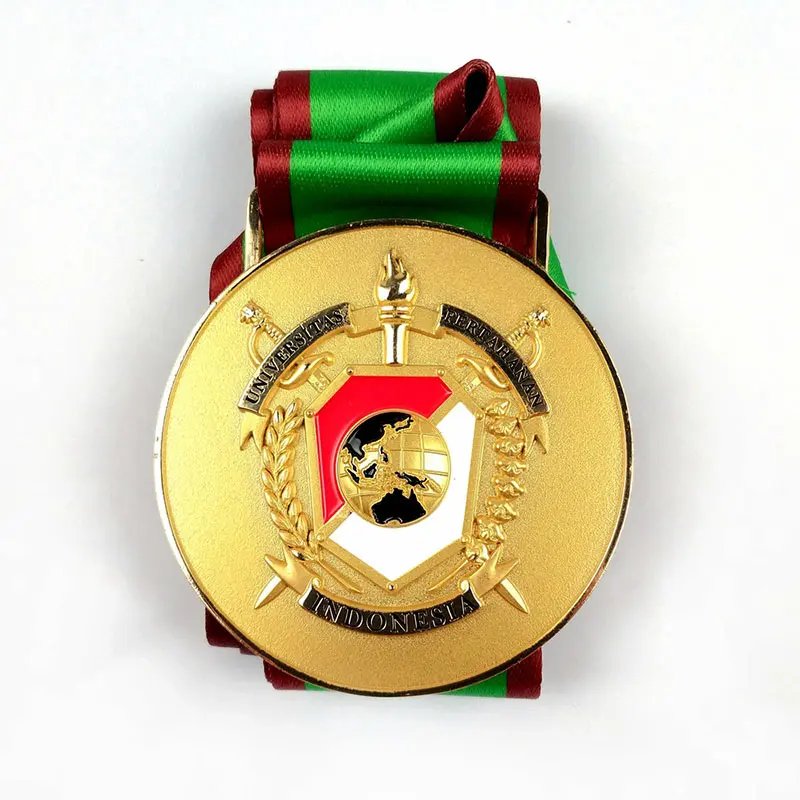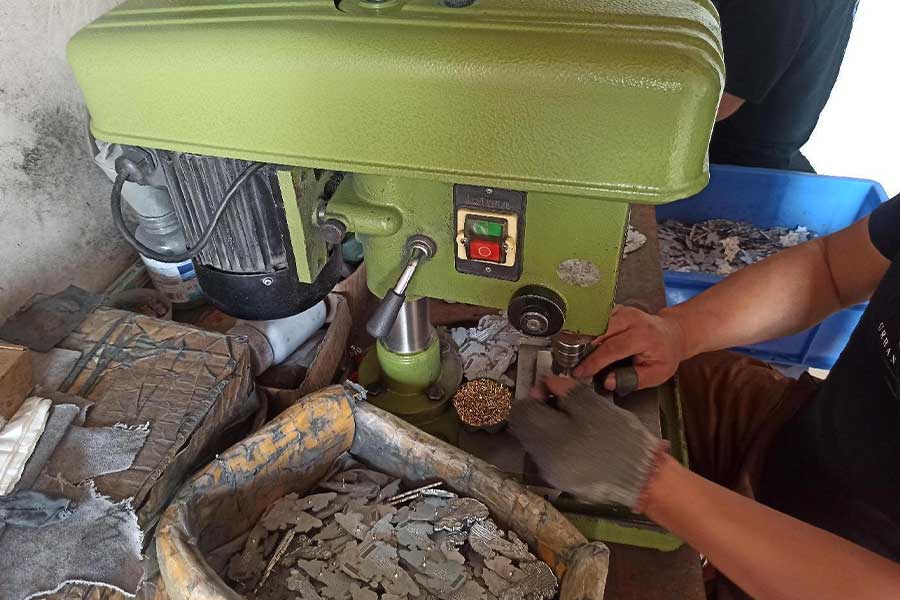
Resin medals show up in the same search results as custom metal medals and usually at a lower price. That lower price is real, and so are the trade-offs. Whether resin is right depends on what the medal has to do.
We manufacture metal medals — die-cast zinc, brass, and stamped iron — so we do not sell resin. That means we can be straightforward about where resin wins. For the broader picture, see our medal materials guide.
What we’ll cover:
- What resin medals actually are
- Cost comparison at different quantities
- Weight, feel, and how recipients read each
- Detail, durability, and where each fails
- Which events suit which material
What Resin Medals Are
Resin medals are cast in a mold from a polymer resin, then finished — usually painted, sprayed, or given a metallic coating to imitate the look of metal.
| Attribute | Resin | Metal (die-cast zinc) |
|---|---|---|
| Base material | Polymer resin | Zinc alloy, brass, iron |
| Production method | Cast in a flexible or rigid mold | Die-cast on a press |
| Weight | Light | Mid to heavy |
| Metallic look | Applied coating | Actual plated metal |
| Tooling cost | Low | Higher — steel mold |
| MOQ | Often very low | 100 pcs per design |
The key difference is what gives the medal its appearance. A metal medal is plated — the gold or silver is actual deposited metal. A resin medal gets a metallic finish applied on top of a polymer surface, which is why the two feel different in the hand even when they look similar in a photograph. Our materials overview covers every option in between.
We run die-casting on an 88-ton press. Zinc melts at 385°C and flows into a steel mold, which is what gives a metal medal its weight and the fidelity of its relief. Resin casting is a different process with different limits. Our manufacturing process covers the die-casting sequence.
Cost at Different Quantities
The cost relationship between the two materials flips depending on quantity.
| Quantity | Resin | Metal |
|---|---|---|
| 1-20 pcs | Much cheaper | Tooling dominates; expensive |
| 20-100 pcs | Cheaper | Tooling still significant |
| 100-500 pcs | Comparable | Tooling amortizing |
| 500-1,000 pcs | Similar | Competitive, better perceived value |
| 1,000+ pcs | Sometimes cheaper | Close, with better durability |
At very low quantities, resin is clearly cheaper because tooling is minimal. That makes it a reasonable choice for a small one-off event where a metal mold cannot be justified.
As quantity rises, the gap narrows. Metal tooling is a fixed cost spread over more pieces, and at high volumes the per-piece difference often shrinks to the point where the material choice stops being a cost decision and becomes a quality one.
Our minimum is 100 pcs per design, which is exactly the range where metal starts to compete. We also hold tooling on file, so a recurring event amortizes tooling across years and the per-unit cost drops further. Our bulk custom medals page explains how volume affects pricing.
Weight, Feel, and Perception
Weight is where the two materials diverge most in the hands of a recipient, and it matters more than buyers expect.
| Attribute | Resin | Metal |
|---|---|---|
| Weight in hand | Light | Substantial |
| Perceived value | Lower | Higher |
| Sound on a table | Dull | Metallic |
| Temperature | Warm to touch | Cool |
| Wearing comfort | Very comfortable | Heavier on the neck |
| Shelf presence | Modest | Distinct |
Recipients read weight as value. A heavy medal in the hand communicates something that a light one does not, and that perception holds even when the two medals look equally good in a photograph.
That is not an argument against resin — it is an argument for choosing resin deliberately. If the medal is a participation token for a fun run, light weight is a comfort advantage. If it is a championship award, light weight works against you.
Detail and Durability
| Aspect | Resin | Metal |
|---|---|---|
| Fine detail | Good in the cast, softens in finishing | Excellent with deep relief |
| 3D relief depth | Moderate | Deep — 2mm minimum wall |
| Edge sharpness | Softer | Crisp |
| Impact resistance | Can crack or chip | Dents rather than shatters |
| Surface durability | Coating can wear or peel | Plating can lift if base is poor |
| Longevity | Years | Decades |
| UV exposure | Coating may fade outdoors | Metal stable; ribbon fades first |
Metal has the advantage on relief depth and edge definition. Zinc flows into a steel mold and holds the shape, which is why a die-cast medal can carry raised lettering and landmarks that a resin cast cannot reproduce as sharply.
Both materials have a coating that can fail. For metal, the risk is plating lifting, which is why our line runs an alkaline copper base at about 500 seconds plus acid copper for 20-60 minutes before color. For resin, the risk is the metallic finish wearing or peeling off the polymer surface. Finishes are compared in our plating guide.
Metal also ages better as an object. A dented metal medal still reads as a medal; a cracked resin one does not.
Which Events Suit Which
| Event type | Better choice | Why |
|---|---|---|
| School sports day | Resin or metal | Resin works if budget is tight |
| Small one-off event | Resin | Tooling cost is low |
| Marathon / 5K finisher | Metal | Weight and durability for a keepsake |
| Championship award | Metal | Perceived value matters |
| Recurring annual event | Metal | Tooling amortizes, better value |
| Very low budget, high volume | Resin | Only if cost is the deciding factor |
| Outdoor long-term display | Metal | More UV and impact resistant |
| Fun run / charity walk | Either | Depends on whether it is kept |
The clearest dividing line is whether the medal is meant to be kept. If recipients will put it on a shelf or a wall for years, metal is the better investment. If it is a token handed out and largely not retained, resin’s lower cost is rational.
The second line is whether the event repeats. A recurring event amortizes a steel mold over many years, which makes metal’s economics much stronger than a single-order comparison suggests.
If you are weighing resin against metal for a specific event, send us the design, quantity, and whether the event recurs — we will tell you honestly what the metal option costs and let you compare directly.
Data to confirm: Confirm current MOQ, tooling charges, and material availability with the factory before quoting, as zinc and resin supply conditions move independently.
FAQ
Are resin medals cheaper than metal medals? At low quantities, yes — resin tooling is much cheaper. The gap narrows as quantity rises, because metal tooling is a fixed cost spread over more pieces. At 500-1,000 pcs the two are often comparable.
Do resin medals look like metal? They can look close in a photograph because the metallic finish is applied on top. In the hand they differ — resin is light and warm, metal is substantial and cool. Recipients read the weight difference as a difference in value.
Which lasts longer, resin or metal? Metal. A resin medal’s applied coating can wear or peel and the material can crack on impact. A metal medal dents rather than shattering and holds its shape for decades. Metal also handles UV exposure better, though its ribbon will fade.
Can resin medals have 3D relief? Some, but not as sharply as die-cast metal. Zinc flowing into a steel mold captures fine raised lettering and deep relief that resin casting cannot reproduce as crisply.
What is the minimum order for metal medals? 100 pcs per design at our factory. That is close to the range where metal’s tooling cost amortizes enough to compete with resin, and we hold tooling on file so recurring events reuse the mold.
Which should I choose for a school sports day? If budget is the priority and the medals are participation tokens, resin is reasonable. If the medals are awards students will keep, metal is the better investment — and consolidating the order brings the per-piece cost down toward resin levels.
Related product page: medals with a rotating centre — medals with a rotating centre, including 3D inner elements and custom plating.
Also relevant: custom acrylic medals — lighter than die-cast metal and more durable than resin, a middle path when resin feels too cheap and metal feels too heavy.