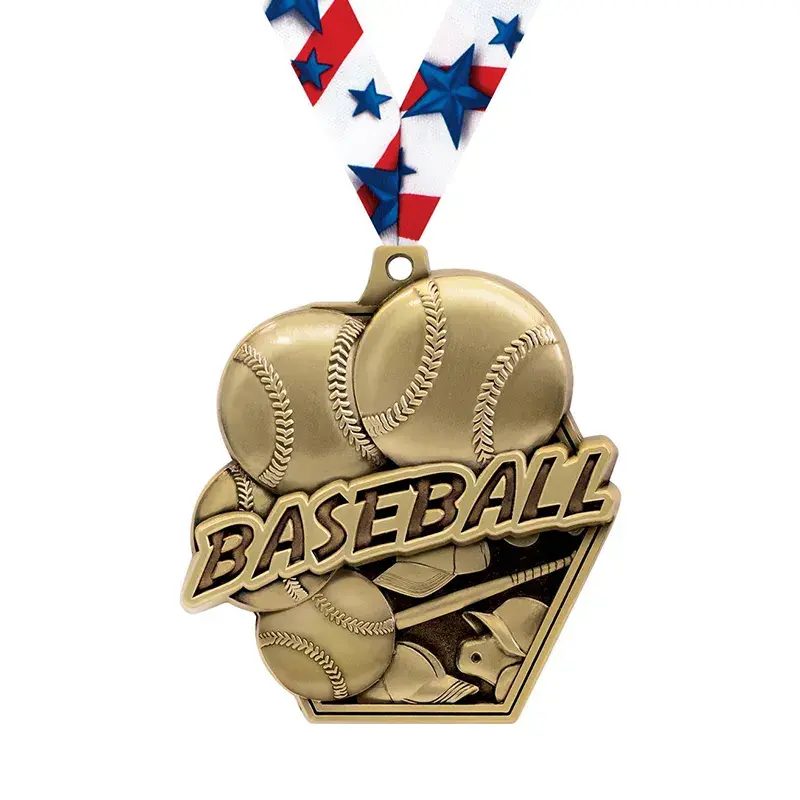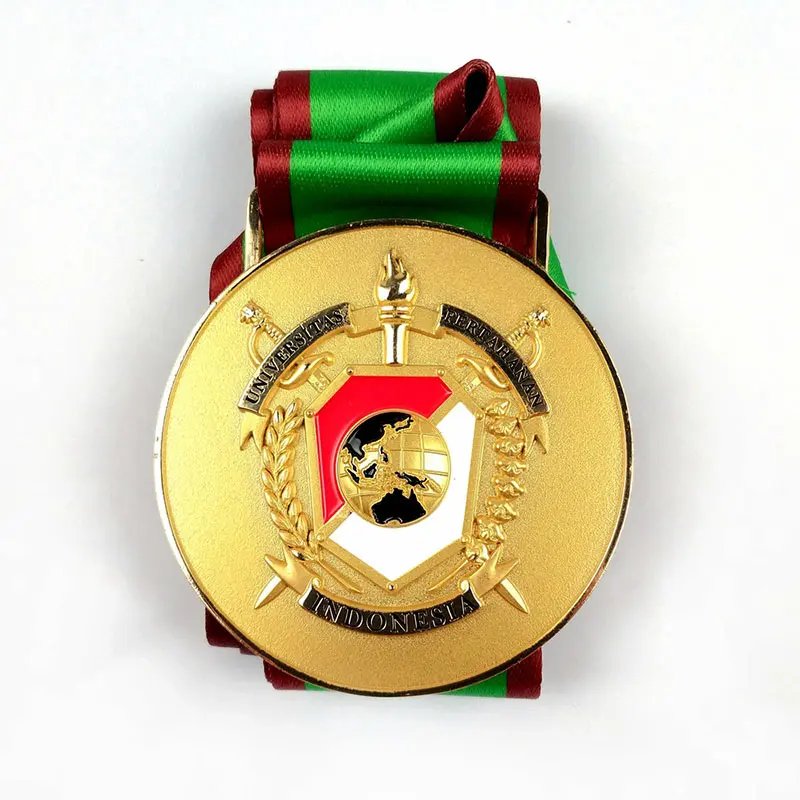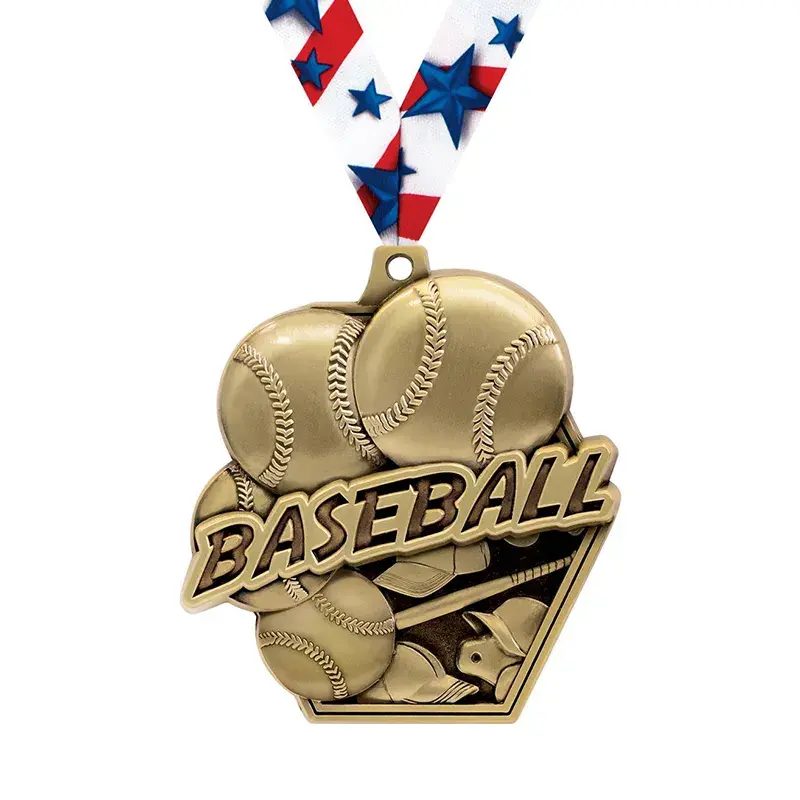
Most spec sheets show a color swatch and stop there. Buyers see “antique gold” or “two-tone” and assume it is a paint choice. It is not. The finish on a custom medal is a process decision, and the process decides the cost, the durability, and whether the color is still there in three years. If you want the product overview first, browse our custom medals range; if you want to know what you are actually paying for when you pick a finish, read on.
Three Finish Families, Three Different Cost Curves
Every medal color you can name falls into one of three families: electroplating, electrophoretic coating (often called “spray antique” in the trade), and spray paint. They are not interchangeable. The cheapest is electrophoresis, then spray paint, then electroplating sits at the top of the cost curve. That ordering surprises buyers who assume “shiny metal” is the cheap option, but electroplating is the most labor- and chemical-intensive of the three.
| Finish family | How color is applied | Typical look | Relative cost | Best when |
|---|---|---|---|---|
| Electroplating | Metal ions deposited on the part by electric current | Mirror or matte real metal | Highest | Premium pieces, metallic color fidelity, long wear |
| Electrophoresis | Charged paint particles drawn onto the part | Antique, semi-matte, uniform | Lowest | Antique tones, large batches, cost-sensitive runs |
| Spray paint | Liquid color atomized onto the surface | Any solid color, including non-metallic | Middle | White, blue, and colors plating cannot produce |
We detail the full manufacturing path in our medal manufacturing process guide, but the finish is where most of the visible quality — and most of the variance between suppliers — lives. A buyer comparing two quotes for the “same” antique gold medal may be comparing an electroplated antique against an electrophoretic antique, and those are different products at different prices.
Electroplating: Nine Steps, Not One Dip
The single biggest misconception is that plating is “dip the medal in gold.” It is a sequence, and every step exists to make the next one adhere. We run the body through nine stations:
| # | Step | What happens | Typical parameter |
|---|---|---|---|
| 1 | Racking | Parts hung on jigs so current reaches every face | Manual, per-part fixture |
| 2 | Degreasing | Wax, oil, and release residue removed | Chemical bath |
| 3 | Ultrasonic cleaning | Residual polish compound lifted from recesses | Ultrasonic tank |
| 4 | Alkaline copper | Thin adhesion layer bonds to the zinc | About 500 seconds |
| 5 | Acid copper | Builds thickness and levels the surface | 20–60 minutes |
| 6 | Color plating | Gold, nickel, copper, rose gold, chrome, black nickel, platinum | Per finish |
| 7 | Tunnel oven dry | Fixes the deposit and drives off moisture | 100°C for 40 minutes |
| 8 | Seal coat | Clear lacquer over gold/copper tones to slow oxidation | Spray |
| 9 | Unracking | Parts come off the jig and go to inspection | Manual |
The alkaline copper step is the one most cut-rate shops rush. A thin, tightly bonded layer grips the zinc; the acid copper that follows does the leveling and brightness. Shorten either and the color metal sits on a surface it does not truly adhere to — which is the mechanism behind most “the plating peeled off” complaints. Step 7, the tunnel oven at 100°C for 40 minutes, is not optional either: it cures the deposit so it does not sweat or dull in storage. Our three-stage QC catches adhesion and coverage issues before shipment, because a finish defect is cheaper to fix at the line than after packaging.
Mirror vs Matte Electroplating
Within electroplating, the first split is mirror (bright) versus matte (satin). Mirror finishes — imitation gold, nickel, red copper, rose gold, chrome, black nickel, white K — are polished to reflectivity and read as “premium new.” Matte finishes are the same metals processed to a non-reflective field, often used behind a polished figure for contrast, and they hide micro-scratches better than mirror. The matte look is not less work; it is a different plating and texture route, and on a medal with deep relief it is usually the more flattering choice because it lets the polished figure pop.
Antique Finishes: Darkening in the Recesses
Antique finishes — antique bronze, antique tin, antique red copper, matte black — are usually achieved by plating a base metal and then running it through an antiquing step: a blackening pass followed by a “sweep” that leaves darkening only in the recesses while the raised areas stay bright. This is where what a medal is made of matters: the relief has to be deep enough for the darkening to read. On a flat design, an antique finish looks like a plain dark coat rather than the aged-metal effect it is meant to be.
Two-Tone: Two Passes, One Design
Two-tone is the finish buyers ask for most but describe least precisely. The most common version is imitation gold plus nickel — one area bright gold, the other bright nickel, separated by the design’s metal lines. It is two plating passes with a masking step between them, not a single mixed bath, which is why two-tone carries a small premium over single-tone. Done well, it turns a one-color medal into something that reads as designed rather than stamped. Done poorly — without proper masking — the two metals bleed across the division line and the piece looks like a defect.
Vacuum Plating: The Seven-Color Novelty
Vacuum plating produces the seven-color (rainbow) look some event medals want. It deposits a thin film under vacuum that interferes light into color. It is best reserved for novelty and souvenir pieces because the film is thinner than conventional plating and less resistant to handling. We offer it, but we are candid that it is a look, not a durable metal finish, and we steer commemorative or premium pieces toward real electroplating.
Electrophoresis: The Antique Workhorse
Electrophoretic coating is the low-cost way to get antique and semi-matte looks at scale. The sequence runs: degrease → blackening → dry → antique sweep → hanging → ultrasonic cleaning → electrophoresis coloring → tunnel oven dry. Because the color is a coating drawn onto the part by an electric field, it lands evenly on complex shapes that spray paint would miss, and it does so without the most expensive plating chemistry.
The trade-off is fidelity. Electrophoresis cannot reproduce the reflective depth of real metal plating, so it reads as “antique” or “painted metal” rather than “polished gold.” For a 5,000-piece school run where the budget is tight, that is usually the right call; for a chairman’s anniversary medal, electroplating earns its cost. The finish decision is therefore not “which looks best” in isolation — it is “which looks best at this budget and this volume.”
Spray Paint: When Plating Cannot Hit the Color
Spray paint exists for the colors plating physically cannot produce — white, blue, and other non-metallic solids, including exact brand colors. The process is straightforward atomization, but the restraint is in curing. Paint that is under-cured scratches; over-cured paint crazes. We cure spray-finished medals in a controlled oven window so the film sets without stress. Spray is also the route for spot color on top of a plated base — for example a gold medal with a blue area that plating cannot deliver — which is common on corporate recognition medals where a brand color has to appear exactly.
Why Electroplating Costs the Most
Three things drive the cost gap. First, chemistry: plating baths are expensive to maintain and the alkaline and acid copper steps consume real process time (about 500 seconds plus 20–60 minutes per rack). Second, the seal coat and the 100°C/40-minute tunnel cure add a finishing station spray paint skips. Third, yield: plating rejects show immediately and cannot be easily reworked, so the effective cost per good part is higher than the per-part labor alone suggests. This is why, when a buyer tells us “make it cheaper,” our first question is which finish they actually need — moving antique gold from electroplating to electrophoresis often removes the single largest variable cost without changing the visible design.
Matching Finish to Intent
| If the medal is… | Recommended finish | Why | Cost tier |
|---|---|---|---|
| A premium award, low volume | Electroplating, mirror or two-tone | Best metallic fidelity and wear | High |
| A large event run on budget | Electrophoresis antique | Cost-stable, even coverage | Low |
| A brand-color requirement | Spray paint over plated base | Hits exact non-metallic colors | Middle |
| A novelty or souvenir piece | Vacuum seven-color | Distinctive look, acceptable film life | Middle |
In our Huizhou factory we run all three families on the same 3#/5#/7# zinc alloy body, so the finish is a true last-stage decision — the same die-cast blank can become a mirror-gold presentation medal or an electrophoresis-antique participation medal depending only on the final pass. Across 15 years and 50+ countries, the finish question is the one we answer most often, and almost always the lever with the most unused savings in the quote.
Reading a Finish Quote Correctly
The most common quote mistake is comparing two “antique gold” medals as if they were the same product. They may not be. One may be real electroplating — a nine-step sequence ending in a seal coat and a 100°C tunnel cure — while the other is electrophoretic coating, which reaches an antique look at a lower cost by skipping the most expensive plating chemistry. Both can look similar in a photo, but they differ in wear and in price. Always ask which family the quoted finish belongs to before comparing numbers; our MOQ explained guide shows why the finish is usually the largest variable in the quote and how volume interacts with it.
Color Fill: Soft Enamel Versus Imitation Hard Enamel
Where color sits inside the metal, the fill method matters. Soft enamel needs a minimum fill position of 0.3 mm and sits slightly below the metal lines, giving the familiar recessed-color look. Imitation hard enamel needs about 0.5 mm of fill and is ground and polished flush, giving a smooth, glass-like surface. Both are applied after the body is cast and finished, and both add a curing step: spray-finished color is set in a controlled oven at 60–70°C for 60–90 minutes for a half cure, then at 100°C for 60 minutes for a full cure. Rushing that cure to save time is how colors craze or fail to bond — which is why we hold the cure window rather than compress it, and why it appears as a real, non-negotiable line in any honest schedule.
Durability by Finish Family
| Finish family | Wear resistance | Best use |
|---|---|---|
| Electroplating (mirror / two-tone) | Highest — real metal deposit, sealed | Premium, long-kept awards |
| Electrophoresis | Moderate — coated, not plated | Large antique runs, budget events |
| Spray paint | Moderate — scratches more than plating | Brand colors plating cannot hit |
| Vacuum seven-color | Lowest film life | Novelty and souvenir pieces |
This is why we steer commemorative and premium pieces toward real electroplating and reserve vacuum plating for souvenir looks. The finish decision is not “which looks best” in isolation — it is “which looks best at this budget, this volume, and this expected handling.” For brand-color requirements that plating cannot produce, spray paint over a plated base is the route, and it is common on corporate recognition medals where an exact color has to appear.
Common Finish Mistakes
Buyers most often err in three ways. First, assuming “shiny” is cheap — electroplating is the most process-intensive family, and a quote that promises mirror gold at electrophoresis prices is probably not electroplating. Second, specifying a two-tone without enough metal-line separation for the masking pass, which risks bleed across the division. Third, under-curing spray color to hit a date, which trades a permanent finish for a temporary one. None of these is a design failure; they are specification failures that a clear finish conversation prevents. Tell us the event date and the budget tier, and we will recommend a finish that hits both — our contact page is where that conversation starts, and our FAQ answers the most common finish questions directly.
Finish Choice and the Production Window
The finish you pick moves the production window as much as the count does, because each finish has a different process length. Electroplating carries the nine-step sequence — including the alkaline copper (~500 seconds), acid copper (20–60 minutes), and the 100°C tunnel oven for 40 minutes — plus a seal coat, so it occupies the line longer than electrophoresis, which skips the most expensive plating chemistry. A two-tone electroplated run adds a masking pass on top of that. This is a real, defensible difference, not a delay tactic, and it is why finish should be chosen with the date in mind, not just the look. Our production timeline lays out the separate clocks; the finish is the variable inside the production clock that buyers control but often forget to plan for. Matching the finish to both the budget and the calendar is the discipline that keeps the 7–15 day window honest rather than hopeful.
FAQ
What is the difference between antique gold and gold plating? Antique gold is a plated or electrophoretic finish that has been darkened in the recesses to read as aged metal, while plain gold plating is bright and uniform. Antique reads “heritage”; bright reads “premium new.”
Can a medal have two metal colors? Yes. Two-tone finishes (most often imitation gold plus nickel) plate two metals in separate passes divided by the design’s metal lines, with a masking step between. It costs slightly more than single-tone.
Why does my old medal’s plating peel? Almost always an adhesion failure from a shortened alkaline or acid copper step. The color metal was never properly bonded to the zinc. A correct nine-step sequence prevents it.
Is spray paint durable on medals? It is durable when cured correctly, but it scratches more easily than plating and cannot match the reflective depth of real metal. It is the right choice for brand colors plating cannot produce.
What finish is cheapest for a big run? Electrophoresis antique is typically the lowest-cost route for antique looks at volume, because it skips the most expensive plating chemistry while still covering complex shapes evenly.
Do you seal plated medals against tarnish? Yes. Gold and copper tones get a clear seal coat, and the deposit is cured in a 100°C tunnel oven for 40 minutes, which slows oxidation and keeps handling from etching the surface.
Talk to the Factory
Finish choice is the fastest way to move cost without changing the design. Send us your artwork and the event date, and we will recommend a finish that hits the look and the budget — contact our team at MedalOrigin for a quote structured around your quantity tier.