Runners keep some race medals for decades and lose others before the season ends. The difference is rarely sentimental — it is design. A medal that is heavy, well-relieved, and distinctive earns its place on the wall. A light, flat, generic one goes in a drawer and then a bin.
We produce custom race medals for events from 5Ks to large marathons. These are the design choices that correlate with medals people keep.
What we’ll cover:
- The physical attributes runners respond to
- Why weight and relief matter more than color
- Size and shape decisions and where they go wrong
- Color, novelty, and mechanical features
- What to specify for a keepable finisher medal
The Attributes That Decide Whether It Survives
| Attribute | Kept | Discarded |
|---|---|---|
| Weight | Substantial in the hand | Feels like a token |
| Relief depth | Raised elements you can feel | Flat, printed-only surface |
| Size | Large enough to read across a room | Small and thin |
| Distinctiveness | Specific to the event or place | Interchangeable with any race |
| Color | Meaningful, restrained palette | Cluttered or washed out |
| Finish | Holds up to handling | Shows every scuff |
Two of those — weight and relief — are production decisions rather than artistic ones, and they are the ones race organizers most often get wrong because they focus on artwork.
Weight and Relief: The Two Physical Levers
Weight is the single strongest cue of value in a medal, and it is set by material and size rather than by design.
Zinc alloy used in die-casting sits around 6.7 g/cm³. A larger, thicker piece simply weighs more, and recipients read that as substance. Our press runs at 88 tons, which is what allows a solid, well-formed casting rather than a thin shell.
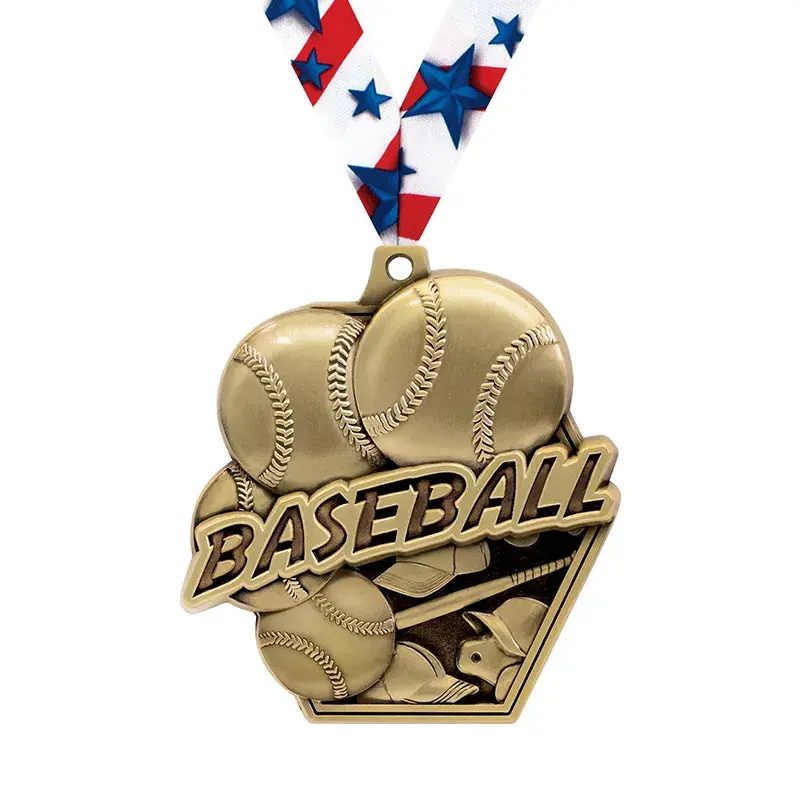
Relief depth is the second lever. A die-cast medal has raised elements the recipient can feel with a thumb. That tactile quality is a large part of why die-cast zinc dominates race medals.
| Production choice | Effect on keepability |
|---|---|
| Die-cast zinc at a solid thickness | Substantial weight, real presence |
| Deep relief with bold shapes | Tactile, reads clearly at distance |
| Flat printed surface only | Feels like a token |
| Very thin casting | Feels cheap regardless of artwork |
| Antique finish over bright relief | Depth and detail visible |
There is a hard constraint worth knowing: die-cast wall thickness has a 2mm minimum. That is what makes a casting solid enough to hold relief properly. A supplier offering a much thinner piece is producing something that will feel insubstantial no matter what the artwork shows. Our manufacturing process explains how the casting and finishing steps affect the finished feel.
Size and Shape
Race medals have drifted larger over the years, and there is a practical reason. A finisher medal is photographed and shared, and size reads in photos even at thumbnail scale.
| Size | Impression | Common use |
|---|---|---|
| 40-45mm | Standard, modest | 5K, 10K, local races |
| 50-55mm | Substantial | Half marathons, mid-size races |
| 60-70mm | Statement piece | Major marathons, flagship events |
| 75mm+ | Novelty or prestige | Bucket-list races, special editions |
| Custom-cut shapes | Distinctive | Signature races with a motif |
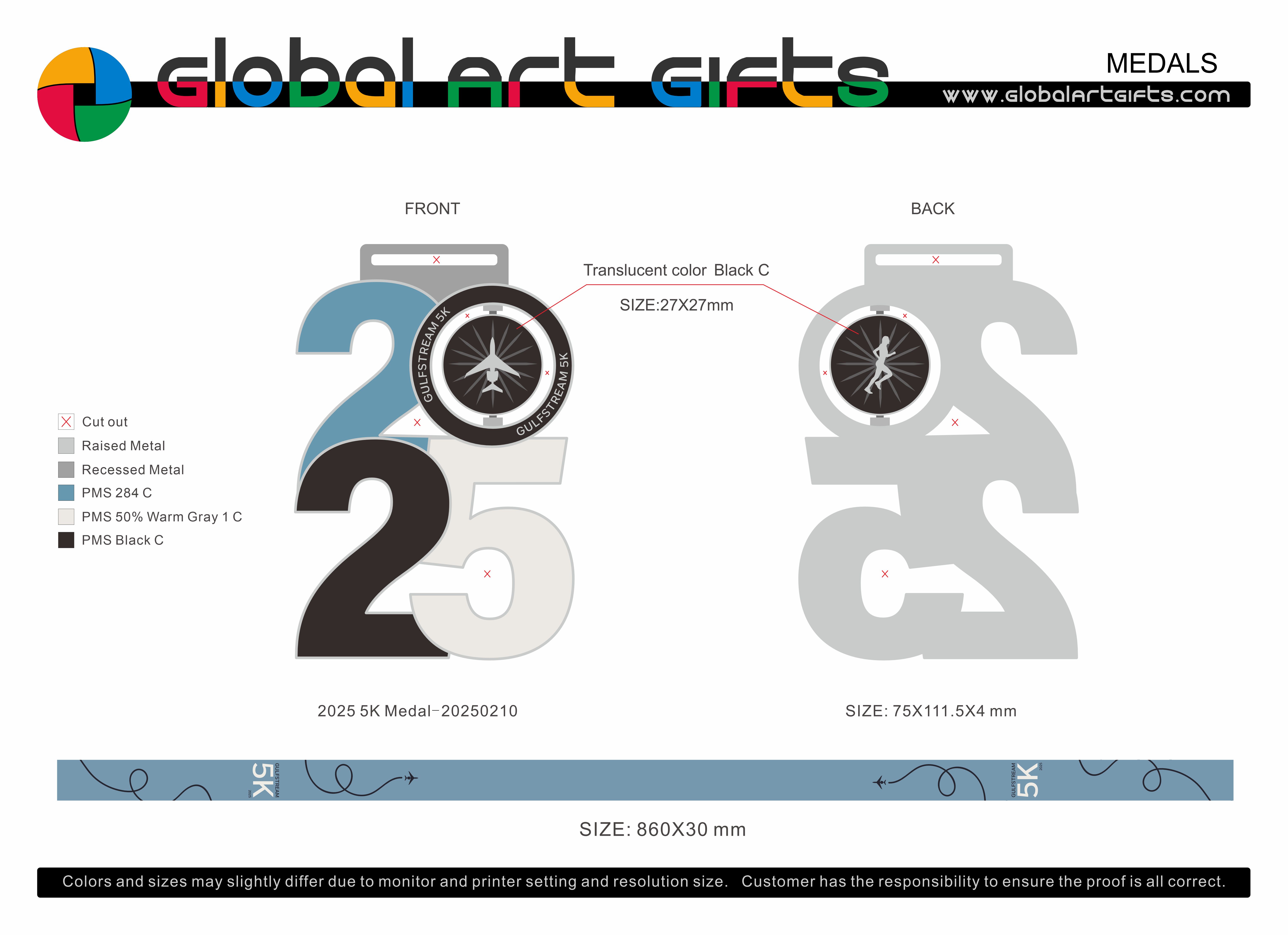
Custom shapes — a city skyline silhouette, a state outline, a landmark — are the most effective way to make a medal instantly recognizable. They are also the most expensive, because an irregular shape needs custom tooling rather than a standard round die. Our design guide covers shape options and their production limits.
The guidance we give race directors: pick size and shape together with the photo in mind. A 65mm round medal with deep relief photographs better than a 55mm custom shape, and it is cheaper. Reserve custom shapes for races with a clear visual identity to express.
Color and Novelty
Color is where race medals most often go wrong. Runners respond to restraint.
| Approach | Result |
|---|---|
| Two or three enamel colors | Clean, readable, ages well |
| Full-color print on metal | Modern, suits flat graphic art |
| Eight or more colors | Cluttered, each color adds a fill step |
| Plating only, no enamel | Elegant, relies on relief |
| Antique finish with bright enamel fills | Best of both — depth plus color |
Each enamel color is a separate fill-and-bake cycle. Our low-temperature cure runs 60-70°C for 60-90 minutes and the full cure runs 100°C for 60 minutes. Every additional color adds cost and production time, and the visual return falls off quickly past four colors.
On novelty features — spinners, LED inserts, moving parts, bottle openers — the honest position is that they work when they serve the event’s identity and they fail when they are a gimmick. A spinning element on a race whose logo is a wheel makes sense. The same mechanism on an unrelated race reads as noise.
If you are considering a novelty feature, ask whether the feature expresses something about the event. If the answer is no, spend the budget on size and relief instead, which reliably improve how the medal is received. Finishes are compared in our plating guide, and cost drivers in our pricing breakdown.
What to Specify for a Keepable Medal
Six things drive whether runners keep a race medal.
- Solid die-cast zinc, 2mm minimum wall. Weight comes from material and thickness, not artwork.
- Deep relief with bold shapes. Tactile and legible at a distance.
- Size matched to the event’s stature. 50-55mm for mid-size, 60-70mm for flagship races.
- Two to four enamel colors. Restraint photographs better and costs less.
- Antique or matte finish over shiny. Hides handling marks from a full race day.
- One distinctive element. A landmark, a shape, a custom-cut edge — something that makes it not interchangeable.
The last one matters most for keepability. A medal with a recognizable element related to the event is why that medal ends up on the wall rather than in the drawer — and it is why the race gets remembered next season.
We run production in 7-15 days after sample approval, sampling in 7-10 days, and a design proof comes back within 24 hours of artwork. Our line produces 30,000+ pcs per day. We hold tooling on file, so a recurring race reuses the same mold with only the year changed.
For race medal design guidance on a specific event, send us your runner count and design direction — we will tell you what is achievable within your budget.
Data to confirm: Confirm current lead times and tooling retention policy with the factory before setting a race schedule, as peak season affects capacity.
FAQ
What makes runners keep a race medal? Weight, relief depth, size, and distinctiveness. Medals that feel substantial and carry a recognizable element related to the event get kept. Light, flat, generic medals are discarded regardless of how good the artwork looks on screen.
How heavy should a finisher medal be? Weight comes from material and size. Die-cast zinc is around 6.7 g/cm³, and a larger, solidly cast piece reads as substantial. Die-cast wall thickness has a 2mm minimum, which is what makes a casting feel solid rather than like a shell.
What size should a marathon finisher medal be? 50-55mm suits mid-size races and half marathons. Flagship marathons often run 60-70mm. Larger sizes photograph better, which matters because finisher medals are widely shared on social media.
Do custom shapes cost more? Yes. Irregular shapes need custom tooling rather than a standard round die. A larger round medal with deep relief is usually cheaper and photographs better than a smaller custom shape.
How many enamel colors should a race medal use? Two to four. Each color is a separate fill-and-bake cycle that adds cost and production time, and the visual return drops sharply past four colors.
Are spinner or LED medals worth it? Only when the feature expresses something about the event’s identity. Used as a gimmick, novelty features read as noise. If the feature has no connection to the race, put the budget into size and relief instead.
Related: custom hard enamel medals — our hard enamel medal line: Pantone colour matching, 0.3 mm minimum fill and 100-piece minimum.