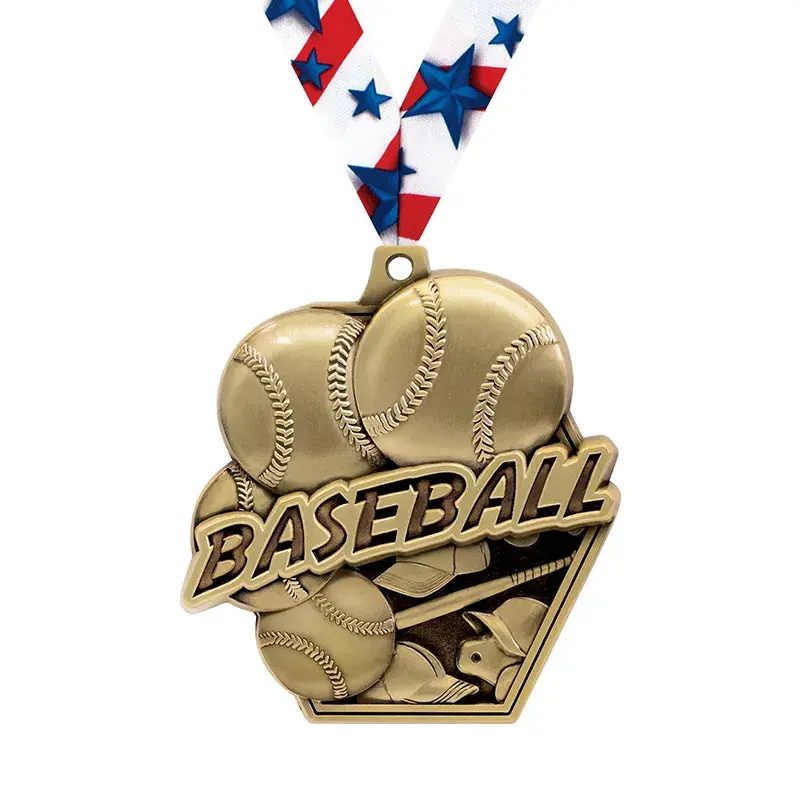
Participation medals are the most debated award in youth sports. Some parents love them, some think every kid should get one regardless of the scoreboard, and everyone has an opinion about what they should look like.
We cast tens of thousands of kids medals a year for leagues and clubs. This guide covers the practical side: what they cost, what design survives being worn by a six-year-old, and the safety points that matter more than the artwork.
What we’ll cover:
- What a participation medal should accomplish (and what it should not)
- Cost per piece and how the age range changes your order
- Design choices that hold up and age well
- Safety specifications for younger children
- Ordering sequence and timing for a season
What a Participation Medal Is Actually For
A participation medal marks the season, not the result. That sounds obvious, but it drives every design decision.
If it marks the result, you build a podium set — gold, silver, bronze, differentiated by finish. If it marks the season, you build one design given to everyone, and the value comes from the memory, the event, and the year printed on it.
| Purpose | Design shape | Plating | Typical use |
|---|---|---|---|
| Participation | One design for all | Single finish | Season-end for every player |
| Placement | One design, three finishes | Gold, silver, bronze | Tournaments, finals |
| Achievement | One design, differentiated by insert | Single finish | Skill milestones, badges |
| Milestone | Year-dated series | Single finish | Multi-year programs |
Most leagues need participation medals for the bulk of players and a small placement set for finals. Ordering them together gets you one tooling cost and one consistent look.
One design note worth saying plainly: a participation medal works when it is clearly about the season. If it looks identical to the trophy awarded to the league champion, you have created confusion, not recognition. Different shape, or clearly different artwork, solves it.
What Participation Medals Cost
Cost per piece depends mostly on quantity and design count, not on the specific “participation” label.
| Order size | Practical scenario | Cost profile |
|---|---|---|
| 100-200 pcs | Single team or small club | Highest per unit |
| 200-500 pcs | Multi-team league | Mid, tooling amortizing |
| 500-1,000 pcs | Large league or district | Lower per unit |
| 1,000+ pcs | Regional program | Lowest per unit |
Two savings that leagues miss:
Combine age divisions. If you order U8, U10, U12, and U14 medals separately, you pay tooling four times and lose volume pricing four times. One universal design with the age printed or engraved as a variable costs far less and looks consistent across the program.
Order the whole season at once. Leagues that order per-team get worse pricing and inconsistent finishes. One league-wide order gives you one batch of plating, which means all the medals match.
Our MOQ is 100 pcs per design, so even a single large team can order direct.
Design Choices That Hold Up
A participation medal gets worn, swung, dropped in a bag, and put in a pocket. Design for that.
| Element | Choose | Avoid |
|---|---|---|
| Diameter | 40-50mm for kids | Oversized discs that hang low |
| Relief depth | Moderate, smooth edges | Deep sharp recesses that catch grit |
| Enamel type | Soft enamel | Hard enamel (harder, heavier, costs more) |
| Edges | Rounded or wavy | Sharp flat edges |
| Color count | 2-4 enamel colors | 8+ colors, thin detail |
| Symbol | Sport icon or mascot | Tiny text-heavy artwork |
Soft enamel holds two to four colors cleanly and has a minimum fill of 0.3mm, which keeps fine detail legible without raising the price much. Imitation hard enamel needs 0.5mm minimum and costs more per piece — for a participation medal given to every player, that is rarely worth it.
Keep the color count low. Each enamel color is an extra fill step in production, and each one adds cost and lead time. Two to four colors is the sweet spot for a youth medal: readable, colorful, affordable. Our kids medals safety and design guide goes deeper on design for young recipients.
Safety Specs for Younger Children
This is the part that matters most and gets discussed least. Medals go around young necks.
| Concern | Specification | Why |
|---|---|---|
| Ribbon length | Standard 860-900mm; consider shorter for under-8s | Prevents the medal hanging at chest level where it swings |
| Ribbon safety | Breakaway or quick-release clasp for young age groups | Reduces snag risk during play |
| Weight | Keep die-cast pieces modest | A heavy medal pulls on a small neck |
| Edges | Sanded, no burrs | Die-cast parts need deburring and polishing |
| Surface | Sealed plating | Reduces metal contact and oxidation |
| Small parts | No loose components | Avoid spinner and insert types for under-6s |
Our twelve-step process includes deburring and polishing before plating, which removes casting burrs. That is not a cosmetic step for kids’ medals — it is the edge safety step. Ribbon attachment options are compared in our medal ribbon guide.
For under-six age groups, we generally steer leagues away from spinner and LED types. They add small moving parts and, in the LED case, a battery. A simple die-cast soft enamel medal is the safer and cheaper answer.
Ordering Sequence for a Season
A youth sports season has a fixed end date, which makes timing the main risk.
| Stage | Timing before season end |
|---|---|
| Send event details and design brief | 8-10 weeks |
| Approve design proof | Within 24 hours of artwork received |
| Sample approval | 7-10 days after brief |
| Production | 7-15 days after approval |
| Delivery buffer | Leave 1-2 weeks |
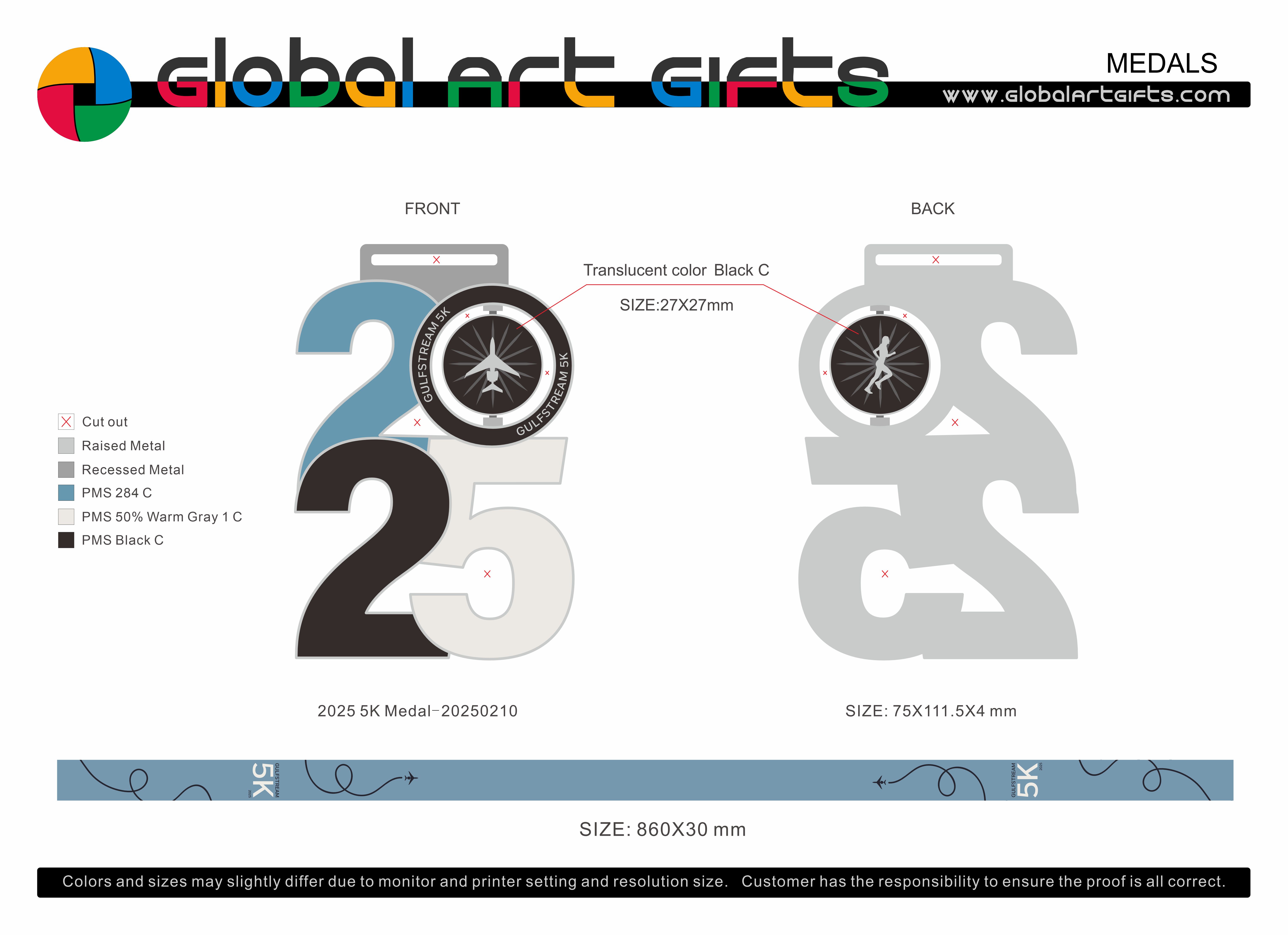
The 24-hour proof turnaround is on our side. The variable is how long your league takes to approve artwork, which is often the longest part of the timeline. If you have a board or committee that has to sign off, start that conversation before you start the medal conversation.
For a league-wide order, lock these four things early: design count, age or division list, plating finish, and ribbon spec. Changing any of them after sampling invalidates the sample and restarts the clock.
A Note on the Participation Debate
We are asked fairly often whether participation medals are “a good idea.” That is not a manufacturing question, and we do not pretend it is ours to settle. If you want a wider view of what youth leagues order, our sports award ideas by sport guide covers per-sport categories, and the bulk custom medals page explains how consolidated runs affect your price.
What we can say from the production side: a well-made participation medal is a low-cost, durable object that carries a season’s memory. It is not a substitute for recognizing achievement, and leagues that use it that way tend to be disappointed. Leagues that use it to mark belonging, alongside a separate placement set for real competition, tend to be happy with it.
If that second model is what you want, we can quote the participation design and the placement set together on one tooling budget.
Send us your age divisions and expected player count and we will quote it.
Data to confirm: Confirm current MOQ, ribbon length options, and safety fittings availability with the factory before finalizing a youth order, as age-group safety conventions vary by market.
FAQ
What does a participation medal cost per piece? It depends mainly on quantity and design count. A single design ordered at 500-1,000 pcs costs far less per unit than separate orders per age division. Combining divisions on one universal design is the biggest single saving.
What size should a kids’ participation medal be? 40-50mm diameter works well for most youth age groups. Keep the relief moderate and the edges rounded rather than sharp.
Are participation medals safe for young children? With the right spec, yes. Use the standard 860-900mm ribbon or shorter for under-8s, request a quick-release or breakaway clasp for young age groups, keep the piece weight modest, and ensure the factory deburrs and polishes the cast edges. Avoid spinner and LED types for under-sixes.
Should participation medals look different from placement medals? Yes. Use a distinct shape or clearly different artwork so a season medal is not confused with a champion medal. You can run both from one tooling budget if you order together.
Is soft enamel or hard enamel better for kids’ medals? Soft enamel. It holds two to four colors cleanly with a 0.3mm minimum fill, weighs less, costs less per piece, and suits the moderate detail of a youth design. Imitation hard enamel needs a 0.5mm minimum and costs more.
What is the minimum order for youth participation medals? 100 pcs per design, so even a single large team can order direct rather than through a reseller.
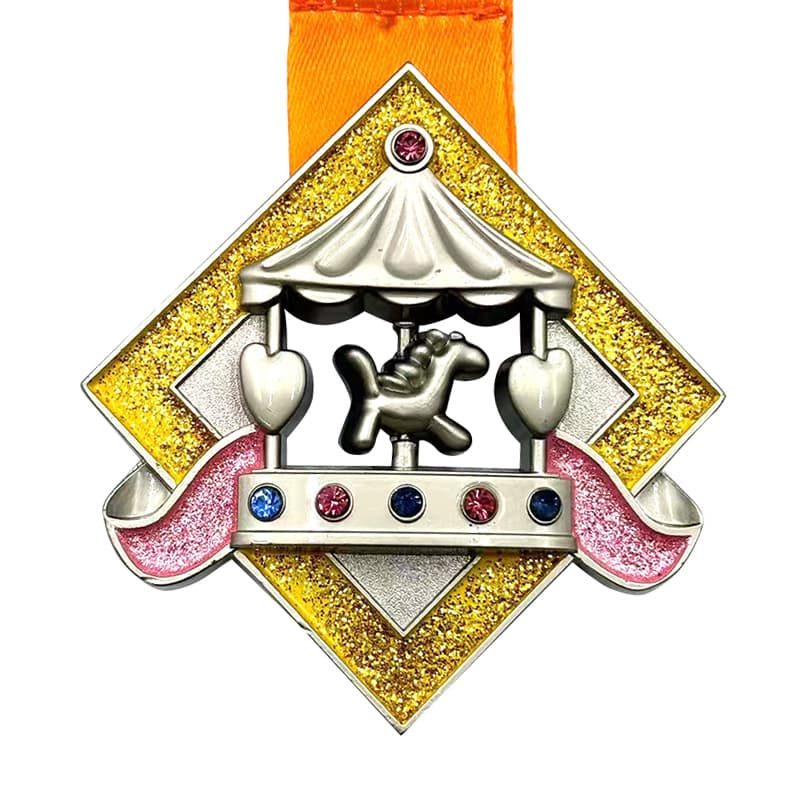
Related product page: custom spin medals for events — our spinning medal range: a moving inner disc on a die-cast body, 100-piece minimum.