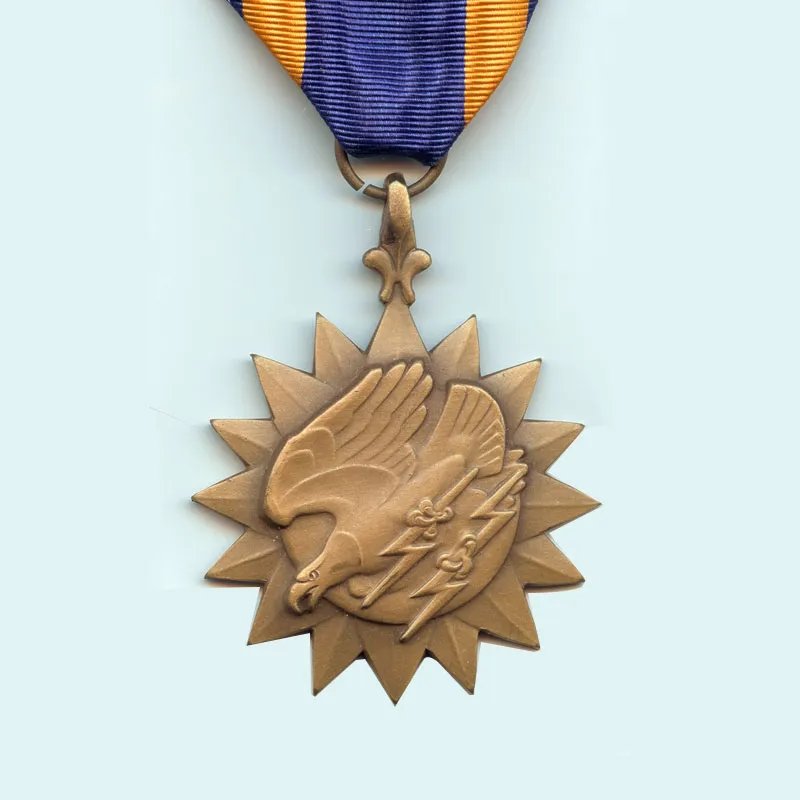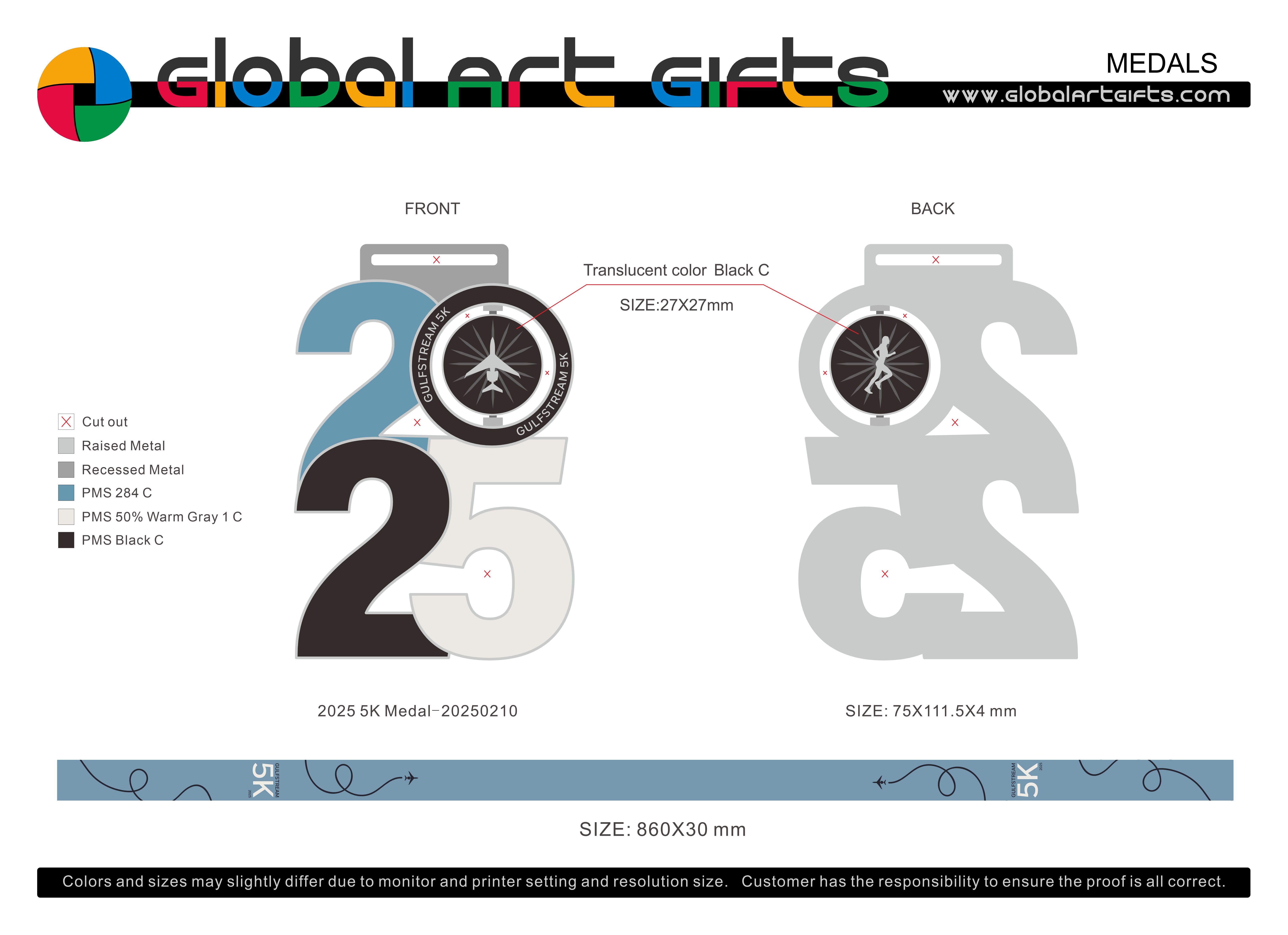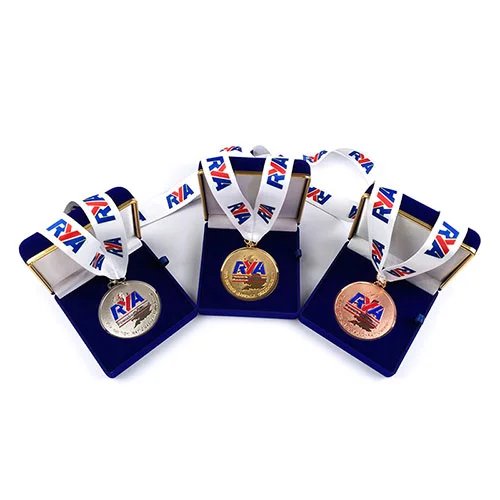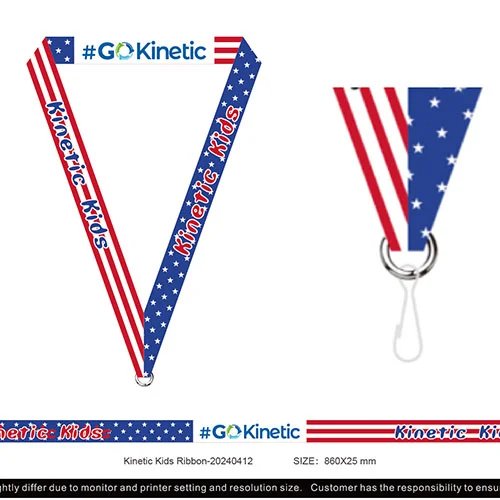
A medal is only as good as the ribbon holding it. That’s the first thing we tell buyers who spec a beautiful die-cast award and then grab any off-the-shelf strap. The ribbon is the part your participant actually touches — the strip that hangs around their neck for the whole ceremony. We make custom medal ribbons in our Huizhou factory, and the material and printing method change durability, cost, and how your logo reads. Get this right and the medal feels like one finished piece.
What we’ll cover:
- The standard ribbon size and why width matters
- Polyester vs nylon, and which fits your event
- The three printing methods: sublimation, silkscreen, and woven
- Attachment hardware, including breakaway clasps for kids
- How to order ribbons with your medals, MOQ and lead time
[Image: medal-ribbons.jpg — Rolls of custom printed medal ribbons in assorted colors and widths]
Get the Size and Specs Right First
Ribbon specs sound boring until a batch shows up too short to tie or too narrow for your logo. Here’s the standard we run, and why it matters.
A standard medal ribbon is 860-900mm long and 20-30mm wide. That length is the drop that puts the medal at chest height on most adults. Too short and the medal rides up on the collar. Too long and it bounces against the belt. The width is your design call. A 20mm ribbon is fine for a compact logo or event name. A 30mm ribbon gives your artwork room to breathe — bigger logo, bolder type, and it carries a heavier medal without twisting.
If your medal is a solid zinc piece, a wider strap distributes the weight and hangs straight. Our die-cast medals start at 2mm thick, and the heavier ones sit better on 30mm. We confirm final length and width on the proof before anything gets cut.
Polyester vs Nylon: The Material Decision
Two materials cover nearly every ribbon we ship. The choice comes down to how the ribbon should look and how hard it’ll be used.
Polyester is the workhorse. It’s durable, holds a crisp print, and costs less than nylon. It’s also the material that takes sublimation ink cleanly — the dye bonds into the fiber itself, so the print won’t crack or peel when the ribbon folds in a backpack. For most events, polyester is the default.
Nylon is the shinier option. It has a satin sheen that photographs well under stage lights and feels smooth against the neck. But it’s pricier, and it doesn’t take dye as sharply, so fine text can look a little soft next to polyester.
| Polyester | Nylon | Woven label | |
|---|---|---|---|
| Look | Matte to satin, crisp print | Shiny, smooth | Textured, no print |
| Durability | High — dye bonds to fiber | High — soft, holds up | Highest — woven in |
| Cost | $ | $$ | $$ |
| Design flexibility | Full color, photos, gradients | Full color, slightly softer | Few colors, simplified |
| Right for | Race medals, kids’ events, bulk orders | Stage ceremonies, award shows | Classic crests, military-style marks |
How Your Logo Gets On: Printing Methods
Three printing methods cover almost every ribbon order, and they’re not interchangeable. Match the method to your artwork and budget.
Sublimation heat-transfer is the full-color method. Your logo is printed onto transfer paper, then heat and pressure push the dye into the polyester fiber. That’s why the print doesn’t sit on top of the ribbon — it’s in it. Sublimation handles gradients, photos, and multi-color logos in one pass, which is why it’s our default for event ribbons.
Silkscreen is spot color. Each color is its own screen and its own pass, so it’s precise and long-wearing, but the price climbs as you add colors. It’s the right call for a simple one- or two-color logo where exact brand color matters — a university crest or a corporate mark.
Woven, or jacquard, is different again: the logo is woven into the ribbon as it’s made, not printed on. It can’t do gradients or photographs, and fine detail has to be simplified. But there’s no ink to fade or peel, ever.
| Sublimation | Silkscreen | Woven | |
|---|---|---|---|
| Colors | Full color, photos, gradients | Spot colors, usually 1-2 | Limited, thread colors |
| Durability | High — dye in fiber | High — ink on surface | Highest — no ink |
| Cost | $ | $$ | $$ |
| Fine detail | Very good | Very good | Simplified |
| Right for | Colorful event logos, sponsor walls | Exact brand color, crests | Permanent, classic marks |
[Image: factory-workshop-04.jpg — Ribbon finishing station on the MedalOrigin production floor]
Attachment Hardware: Spur Pins, Safety Pins, and Breakaway Clasps
The ribbon has to attach to the medal, and the hardware you pick affects safety as much as looks.
We attach the strap by riveting — the metal end tip is crimped onto the ribbon so it can’t slide off, and the medal hangs from a jump ring. For the wearable end, you choose the clasp.
A spur pin is the classic fold-over clip. Two prongs slide through the ribbon and fold down flat. It’s simple and cheap, and it holds fine for adult ceremonies.
A safety pin is a closed pin that won’t pop open while a runner bounces. We recommend it for anything worn during activity — races, obstacle courses, sports tournaments.
And for kids, use a breakaway clasp. It’s a plastic or metal clip that separates under light pressure, so if a child snags the ribbon on playground equipment, it releases instead of choking. This is a safety call, not a style choice. Most schools and kids’ run organizers require it, and we stock breakaway hardware as standard on our kids’ medals.
[Image: kids-medals.jpg — Children’s medals with safety breakaway ribbon clasps in bright colors]
Ordering Ribbons With Your Medals
You’ll almost always order the ribbon with the medal, not separately. Here’s what that looks like from our side.
Ordering them together means the colors and width match in one proof, and the strap arrives attached to the medal. The ribbon is priced per piece and drops fast at volume. MOQ is 100 pieces per design, and the factory prints 30,000+ medals a day, so a few thousand ribbons won’t slow your order down.
The whole order moves through one flow: free design within 24 hours, unlimited revisions, then 7-15 days of production after you approve the sample. We run a 3-stage QC check on every batch, and ribbons get checked against the approved Pantone reference before they’re packed with the medals.
If you’re still deciding on the medal body itself, our medal materials guide walks through zinc, brass, iron, and aluminum. Need the ribbon and medal shipped with medal packaging boxes? We handle that in one shipment. And for volume pricing, the bulk custom medals page has the tiers. The design team at MedalOrigin turns your logo into a proof within 24 hours — free, with unlimited revisions.
FAQ: Custom Medal Ribbons
What is the standard size for a medal ribbon? 860-900mm long by 20-30mm wide. That drop puts the medal at chest height on most adults. Width is your choice — 20mm for a compact logo, 30mm for a bigger mark and a heavier medal.
Which is better, polyester or nylon? Polyester for most orders. It’s durable, takes sublimation ink cleanly, and costs less. Nylon is the pick when you want the shinier, smoother look for a stage ceremony.
Can you print photos and gradients on a ribbon? Yes, with sublimation heat-transfer. It’s full color and the dye bonds into the polyester fiber, so it won’t crack or peel. Silkscreen and woven are limited to fewer colors.
What’s the difference between a spur pin and a safety pin? A spur pin folds over the ribbon and is fine for adult ceremonies. A safety pin is a closed pin that won’t pop open during activity, so we recommend it for races and sports.
Do you offer breakaway clasps for kids’ medals? Yes. Breakaway hardware releases under light pressure, which is a safety requirement for most children’s events. We stock it as standard on kids’ medals.
What’s the MOQ and lead time for custom ribbons? MOQ is 100 pieces per design. Production takes 7-15 days after you approve the sample, and design is free within 24 hours with unlimited revisions.
Recommended Reading
- Custom Medal Ribbons & Accessories: The Complete Procurement Guide — the full ribbon and accessory specs
- Custom Medal Packaging: Presentation Boxes & Velvet Cases — how to present the finished medal
- Custom Medal Design Tips: What Manufacturers Wish You Knew — the artwork rules that apply to every material
Data to confirm: sublimation heat-transfer uses heat and pressure to bond dye into polyester fiber — the exact temperature and dwell time we run are set per machine and fabric batch, so confirm with our production team. Nylon’s slightly softer print edge versus polyester is a general material property; verify for your specific artwork.