LED medals cost more than standard medals. That’s just a fact — the electronics add up. The real question is whether your event earns that premium back. The answer comes down to one thing: will anyone actually see the light? An LED medal at a noon road race is a gimmick. The same medal at a night run is the entire photo. We build custom LED medals in our Huizhou factory, and we’ve learned exactly when the light is worth it.
What we’ll cover: the events where LED medals earn their cost back, the events where they’re the wrong call, a side-by-side against glow-in-the-dark and standard medals, the real cost of the electronics, and the design rules that make the light work instead of fizzling.
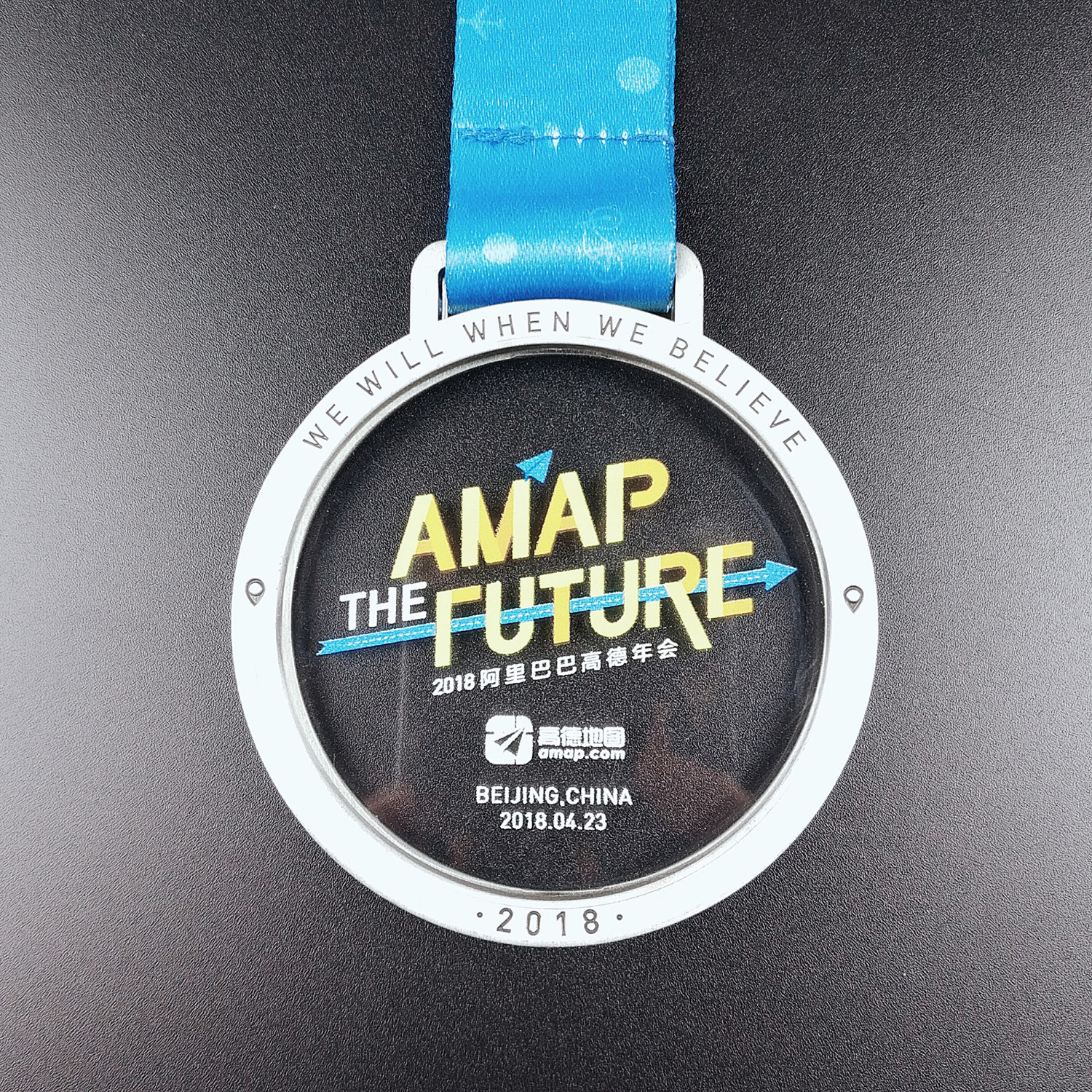
[Image: led-medals.jpg — Custom LED light-up medals glowing with translucent enamel color at a night event finish line]
When LED Medals Earn Their Premium
The premium is easiest to justify when the medal gets seen in low light and photographed. That’s the whole logic.
Night runs and glow runs are the obvious fit. Hundreds of glowing medals at a dark finish line create a visual that no static medal can touch. Participants hold them up, photograph them, and post them. That’s earned media your event didn’t buy. Evening awards ceremonies and galas are a quieter fit — a steady-burn LED behind a gold-plated medal reads as refined, not flashy. Music festivals, New Year’s Eve events, Halloween races, and neon-themed parties all sit in the same bucket: after-dark, photo-heavy, high energy.
Here’s a simpler test we give every buyer. If your medal will be worn during the event, not just handed over at the end, an LED earns its keep. If it goes from the finish line straight into a goody bag and then a drawer, the light never gets seen and you’ve paid for nothing.
Daytime events are where LED medals underperform. Sunlight washes out the LED entirely. At noon, a red LED behind red enamel looks like a red enamel medal — you’re paying electronics cost for zero visual return. We say this to buyers constantly, and some order the LED anyway for the novelty. Fine. But know you’re paying for a feature nobody can see.
LED vs Glow-in-the-Dark vs Standard: The Honest Comparison
Each option lights up (or doesn’t) in a different way. Pick by when and where the medal is seen.
| LED Medal | Glow-in-the-Dark | Standard Medal | |
|---|---|---|---|
| How it lights | Powered LED + battery | Phosphorescent enamel charges from light | Doesn’t |
| Brightness | Bright, immediate | Faint, needs “charge” | — |
| When it works | Any dark setting, on demand | Dark, only right after light exposure | Any light |
| Cost vs standard | +$0.80–$1.50/unit | +$0.20–$0.40/unit | Baseline |
| Battery / maintenance | CR2032, user-replaceable | None — recharges in light | None |
| Thickness | 5–6mm (houses battery) | 2.5–4mm | 2.5–4mm |
| Best event | Night run, festival, evening gala | Kids’ events, budget night runs | Daytime, formal |
Glow-in-the-dark is the budget middle ground. The enamel charges under light and glows faintly in the dark for a few minutes. It’s cheap, it needs no battery, and it adds a fun element for kids’ events. But it doesn’t project — you can’t see it across a room the way you can an LED. And it fades fast. An LED is the only option that actually lights up on command and stays lit.
The Real Cost of LED Electronics
The price difference isn’t a markup game. It’s components and labor.
A standard medal is metal plus enamel. An LED medal adds an LED, a small PCB, a CR2032 coin cell, wiring, and the assembly to put it together — soldering, testing, battery install. That’s why LED medals run roughly $0.80 to $1.50 more per unit than an equivalent standard medal. The battery cavity also forces a thicker medal: 5–6mm minimum versus 2.5–4mm for a normal one, because the cavity itself is 20–30mm in diameter and 5–8mm deep.
One thing worth paying attention to: the battery. We use brand-name CR2032 cells — Panasonic, Sony, or equivalent — not no-name generics with inconsistent voltage. A continuous burn runs 24–48 hours. Flashing mode stretches that significantly because the LED is off more than it’s on. For a night run where the medal is worn two or three hours, that’s a fraction of capacity. For a multi-day festival, ask about spare batteries with the bulk order.
The full pricing picture lives on our bulk custom medals page, but the short version is that quantity is your lever. Component costs drop hard at 300, 500, and 1,000+ pieces.
Design Rules That Make the Light Work
Light behaves differently from paint, and most first-time LED designs get this wrong.
Rule one: translucent enamel, not soft enamel. Light needs a clear path through the color. Translucent enamel lets the LED shine through and glow in that color. Soft enamel is opaque — the light dies behind it. If you want a red glow, you need red translucent enamel, not red soft enamel.
Rule two: dark plating makes the light pop. A black nickel or dark antique finish behind the LED area reads brighter because the dark metal doesn’t compete with the light. Gold and bright nickel scatter and dilute the effect. This is a two-tone plating decision we flag during design.
Rule three: plan the light points before tooling. We show LED positions in the 3D rendering, so you see exactly where light comes from before any mold steel is cut. Behind translucent enamel you get a colored glow. Behind an open cut-out window you get a distinct light beam. Edge-lit placement gives a halo around the perimeter. Each reads differently in a photo.
Rule four: match the LED color to the enamel. Red LED behind red translucent enamel gives an intense ruby glow. Blue behind blue is electric. White behind clear is a pure bright light. Mixed and matched, they fight each other and look muddy.
The metal itself is still the same die-cast zinc alloy as every other medal — melted at 385°C and shot into the mold on an 88-ton press. The electronics are an addition to that process, not a replacement for it. That’s why the materials guide still matters for an LED order.
Battery Logistics Nobody Thinks About
Batteries die in storage. That’s the failure most buyers only discover on event day.
The fix is a pull-tab. Every LED medal ships with the battery installed but not connected — a plastic activation tab keeps the circuit open. The recipient pulls the tab to complete the circuit and turn on the light for the first time. That way a medal stored for weeks before the event still has a full charge when it matters.
Testing is the other half. We test every LED at the component stage, before it’s sealed into the medal, then again after assembly. A dead light in a finished medal is a defective product, so we catch it twice. That double-testing step is what separates a medal with a light from a light-up medal.
If the light dies years later, the user opens the back — a small screw cover or snap-fit hatch — and swaps in a fresh CR2032. They’re sold at every pharmacy and supermarket. The medal’s useful life isn’t tied to its first battery.
FAQ: LED Medal Decisions
Are LED medals worth the extra cost for a daytime event? Usually not. Sunlight washes out the LED completely, so you’re paying an electronics premium for a feature nobody can see. If the medal is only seen in daylight, a standard medal with a premium finish gives you more for the money.
How long does the battery actually last? 24–48 hours of continuous illumination on a standard CR2032. Flashing mode stretches that significantly. A typical night run wears the medal for two or three hours, so the battery far outlasts the event. The pull-tab keeps it fresh until the medal is activated.
Can I match the LED color to my event’s theme? Yes — red, green, blue, white, yellow, orange, purple, and pink, plus RGB color-changing. Match the LED to your theme color, then pair it with translucent enamel in the same color for a saturated glow.
Why are LED medals thicker than normal medals? The medal body has to house the battery, PCB, and wiring. The battery cavity alone is 20–30mm in diameter and 5–8mm deep, which pushes minimum thickness to 5–6mm versus 2.5–4mm for a standard medal. Most buyers read the extra weight as a premium feel.
What’s the minimum order for LED medals? 100 pieces per design, same as all our medals. The per-unit cost drops noticeably at 300, 500, and 1,000+ because component pricing improves with volume and assembly setup is amortized.
Is the battery replaceable? Yes. A screw cover or snap-fit hatch on the back gives access to the CR2032, which is sold everywhere. Spare batteries are available with bulk orders if you want to include one with each medal.
Recommended Reading
- How Custom Medals Are Made: Inside Our Die-Casting Factory — the 12-step process the electronics plug into
- Custom Medal Design Tips: What Manufacturers Wish You Knew — artwork rules before you submit files
- How to Order Custom Medals in Bulk: MOQ, Pricing & Timeline — the full procurement workflow