A medal ribbon is usually already attached when custom medals arrive. But ceremonies involve dozens of hands, and ribbons get untwisted, re-folded, swapped between medals, and adjusted for recipients of very different sizes. Doing that correctly is a small skill worth having.
We manufacture ribbons alongside the medals they hang on, so this is the practical side. For how to specify a ribbon order, see our guide to custom medal ribbons and accessories.
What we’ll cover:
- How a ribbon is attached to a medal in the first place
- The standard V-fold and why it is used
- Attaching by thread-through versus by clip
- Adjusting length for the wearer
- Fixing a twisted or reversed ribbon at a ceremony
How a Ribbon Attaches to a Medal
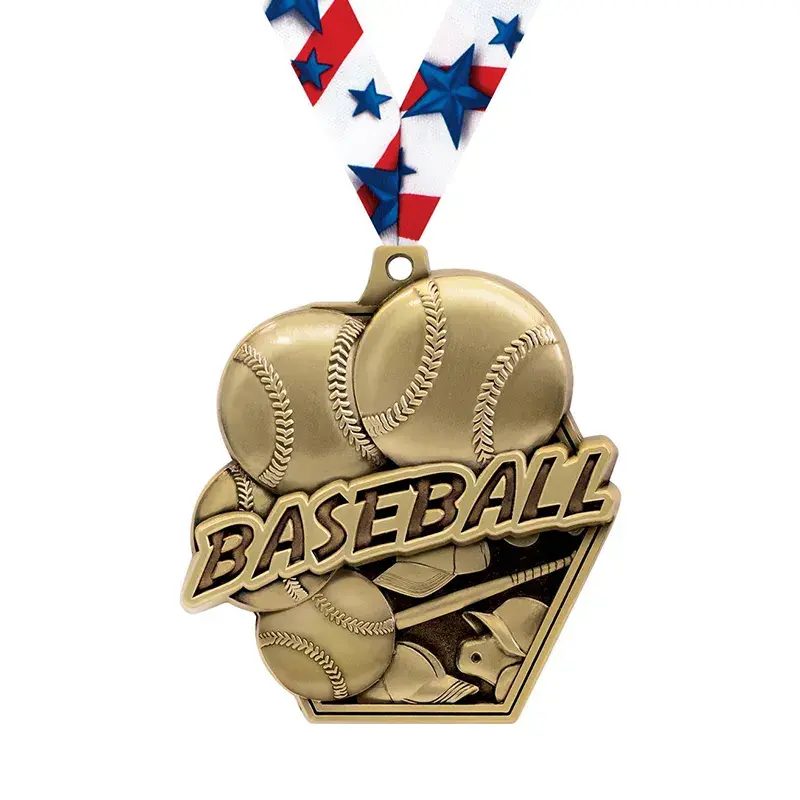
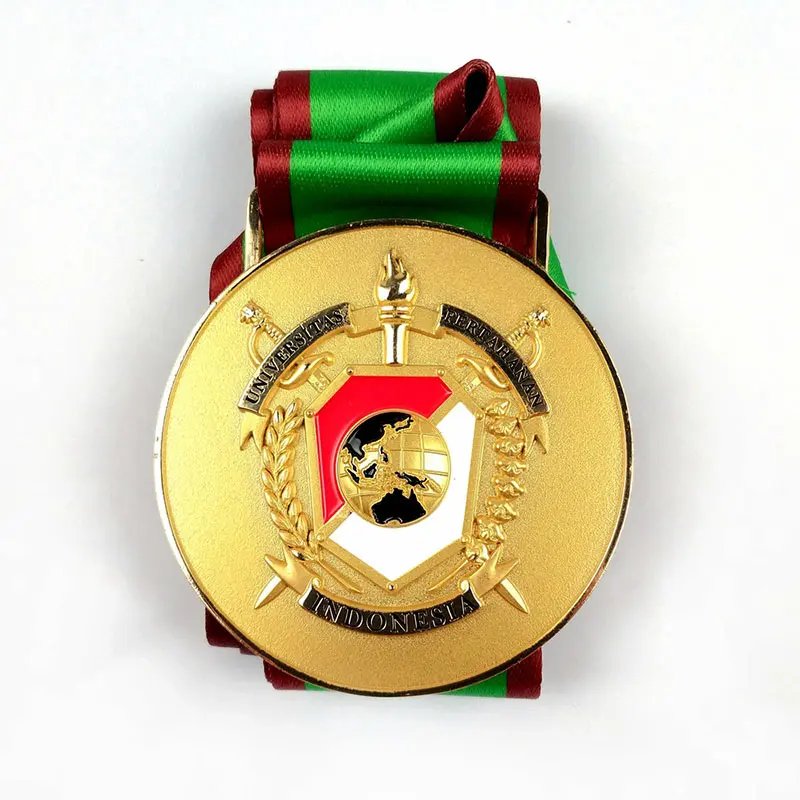
A medal usually has a loop or jump ring at the top. The ribbon passes through that ring and is secured so it hangs as a V.
| Attachment method | How it works | Typical use |
|---|---|---|
| Sewn loop | Ribbon folded, stitched to hold the V | Traditional awards |
| Heat-taped end | Ribbon end fused, fed through the ring | High-volume production |
| Snap clip | Metal clip snaps onto the ring | Swappable ribbons |
| Swivel hook | Clip rotates freely on the ring | Lanyard pairing |
| Safety / breakaway | Clasp separates under load | Youth and school awards |
A sewn loop is the most permanent. A taped end is faster and standard on high-volume orders. A clip is the most flexible, because the ribbon can be swapped — which is exactly why leagues that color-code ribbons by team sometimes prefer it.
Our standard ribbon spec is 860-900mm long by 20-30mm wide. That length is set so the ribbon forms a proper V when worn and the medal sits at chest height.
The Standard V-Fold
The V-fold is what makes a ribbon look correct. The ribbon is folded in half, the fold passes through the medal’s ring, and the two ends are brought back through the loop and pulled up.
| Step | Action |
|---|---|
| 1 | Fold the ribbon in half so the two ends meet |
| 2 | Push the folded loop through the medal’s jump ring |
| 3 | Bring the two free ends through the folded loop |
| 4 | Pull the ends up to tighten into a V |
| 5 | Adjust so both sides hang evenly |
The result is a V-shaped ribbon with the medal at the point. This is the configuration you see at virtually every awards ceremony, and it is what receivers expect.
The reason for the fold rather than a simple knot is that the fold distributes load across the ribbon width. A knot concentrates all the medal’s weight at one point, which will eventually wear through or distort the ribbon.
If you are assembling medals yourself, note that a die-cast medal has real weight. Our castings come off 88-ton machines at 385°C in Zamak zinc alloy at 6.7 g/cm³, so a full-size award carries genuine mass — and a ribbon attachment rated for a light stamped blank is not rated for that. Pull the fold snug — a loose V will let the medal shift during a ceremony, and the ribbon will work its way back through the loop. Understanding the medal manufacturing process helps explain why die-cast weight matters for ribbon choice. For how ribbons differ from lanyards in construction, see our ribbon vs lanyard comparison.
Thread-Through vs Clip Attachment
If you are choosing how your ribbons attach, the two methods suit different needs.
| Thread-through (sewn or taped) | Clip | |
|---|---|---|
| Permanence | Fixed to the medal | Detachable |
| Look | Clean, traditional | Slightly bulkier |
| Swappable | No | Yes |
| Failure mode | Stitching or taping comes loose | Clip weakens |
| Best for | Ceremonial awards | Team color coding, badges |
For ceremonial medals, thread-through is the better choice — it is what the format expects and it looks cleaner. For anything where the ribbon might need to change — assigning different colors per team, replacing a worn ribbon, or a lanyard-style arrangement — a clip or swivel hook is the answer.
One combination to avoid: a heavy medal on a light clip with a thin ribbon. That is the configuration most likely to fail, and it fails during a ceremony, which is the worst possible moment. If your medal is heavy, either use a thread-through attachment or a properly rated clip. The full range is on our medal ribbons and accessories page.
Adjusting Length for the Wearer
Standard length fits most adults. It does not fit everyone.
| Wearer | Adjustment |
|---|---|
| Adult, average height | Standard 860-900mm is correct |
| Adult, tall | Slight increase; the medal should sit at upper chest |
| Adult, shorter | Slight decrease to avoid the medal sitting below the ribs |
| Teenager | Reduce modestly from standard |
| Under-8 | Consider a shorter ribbon and a safety clasp |
| Adaptive or seated recipients | Shorter ribbon so the medal is visible and comfortable |
The correct visual position is the medal resting on the upper chest, above the sternum. If it hangs lower, it will swing and knock against the body during a ceremony; if it sits too high, it crowds the neck and looks pinched.
Rather than cutting a ribbon, the usual adjustment for a clip attachment is to shorten the effective length by moving the clip. For sewn or taped ribbons ordered in bulk, order two lengths if your ceremony includes a wide size range, such as a youth program with adult coaches.
For under-8 age groups, a shorter ribbon plus a safety or breakaway clasp is the sensible combination. Our kids medals safety and design guide covers the wider safety considerations.
Fixing a Ribbon at the Ceremony
These come up at every event, and all are quick fixes.
The ribbon is twisted. Hold the medal, let the ribbon hang freely, and turn the fold a quarter turn to straighten. If it will not settle, the fold was made the wrong way and needs to be re-threaded.
The ribbon is reversed. Printed ribbons are readable from one side. If the print faces inward, the ribbon was threaded the wrong way round. With a clip attachment, detach and refit. With a sewn ribbon, it cannot be corrected without re-sewing.
The medal is hanging at an angle. The two ribbon ends are uneven after the fold. Re-tighten and pull both sides to even length.
The ribbon came loose from the ring. With a taped end, the tape has failed. This usually means the medal is heavier than the attachment was rated for. For the rest of the batch, use a clip or reinforce the attachment.
Printed ribbons should be checked before mass assembly rather than during a ceremony. Lay one out and confirm the print and the plating match the intended place, then assemble the batch against that reference.
We run production in 7-15 days after sample approval, and ribbon specs are confirmed alongside the medal order so the two arrive matched. If you are ordering ribbons separately from medals, send us the medal weight and size and we will spec the width and attachment to suit.
Data to confirm: Confirm current ribbon specs, print methods, and clasp availability with the factory before finalizing an order, as attachment hardware options vary by market.
FAQ
How do you attach a ribbon to a medal? Fold the ribbon in half, push the folded loop through the medal’s jump ring, bring the free ends through the loop, and pull up to form a V. The fold distributes the medal’s weight across the ribbon width, unlike a knot.
Why does my medal ribbon look twisted? The fold was made the wrong way or the two sides ended up uneven. Let the ribbon hang freely and turn the fold a quarter turn. If it will not settle, re-thread it with the fold passing through the ring correctly.
How long should a medal ribbon be? Standard is 860-900mm, which places the medal at upper chest height for most adults. Ribbons ordered in bulk for a program spanning children and adults should be ordered in two lengths.
How do I stop a ribbon from coming loose? The failure point is the attachment, not the fabric. Use a reinforced stitch or a properly rated clip for heavy medals. A taped end on a heavy die-cast medal is the most likely combination to fail.
Can I swap a medal ribbon for a different color? Only with a clip or swivel hook attachment. A sewn or heat-taped ribbon is fixed to the medal. If you need to color-code ribbons by team from a single medal order, specify a clip attachment.
What ribbon is safe for young children? A shorter length plus a safety or breakaway clasp. Standard ribbon length is designed for adults and hangs longer on a small child than is ideal for play.
Related: custom hard enamel medals — our hard enamel medal line: Pantone colour matching, 0.3 mm minimum fill and 100-piece minimum.