Most people picture a round medal. Your event doesn’t have to ship one. A star, a shield, a cut-out paw print, your logo’s actual silhouette — shaped medals are how events make the finisher feel like the center of something custom. And they’re not as risky as buyers fear, once you know the two production paths. We cut and cast shaped medals daily in our Huizhou factory. Here’s what’s possible and where the real limits sit, so your custom medal design brief hits production reality from day one.
What we’ll cover: the two ways a shape gets made and what each allows, which shapes work and which get risky, how 3D relief adds depth, the size and detail rules that keep designs producible, and how your shape gets engraved into steel.
Stamping vs Die-Casting: Two Ways to Make a Shape
Your shape exists two ways, and the path changes what you can design. Stamping and die-casting are different tools with different rules — pick the wrong one and you’ll either overpay or hit a wall on detail.
Stamping presses a flat metal sheet into a shape with a die, which is fast and cheap at volume but limited to flat silhouettes. Die-casting injects molten metal into a mold cavity, which lets you build depth, cut-outs, and multi-level relief the press can’t touch.
| Stamping | Die-Casting | |
|---|---|---|
| Process | Press a flat sheet into shape | Inject molten zinc into a mold |
| Best shapes | Simple flat silhouettes | Complex, 3D, sculpted |
| Min thickness | Brass >3mm, iron >4mm | Zinc ~2mm |
| Depth & relief | Flat, limited | Deep, multi-level |
| Undercuts / cut-outs | Limited | Yes, built into the tool |
| Volume sweet spot | Very high, simple parts | 100+ pieces (our MOQ) |
| Best scenario | Budget, high-volume, flat design | Shaped and sculpted medals |
Zinc alloy melts at 385°C and flows easily into the mold, which is why it can reproduce fine detail and thin walls. Brass and iron are stamped instead — they’re denser, so a stamped blank has to stay thick enough to hold its shape. Most of our custom medals ship die-cast for this reason.
[Image: process-03-die-casting.jpg — Molten zinc being injected into a mold on a die-casting press in the factory]
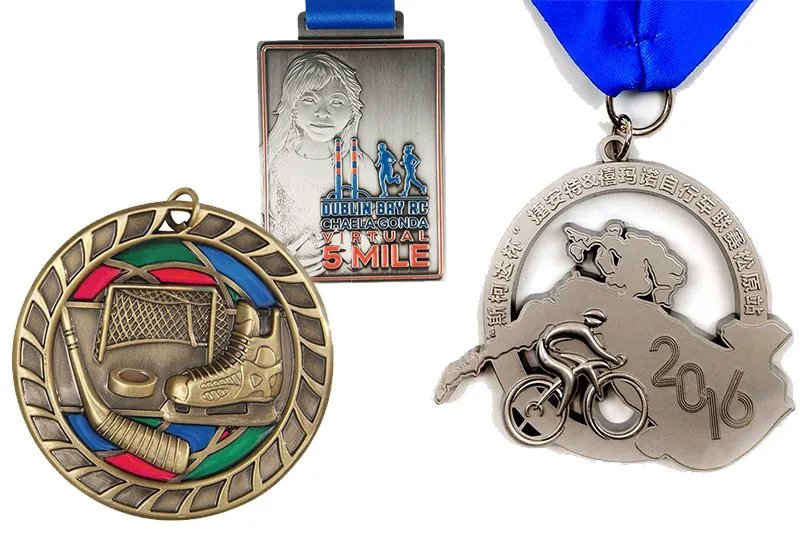
Shaped Medals That Work: Stars, Shields, Cut-Outs and More
Here’s what we actually cut and cast, in rough order of popularity.
- Stars. Simple, recognizable, reads instantly. Fine points are the one risk — a needle-sharp star tip can chip in handling, so we round the points slightly in the tool.
- Shields. A classic for military and law-enforcement awards. The shape itself carries meaning, so the finish can stay quiet.
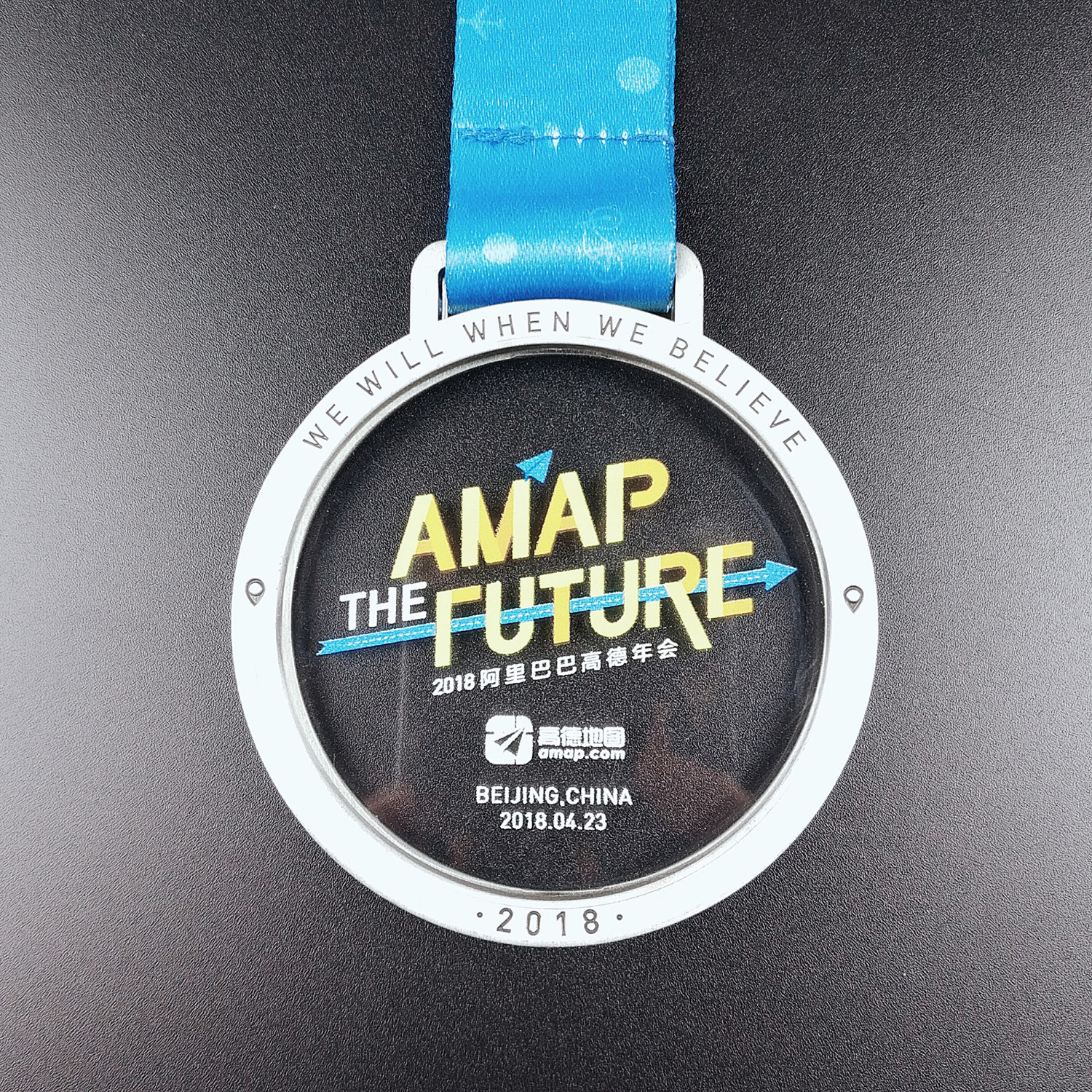
- Cut-out shapes. Removing metal instead of adding — a paw print, a letter, a window in the center. Die-cast cut-outs are clean; just remember any opening removes surface the enamel would have filled.
- Animal silhouettes. A running horse, an eagle, a trophy. These need 3D relief to look right — a flat silhouette of a complex animal reads like a sticker.
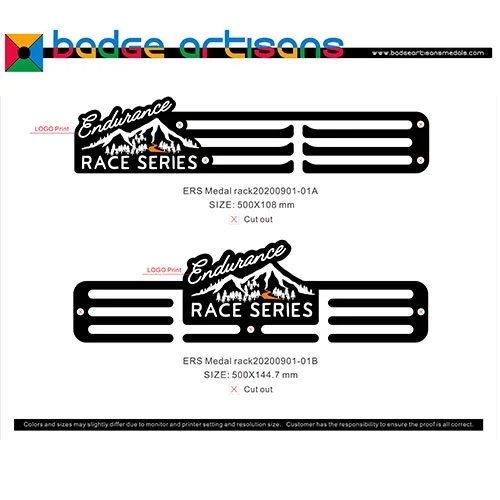
- Your logo as the medal. The ultimate brand shape. We trace the logo outline as the medal profile and keep the interior simple so it stays legible at medal size.
One caution: the more complex the silhouette, the more the design competes with the shape itself. Pick a shape that carries your event, then let the enamel do the storytelling.
3D Relief: Depth That Flat Stamping Can’t Touch
Flat medals are fine. But the medals people keep are the ones with depth — raised edges, layered relief, a face that catches light.
Die-casting builds relief in layers: the top face sits proud of the mid ground, and the background drops away. Each level is cut into the mold as a separate plane, and the transition between levels is where the light catches. Two levels are the common default. Three give real sculptural depth and cost more in tooling.
The rule we give every buyer: depth is a design decision, not an afterthought. Tell us “raised border, raised star, recessed background” and the tool gets built that way. Send a flat logo and ask for 3D later, and you’re paying twice.
[Image: process-02-mould-engraving.jpg — CNC mold engraving machine cutting a 3D medal cavity from a steel tool]
The Size and Detail Limits That Matter
Every design hits physical limits. Know them before the brief, not after the first sample.
Enamel lines need room to fill. Soft enamel needs at least 0.3mm of width; imitation hard enamel needs 0.5mm. Below that, the color beads up and leaves metal gaps instead of a clean line. Zinc die-cast medals hold detail at about 2mm minimum thickness, while stamped brass stays above 3mm and stamped iron above 4mm.
Keep lettering and fine lines generous rather than razor-thin. At medal size, what looks elegant in a vector file can turn muddy on a 55mm metal disc. When in doubt, thicker reads better.
How Your Shape Gets Engraved Into Steel
Your design becomes a steel tool before it becomes a medal. That step sets your ceiling for detail.
The die is engraved by CNC from the 3D model — our shop uses 3D engraving machines (Beijing Jingdiao-style tooling, if you’ve seen it named) that translate the design into the mold cavity. The tool is then heat-treated, and after treatment we run a test shot to confirm the part pulls clean and the enamel lines hold.
That’s the step where “it’ll work” turns into “it works.” If the shape has a trapped undercut the tool can’t release, the design has to change before any steel is cut — which is why we show a 3D rendering before tooling starts. It’s cheaper to move a line on screen than to re-cut a mold. The full journey from file to steel sits on our medal manufacturing process page.
FAQ: Shaped Medal Design
Can my medal be shaped exactly like my logo? Yes, if the outline stays reasonable. We trace the logo silhouette as the medal profile. Keep the interior detail simple — complex interiors turn muddy at small size. Send a clean vector outline and we’ll flag anything risky before tooling.
What’s the smallest detail that will actually hold? Enamel lines need at least 0.3mm for soft enamel and 0.5mm for imitation hard enamel. Below that, color doesn’t fill cleanly. Raised metal detail can be finer, but we keep lettering legible rather than razor-thin.
Is a star shape risky? Only the points. Needle-sharp star tips can chip in handling and in transit. We round the points slightly in the tool — it’s invisible at arm’s length and saves you a batch of chipped medals.
How thick does a shaped medal need to be? Zinc die-cast medals hold detail at about 2mm minimum. Stamped brass needs to stay above 3mm and stamped iron above 4mm, because the sheet has to hold its shape after the press.
Can I combine a shape with a cut-out? Yes. Cut-outs are common — letters, paw prints, windows. Just remember the opening removes surface that enamel would have filled, so plan the color layout around the holes.
What’s the minimum order for a shaped medal? 100 pieces per design, same as all our medals. Tooling cost is amortized over your quantity, so the per-unit price drops noticeably at 300, 500, and 1,000+ pieces.
Not sure whether your shape survives production? Send the artwork and MedalOrigin’s design team will redraw it within 24 hours — free. Start on our contact page.
Recommended Reading
- Custom Medal Design Tips: What Manufacturers Wish You Knew — artwork rules before you submit files
- Custom Die-Cast Medals Guide — why most shaped medals are die-cast