The right award isn’t the one that looks nicest in the catalog. It’s the one that fits how it gets used — and medals, trophies, and plaques earn their keep in completely different settings. We make custom medals by the tens of thousands at MedalOrigin, and we assemble trophies and plaques too, so we see the decision from the factory floor. Here’s the honest comparison that gets most awards right the first time.
What we’ll cover: the difference that actually matters — how the award is used — a head-to-head comparison across the factors procurement cares about, the manufacturing reality behind each type, a scenario-by-scenario decision guide, and when quantity alone should push you to medals.
[Image: enamel-medals.jpg — Colorful enamel medals with detailed die-cast designs on display in a factory showcase]
The Difference That Actually Matters: How It Gets Used
Skip the aesthetics for a second. The question that settles this is practical: where does this award live after the ceremony?
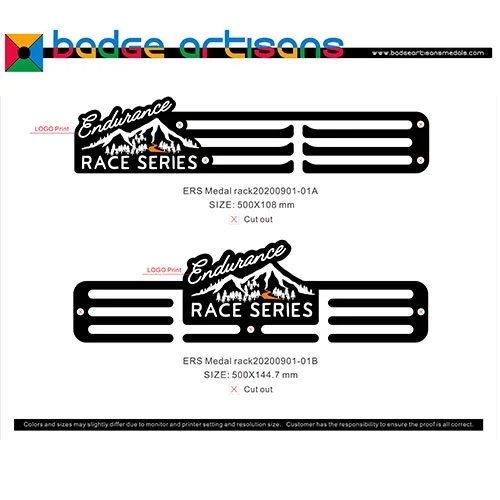
A medal is wearable. It goes around a neck, it pins to a jacket, it ends up on a wall or in a display box — but its defining trait is that it travels with the person. A trophy is a desk or shelf object. It has a base and a figure, it takes up space, and it announces itself from across a room. A plaque is flat and meant to hang — a wall is its natural home. Match the object to the location and the award keeps working long after the event.
Medals vs Trophies vs Plaques: The Head-to-Head
Each column below is a different setting, because that’s how you’ll actually choose.
| Medal | Trophy | Plaque | |
|---|---|---|---|
| Best for | Wearable, high-volume, sports | Single big award, desk display | Wall display, formal recognition |
| Portability | Wears on the body | Carried, awkward in bulk | Flat, easy to ship |
| Unit cost (typical) | Lowest per unit at volume | Mid to high | Mid |
| Volume-friendly | Yes — die-cast line runs thousands | No — each is semi-hand assembled | Yes — batch printing |
| Production speed | Fast — 7–15 days after sample | Slower — multi-part assembly | Fast — flat surface, print or engrave |
| Personalization | 3D detail, enamel colors | Base plate engraving | Engraved or printed text and logos |
| Typical scenario | Race, school, team, corporate events | Sales awards, single champions | Service years, memorials, boardrooms |
If you need to pin it on someone, that’s a medal. If it needs to hold up a shelf, it’s a trophy. If it’s going on a wall with a name and a year, it’s a plaque. The rest is budget.
The Manufacturing Differences Nobody Talks About
The three types come off different production lines, and that changes cost and lead time more than people expect.
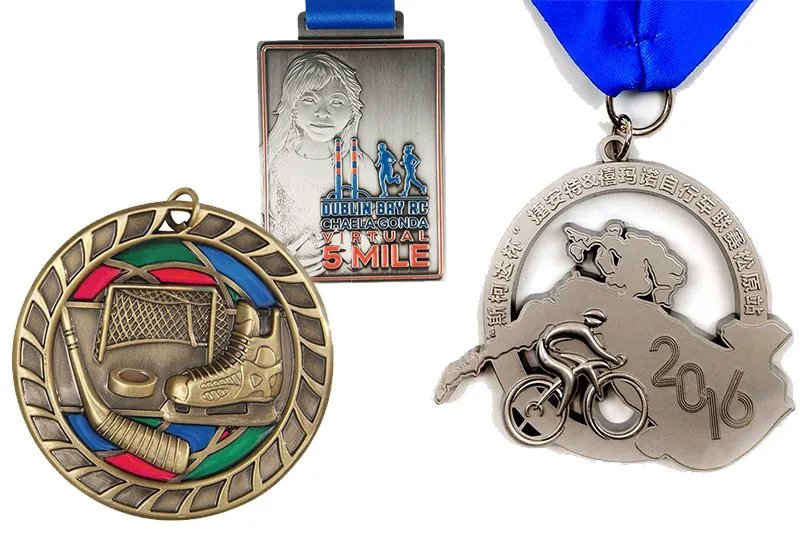
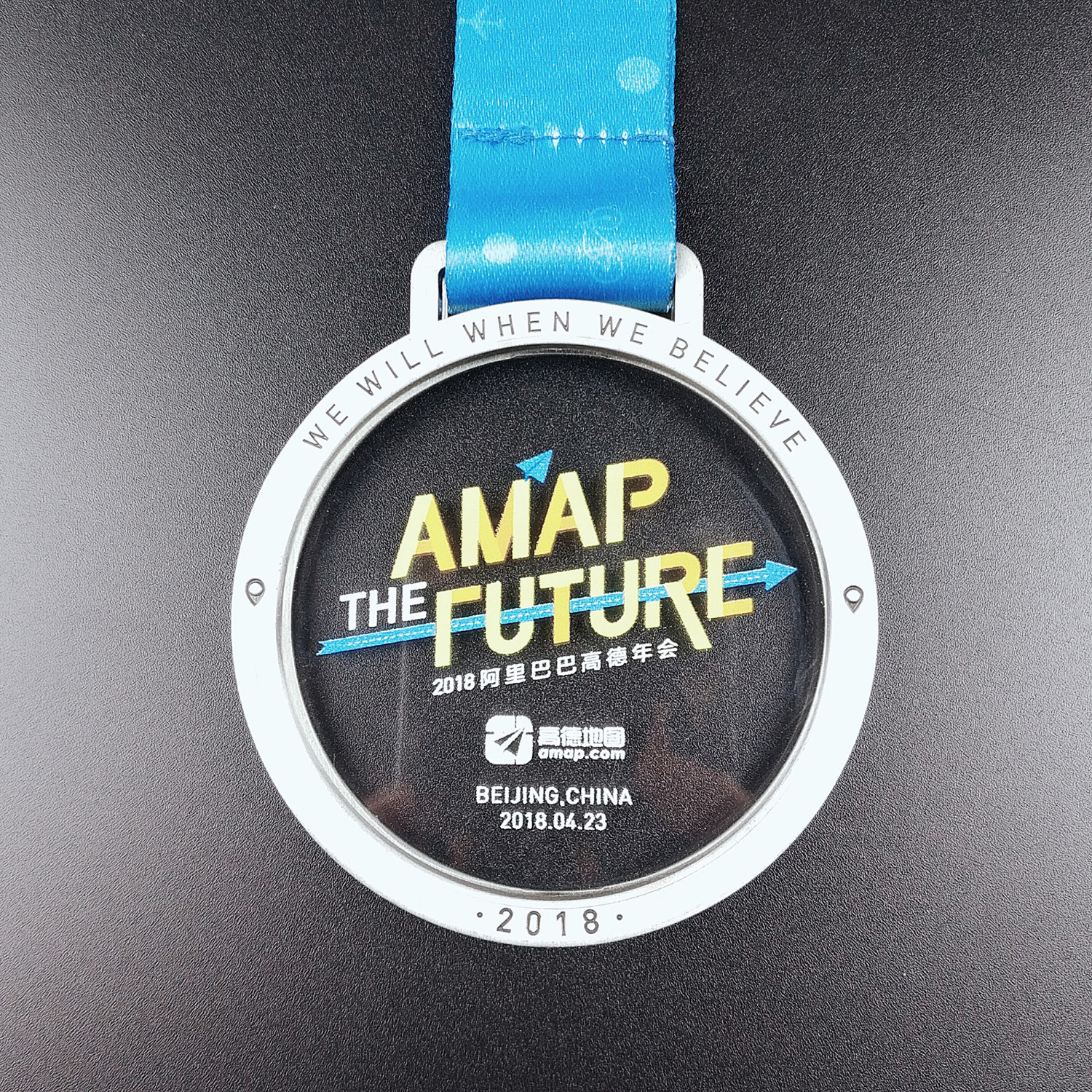
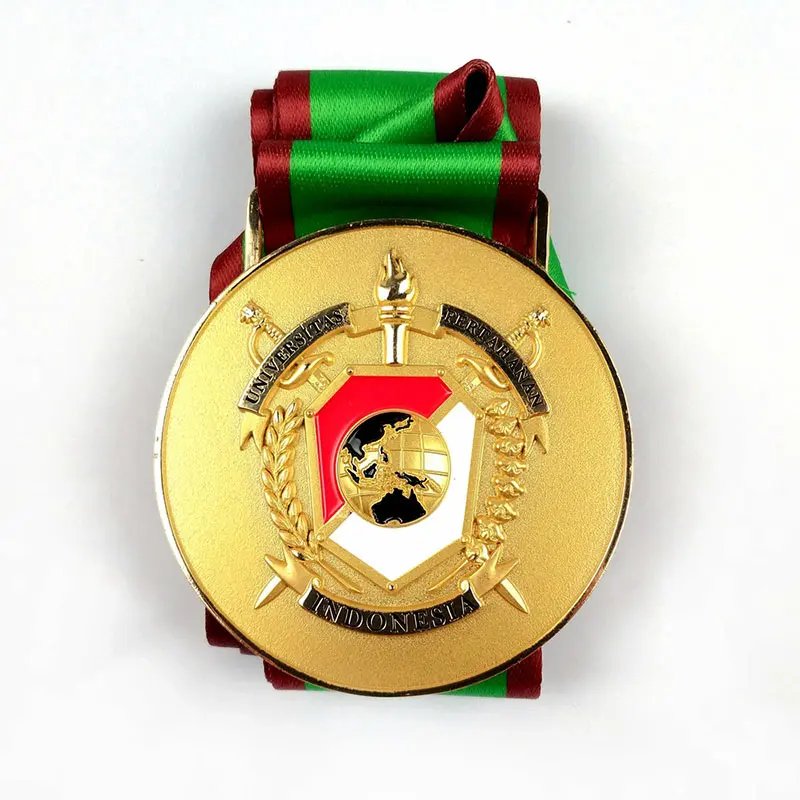
Medals are die-cast. Zinc alloy melts at 385°C and is shot into a steel mold on an 88-ton press, which is why medals carry 3D detail — raised logos, textured edges, sculpted figures — that you can feel with a finger. The mold is a fixed cost, but once it exists, thousands of units pour through at a fast clip, which is what makes medals the volume option.
Trophies are assemblies. A trophy is usually several parts — a die-cast or spun figure, a base (wood, marble, or acrylic), and a metal plate — joined in a line with more labor per piece than a medal. That assembly is why trophies cost more and take longer, and why they rarely make sense for quantities past a few hundred.
Plaques are flat, and flat is fast. There’s no mold for a plaque — the surface is printed or engraved directly, using UV printing, silkscreen, or laser. So plaques skip tooling entirely, which makes small batches cheap. But flat also means no 3D detail; if your design relies on depth and texture, a plaque can’t deliver it the way a die-cast medal can.
For a deeper look at the materials each type uses, our medal materials guide covers the full comparison.
[Image: process-03-die-casting.jpg — Zinc alloy medal being die-cast in a mold on an 88-ton press inside the factory]
Match the Award to the Situation
Award type follows setting, so here’s the short decision path we give buyers.
Need the recipient to wear it, or the award to travel — a race finisher, a staff pin, a team medal — go with a medal. Need a single centerpiece that dominates a desk or shelf — a champion’s trophy — go with a trophy. Need something formal on a wall — years of service, a retirement, a memorial — go with a plaque. For event programs specifically, our event medals page walks through the options.
Also consider the photo. Medals photograph well because the recipient holds them up. Trophies photograph well on a table. Plaques photograph well on a wall. Choose the type that’s in the shot you want.
[Image: event-medals.jpg — Custom medals hanging with ribbons at an awards ceremony, being presented to recipients]
When Quantity Pushes You Toward Medals
Volume is the silent tiebreaker, and it favors medals almost every time.
A die-cast medal mold is a fixed cost, so a 1,000-piece order spreads that cost across 1,000 units and the per-unit price drops as quantity climbs. A trophy doesn’t scale that way — every unit is assembled from parts, so the price floor stays high. A plaque scales better because it’s flat printing, but plaques don’t wear, and if your award needs to be worn or carried, they’re out.
That’s the math behind why sports, schools, and corporate programs lean on medals. If you’re ordering for a large group under a fixed budget, get all three priced side by side for the same design — send the specs to our contact page and we’ll quote medals, trophies, and plaques against each other.
FAQ: Choosing Between Medals, Trophies, and Plaques
When should I choose a medal over a trophy? Choose a medal when the award will be worn, pinned, or carried, and when you need a large quantity under one budget. Medals are die-cast, so the per-unit price drops sharply as volume climbs. Trophies are assembled by hand and stay expensive per piece.
What’s a plaque best used for? A plaque is best for formal, wall-mounted recognition — years of service, retirements, memorials, boardroom awards. Plaques are flat and printed or engraved, so there’s no mold cost and small batches are affordable.
Are medals cheaper than trophies? Generally yes, especially at volume. Because medals are die-cast and trophies are assembled from multiple parts, medals carry a lower per-unit price once quantities pass a few hundred. At the 100-piece minimum, the difference is smaller.
Can medals show as much detail as trophies? Yes, and sometimes more. Zinc alloy die-casting at 385°C reproduces fine 3D detail — raised logos, textures, sculpted elements. Trophies get their detail from a similar die-cast figure, but the multi-part assembly raises cost. Plaques are the flat ones; they can’t do 3D depth.
How long does production take for each type? Medals run about 7–15 days of production after a sample, with the design proof in 24 hours. Trophies take longer because of multi-part assembly. Plaques are the fastest — flat surfaces print or engrave quickly, with no mold step.
Can I mix all three in one order? Yes. A lot of programs do — medals for participants, a trophy for the overall champion, and plaques for service awards. Sourcing them from one factory keeps the design theme consistent and simplifies shipping.
Recommended Reading
- Corporate & Charity Event Medals: A Planning Guide — planning and budget for event awards
- Custom Medal Design Tips: What Manufacturers Wish You Knew — design rules before you commit to an award type