A sample arrives in a small box, wrapped in foam, and it is beautiful. The edges are clean, the enamel sits level, the plating has depth. You approve it. Six weeks later a carton of five thousand arrives and something is subtly wrong — the edges feel sharper, the color sits lower in the recess, the gold reads half a shade paler than the piece you signed off. Nothing is defective, but it is not the medal you approved. That gap is the predictable result of two different production methods producing two different objects, and the only real defense is knowing what a sample can prove and what it cannot. This guide is the sampling and proof-approval process we run for every order in our Huizhou plant, written from the factory side of the table, and it assumes you already know the basics of custom medals as a product category.
We have cast metal since 2010 and ship to more than 50 countries, so we have seen this failure hit buyers who did everything right except ask the right questions at the sample stage.
The Sample Is Not a Preview. It Is a Contract.
Most buyers treat the sample as a marketing deliverable: does it look good, does the logo read, would I hang this around a runner’s neck. Those are the easy questions, and any competent factory passes them.
The sample is actually a manufacturing reference — the object a QC inspector on the packing line holds up against a production part and says yes or no to. That means it has to be documented, not just admired. A sample with no written spec behind it is worth nothing in a dispute, because “it looked like the sample” is not a comparison anyone can win.
The real work of sampling is not receiving the sample. It is converting it into a signed specification.
What a Sample Costs, and What the Fee Buys
We quote sampling as a separate line item on every project, priced by color count, enamel areas, plating type, tooling requirement, and sample quantity. A flat “sample fee” published on a website would be either wrong or padded.
What matters more than the number is the credit policy, and you should get it in writing before you pay:
| Sampling item | Quoted separately? | Creditable against bulk? |
|---|---|---|
| Mold or tooling charge | Yes, per design | Usually yes, in full, once the bulk PO is placed |
| Sample production (metal, plating, enamel, assembly) | Yes, per design and quantity | Negotiable — often partly or fully credited |
| Courier and duties | Yes, at cost | No |
| Artwork and 3D rendering | No charge | Not applicable |
| Second sample after an artwork change (same mold) | Usually a reduced charge | Negotiable |
| Second sample after a shape change (new mold) | New tooling, quoted again | Treated as a new project |
Credit is normally conditional on the bulk order landing inside a stated window and at or above the MOQ of 100 pieces per design — ask what that window is. The tooling credit is the meaningful one: on a small order the mold charge can be a large share of the total, so a factory that credits tooling at bulk is telling you it expects to keep the account.
The Timeline: 24 Hours for Artwork, 7–10 Days for Metal
Artwork turnaround and sample turnaround are different promises and should be tracked separately.
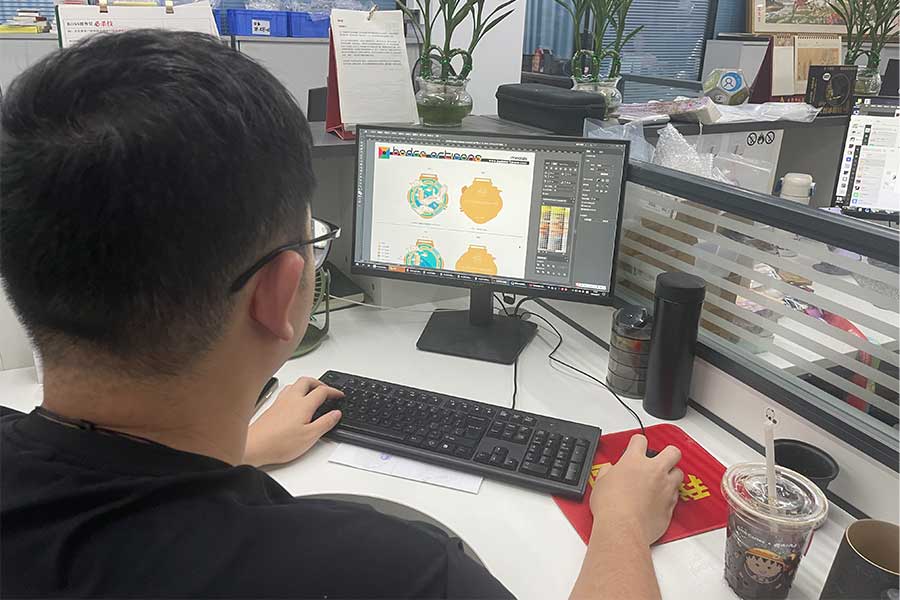
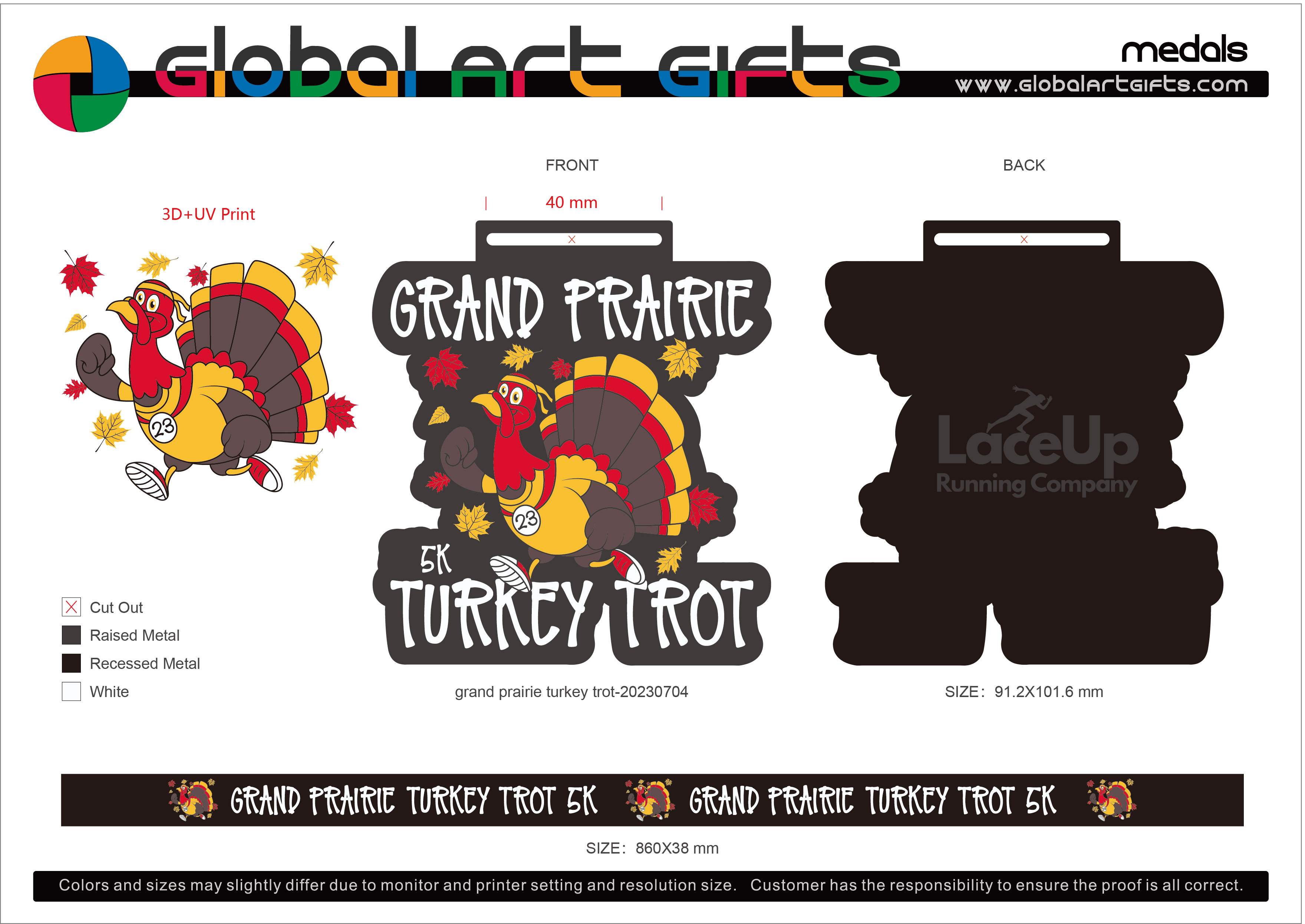
Within 24 hours of receiving your logo files, dimensions, and reference images, we return a design rendering plus a spec sheet showing size, thickness, plating, enamel layout, ribbon attachment, and packing. That clock we control completely, because it is a desk task, and most preventable problems are caught here — a line weight too fine to hold enamel, lettering too small for the mold, a logo that reads badly at the size you actually ordered.
The physical sample then takes 7–10 days: mold cutting, a trial shot, hand trimming and polishing, plating, enamel filling and curing, assembly, and photography before dispatch. Anyone promising a custom die-cast sample in three days is either reusing an existing mold or skipping the finishing steps that make a sample look good — and the second is worse for you than a slow sample.
For how the sample window sits inside the whole calendar, our shipping and lead time guide lays it out. Bulk production runs 7–15 days after approval and deposit; sampling does not compress that, it sits in front of it.
Where Sample and Mass Production Diverge
Your sample is, functionally, a hand-built object. It is cast in a short trial run, then trimmed, filed, polished, plated, and filled by people who know it will be photographed. Your bulk order runs on an 88-ton die casting machine at cycle speed, is deflashed in a batch process, plated on a full rack, and enamel-filled at line pace. Both are correct but not identical, and the differences cluster in four places.
| Variable | Why the sample differs | What you see in bulk | How we control it |
|---|---|---|---|
| Flash at the parting line | Hand-trimmed under a bench lamp, with time to chase every edge | A hairline fin can survive, especially at the four gates of a round medal | Sealed sample sets the limit; deflash time is specified per mold |
| Plating thickness and tone | Racked alone or lightly loaded, so current density is even | A full rack spreads current unevenly; recesses and edges plate thinner or thicker, shifting tone | Bath chemistry, current, and dwell are logged per batch (alkaline copper 500 seconds, acid copper 20–60 minutes, color, 100°C tunnel oven 40 minutes) and matched to the sealed sample |
| Enamel fill level | A senior operator fills and tops up until the surface sits exactly right | Fixed dispense volume at line speed; fill can sit slightly low or high in the recess | Fill depth is written into the spec — 0.3 mm minimum for soft enamel, 0.5 mm for imitation hard enamel, solid glass paint, and transparent glass paint |
| Surface texture | Extra polish passes, matte areas finished by hand | EDM texture is more consistent in bulk than hand finishing, but polish depth varies slightly | Texture is cut into the steel by spark erosion, so it cannot drift |
Two constraints are locked at the mold. Minimum wall thickness on our 88-ton machine is 2 mm, and Zamak 3, 5, and 7 run at a density of 6.7 g/cm³ with a melting point of 385°C — which is why zinc holds fine relief better than copper (8.9 g/cm³, difficult to cast below 3 mm walls) or iron (7.8 g/cm³, difficult below 4 mm). If your design needs a wall thinner than 2 mm, no amount of sampling will save it. The full comparison lives in our materials guide.
How to Run a Sample-vs-Bulk Comparison Yourself
All you need is daylight, a scale, and a caliper.
Put the sealed sample and a random production part side by side on a white sheet near a window, not under warm office lighting, which hides gold and rose-gold shifts. Compare in this order: outline and thickness with the caliper; weight on a 0.1 g scale; edge feel with a fingernail along the parting line; plating tone at the recess and at the outer rim, because a shift shows at the extremities first; enamel fill by tilting the medal so light rakes across the surface, since a dished fill shows as a shadow ring inside the color; and enamel position against the artwork, not against memory.
If something fails, photograph it on the white sheet with the sample in the same frame. A side-by-side photo settles arguments in seconds, and it is the difference between a claim a factory can act on and a complaint it can only deny. Our quality issue guide covers each defect and its cause.
Changing Your Mind After the Sample: Artwork vs Mold
Almost every buyer changes something after the first sample, which is why the sample exists. What surprises people is that the cost depends entirely on whether the change touches the steel.
| Change | Example | Tooling impact | Who normally pays |
|---|---|---|---|
| Artwork within the existing mold | Move a logo, change a date, swap an enamel or plating color, change ribbon color | None — same cavity, same die | Factory absorbs small changes; rework is quoted if a new sample is needed |
| Depth or relief adjustment | Raise a border, deepen a recessed field | Die touch-up (welding and re-cutting), not a new mold | Shared — quoted case by case |
| Outline or dimension change | New diameter, new silhouette, different shape | New mold, new EDM work, new trial shot | Buyer, as new tooling, credited again at bulk |
| A feature that breaks the cavity | New hole position, new loop, cut-through area | New mold | Buyer |
| Attachment or packaging change | Different ring, clip, backing card, box | None | Buyer pays the material delta only |
The rule we give clients is blunt: if the change touches the steel, it is a mold change and it restarts the 7–10 day sample clock. If it only touches color, plating, ribbon, or packing, it is a paperwork change we can usually turn around inside the same sample cycle.
What “Sealed Sample” Actually Means
A sealed sample — also called a signed sample, a master sample, or a golden sample — is a physical reference both sides have signed and dated, retained by the factory, and photographed from fixed angles with a scale in frame. It is what QC compares against and what settles a dispute, and it is only useful if the spec behind it is complete:
| Item to lock | What goes in the spec | How it gets verified |
|---|---|---|
| Dimensions | Diameter or width and height, thickness, tolerance band | Caliper on the sealed piece, recorded |
| Weight | Grams per piece | 0.1 g scale, recorded on the spec sheet |
| Plating | Color code or physical chip, plus finish (bright, satin, antique) | Visual match under daylight against the chip, not a screen |
| Enamel | Color code per area, fill type, fill depth, position map | Raking-light check plus the color map |
| Ribbon | Width, weave, color, print method, attachment style and position | Physical swatch stapled to the spec sheet |
| Hardware | Ring, clip, or loop type and finish | Sample photographed with hardware attached |
| Packaging | Bag type, backing card, box, insert, label position | Packed sample retained, not just described |
| Edge and texture | Polished, matte, or EDM texture; flash limit at the parting line | Fingernail and raking-light check |
Ribbon and packaging are the most commonly skipped lines, and the two that generate the most “this is not what we agreed” emails, because they come from different suppliers than the medal itself. If you are ordering race medals with printed ribbons, lock the ribbon spec at the same time as the medal — our ribbon guide explains what to specify. Same for packaging: a backing card sized for a 50 mm medal will not fit a 70 mm one, and nobody discovers that until the cartons are open.
Where the Three-Stage QC Meets the Sample
We run three inspection stages on every order, and the sealed sample is the reference at all three — which is how sampling connects to the 100% pass commitment instead of floating above it as a promise.
| Stage | When it happens | What it covers | Role of the sealed sample |
|---|---|---|---|
| First article | After the trial shot, before the sample ships | Dimensions, weight, relief depth, mold condition, gate marks | The first article becomes the sealed sample once you approve it |
| In-process | During bulk casting, plating, and enamel curing | Wall thickness, bath parameters and dwell times, enamel fill depth, cure schedule (60–70°C for 60–90 minutes semi-cure, then 100°C for 60 minutes full cure) | Operators compare parts to the sealed piece at the line, not to a photo |
| Pre-shipment | Before packing, on the finished batch | Full visual and dimensional check, plating tone, enamel position, assembly, packing count | Any part outside the sealed sample’s limits is pulled, not shipped |
100% pass on delivery sounds like a marketing line until you see what it requires: a reference object precise enough that “pass” is a decision rather than an opinion. A factory that cannot produce a documented sealed sample cannot honestly offer that commitment, because it has nothing to measure against.
Red Flags When You Audit a Factory at the Sampling Stage
Sampling is the cheapest audit you will ever run, and how a factory behaves predicts the bulk run better than any certificate. Certifications matter — we hold BSCI, Disney, ISO 9001, Reach, RoHS, TUV, Sedex, and USJ — but a certificate proves a system exists, not that people follow it.
A factory that will not put the sample fee credit in writing is planning to keep it. One that sends a sample with no spec sheet is telling you QC is visual and informal. One that photographs the sample under warm light and refuses a daylight shot is hiding a plating tone. One that quotes three days for a custom die-cast sample is skipping finishing steps. One that cannot explain why bulk might differ from the sample is either inexperienced or hoping you will not notice.
One boundary on scope: we cast metal — die-cast medals, multi-material medals, trophies, and attachments. We do not make textile, apparel, paper, or silicone products, and a supplier that offers all of those from one line is brokering the medal, not making it.
FAQ
Is there a charge for the sample, and is it credited against the bulk order?
Yes. Sampling is quoted as a separate line item, priced by color count, enamel areas, plating type, tooling requirement, and sample quantity. The tooling charge is normally credited in full once the bulk order is placed; the sample production charge is negotiable on the same terms. Courier and duties pass through at cost and are not credited. Get the credit conditions in writing before you pay.
How fast is the artwork, and how long does the physical sample take?
Artwork and a 3D rendering come back within 24 hours of receiving your logo files and dimensions. The physical sample takes 7–10 days from artwork approval, covering mold cutting, trial casting, hand trimming and polishing, plating, enamel filling and curing, and assembly. Bulk production then runs 7–15 days after approval and deposit.
What if the mass production does not match the sample I approved?
Then the sealed sample decides it, which is why it exists. Compare side by side in daylight with a caliper and a scale, photograph both in the same frame, and send the images with the batch number. The usual causes are flash at the parting line, plating tone drift from bath chemistry, or enamel sitting low — in-process variables, all correctable on a re-run, and all traceable because we log bath parameters and cure schedules per batch.
Who pays when I change the design after seeing the sample?
It depends on whether the change touches the mold. Moving a logo, changing a date, swapping an enamel or plating color, or changing the ribbon costs nothing in tooling, and we absorb small changes as goodwill. Changing the outline, the diameter, or a feature that breaks the cavity means a new mold, quoted as new tooling and credited again at bulk, with the 7–10 day sample clock restarting. Depth adjustments are quoted case by case.
What has to be signed off for a sample to be sealed?
Dimensions with tolerance, weight per piece, plating color code and finish, enamel codes with a position map and fill depth, ribbon width and construction with a physical swatch, hardware type and finish, packaging with a packed sample retained, and the acceptable flash limit at the parting line. All of it goes on one dated spec sheet, signed by both sides, with fixed-angle photographs taken alongside a scale. A sample without that sheet is a souvenir, not a reference.
Can we skip sampling to save time before a deadline?
Only if the design already exists in a mold we hold and you accept the existing specification as-is. For a new design, no — and a factory that agrees to skip it is telling you how it will run the bulk order. If the calendar is tight, compress the artwork loop instead: send complete files on day one, approve the rendering the same day, and lock colors from physical chips rather than screen previews.
Send Us the Brief
If you are sourcing medals for a race, a corporate program, a school, or a reseller catalog, send us the event, the quantity per design, and the date you need the medals in hand. Within 24 hours you will have a design rendering and a sampling plan — what the sample costs, what portion is creditable at bulk, and which items we need you to sign off before we cut steel.