Most suppliers answer “how long?” with a single number — “7–15 days” — and leave it there. That number is real but useless for planning, because it hides what is happening and what is waiting on you. A timeline you cannot see is a timeline you cannot protect. If you want the product overview first, browse our custom medals range; if you want to know what each week is actually spent on, read on.
The Three Stages, Named
A custom medal order moves through three clock-separated stages. They do not overlap, and the date is set by their sum plus your response time, not by the factory’s speed alone.
| Stage | Typical window | What it waits on |
|---|---|---|
| 1. Artwork & proof | Up to 24 hours | Your approval of the design proof |
| 2. Sampling | 7–10 days | Mold machining, first cast, finishing, QC sample |
| 3. Mass production | 7–15 days after approval | Full casting, finishing lines, assembly, 3-stage QC |
Our minimum order quantity guide explains why the run size matters; here the focus is time, not volume.
Stage 1: Proof in 24 Hours, Then You
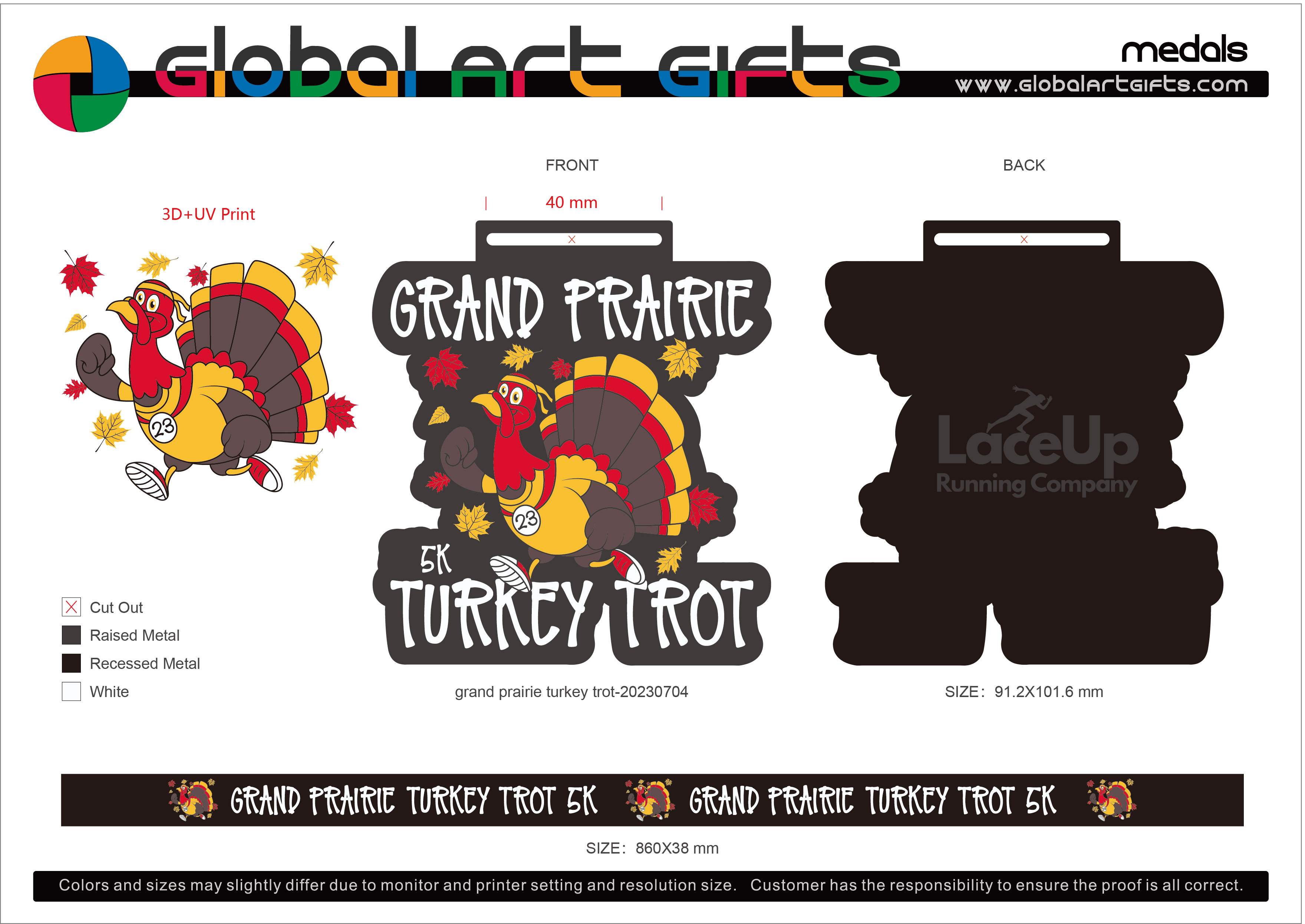
The first clock is short and mostly yours. We return a design proof within 24 hours of receiving your artwork — a rendered layout showing the relief, the plating tones, and the enamel areas. This is fast because no tooling exists yet; it is design work, not manufacturing.
The wait here is your approval. A proof sent on Monday that is approved on Friday has already lost four days that no factory can recover. The single biggest schedule risk in the whole order is the gap between “proof sent” and “approved,” and it is entirely on the buyer’s side. We offer unlimited revisions during this stage precisely so the approval is decisive when it comes.
Stage 2: Sampling Is Where the Mold Is Born
Sampling runs 7–10 days, and most of that is the mold, not the medal. A steel mold is machined from your approved artwork and heat-treated; the matte fields are burned in by spark erosion and the relief by CNC. That machining is measured in days, not hours, because the mold is the part that has to be right — every one of the 30,000+ units we cast daily inherits its accuracy from this step.
Once the mold exists, we cast a first batch, run it through finishing (plating or electrophoresis, enamel fill if the design has color), and pull a sample for QC. The sample you receive is the proof that the mold, the finish, and the fill all behave as drawn. If anything is off, the fix happens here, before mass production, where a correction costs minutes of mold time rather than a re-run of the whole order.
The enamel cure alone takes real time inside sampling: a low-temperature set at 60–70°C for 60–90 minutes, then a full cure at 100°C for 60 minutes. Multi-color samples stack those cycles. This is why “make it faster” during sampling usually means “skip a cure,” which we will not do.
Stage 3: Mass Production After Approval
Production is 7–15 days after you approve the sample. The range exists because production scales with order size and finish complexity, not because the factory is slow. A 500-piece soft-enamel run and a 5,000-piece two-tone run do not take the same time, and pretending they do would be dishonest.
Inside this stage:
- The mold is loaded and the 88-ton die-casting machine runs the body. Daily output exceeds 30,000 pieces, so volume is rarely the bottleneck.
- Finishing lines — electroplating (alkaline copper ~500 seconds, acid copper 20–60 minutes, tunnel oven 100°C/40 minutes) or electrophoresis or spray — process in batches.
- Assembly adds the ribbon (860–900 × 20–30 mm heat-transfer polyester, welded or sewn) and the attachment.
- Packaging ranges from PP bag to velvet bag, paper box, acrylic box, or blister pack.
Finish-Specific Timing
The finish choice moves the production window more than most buyers expect, because each finish has a different process length.
| Finish | Added process steps | Relative time impact |
|---|---|---|
| Electrophoresis antique | Single-pass coating + tunnel dry | Lowest |
| Spray paint | Atomize + controlled oven cure | Low–moderate |
| Electroplating (single tone) | Alkaline copper + acid copper + color + tunnel | Moderate |
| Electroplating two-tone | Above plus a masking pass | Highest |
A two-tone electroplated run simply has more line time than an electrophoresis-antique run of the same count. This is a real, defensible difference — not a delay tactic — and it is why finish should be chosen with the date in mind, not just the look. Our medal plating guide covers the finish menu in full.
A Worked Example: A 500-Piece Run
Suppose the ceremony is on day 45 from today. A realistic backward plan:
- Day 0: artwork received; proof out within 24 hours.
- Day 2: proof approved (buyer side — the variable).
- Day 2–11: sampling, mold born, sample shipped.
- Day 14: sample approved (buyer side).
- Day 14–26: mass production (electroplating, 500 pieces).
- Day 27–30: freight to destination.
- Day 30: in hands, with buffer before day 45.
If the proof or sample approval slips a week each, the buffer vanishes and the run lands on the ceremony date with no margin. The factory window (sampling + production) is fixed; the buyer windows are where the plan breaks.
The Rush-Order Reality
Buyers sometimes ask to “skip sampling” to save a week. That trades a 7–10 day verification for the risk of a 5,000-piece error — a bad trade we will not make on a new mold. What can be compressed is overlap: starting freight quotes and packaging prep during production, not after. What cannot be compressed is the mold machining and the enamel cures, because those are physical, not administrative. Anyone offering a 500-piece custom medal in three days is either reusing a stock mold or skipping steps you would not want skipped.
The QC Stages That Protect the Date
We run three QC stages rather than one end-of-line check, because catching a defect at stage one costs a fraction of catching it after packaging. The trade-off is that QC is built into the schedule, not bolted on. A run that “finished early” but failed final inspection still ships late; building inspection in is the only way to ship on the date promised. Our standard is 100% qualified delivery, which is a process claim, not a slogan.
Freight: The Fourth Clock Nobody Quotes
Production lead time stops at the factory door. Freight — by air or sea, to your destination — is a separate clock that varies by method and distance, and it is not part of the 7–15 days. A buyer who plans the ceremony against production alone, ignoring freight, is the other common source of a missed date. Build freight into the backward plan from the start.
What You Control, and What You Don’t
| Factor | Who controls it | Effect on date |
|---|---|---|
| Proof approval speed | Buyer | Large — pure wait time |
| Sample approval | Buyer | Large — gates production |
| Order size | Buyer | Moderate — scales production window |
| Finish complexity | Buyer | Moderate — more passes, more time |
| Factory throughput | Factory | Small — capacity is high |
The honest read: most “delayed” orders were delayed at an approval gate, not on the floor. The factory-side window is predictable; the buyer-side windows are where dates slip.
Planning Backward From the Event
Start from the ceremony date and subtract, in order: freight (varies by destination), production (7–15 days), sampling (7–10 days), and a buffer for proof revisions. What remains is your artwork deadline. Buyers who work forward from “I’ll send the file soon” routinely compress the sample and production windows until one of them breaks. Working backward is the only method that respects the fixed stages.
Across 50+ countries we have shipped to events on six continents, and the orders that landed on time were the ones planned around these three stages, not the ones that demanded a shorter number.
Reading the Timeline as Three Separate Clocks
The most useful habit a buyer can build is to stop asking “how long?” as a single question and start asking it as three. Each clock below is independent, and each is owned by a different party:
- The proof clock runs up to 24 hours and is pure design time. No steel has been cut yet; we render the layout from your artwork and return it for approval. This is the cheapest clock to keep short, because the only thing that slows it is a late reply on your side.
- The sampling clock runs 7–10 days and is tooling time. The steel mold is born here by spark erosion for the matte fields and CNC for the relief, then heat-treated, then used to cast and finish the first sample. This clock cannot be rushed without risking every unit that follows.
- The production clock runs 7–15 days after sample approval and is volume time. With the mold in hand, the 88-ton die-casting machine runs the body and our daily output exceeds 30,000 pieces, so the run length is driven by finish passes and assembly, not by machine scarcity.
Treating these as one number hides the truth that two of the three clocks are yours to keep moving. A factory can guarantee its own windows; it cannot guarantee your inbox. Our minimum order quantity guide explains how run size feeds the production clock; here the point is simply that the three clocks are separate and should be planned separately.
A Second Worked Example: Three Events, One Mold
The single-run example above is the simple case. Most institutional buyers actually run several events from one program — a district with fall, winter, and spring seasons, or a company with quarterly performance awards. The scheduling logic does not change, but the buffer math gets tighter and mold reuse becomes decisive.
Imagine three ceremonies at days 60, 120, and 180. The naive plan orders all three at once against the first date. The smarter plan treats each as its own backward schedule but reuses the retained mold:
- Event A (day 60): proof day 0–1, sample day 2–11, approval day 14, production day 14–26, freight day 27–33. Landed with 27 days of buffer.
- Event B (day 120): because the mold already exists, sampling is not repeated — only a proof confirmation and a production window of 7–15 days. Reorder placed day 100, landed day 115.
- Event C (day 180): same reuse logic; reorder placed day 160, landed day 175.
The mold-retention point is what turns three separate 7–10 day sampling waits into one. For a program that reorders annually, this is the difference between paying tooling three times and paying it once. We cover that program model in our corporate recognition guide.
What a Realistic Rush Actually Looks Like
Buyers sometimes open with “we need this in five days.” Here is the honest factory answer. The fixed process floors are: proof up to 24 hours, sampling 7–10 days on a new mold, and production 7–15 days after approval. The only way those collapse is if one is removed — and the one that gets removed is almost always sampling, which means shipping against an unproven mold. We do not do that on a new design, because a 5,000-piece error costs more than the week it saves.
What we can do on a tight schedule is overlap the administrative clocks: open freight quotes while production runs, pre-stage packaging, and confirm the ribbon (860–900 × 20–30 mm heat-transfer polyester, welded or sewn) at the proof stage rather than after sampling. These overlaps shave calendar days without skipping any physical process. If you are working from a final event date, the right move is to contact us early and let the three stages stack with their real minimums — not to ask us to break the 7–15 day floor. See our contact page to open that conversation.
Freight Is a Choice, Not a Constant
The fourth clock — freight — is the one buyers most often leave to chance. Air is faster but costs more per carton; sea is cheaper but adds weeks. Neither is part of the 7–15 day production window, and neither is something the factory can shorten after the fact. The disciplined buyer decides the freight method at the proof stage, not after production finishes, because the production schedule and the freight schedule should run in parallel, not in series. For a school or corporate program with a fixed ceremony date, locking freight early is the single most reliable way to protect the date.
The Five Scheduling Mistakes We See Most
Across 50+ countries and 15 years, the missed deadlines follow a short list:
- Approving the proof late. The proof sits in an inbox over a weekend and a four-day gap appears that no factory can recover.
- Treating sampling as optional. Skipping the 7–10 day sample to “save time” ships an unverified mold to mass production.
- Forgetting freight. Production ends at the factory door; air or sea to the destination is a separate clock that is easy to ignore until it is too late.
- Adding finish passes after approval. A two-tone change mid-run adds a masking pass and resets part of the line.
- Planning forward from “send the file soon.” This compresses sampling and production until one breaks. Work backward from the event date instead.
None of these are factory failures. They are plan failures, and every one is avoidable with the backward method described above. If you want the finish-specific detail that drives the production window, our plating finishes guide breaks down why a two-tone run takes longer than an electrophoresis run of the same count.
FAQ
What is the fastest a custom medal order can be ready? Realistically, proof (up to 24 hours) plus sampling (7–10 days) plus production (7–15 days) after approval, plus freight. We do not quote faster than that, because each stage has fixed process time.
Why does sampling take 7–10 days? Most of it is mold machining — spark erosion for matte fields and CNC for relief — plus first casting, finishing, and a QC sample. The mold is the part every unit depends on, so it is not rushed.
Does a larger order take longer in production? Yes, but mildly. Our daily output exceeds 30,000 pieces, so volume rarely bottlenecks; finish complexity and packaging tier move the window more than count alone.
Can I speed up by skipping sampling or QC? No. Skipping sampling risks a full-run error; our three-stage QC backs the 100% qualified delivery standard. Both are built into the schedule for good reason.
Does finish choice change the timeline? Yes. Electroplating (especially two-tone) adds line time over electrophoresis or spray. Choose finish with the date in mind, not just the look.
Should I plan from the event date or from today? From the event date, backward: subtract freight, production, sampling, and a revision buffer. Planning forward from “send the file soon” is how dates get compressed until they break.
Talk to the Factory
Send us your event date and we will lay the three stages backward so the proof and sample approvals land with buffer — contact MedalOrigin to lock a realistic schedule instead of a hopeful one.