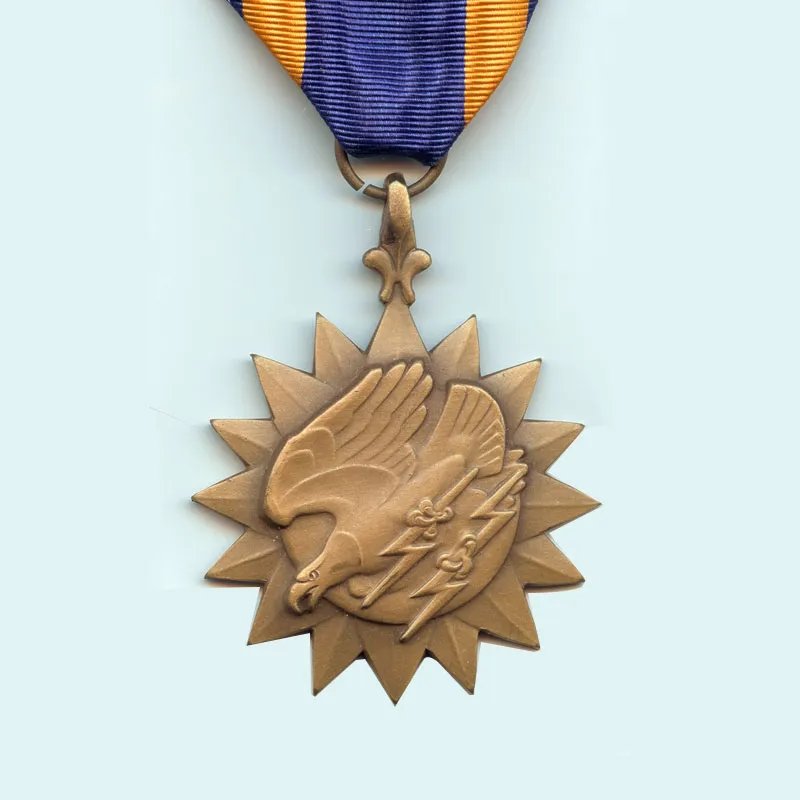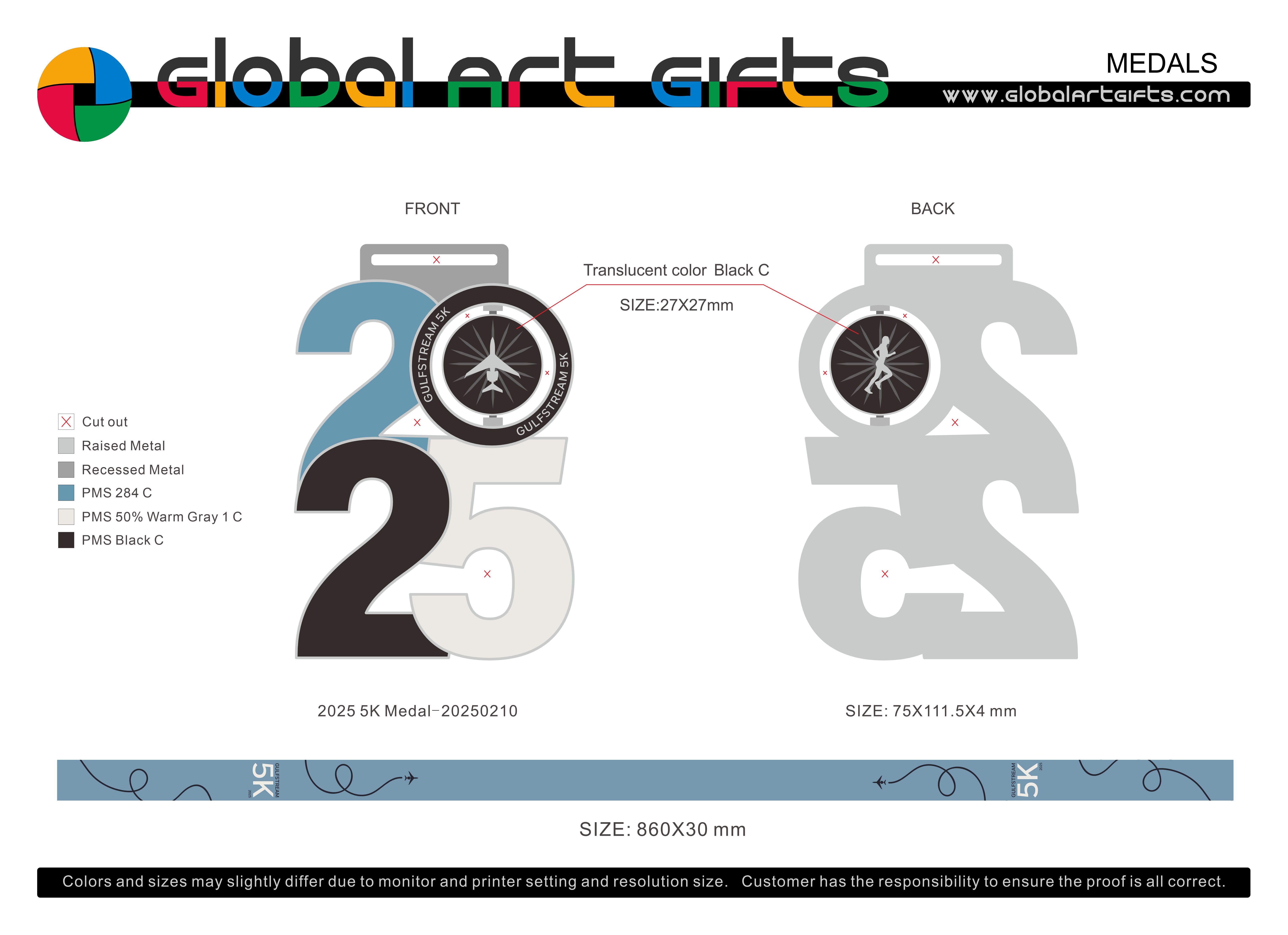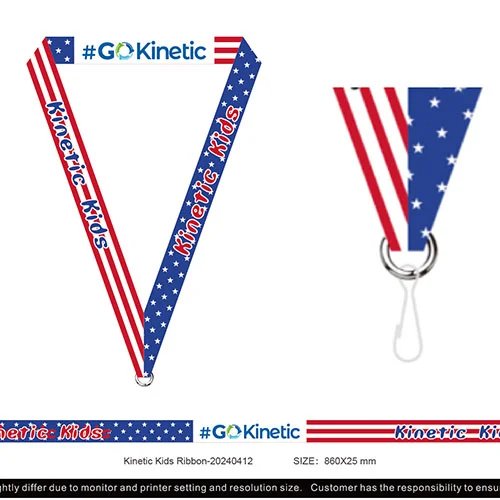
A medal ribbon does three jobs at once: it holds the medal around a neck, it carries the event branding, and it’s the first thing anyone sees in a photo. Most buyers spend weeks on the medal design and pick the ribbon in the last five minutes. That’s backwards. We manufacture custom medal ribbons alongside the medals they hang from — same factory, same QC line, same export crate. The ribbon deserves its own procurement plan.
What we’ll cover: the four ribbon materials and which event each suits, printing methods ranked by durability and cost, the hardware attachment options that change how a medal wears, safety breakaway mechanisms for kids’ events, and the pricing benchmarks that separate a fair quote from an inflated one.
[Image: medal-ribbons.jpg — Assorted custom medal ribbons in various colors with sublimated logos and event branding attached to medals]
Ribbon Material: The Four Fabrics You’ll Actually Choose Between
Not every ribbon material works for every event. Here’s what we stock and what we recommend.
| Grosgrain | Satin | Polyester Webbing | Nylon Webbing | |
|---|---|---|---|---|
| Texture | Ribbed, matte | Smooth, glossy | Flat, matte | Firm, semi-gloss |
| Durability | High — fray-resistant, colorfast | Medium — prone to snagging | High — tough, washable | Very high — abrasion-resistant |
| Print compatibility | Screen print, foil stamp | Screen print only | Sublimation (full color) | Screen print only |
| Cost at 1,000 pcs | $ | $ | $$ | $$ |
| Best for | Sports events, schools, general use | Formal ceremonies, photography | Any event with logo/gradient on ribbon | Military, outdoor, long-term wear |
| Standard width | 15–38mm | 15–38mm | 20–30mm | 20–30mm |
| Standard length | 860–900mm (neck drop) | 860–900mm | 860–900mm | 860–900mm |
Grosgrain is the default. It’s what 70% of our orders use. The ribbed texture hides creases, the polyester base holds color through washing and sun exposure, and the surface takes screen printing and foil stamping cleanly. If you’re not sure what to pick, pick grosgrain.
Satin looks better in photos and worse after six months. The smooth surface photographs beautifully — reflection off the sheen gives a premium look under ceremony lighting. But snags are permanent, and satin frays at the cut edge if it’s not heat-sealed properly. We use satin for formal galas and awards dinners where the ribbon is worn once and the photos matter more than the longevity.
Polyester webbing with sublimation is the modern standard for any event with sponsor logos, gradients, or photographic elements on the ribbon. Sublimation dyes the polyester at a molecular level — the design is in the fiber, not on top of it. It won’t crack, peel, or fade. We run sublimated ribbons at 200°C for 45–60 seconds under pressure, transferring the design from paper to fabric in a single heat press cycle. The result is edge-to-edge full color with photo-quality resolution.
Printing Methods: What Goes on the Ribbon and How Long It Stays There
| Method | Colors | Durability | Setup Cost | Best For |
|---|---|---|---|---|
| Sublimation (heat transfer) | Unlimited, photo-quality | Excellent — in the fiber, won’t peel | Low — no screens needed | Logos, gradients, sponsor marks |
| Screen printing | 1–5 solid colors | Very good — sits on surface | Moderate — screens per color | Bold text, simple logos at scale |
| Woven | Limited by thread colors | Maximum — part of the structure | High — loom setup | Prestigious recurring awards |
| Hot stamp foil | Metallic gold/silver only | Moderate — can wear off | Low | Formal academic, military |
Sublimation dominates event medals now, and for good reason. A charity 5K with five sponsor logos across the ribbon — that’s a one-pass sublimation job. Screen printing would need five separate screens and five registration setups. The cost crossover happens around 200 pieces: below that, sublimation is cheaper because there’s no screen fee. Above 500, screen printing can become cheaper per unit but you lose the ability to do gradients and photos.
One quality note most guides won’t mention: sublimation only works on polyester. If you spec a cotton or cotton-blend ribbon, sublimation won’t bond. The dye needs polyester polymer chains to grip. We see this mistake on about one in ten first-time buyer briefs — someone asks for a “cotton ribbon with full-color logo” and we have to explain that cotton takes screen printing, not sublimation.
Hardware: The Attachment That Changes How a Medal Wears
The hardware connecting ribbon to medal is a functional detail that affects safety, appearance, and cost. Here are the standard options from our assembly line.
| Hardware Type | Mechanism | Best For | Cost Impact |
|---|---|---|---|
| Split ring (jump ring) | Metal ring threaded through medal hole + ribbon loop | Standard for most events | Baseline — included |
| Lobster claw clasp | Spring-loaded clip, detachable | Medals that get removed/re-worn | +$0.10–$0.20/unit |
| Breakaway clasp | Plastic snap barrel, releases at 2–5 kg pull | Kids’ events, K-12 schools | +$0.15/unit |
| Direct stitch | Ribbon sewn directly around medal loop | Permanent, clean look | +$0.05/unit |
| D-ring + S-hook | Metal D-ring on ribbon, S-hook to medal | Heavy or asymmetrical medals | +$0.15–$0.30/unit |
| Crimp cover | Metal sleeve conceals raw ribbon end | Polished, finished appearance | +$0.03–$0.08/unit |
The split ring is our default and it works for 90% of orders. But the breakaway clasp deserves special attention. For any event involving children under 13, a breakaway mechanism is a safety requirement, not an option. The mechanism is straightforward: a two-piece plastic barrel that snaps apart under 2–5 kilograms of pull force. Both halves stay on the ribbon so the medal can be reassembled. It costs about $0.15 extra per unit. We cover the full children’s safety spec in our kids’ medals guide.
Lobster claw clasps are worth considering for event medals that people will take on and off — corporate conferences where attendees might wear the medal for the awards ceremony but not during breakout sessions, for instance. The clasp lets them detach the medal and clip it back on later without untying or cutting the ribbon.
Ribbon Dimensions: Getting the Fit Right
Our standard neck ribbon spec is 860–900mm in total length by 20–30mm in width. That length creates a natural drape where the medal hangs at mid-chest level on an average adult. Here’s what happens when the dimensions are wrong:
Too narrow (under 15mm): the ribbon twists and doesn’t lay flat. Looks cheap in photos.
Too wide (over 38mm): the ribbon dominates the medal. A 2-inch medal on a 1.5-inch ribbon looks like an afterthought.
Too short (under 700mm): the medal rides up near the collarbone. Uncomfortable and awkward in ceremony photos.
Too long (over 1000mm): the medal hangs at belly-button level. Looks sloppy.
For kids’ events, we shorten the spec to 700–750mm. For formal military or academic presentations with a drape ribbon (pin-back rather than neck-hang), the ribbon is typically 50–80mm long with a brooch pin attachment — a totally different form factor that we cover separately for military medal orders.
Pricing: What a Fair Quote Looks Like
Ribbon pricing depends on material, print method, quantity, and hardware. Here are our factory-direct benchmarks.
| Spec | 500 pcs | 1,000 pcs | 5,000 pcs |
|---|---|---|---|
| Grosgrain, 1-color screen print, split ring | $0.35–$0.50 | $0.28–$0.40 | $0.20–$0.30 |
| Satin, foil stamp, split ring | $0.40–$0.55 | $0.32–$0.45 | $0.25–$0.35 |
| Polyester webbing, full-color sublimation, lobster claw | $0.55–$0.75 | $0.45–$0.60 | $0.35–$0.50 |
| Nylon, 2-color screen, woven edge, crimp cover | $0.60–$0.85 | $0.50–$0.70 | $0.40–$0.55 |
These are ribbon-only prices. A ribbon bundled with a medal (which is how we ship 95% of orders) typically adds $0.25–$0.50 to the total per-unit cost because assembly labor and hardware are shared across the two components.
Hidden costs to ask about upfront: setup/artwork fees ($30–$50 for screen printing, typically free for sublimation), sample fees ($15–$30, refundable against the main order), and shipping — a box of 1,000 ribboned medals weighs roughly 18–22 kg, and air freight on that to the US runs $200–$400.
Our bulk ordering page has the full pricing breakdown for medals with ribbons as a bundled product.
[Image: process-06-riveting.jpg — Factory worker attaching ribbons to medals using split rings and hardware on the assembly line]
FAQ: Medal Ribbon Procurement
What’s the standard ribbon size for a neck medal? 860–900mm long by 20–30mm wide. That drapes the medal at mid-chest on an average adult. For kids, we use 700–750mm length. Width under 15mm tends to twist; over 38mm overpowers the medal.
Can I put our event logo and sponsors on the ribbon? Yes — sublimation printing handles full-color logos, gradients, and photo elements on polyester webbing. The design is dyed into the fiber at 200°C so it won’t crack or peel. Screen printing works for simpler designs on grosgrain or satin. Send vector artwork (.ai, .eps, .pdf) and we’ll proof it on the ribbon material before production.
How do I make sure the ribbon color matches our event branding? Send a Pantone number. Our ribbon dyeing matches to Pantone textile standards. For sublimated ribbons, the color is part of the printed design and can match any Pantone in the CMYK-printable gamut. For solid-color grosgrain or satin, we dye to the closest Pantone match that the polyester base can achieve. Request a physical swatch if color-critical.
What’s the safety requirement for kids’ event ribbons? Breakaway clasps that release at 2–5 kg of pull force. Mandatory for children under 13 per CPSIA (US) and EN 71 (EU) standards. The clasp adds about $0.15 per unit. Do not use standard split rings for kids’ medals — the ribbon becomes a strangulation hazard if it catches on playground equipment or during roughhousing.
How long do sublimated ribbons last? The print won’t fade or peel because it’s in the fiber, not on the surface. We’ve seen sublimated ribbons from events 5+ years ago that still look sharp. The limiting factor is the polyester fabric itself — after years of handling, the edges may fray slightly. Heat-sealed edges help prevent this.
Can I order ribbons separately from medals? Yes. Some buyers have existing medal inventory and just need replacement or upgraded ribbons. Our MOQ for ribbon-only orders is 200 pieces. The per-unit price is slightly higher than ribbon-with-medal bundles because assembly isn’t shared, but it’s a common request for events that reuse medal designs year to year and just update the ribbon with the current year’s date.
Recommended Reading
- How Custom Medals Are Made: Inside Our Die-Casting Factory — see how ribbons attach to medals in the full 12-step process
- How to Order Custom Medals in Bulk: MOQ, Pricing & Timeline — the complete procurement workflow
- Kids Medals: Safety Standards, Design Tips & What Parents Want — breakaway hardware and safety specs in detail