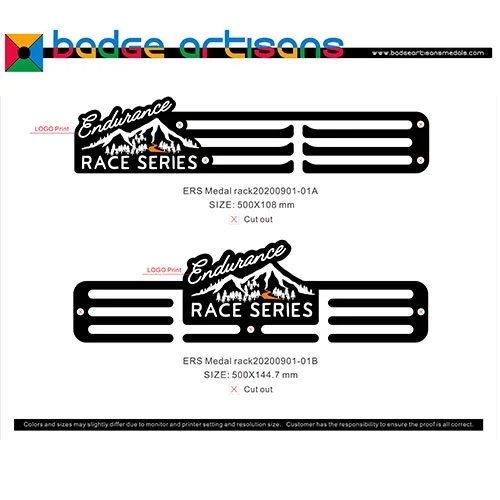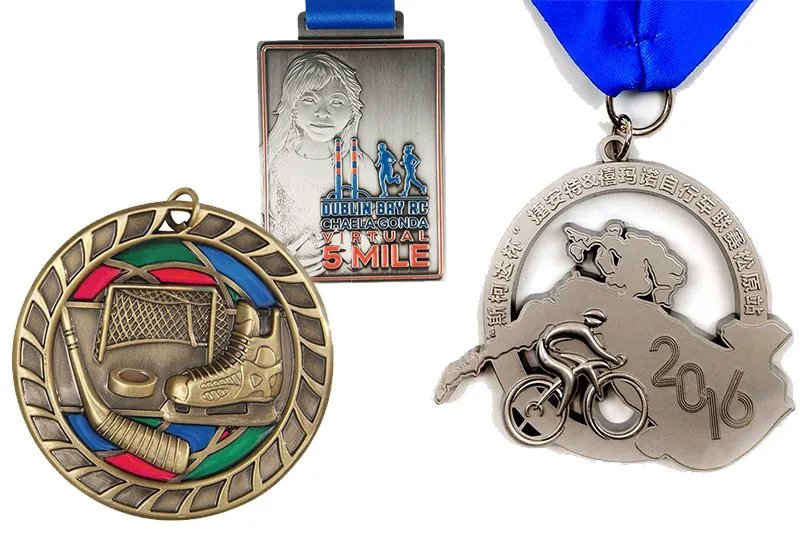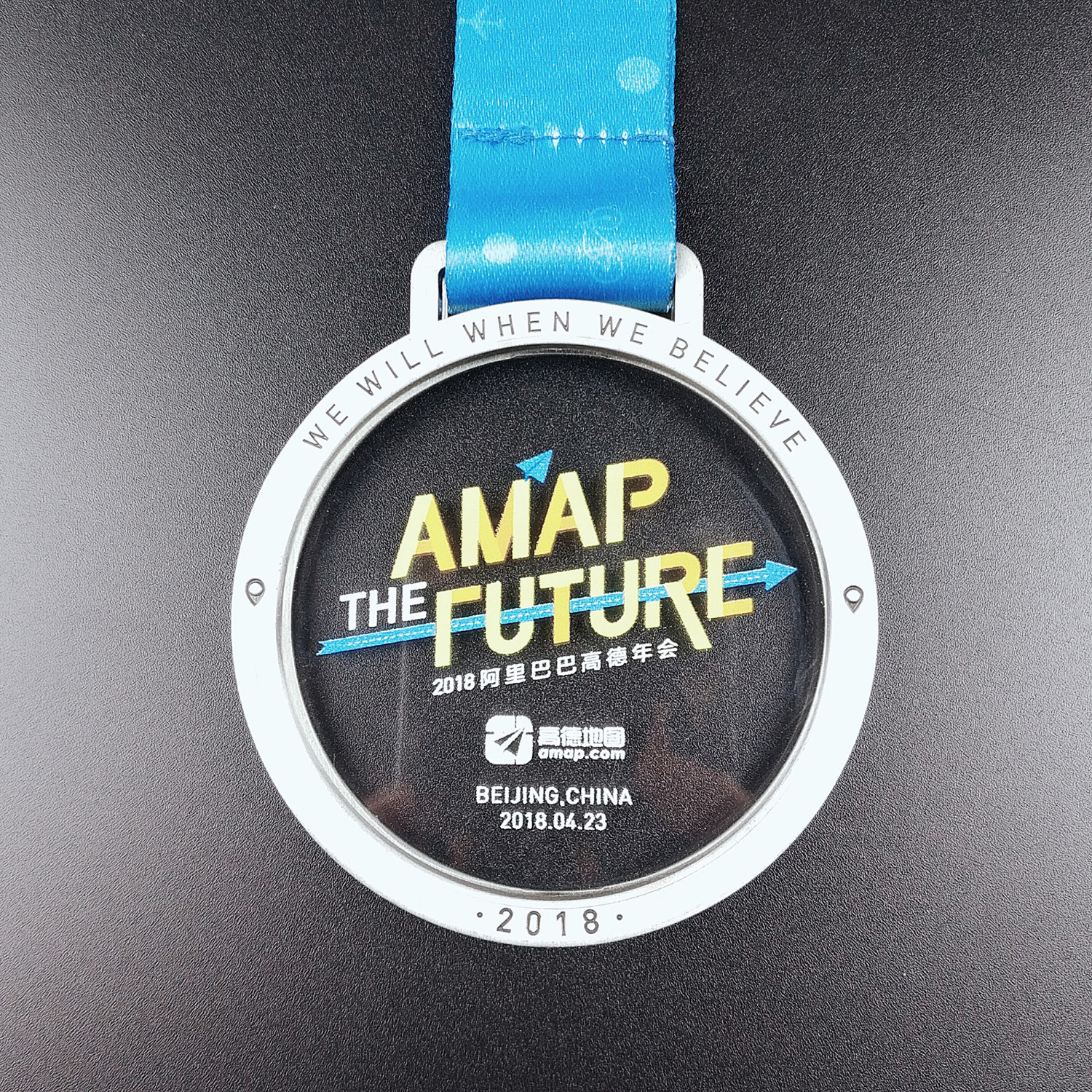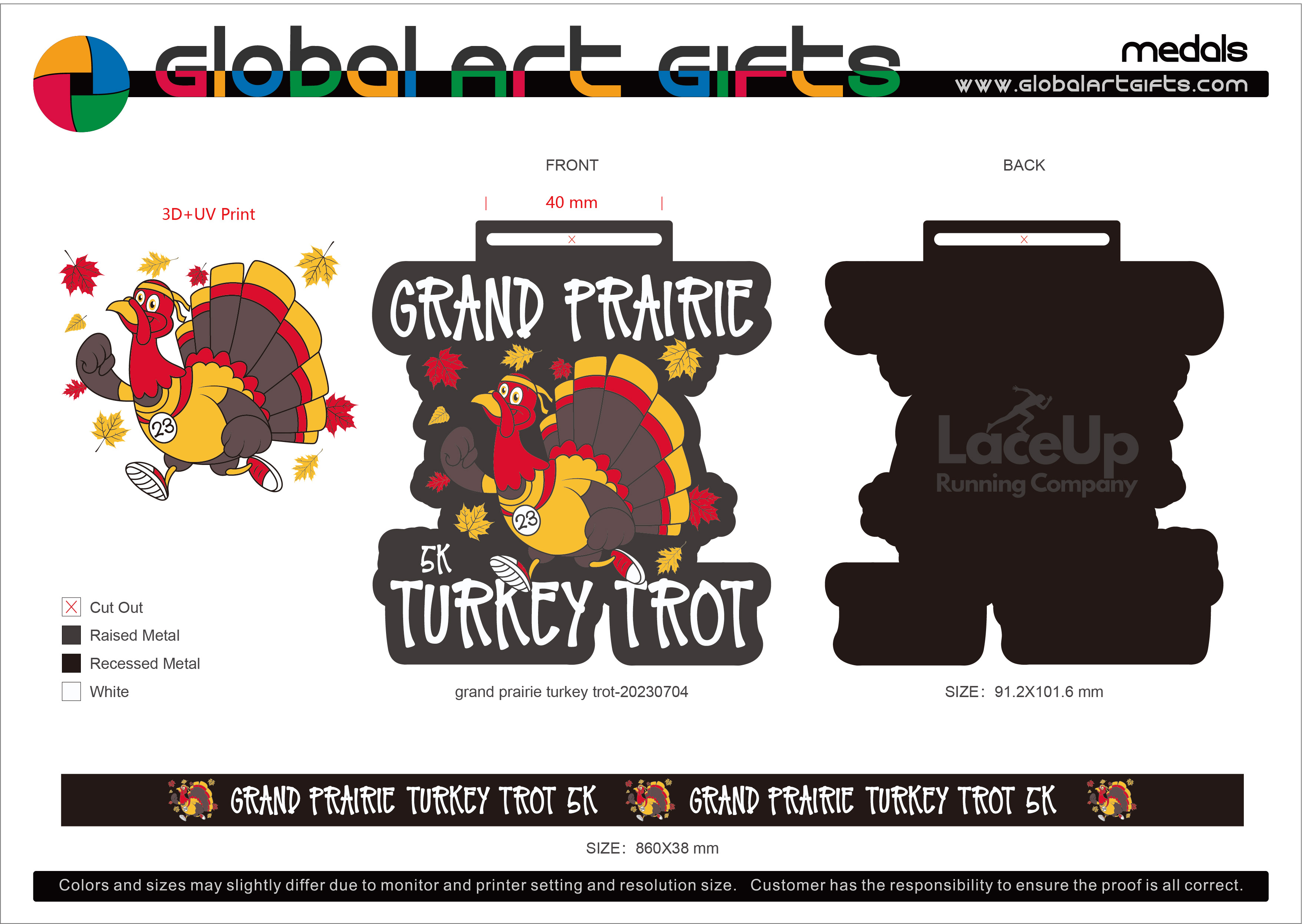
A corporate gala medal and a charity fun-run medal look nothing alike — but they come off the same production line. The difference is in how you plan them. We’ve made custom event medals for Fortune 500 service award dinners, for 5K breast cancer fundraisers with 2,000 participants, and for small nonprofit galas with a 100-piece order. Same factory. Different brief.
What we’ll cover: the four decisions that determine your medal budget before you even talk to a supplier, a side-by-side of corporate vs. charity medal requirements (they’re not the same brief), the material and finish options that match each event type, timeline planning so your medals don’t arrive the day after your gala, and the three customization details that make a medal feel expensive without adding cost.
[Image: event-medals.jpg — Assorted custom event medals in gold, silver, and bronze finishes with colorful ribbon attachments for corporate and charity events]
Corporate vs. Charity: Two Different Briefs
The same factory floor with the same machines produces both. But the brief on your end should look different. Here’s what changes.
| Corporate Recognition | Charity Fundraiser | |
|---|---|---|
| Primary goal | Perceived value, prestige | Participation proof, memory |
| Typical quantity | 50–500 pcs | 500–5,000 pcs |
| Budget per medal | $3–$15 | $0.80–$4 |
| Material sweet spot | Brass or thick zinc alloy (3mm+) | Zinc alloy (2mm standard) |
| Finish preference | Antique gold, dual plating, polished | Bright gold/silver, single-plate |
| Ribbon style | Satin drape, custom woven | Sublimated neck ribbon with event branding |
| Presentation | Velvet box or wooden case | Individually polybagged |
| Lead time sensitivity | High — fixed event date, zero margin | High — but usually planned further out |
| Design complexity | Logo + engraving + multi-layer | Event theme, sponsor logos, year |
Corporate medals live on a desk or a shelf. They get picked up, shown to colleagues, photographed. The weight matters — literally. A brass medal at 8.9 g/cm³ has a heft that zinc alloy at 6.7 g/cm³ doesn’t match. That extra density costs more, but for a CEO handing out service anniversary awards to 40 people, it’s the right call.
Charity medals live in a shoebox or on a corkboard. The participant wants the memory, not the precious metal. A 2mm zinc alloy medal with bright electroplating and a full-color sublimated ribbon carrying the event name and sponsor logos — that’s where the value is. We produce north of 5,000 charity event medals a month, and the spec that keeps coming back is: zinc alloy body, single-color plating (gold or nickel), event logo on ribbon, MOQ-friendly at 100 pcs.
Material Decisions That Shape the Budget
Your medal material is the single biggest cost lever you’ll pull. Here’s the practical range for event medals.
| Material | Unit Cost (500 pcs) | Weight Feel | Detail Level | Best Event Type |
|---|---|---|---|---|
| Zinc alloy, 2mm | $0.80–$2.50 | Medium-light | Excellent — sharp 3D | Fun runs, walkathons, community events |
| Zinc alloy, 3mm+ | $1.50–$4.00 | Medium-heavy | Excellent | Galas, award dinners, conferences |
| Brass, 3mm+ | $3.00–$10.00 | Heavy, premium | Very good | Executive recognition, milestone awards |
| Iron, 4mm+ | $0.60–$1.80 | Heavy, budget | Moderate — softer edges | Large-volume charity, school events |
| Acrylic + metal combo | $2.00–$6.00 | Light, modern | Good | Tech conferences, creative industry awards |
Zinc alloy is our default recommendation for 80% of event medals. At 385°C melting temperature, it flows into a mold cavity with the viscosity of warm honey — meaning your event logo with fine text and a 3D city skyline comes through sharp. The medal materials guide walks through the full comparison, but the short version for event planners: if your medal needs to impress in someone’s hand, go brass or thick zinc. If it needs to look great in a photo on Instagram, 2mm zinc is plenty.
But here’s something most buying guides skip: material choice determines your plating adhesion. We plate every zinc alloy medal with an alkaline copper base layer — roughly 500 seconds in the bath — before the finish layer goes on. That copper strike is what keeps gold plating from flaking off six months later when the recipient pulls the medal out of a drawer. Cheap suppliers skip it or cut the dwell time. You won’t see the difference in a proof photo. You’ll see it in February when someone emails you about a peeling medal.
The Timeline Nobody Budgets For
Every event has a fixed date. Medals don’t ship on Amazon Prime.
| Stage | Standard | Rush (adds 20–30%) |
|---|---|---|
| Artwork submission → first proof | 24 hours | 12 hours |
| Design revisions (2–3 rounds) | 3–5 days | 1–2 days |
| Sample production | 7–10 days | 5–7 days |
| Sample approval → mass production | 7–15 days | 5–10 days |
| QC inspection (3-stage) | 2 days | 1 day |
| Air freight (to US/UK/EU) | 5–10 days | 3–5 days |
| Total from brief to delivery | 4–6 weeks | 2.5–4 weeks |
That four-to-six-week window is real. We see the same panic every November when corporate clients realize their year-end gala is 18 days away and they need 300 custom medals. We can rush it. But rush fees on a 300-piece order add roughly $1–$2 per medal, and the air freight premium for a 25 kg box from Guangdong to Chicago can run $300–$500 more than sea freight.
The fix is boring but reliable: when you book the venue, email your medal supplier. Same day. Our bulk ordering page has the step-by-step process, and the number-one thing we tell first-time buyers is that the design phase eats more calendar days than production. You’ll spend three to five days going back and forth on proofs — adjusting the logo size, tweaking the ribbon Pantone, deciding between antique gold and polished gold. That’s not delay. That’s normal. Budget for it.
Three Design Moves That Add Perceived Value Without Adding Cost
After 15 years of making event medals, we’ve learned that perceived value doesn’t come from the material invoice. It comes from three things you control in the design phase.
1. Dual plating on a single medal body. A gold base with nickel (silver) highlights on raised areas — same zinc alloy blank, same mold, no extra material cost. The masking step adds maybe $0.15 per unit. But the medal looks like it cost twice as much. We run dual-plated event medals regularly: gold body with silver text on the raised border, or rose gold base with gold lettering. The contrast tricks the eye into reading “expensive.”
2. Thickness where it counts. You don’t need a 5mm-thick medal to feel substantial. A 2.5mm zinc alloy body with a 1mm raised rim around the edge creates the same hand-feel as a 3.5mm flat medal, but uses 30% less material. The mold achieves this by recessing the center and leaving a thicker perimeter ring. Our design guide covers the file preparation side, but the manufacturing trick is simple: a stepped mold cavity.
3. The ribbon as part of the medal, not an afterthought. A full-color sublimated ribbon with the event logo, date, and sponsor marks costs maybe $0.25 more than a plain single-color grosgrain ribbon. But it transforms the package. Charity events especially — when a participant hangs that medal on their wall, the ribbon tells the story without needing the medal body to do all the work.
[Image: process-07-plating.jpg — Electroplating line showing medals being dipped in gold and nickel plating baths for dual-tone finishing]
FAQ: Event Medal Procurement
How far in advance should I order custom event medals? Six weeks minimum for standard production and air shipping. Eight weeks if you want sea freight (cheaper but slower). We’ve done 18-day turnarounds on rush orders, but every day you cut from the timeline adds cost — rush production fees, air freight premiums, and less time for design revisions.
What’s the realistic minimum order? 100 pieces per design. That’s our standard MOQ and it covers most corporate galas and mid-size charity events. Need 50? We can do it, but the per-unit price goes up because mold amortization is spread across fewer pieces. Our bulk order page breaks down the pricing tiers.
Can I mix gold, silver, and bronze in the same order? Yes — and it’s common. Same mold, same zinc alloy blank, three different plating baths. The cost difference is in the plating metal (gold-tone vs. nickel vs. copper-tone), which adds roughly $0.10–$0.30 per unit for the different finishes. No new mold needed.
What file format should I send for the medal artwork? Vector files — Adobe Illustrator (.ai), CorelDRAW (.cdr), or high-resolution PDF. Your JPEG logo on a letterhead is not production-ready, and that’s fine. It’s where everyone starts. Our design team converts raster logos to vector as part of the free design service, usually in the first 24-hour proof window.
How do I make sure the medals don’t arrive with defects? We run three-stage QC on every order: visual inspection after plating, dimensional check (caliper verification against the mold spec), and a final “table audit” where every medal in the batch is laid out and checked under 5000K lighting. Defects that survive all three — casting porosity, plating bubbles, uneven color fill — are under 0.3% of output. Ask any supplier you’re evaluating what their QC stages actually are. If the answer is “we check before shipping,” keep looking.
Do you offer medal presentation packaging? Yes — velvet boxes, wooden cases, PU leather display cases, and individual polybags. For corporate galas, the velvet box adds about $1.50–$3.00 per unit and we strongly recommend it. The packaging is the first thing the recipient touches. A $5 medal in a nice box feels like a $15 award. A $15 medal in a plastic bag feels like a $5 giveaway.
Recommended Reading
- How to Order Custom Medals in Bulk: MOQ, Pricing & Timeline — the procurement playbook
- Custom Medal Design Tips: What Manufacturers Wish You Knew — art file prep and design rules
- How Custom Medals Are Made: Inside Our Die-Casting Factory — the full 12-step production process