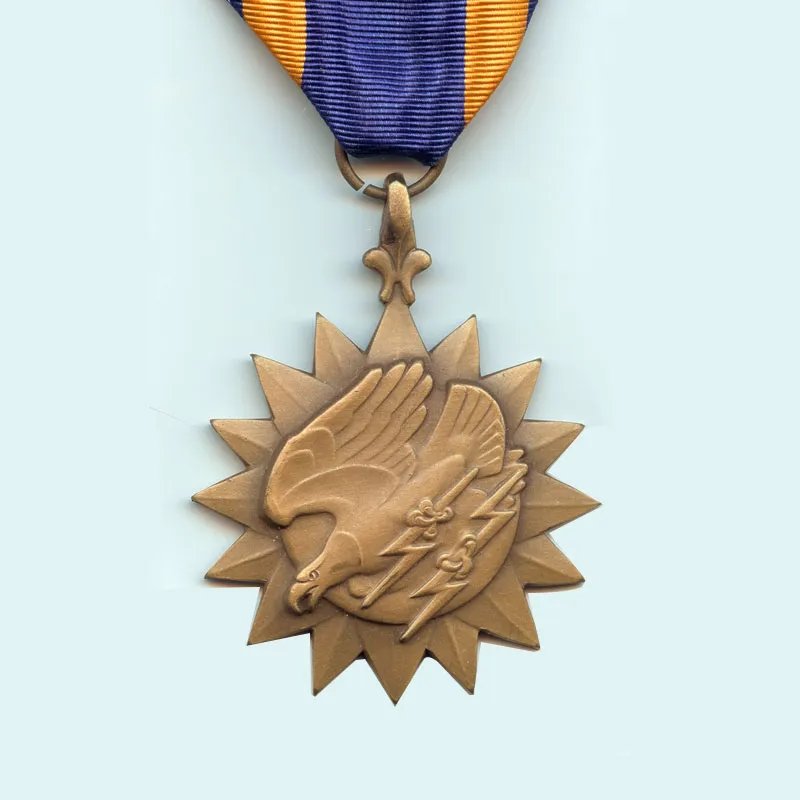
You want a medal where every letter, every contour, every hair on a portrait comes through sharp. That’s not about design taste — it’s about which metal and which process you pick. The method that consistently delivers that sharpness is zinc alloy die casting. Understanding custom medal materials is where every procurement decision should start, because material and process are locked together. Pick one, and you’ve mostly picked the other.
What we’ll cover: why die casting captures detail that stamping leaves blurry, what actually happens when molten zinc hits a steel mold at 88 tons of pressure, a side-by-side comparison of the three manufacturing methods buyers choose between, the design rules that keep your 3D relief from failing in production, and the five questions procurement teams ask us about die-cast medals.
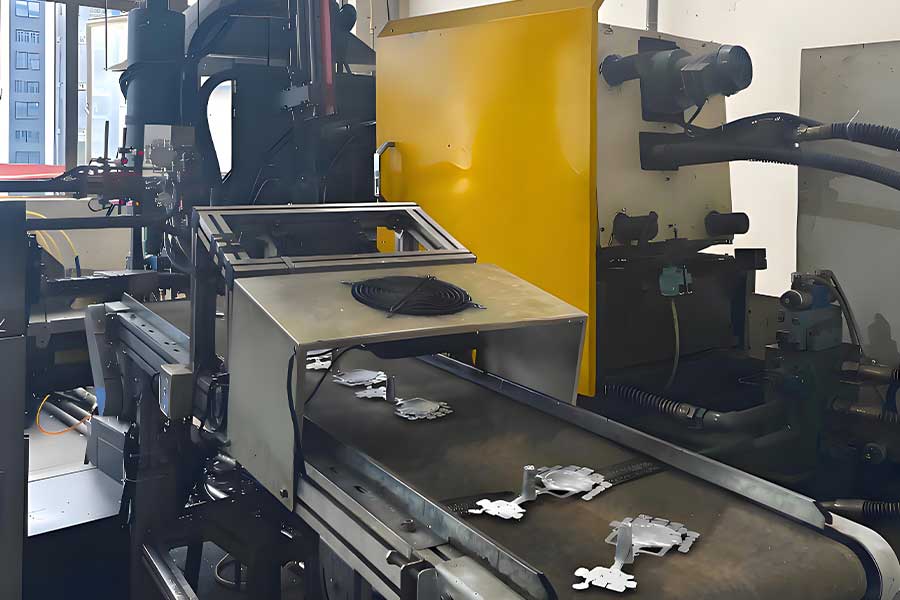
[Image: process-03-die-casting.jpg — Molten zinc alloy being injected at high pressure into a precision steel mold on a die casting machine, capturing 3D relief detail]
Die Casting vs. the Alternatives: Where the Detail Gap Comes From
You’ve got three realistic paths for manufacturing custom medals at quantity: die casting, stamping, and — for very small runs — 3D printing with lost-wax casting. They’re not interchangeable. Each favors a different kind of design.
Here’s the detail comparison, based on what we see on our own factory floor running both die-cast and stamping lines.
| Zinc Alloy Die Casting | Brass/Iron Stamping | 3D Print + Casting | |
|---|---|---|---|
| Best for | Complex 3D relief, fine text, sculpted portraits | Flat or low-relief designs, simple geometry | One-off prototypes, ultra-complex undercuts |
| Minimum line width | 0.3mm | 0.5mm+ | ~0.2mm (wax-limited) |
| 3D depth range | 0.5–4mm in a single shot | 0.3–1.5mm (multi-strike adds cost) | Nearly unlimited, but fragile |
| Edge sharpness | Crisp — molten metal fills every cavity | Softer — metal flows around, not into, fine recesses | Sharp but surface finish is rougher |
| Per-unit cost at 500 pcs | $$ | $–$$ | $$$$ |
| Mold life | 50,000+ shots (H13 steel) | 20,000–30,000 strikes (tool steel) | N/A (printed per unit) |
| Consistency across 1,000+ units | Excellent — same mold, same shot parameters | Good — die wear shows gradually | Poor — each cast varies |
| Common defect | Porosity if venting is inadequate | Blurred edges as the die wears | Surface pitting from wax residue |
Stamping works. We run stamping lines too. But when a customer sends us artwork with a detailed eagle emblem, layered text, and a 3D city skyline in the background — we don’t suggest stamping. The physics of forcing a flat metal blank against a die simply won’t fill those narrow recesses the way 385°C liquid zinc will.
What Happens Inside the Mold: Temperature, Pressure, and Fill
Most buyers never think about what’s happening inside a steel mold during those 15 to 30 seconds of a shot cycle. But that’s where the detail lives or dies.
Here’s the sequence on our 88-ton hot-chamber die casting machines:
The zinc alloy — Zamak 3, our standard for medals — melts at 385°C. That’s low enough that the steel mold doesn’t thermally crack, but hot enough that the liquid metal has the viscosity of warm honey. Low viscosity is the whole game. It means the metal flows into a 0.3mm-wide letter cavity instead of bridging across it.
The plunger drives the molten zinc into the mold at pressures between 800 and 1,200 bar. That pressure isn’t arbitrary. Too low and you get “short shot” — the metal cools before filling the farthest cavities, leaving rounded, incomplete edges. Too high and you get flash — thin metal webs squeezing out along the parting line that need extra deburring. Our operators dial pressure per-design based on wall thickness, cavity depth, and the distance from the sprue to the farthest fill point.
The mold itself runs at 150–200°C, maintained by internal oil channels. If the mold is too cold, the zinc solidifies before it finishes filling. If it’s too hot, cycle time stretches and porosity creeps up. The thermal balance is a parameter we adjust per medal design — not a number you copy from a textbook.
And the vents. Mold venting is the invisible detail that separates a clean cast from a porous one. As molten zinc rushes in, air has to rush out through channels cut into the parting surface — some as shallow as 0.05mm. When those vents clog after a few thousand shots, porosity appears. Our mold maintenance schedule pulls each die for vent cleaning every 5,000 cycles. Most buyers will never hear about that. But they’ll see the difference in the finished medal.
[Image: process-01-design.jpg — A medal mold design on screen showing 3D relief toolpaths and cavity depth mapping]
Designing for the Process: What Actually Translates to Metal
You don’t need to know how to operate a die casting machine. But knowing three design rules will save you a revision cycle — and a week on your timeline.
Rule 1: Draft Angles Aren’t Optional
Every vertical surface in your design needs at least 0.5° of draft — a slight taper that lets the solidified part eject cleanly. No draft, and the medal sticks. Ejector pins push harder. You get deformation marks on the face. We add draft during mold engineering, but if your design has deep undercuts or vertical walls, we’ll come back to you with a conversation, not a mold.
Rule 2: Metal Thickness Needs to Be Consistent
The ideal zinc die-cast medal sits between 2mm and 4mm thick across the whole body. A design with a 4mm central medallion that tapers to 1.2mm at the edges creates uneven cooling. The thick center stays molten longer. As it shrinks during solidification, it pulls material from the already-solid edges. Result: sink marks — subtle depressions on the surface that plating can’t hide. We catch this in mold-flow simulation before cutting steel. But the more uniform your base thickness, the less we have to adjust your design.
Rule 3: Text Below 6pt Needs a Conversation
We can cast 4pt text. We’ve done it. But readability depends on the font. A clean sans-serif at 4pt on a flat background — usually fine. A serif font at 5pt across a textured 3D surface — that’s pushing it. Send us the artwork. We’ll tell you honestly whether the text will read or whether you should bump it up a point. That conversation takes five minutes and saves a mold remake.
Why Zinc Alloy Takes Plating Better Than You’d Expect
Detail doesn’t stop at the cast blank. The plating step amplifies or flattens it — depending on the surface underneath.
Zinc alloy has a property that matters for plating: it’s non-porous when cast correctly. Unlike iron, which has a micro-rough surface even after polishing, well-cast zinc presents a uniform substrate. That means the electroplated layer — whether it’s antique brass, bright nickel, or dual-tone gold-and-nickel — deposits evenly. No thin spots. No roughness telegraphing through the finish.
The process: after casting and deburring, blanks go through wet polishing on a rotary machine, then into the plating line. First stop is an alkaline copper bath — about 500 seconds — to build a smooth base layer. Then 20 to 60 minutes in an acid copper tank to develop luster. Then the finish metal: gold, nickel, bronze, whatever the design calls for. Finally, a tunnel oven at 100°C for about 40 minutes to cure the anti-tarnish seal coat.
That’s the standard line. But here’s the die-cast-specific advantage: because zinc casts so smooth, the polishing step is shorter. Less abrasive time means less risk of rounding over the crisp edges you paid for in the mold. A stamped medal goes in with softer edges and comes out softer still. A die-cast medal goes in sharp and stays sharp.
[Image: process-07-plating.jpg — Freshly electroplated zinc alloy medals on a rack after the finishing bath, showing uniform surface coverage]
When Die Casting Isn’t the Answer
Some honesty. There are three situations where we steer customers away from die casting:
You need heavyweight heft. Zinc alloy at 2–4mm thickness weighs less than brass at the same dimensions. If the perceived weight of the medal matters — military ceremonies, high-end corporate awards — brass stamping at 3mm+ delivers a denser feel. We wrote more about that in our zinc alloy vs brass comparison.
Your order is under 100 pieces. The mold cost for die casting amortizes across quantity. Below 100 units, the per-piece mold burden pushes the unit price higher than most budgets want. For very small runs, we’ll often recommend soft enamel medals on a shared-base design to keep costs reasonable.
Your design is purely 2D with one flat color. A simple flat design with one enamel fill and basic text doesn’t need 3D capability. Stamping will produce it faster and cheaper, and you won’t see the difference. Our custom medal design guide walks through which process fits which artwork style.
For everything else — portraits, detailed logos, multi-depth 3D reliefs, text-heavy designs, intricate borders — die casting is how you get the detail you designed onto the medal the customer receives.
FAQ
How much does a die-cast medal mold cost?
At MedalOrigin, a single-cavity steel mold for a standard 50–70mm medal typically runs $200–400, depending on 3D complexity. Multi-cavity molds that produce 2–4 medals per shot cost more upfront but slash the per-unit price on larger runs. Mold cost is a one-time charge, and we store your mold for reorders — no second mold fee on repeat runs.
What’s the minimum order quantity for die-cast medals?
100 pieces per design is our standard MOQ. The mold cost drives this — below 100 units, the per-piece mold burden becomes disproportionate. Need fewer? We can sometimes run a shared-mold approach for simpler designs. Ask us before you assume it won’t work.
How long does production take from artwork to delivery?
Design-to-door runs 3–4 weeks for a typical die-cast medal order: 24 hours for free design proofs, 7–10 days for sampling, then 7–15 days for bulk production once the sample is approved. Shipping adds 3–7 days depending on your location and courier choice.
Can die-cast medals have moving parts?
Yes. Spinning centers, sliding elements, and bottle-opener cutouts all work in die-cast zinc. The mold just needs the right insert design. We make spinning medals and bottle-opener medals regularly — the zinc alloy’s castability handles internal voids and rotating mechanisms that stamping can’t produce at all.
What’s the biggest quality issue buyers miss with die-cast medals?
Venting-related porosity. Tiny air pockets trapped beneath the surface that only become visible after plating — they show up as small pits or bubbles in the finish. The buyer sees “plating defects” and blames the plating line. The actual cause is clogged mold vents 20 steps earlier in the process. This is why mold maintenance discipline matters more than the plating chemistry. Ask your supplier how often they pull molds for vent cleaning. If they don’t have an answer, you have your answer.
Do you ship internationally?
We ship to 50+ countries — the US, Canada, UK, Australia, and across the EU are our main markets. Shipping is by air courier (DHL/UPS/FedEx) for speed or sea freight for heavy bulk orders. We’ll quote both options so you can decide based on your timeline.
What to Do Next
If you’ve got artwork, send it over. We’ll tell you whether die casting fits, what the mold will cost, and what the per-unit price looks like at your quantity. If you don’t have artwork yet, that’s fine too — our design team sketches from your brief and we go from there. Start with a conversation — no obligation, no hard sell.
More from our factory floor:
- How Custom Medals Are Made: Inside Our Die-Casting Factory — the full 12-step manufacturing walkthrough
- Zinc Alloy vs Brass Medals: Which Material Is Right for Your Event? — side-by-side material comparison with real weight and cost data
- Custom Medal Design Tips: What Manufacturers Wish You Knew Before Submitting Artwork — practical design rules from the production side
Data to confirm: vent cleaning cycle at 5,000 shots is our standard protocol — verify with the current mold maintenance team. Exact mold cost range ($200–400) is typical for standard sizes; complex 3D may exceed this.