“Anodized” shows up in custom medal listings next to “plated” as if they were two finishes of the same thing. They are not. Anodizing and plating are different processes applied to different metals, and they behave differently over time.
We work mainly in die-cast zinc, which is plated, so we are not selling you an anodized medal. That also means we can explain the trade-off without pushing you either way. For the wider picture of materials, see our medal materials guide.
What we’ll cover:
- What anodizing actually is versus plating
- How the two differ in weight, detail, and color durability
- Where each makes sense for events and budgets
- Cost expectations and minimum quantities
- How to tell which one a supplier is really offering
Anodizing vs Plating: The Process Difference
| Anodizing | Plating | |
|---|---|---|
| Base metal | Aluminium (mostly) | Zinc alloy, brass, iron |
| What happens | Surface layer is grown from the metal itself | A separate metal layer is deposited on top |
| Color method | Dye absorbed into the oxide layer, or left natural | Plated in gold, silver, nickel, bronze, etc. |
| Can it chip off? | No — it is part of the metal | Can lift if the base layer is poor |
| Typical look | Matte, flat, modern | Metallic, reflective, traditional |
| 3D relief | Shallow, flat surface | Deep, detailed relief |
The key structural difference: anodizing converts the surface of the aluminium into an oxide layer and dyes it. There is no separate coating to peel. Plating deposits a different metal on top, which means the adhesion layer underneath matters enormously.
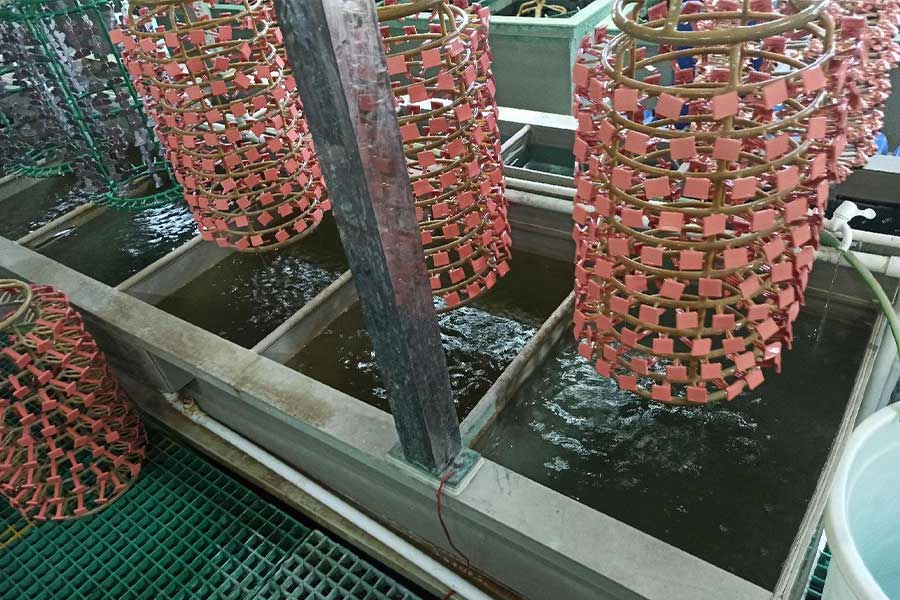
That is why plating quality depends so heavily on process. Our line runs nine steps, including an alkaline copper base of about 500 seconds and acid copper for 20-60 minutes, before any color goes on. Skip the copper base and the finish lifts. Anodizing has no equivalent failure mode, but it also cannot produce the reflective metallic look that most awards rely on. Our manufacturing process walks through all twelve steps.
Weight, Detail, and Look
Anodized aluminium medals are notably light. Plated die-cast zinc medals have real heft — the alloy sits around 6.7 g/cm³.
| Attribute | Anodized aluminium | Plated zinc (die-cast) |
|---|---|---|
| Weight | Very light | Mid to heavy |
| Detail | Flat, 2D shapes | 3D relief, raised lettering |
| Color range | Any dyed color, including brights | Gold, silver, bronze, nickel, copper |
| Color permanence | Very stable, does not tarnish | Stable if plated and sealed correctly |
| Surface feel | Matte, soft | Metallic, smooth or antique |
| Scratch visibility | Low — marks blend in | Higher on shiny finishes |
For a 10K finisher medal where runners wear it for hours, light weight is a genuine advantage. For a podium award where the recipient should feel something substantial in the hand, light weight works against you.
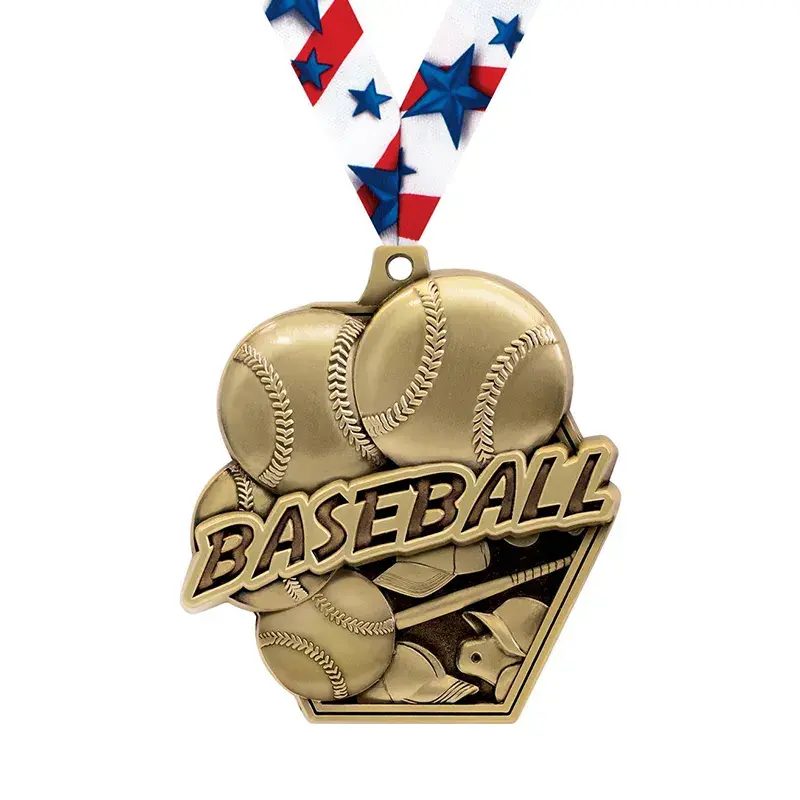
The detail limit is the bigger constraint. Anodizing suits flat graphic shapes — logos, silhouettes, clean geometry. It cannot give you the raised landmark or mascot relief that die-casting produces on an 88-ton press. If your design depends on 3D depth, anodizing is not the vehicle. See our design guide for what each process can hold.
Where Each Makes Sense
| Use case | Better choice | Why |
|---|---|---|
| Marathon / 5K finisher | Anodized or die-cast | Depends on weight preference |
| Podium / championship | Die-cast zinc | Needs weight and relief |
| Full-color graphic logo | Anodized, or acrylic | Flat art suits the process |
| Deep 3D relief design | Die-cast zinc | Anodizing cannot hold depth |
| Budget bulk order | Anodized or stamped | Lower unit cost at volume |
| Heirloom / keepsake | Die-cast zinc, antique finish | Weight and durability read as value |
| Custom metal color (e.g. rose) | Plated zinc | Plating gives more metal color options |
| Colors outside metal range | Anodized or enamel | Dye and enamel go beyond metal tones |
The pattern: anodizing wins when you want flat graphic color and low weight. Plating plus die-casting wins when you want depth, metal tones, and a substantial feel. Our materials comparison covers every metal we work with.
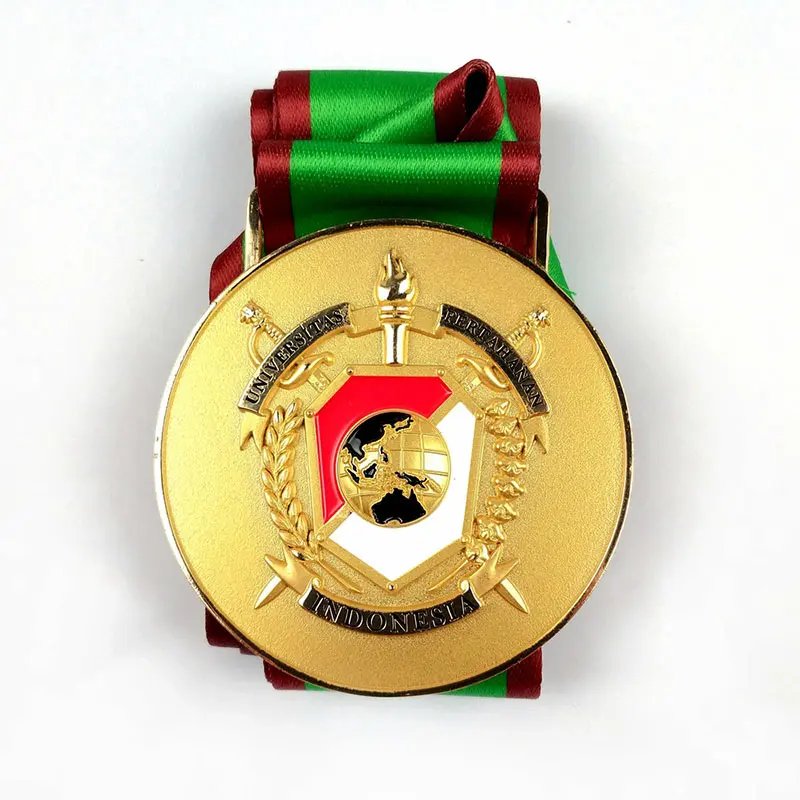
One point buyers miss — if you want a colored medal that is not a metal tone (a bright teal, for instance), you are choosing between anodizing and enamel. Our soft enamel process fills recessed areas with color at a minimum of 0.3mm, which sits on a die-cast medal and gives you both relief and full color. That combination is usually stronger than either process alone.
Cost and Minimums
Cost comparisons are difficult because the two processes sit in different supply chains and different quantity bands.
| Factor | Anodized aluminium | Plated die-cast zinc |
|---|---|---|
| Tooling | Lower — simpler dies | Higher — steel mold per design |
| Unit cost at low volume | Lower | Higher, tooling dominates |
| Unit cost at high volume | Low | Low, tooling amortized |
| MOQ typical | Varies widely | 100 pcs per design at our factory |
| Color changes | Cheap during anodizing | Requires more enamel colors, adds cost |
For a one-off small run with flat artwork, anodizing usually wins on price. For a recurring event where tooling amortizes across years, die-cast zinc closes the gap and brings better perceived value.
If you are ordering a recurring event medal, ask whether your tooling can be held on file. We retain molds for reorders, which removes tooling cost from year two onward. Our bulk custom medals page explains how quantity affects per-piece pricing.
How to Tell What You Are Being Offered
Suppliers are not always precise about this. Five questions settle it.
- What is the base metal? Aluminium points to anodizing. Zinc or brass points to plating.
- How is the color applied? Dye in an oxide layer is anodizing. Metal deposition is plating.
- Can the finish chip? Anodizing cannot chip; plating can lift if the base is poor.
- How deep is the relief? Flat and shallow is anodizing. Deep 3D is die-casting.
- What is the plating base layer? A plating supplier will name it. We use alkaline copper at roughly 500 seconds.
If a listing says “anodized” but shows a deep 3D relief medal, one of the two claims is wrong. That is worth resolving before you place an order, because it determines whether your design is even manufacturable as specified.
We run three-stage QC — after casting, after plating, and after assembly — and our line produces 30,000+ pcs per day. If you are weighing anodized against plated for a specific event, send us your design and quantity and we will tell you which process actually fits.
Data to confirm: Confirm current MOQ, tooling charges, and material availability with the factory before quoting, as aluminium and zinc supply conditions shift independently.
FAQ
Is anodizing the same as plating? No. Anodizing converts the surface of aluminium into an oxide layer and dyes it, so the color is part of the metal. Plating deposits a separate metal layer on top of zinc, brass, or iron, which is why the base adhesion layer matters so much.
Can anodized medals chip? No. Because the color is grown from the metal rather than applied on top, there is no coating to chip or peel. Plated medals can lift or blister if the base layer is rushed.
Which is heavier, anodized or die-cast? Die-cast zinc is notably heavier — the alloy is around 6.7 g/cm³. Anodized aluminium is very light, which suits long-distance finisher medals but feels insubstantial for a podium award.
Can anodized medals have 3D relief? Not meaningfully. Anodizing suits flat graphic shapes like logos and silhouettes. Deep raised relief requires die-casting, where zinc flows into a steel mold on a press.
Which is cheaper? For small one-off runs with flat artwork, anodizing is usually cheaper because tooling is simpler. At higher volumes on recurring events, plated die-cast zinc closes the gap as tooling amortizes, and it delivers more perceived value.
What if I want both relief and full color? That is the soft enamel process on a die-cast medal. Color fills recessed areas at a 0.3mm minimum, so you get 3D relief and full color together — which neither anodizing nor plain plating achieves alone.
See also: enamel-filled die-cast medals — custom hard enamel medals — the finish most buyers compare against soft enamel.