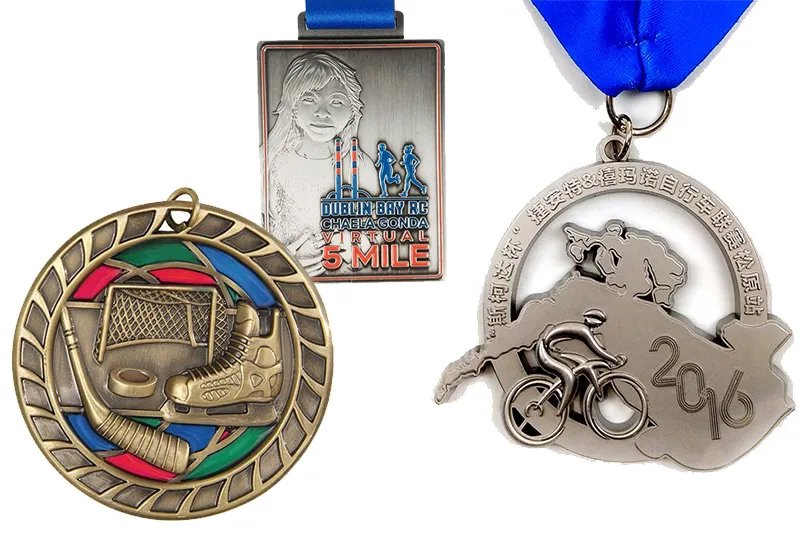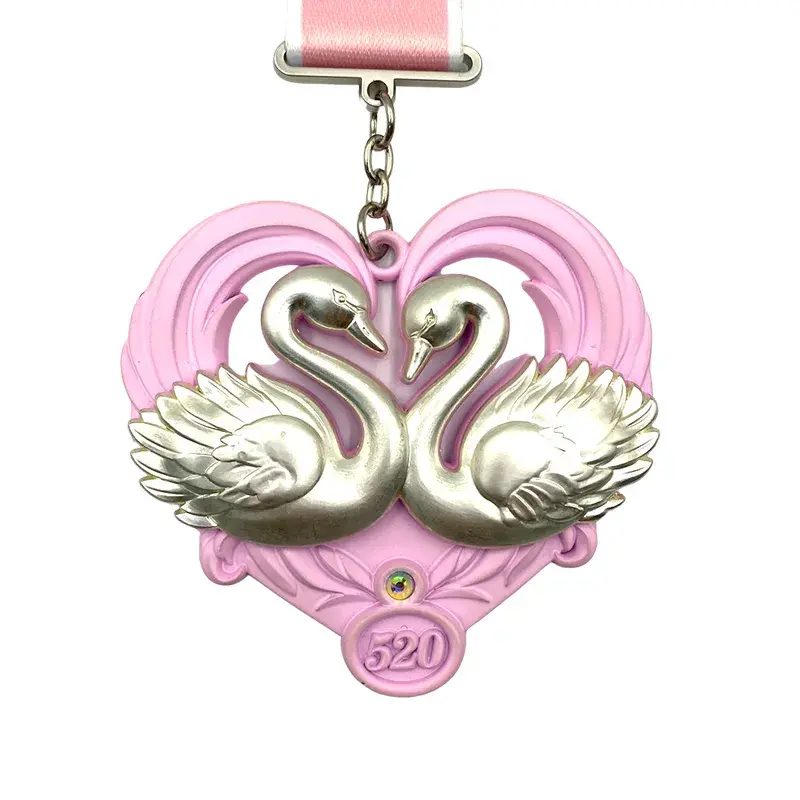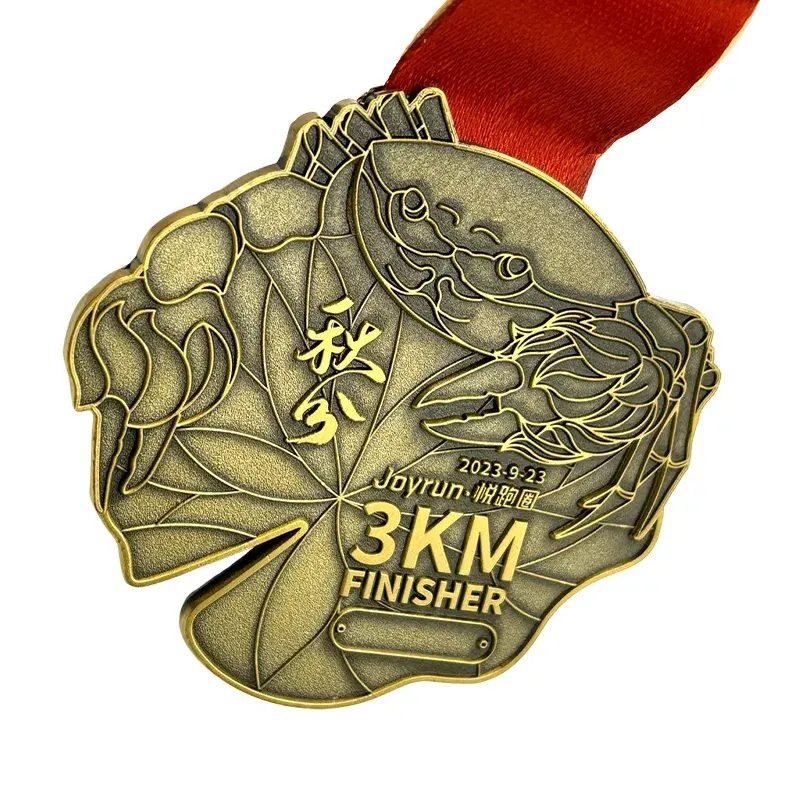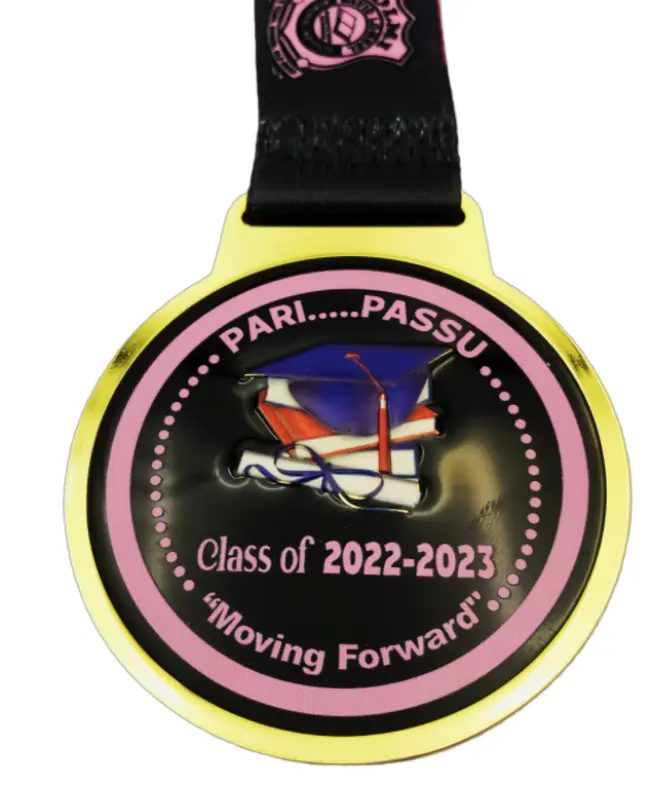
Every season-end banquet runs into the same wall: you need custom medals for a dozen sports, they have to look like a set, and the budget is fixed. Plan sport by sport without a system and you end up with a mismatched table and fifteen separate tooling charges.
We cast custom sports medals for clubs, schools and multi-sport leagues across dozens of sports. This is the reference we use when a client brings us a full award list — award ideas by sport, medal sizing by age group, and the categories beyond MVP that leagues actually use.
What this guide covers:
- Why per-sport medals beat one generic design — and what it really costs
- How to design one coherent set instead of fifteen unrelated medals
- A sport-by-sport motif, size and finish reference across 15 sports
- Per-sport award ideas that go beyond first, second and third
- Age-level adjustments that matter more than the sport itself
- Quantity planning, buffers and a working backwards timeline
Why Per-Sport Medals Beat Generic Awards
Most leagues order one generic medal for every sport and hand them out at an end-of-season ceremony. It’s cheap and it’s fast. It’s also forgettable.
A swimmer doesn’t recognize themselves in a generic star medal. A gymnast does recognize themselves in a sport-specific medal with a beam silhouette. That specificity costs very little — the mold is the same process, the material is the same zinc alloy — and it moves the medal from a participation token to a keepsake. Recipients who keep things are recipients who remember your league next season.
The economics work out too. If you’re running a multi-sport league, ordering per-sport designs in one combined run spreads your setup cost across the whole order rather than paying it once per design. That usually means per-sport medals cost close to what a single generic run would have. The bulk custom medals page breaks down how consolidated runs change your unit price.
| Age group | Medal size | Priority | Attachment |
|---|---|---|---|
| Under 6 | 40–45mm | Safety, bright color, rounded edges | Ribbon 20mm wide, 800mm length |
| 6–12 | 45–50mm | Durability, sport-specific iconography | Ribbon 20mm, 800–860mm |
| 13–18 | 50–60mm | Prestige feel, achievement medallions | Ribbon 25mm, 860mm |
| Adult / varsity | 60–70mm | Weight, formal finish, engraving | Ribbon 25–30mm, or a display box |
Younger recipients need smaller, lighter medals with softer edges — a heavy 70mm medal on a six-year-old isn’t a reward, it’s a hazard. Older and adult recipients read weight and finish as value, so that’s where brass or heavier zinc with a mirror plating earns its keep. The full size and thickness logic sits in our size and thickness guide.
[Image: kids-medals.jpg — Custom kids sports medals with bright enamel and rounded edges]
Design One Set, Not Fifteen Medals
The instinct is to design each sport separately. That produces fifteen unrelated medals and fifteen tooling charges. There is a better ladder, and the right rung depends on your budget and how much the set needs to look deliberate.
| Approach | Designs | Tooling | Coherence |
|---|---|---|---|
| Per sport, unique art | 15 | Very high | Low — looks assembled |
| Per sport, shared frame | 15 | High | High — same border, different center |
| Grouped by category | 4–6 | Moderate | High |
| Universal + text layer | 1–2 | Lowest | Highest |
The “shared frame” approach is a good middle ground and often underused. Use one identical outer border, ribbon treatment and plating family across all sports medal designs, and vary only the center motif. The medals read as a set because the frame is constant — and to a recipient, the frame is what signals “these belong together.”
The universal approach goes further: one design with the sport carried entirely in the text layer. For a season-end banquet that is often enough, and it costs the least.
Sport by Sport: Motif, Size and Finish Reference
The table below is our house recommendation for the design motif that actually reads in die-cast metal. Adjust for your level and budget.
| Sport | Motif that reads | Suggested size | Finish note |
|---|---|---|---|
| Soccer / football | Ball + goal or pitch lines | 45–50mm | Antique holds detail in relief |
| Basketball | Ball + hoop, or ball in motion | 45–55mm | Distinctive silhouette, reads well |
| Baseball / softball | Ball + bat crossing, or glove | 45–50mm | Classic, works at most sizes |
| Volleyball | Net + ball, or court diagram | 45–55mm | Add the net — ball alone is ambiguous |
| Track & field | Runner figure, or event implement | 40–50mm | Differentiate events by text |
| Swimming | Swimmer + wave, or lane lines | 45–50mm | Wave motif casts cleanly |
| Cycling | Wheel + motion lines | 45–55mm | Bold shapes suit die-casting |
| Wrestling | Grappler silhouette, or mat outline | 45–50mm | Silhouette reads better than detail |
| Martial arts | Belt, fist, or discipline symbol | 45–55mm | Differentiate styles by text |
| Tennis / pickleball | Racket + ball, or paddle + ball | 40–50mm | Paddle differentiates pickleball |
| Golf | Flag + green, or club + ball | 45–50mm | Flag motif reads at distance |
| Chess | King piece, or checkerboard band | 40–45mm | Bold symbol over fine detail |
| Robotics / STEM | Robot silhouette + team number | 45–55mm | Team number in the text layer |
| Hockey | Stick + puck, or skater | 50–55mm | Skater silhouette is distinctive |
| Multi-sport / general | Laurel, star, or medal-in-medal | 45–50mm | Use for all-around awards |
Two recurring principles run through that table. First, silhouettes beat detailed scenes — a bold shape survives die-casting at the 2mm minimum wall thickness, while fine detail fills in and disappears. Second, when a sport has an ambiguous object, add one contextual element: the net for volleyball, the target ring for archery, the paddle for pickleball. For the design rules behind both principles, see our medal design guide.
Baseball, Softball, and Tee-Ball Awards
Baseball and softball seasons are long, which gives you more award moments than a short-season sport. That’s an opportunity most leagues waste by only handing out one medal.
Ideas that go over well:
- Division placement medals for first through third, with the placement number cast into the design rather than printed. A cast number reads as permanent.
- Position medallions — a glove for infield, a ball for outfield, a mask for catcher. Combine position with placement and you get a keepsake that’s specific to that player’s season.
- All-tournament team medals for the standout performers across a weekend tournament. These carry more cachet than participation pieces because they’re earned within a narrow window.
- Tee-ball participation medals for the youngest group, where placement isn’t appropriate yet. Bright enamel, a fun shape, and no ordinal number.
For bat-and-ball sports, a rectangular or shield shape with a diamond motif reads more authentically than a round star. And if your league hands out ribbons alongside medals, order them together so the colorways match — mismatched ribbon and medal plating is the most common presentation complaint we hear about. Our ribbon materials guide covers the colorway and attachment decisions.
[Image: sports-medals.jpg — Engraved baseball and softball medals with ribbon]
Basketball, Football, and Volleyball Awards
Court and field sports reward team identity more than individual position, so the medal design should carry the sport’s silhouette and your league’s mark.
Practical ideas:
- Championship medals with the division name cast into the design and the year engraved afterward. Engraving the year lets you reuse the same tooling across seasons, which drops your per-year cost substantially.
- All-conference or all-star medals that read as distinctly better than a standard league medal. Different plating — dual-tone or gold against the league’s usual silver — signals the tier without a new mold.
- End-of-season category medals for things the box score doesn’t capture: most improved, defensive player, best teammate, coach’s award. These cost the same per piece as an MVP medal and mean considerably more to most recipients.
- Volleyball-specific shapes where the ball’s panel lines double as the medal’s relief pattern. That’s a detail zinc die-casting handles well.
Football and basketball medals usually want to run larger, 60 to 70mm, because they’re presented on a court or field where the medal needs to read from the bleachers. Volleyball skews slightly smaller since the presentation is more often in a gym with a closer audience.
Soccer Awards
Soccer is our highest-volume sport medal category, and the pattern that works for clubs is different from what works for tournaments.
For clubs running a full season, the effective structure is placement medals for the top teams, individual position medallions — goalkeeper gloves, a striker’s boot — and a small set of character awards. For tournaments, the emphasis shifts to all-tournament selections and top-scorer recognition, because those are decided in a weekend and the award should feel tied to that specific event.
A detail worth getting right: soccer medal artwork usually centers on a ball, and the ball’s panel geometry is what sells the authenticity. A five-sided or hexagon-panel ball drawn accurately in relief reads as soccer. A generic sphere doesn’t. Confirm the proof shows the panel detail before you approve tooling — it’s expensive to correct after the mold is cut.
You can see the range on our sports medals page.
[Image: sports-medals.jpg — Custom soccer medals with 3D ball relief]
Swimming, Gymnastics, and Track Awards
Individual sports have a different awards logic: placement is the primary story, and times or scores are personal data worth casting or engraving.
Swimming. Heat placement medals for first through third, plus a personal-best recognition. Swimming is one of the few sports where a personal best genuinely outperforms a placement award as motivation, because most swimmers compete against their own clock more than against the field. Engraving the time onto the medal back is a small cost for a large effect.
Gymnastics. Event-specific medals — vault, beam, floor, bars — rather than one generic gymnastics medal, because gymnasts identify with their apparatus. All-around medals for the combined winner should look visibly distinct, which dual-tone plating achieves without new tooling.
Track and field. Placement medals by event, with the event name cast in and the result engraved. Track meets run many events in a single day, so ordering per-event designs in one combined run is what keeps the per-piece cost down.
We’ve produced swimming, cycling, and triathlon medals as combined runs for multi-discipline clubs, which is worth considering if your program covers more than one sport.
Age Level Changes More Than Sport
If you are running a youth program across many sports, age matters more than which sport the medal is for. The same 50mm disc that looks right on a varsity athlete looks like a hubcap on an eight-year-old.
| Age level | Size | Weight | Notes |
|---|---|---|---|
| Under 8 | 40–45mm | Light | Rounded edges, 800mm ribbon, safety attachment option |
| 8–12 | 45–50mm | Light to mid | Color-rich designs work well |
| 13–18 | 50–60mm | Mid | Standard podium sizing |
| Adult / open | 60–70mm | Mid to heavier | Full detail budget available |
| Masters | 60–70mm | Mid | Traditional finishes preferred |
For under-8 groups, keep the piece light and confirm the factory deburrs and polishes the cast edges. Our twelve-step manufacturing sequence includes deburring and polishing before plating for exactly this reason. The full safety picture is in our kids medals guide.
For adult and masters divisions, you have a larger detail budget and can use fuller scenes. That is also where antique and matte finishes tend to be preferred over bright shiny ones.
Categories Worth Recognizing Beyond MVP
The single biggest improvement most banquets can make is dropping a category or two and adding three. Every recipient who isn’t MVP leaves with nothing specific. That’s a missed moment, and the medals cost the same.
Before you pick categories, match them to the sport. Some recognitions land in one sport and fall flat in another.
| Category | Works best in | Design approach | Finish |
|---|---|---|---|
| Most improved | Swimming, track, gymnastics | Distinct design, often an arrow motif | Gold or antique |
| Best teammate / sportsmanship | Basketball, soccer, volleyball | Distinct design, handshake or laurel | Gold |
| Coach’s award | All sports | Larger, distinct design | Antique gold |
| Defensive player | Baseball, basketball, soccer | Distinct design | Gold or antique |
| Rookie of the year | Leagues with new players each season | Distinct design | Gold |
| Iron player | All youth sports | Shared achievement design | Gold or bronze |
| 1st / 2nd / 3rd place | All sports | One podium design | Gold, silver, bronze |
| Participation | All sports | One shared design | Bronze or single color |
| All-conference / all-star | Team sports | One shared design, text layer for team | Gold |
The efficiency move: run participation, place, and special awards from as few designs as possible, and use the text layer to differentiate. A most-improved award is a different achievement from a place award, so it deserves distinct artwork — but it does not need its own mold if you already have a general achievement design.
Run the numbers before you decide. If you’re ordering 200 placement medals, adding 30 category medals is a 15% increase in piece count. Because setup cost is fixed and already paid, those 30 pieces cost close to material price alone.
One award is worth treating as the exception. If your banquet crowns an overall champion or a team sweepstakes winner, that single piece does more work on the head table as a custom trophy than another medal in the same design — and because it’s one unit, not a per-athlete cost, it barely moves the budget.
[Image: factory-workshop-06.jpg — Finished sports medal orders in packing before shipment]
Quantity Planning for a Full Banquet
Ordering a full banquet means counting across every sport, every age division and every category. Two mistakes are common.
Mistake one: ordering per team. Teams then receive medals from different plating runs, and they do not match when players compare them. One consolidated order gives you one plating batch.
Mistake two: forgetting the buffer. Season-end counts always move. Players who joined late, teams that merged, a division that grew. Add a modest buffer, and order a few spares in the podium finishes — a missing gold medal at a banquet has no remedy.
| Component | Quantity basis | Buffer |
|---|---|---|
| Participation | Registered players | +5–10% |
| Podium | Teams or individuals per division | +2–3 per place |
| Special awards | Named recipients | +1–2 per category |
Our MOQ is 100 pcs per design, which a full banquet clears easily. If you are ordering a single sport for a small club, the MOQ still applies per design, which is another argument for consolidating.
Timeline: Working Backwards From Banquet Night
| Stage | Timing before banquet |
|---|---|
| Award list and headcount confirmation | 10–12 weeks |
| Artwork and design brief | 10 weeks |
| Design proof | Within 24 hours of artwork received |
| Sample approval | 7–10 days |
| Production | 7–15 days after approval |
| Variable text (names, sports, teams) | After production |
| Delivery buffer | Leave 1–2 weeks |
The step most banquets miss is variable text. If your medals carry player names across a dozen sports, that engraving happens after production and needs its own time.
Our line runs 30,000+ pcs per day and we apply three-stage QC after casting, after plating and after assembly — so a full banquet order arrives as one consistent batch rather than a set of mismatched teams. Our shipping and lead time guide covers how air, sea and DDP shipping compare for a fixed event date.
Spec’ing the Order
Here’s how we’d approach a season-end banquet order from scratch.
Start with the sports you actually run, and order one design per sport rather than one generic design — or, if the budget is tight, one shared frame with different centers. Combine everything into a single production run so setup costs spread across the whole order.
Size by recipient, not by uniformity. Under-8s get 40–45mm with rounded edges and an 800mm ribbon. Adults and varsity get 60–70mm with a heavier feel. Everyone in between lands in the middle.
Cast what stays the same and engrave what changes. Division names, sport icons and league marks belong in the mold. Years, individual names and times should be engraved afterward, because that lets you reuse the tooling season after season instead of paying for a new mold every year. Our engraving service handles variable text, numbers and results.
And keep the enamel color count honest. Every color is a separate fill-and-bake cycle — the low-temperature cure runs 60 to 70°C for 60 to 90 minutes, and the full cure is 100°C for 60 minutes. Four colors is usually the point where cost starts climbing faster than the visual return.
Our minimum is 100 pieces per design, our floor runs over 30,000 pieces a day, and production ships in 7 to 15 days after you approve a sample. Samples take 7 to 10 days. Send us your roster and sports list through our contact page and we’ll quote the combined run, with a free design proof inside 24 hours.
[Image: process-11-packing.jpg — Medals being assembled with ribbons before final QC]
FAQ: Sports Award Ideas
What awards should a youth sports banquet include? Beyond placement medals, add categories that recognize behavior and improvement: most improved, best teammate, coach’s award, defensive player, and rookie of the year. Because setup cost is already covered by your placement order, adding 20 to 30 category medals raises piece count modestly without adding new tooling cost.
Should I order different medals for different sports? Yes, where your budget allows. A sport-specific medal — a beam silhouette for gymnastics, panel-detailed ball for soccer — costs the same to produce as a generic one. Combining all sports into a single production run spreads setup cost across the order, so per-sport designs usually cost close to a single generic run. If the budget is tight, use one shared outer frame and vary only the center motif.
How many medal designs does a multi-sport banquet need? Four to six covers most banquets if you group by category, or one to two if you use a universal design with the sport carried in the text layer. A shared outer frame across different sport motifs also creates a coherent set without a full design per sport.
What size medal is right for young kids? Under-8s should get 40–45mm medals with rounded edges and ribbons no wider than about 20mm at a shorter 800mm length. A heavy 70mm medal on a small child is a safety concern as well as a comfort one. Children aged 8–12 can move to 45–50mm, and teenagers to 50–60mm.
How do I recognize more than one winner per team? Cast the elements that stay constant — sport icon, league mark, division — and engrave the variable parts afterward. Engraving names, times and results lets one tooling set serve many recipients and many seasons. We handle variable engraving as part of production.
Is it cheaper to order one generic medal for the whole league? It can be slightly cheaper per piece, but usually by less than buyers expect, since material and finish costs stay the same and setup is paid once either way. Combining multiple sport designs into a single run keeps your per-piece cost close to a generic order while producing a much stronger keepsake.
Which finish works best for a season-end banquet? Antique and matte finishes hide handling marks better than mirror-bright shiny finishes, and they photograph with more depth. Use one finish family across gold, silver and bronze so the podium set matches.
How far ahead should I order for a season-end banquet? Allow at least four to five weeks for a simple order, and 10 to 12 weeks for a full multi-sport banquet. A free design proof takes 24 hours, samples take 7 to 10 days, and full production ships in 7 to 15 days after approval. Engraving names and results adds a step, so build that in if you’re personalizing every medal.
How many spare medals should we order? Add 5–10% over registered participant counts, and 2–3 spares per place in the podium finishes. A missing gold medal on banquet night cannot be fixed after the fact.
Recommended Reading
- Types of Custom Sports Medals: Which Fits Your Event? — the full sports medal decision
- Custom Sports Medals: The Tournament Organizer’s Guide — running a multi-sport event
- Custom Medal Size and Thickness Guide — diameter charts, thickness floors and ribbon sizing
- Kids Medals: Safety and Design Guide — spec’ing medals for young recipients
- Medal Engraving Explained — how to prepare variable name and result data
- Bulk Custom Medals — how consolidated runs change your unit price
Data to confirm: age-group size ranges and ribbon widths reflect our standard guidance and common practice rather than a fixed rule. Confirm with your supplier against specific event requirements, and check any age-safety standards that apply in your jurisdiction.
Related product page: custom spin medals for events — custom spinning medals with a rotating centre — same Zamak die-cast base, MOQ 100 per design.