Pickleball has gone from a niche retirement-community game to one of the fastest-growing sports in the world, and the demand for pickleball medals has followed. The problem is that most generic suppliers treat pickleball medals as tennis medals with a different word printed on them.
They are not the same. The paddle shape is distinct, the player demographic spans a wider age range than almost any other sport, and the tournament formats are usually bracket-based, which changes how you plan quantities. We make custom sports medals for racket sports including pickleball, and here is how we approach them.
What we’ll cover:
- Why the paddle motif matters more than the ball
- Sizing across the sport’s unusually wide age range
- Bracket-based quantity planning
- Finishes that survive outdoor courts
- Ordering for a club league versus a tournament
The Paddle, Not the Ball
The single design decision that makes a pickleball medal recognizable is the paddle.
A ball alone is useless here. A pickleball is a perforated plastic sphere, and at medal scale the holes will not cast cleanly. Even if they did, a ball silhouette reads as tennis, ping-pong, or generic. The paddle, by contrast, has a distinct broad, squared-off shape that is unmistakable once you know the sport.
| Motif | Reads as pickleball? | Casting note |
|---|---|---|
| Paddle, standalone | Yes, to anyone who plays | Bold shape, casts cleanly |
| Paddle + ball | Yes, strongest option | Two elements, still readable |
| Paddle + net | Yes, context-rich | Good for larger medals |
| Ball only | No | Holes do not cast at 2mm wall |
| Court diagram | Yes, for larger sizes | Needs 50mm+ to read |
| Paddle + laurel | Yes, award framing | Safe, traditional |
The strongest combination for a tournament medal is paddle plus ball. Two elements is the practical ceiling — add a court or net and the design fills in at production thickness, where the die-cast wall has a 2mm minimum. Our medal design guide explains the production limits behind that rule.
If your medal is 50mm or larger, a stylized court with the kitchen line is a distinctive option. It reads instantly to players and nobody else in racket sports uses it. Save it for your flagship tournament rather than a weekly league.
Sizing Across a Wide Age Range
Pickleball’s age spread is wider than most sports — a single tournament may run open divisions for players in their twenties alongside 70+ senior divisions. Medal sizing should account for that.
| Division | Suggested size | Weight | Notes |
|---|---|---|---|
| Youth / junior | 40-45mm | Light | Rounded edges, bright color |
| Open / adult | 50-55mm | Mid | Full relief budget |
| Senior (50+) | 50-60mm | Mid | Antique finish, classic look |
| 70+ divisions | 45-55mm | Light to mid | Keep weight moderate |
| Club league | 45-50mm | Light to mid | Design must work across all ages |
For mixed-age events, the safest single size is 45-50mm with a moderate weight. That reads as substantial for younger players without being heavy on older recipients who may wear it for a full ceremony.
For divisions with older players, antique finishes have a practical advantage beyond aesthetics. Antique treatment darkens the recesses and hides handling marks, which suits medals that get passed between recipients at a long ceremony.
For senior divisions specifically, keep the piece light and confirm that the manufacturer deburrs and polishes cast edges. Our twelve-step process includes deburring and polishing before plating for that reason. Our kids and youth medal guide covers age-appropriate sizing in more depth.
Bracket-Based Quantity Planning
Pickleball tournaments are usually bracket or pool-play formats, which makes quantity planning more predictable than in many sports.
| Format | Medal requirement | Typical count |
|---|---|---|
| Single elimination | 1st, 2nd, 3rd | 3 per bracket |
| Double elimination | 1st, 2nd, two 3rd | 4 per bracket |
| Round robin pool | 1st, 2nd per pool | 2 per pool |
| Pool play + bracket | Pool winners + bracket places | Varies |
| Club league season | Participation + place | Every player |
The key insight: in a bracket format, medal counts are determined by bracket size, not player count. A 32-team double-elimination bracket needs the same number of medals as an 8-team one. That means you can order to your bracket structure precisely.
Where directors get caught out is the doubles format. Pickleball is predominantly doubles, so a 32-team bracket has 64 players but awards medals to pairs, not individuals. Confirm whether your medals are per player or per pair before ordering — getting this wrong means either a shortfall at the ceremony or a pile of spares.
For a club league running a full season with participation medals, our minimum is 100 pcs per design, which most clubs clear easily.
Finishes for Outdoor Courts
Pickleball is overwhelmingly outdoor, which is the deciding factor in finish choice.
| Finish | Outdoor verdict | Reason |
|---|---|---|
| Shiny gold | Poor | Glare in photos, shows every mark |
| Antique gold | Excellent | Hides marks, photographs with depth |
| Antique silver | Excellent | Same, plus classic look |
| Matte | Very good | Even light, no glare |
| Antique bronze | Excellent | Most forgiving of the three places |
| Shiny silver | Poor outdoors | Fingerprints and marks show fastest |
Bright shiny finishes are the wrong choice for outdoor sports. Direct sun makes them glare, which ruins ceremony photos, and the reflective surface shows every handling mark accumulated over a tournament weekend.
Antique finishes hold recess color and polish raised areas, which means your relief detail stays visible in sunlight. If your club has used shiny finishes before and been disappointed, the finish is usually the cause rather than the design.
We run nine plating steps in-house, including an alkaline copper base at about 500 seconds and acid copper for 20-60 minutes, finished with a 100°C, 40-minute oven dry and an oil seal. That sealing step matters outdoors, where handling and sun accelerate wear. Finishes are compared in our plating guide.
Club League vs Tournament Ordering
The two order shapes are different enough to plan separately.
| Club league | Tournament | |
|---|---|---|
| Award type | Participation plus place | Place only |
| Quantity basis | Registered players | Bracket structure |
| Design count | One shared design | One plus a distinct champion design |
| Ribbon | Club colors | Division-appropriate |
| Timing | Season end, 8-10 weeks out | Tournament date, 8 weeks out |
For a league, one shared design with the division carried in the text layer keeps tooling to a single mold. For a tournament, a distinct champion medal is worth the extra tooling — a champion award should be recognizable as a different achievement.
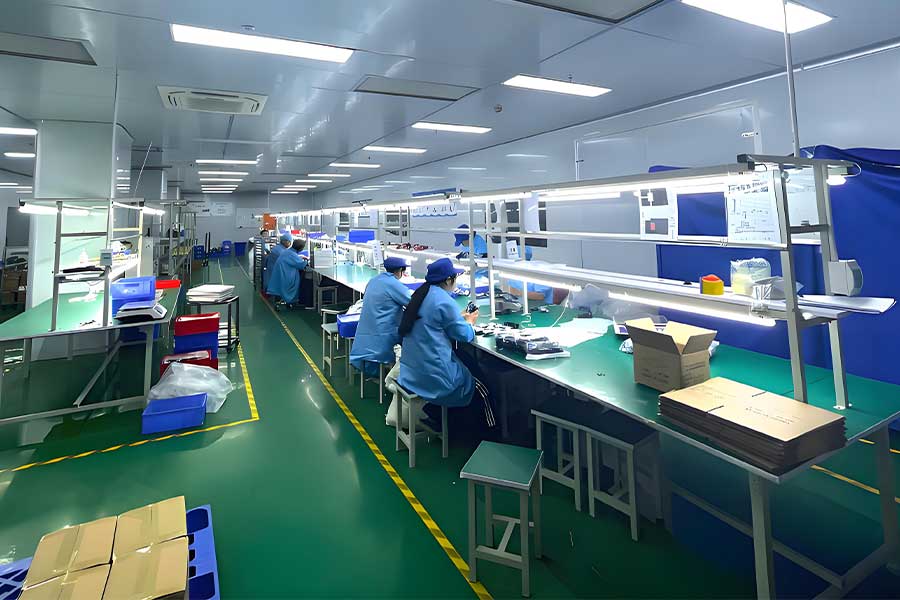
Timing is standard: design proof within 24 hours of artwork, sampling 7-10 days, production 7-15 days after approval. We run three-stage QC after casting, after plating, and after assembly, and our line produces 30,000+ pcs per day. Volume pricing for club-size orders is on our bulk custom medals page.
If you are running a pickleball event, send us your bracket structure and whether medals are per player or per pair, and we will quote it precisely.
Data to confirm: Confirm current MOQ, lead times, and finishing options with the factory before setting tournament fees, as peak season affects scheduling.
FAQ
How do I make a pickleball medal recognizable? Use the paddle. A pickleball alone is ambiguous and its holes will not cast cleanly at production thickness. Paddle plus ball is the strongest two-element combination.
What size pickleball medal suits senior divisions? 45-55mm with moderate weight. Keep the piece light enough to wear through a ceremony, and confirm the factory deburrs and polishes cast edges.
How many medals does a pickleball bracket need? Single elimination needs 1st, 2nd, and 3rd. Double elimination needs 1st, 2nd, and two 3rd places. Pool formats award 1st and 2nd per pool. Medal counts follow bracket structure, not player count.
Should medals be ordered per player or per pair? Pickleball is mostly doubles, so a 32-team bracket has 64 players but 32 pairs. Confirm this before ordering or you will either run short or order a large surplus.
Which finish works best for outdoor pickleball courts? Antique finishes. Shiny finishes glare in sunlight and show every handling mark. Antique gold, silver, and bronze hold recess color and photograph with depth.
How far ahead should a pickleball tournament order medals? Start about 8 weeks before the event. Design proofs come back within 24 hours of artwork, sampling runs 7-10 days, and production runs 7-15 days after approval.
See also: hard enamel award medals — custom hard enamel medals — the finish most buyers compare against soft enamel.