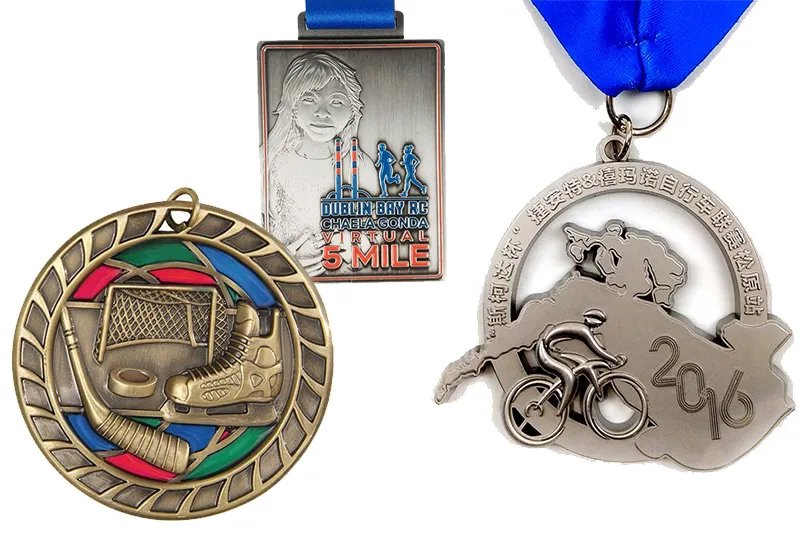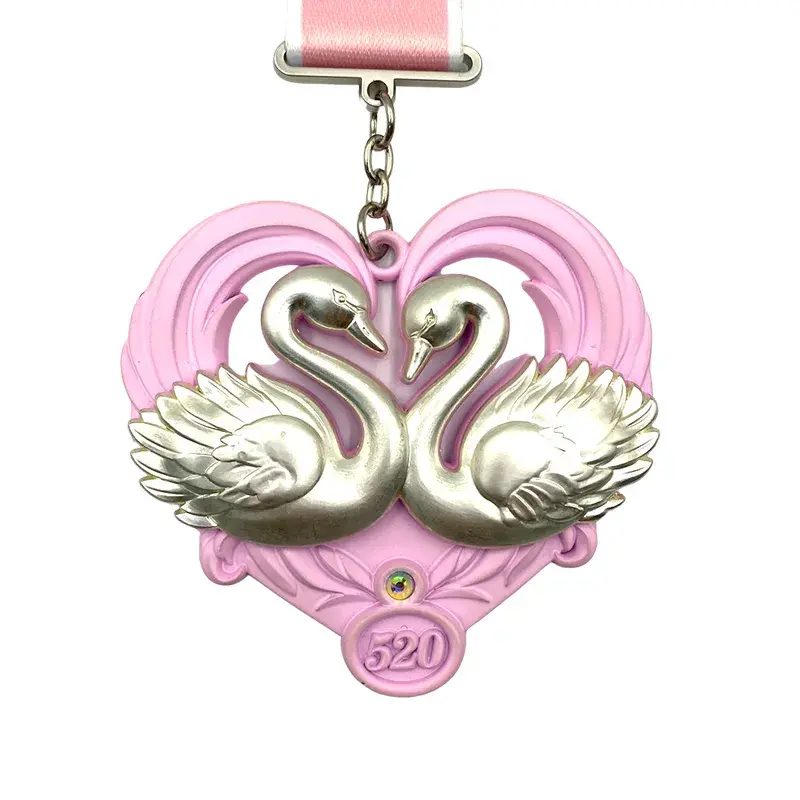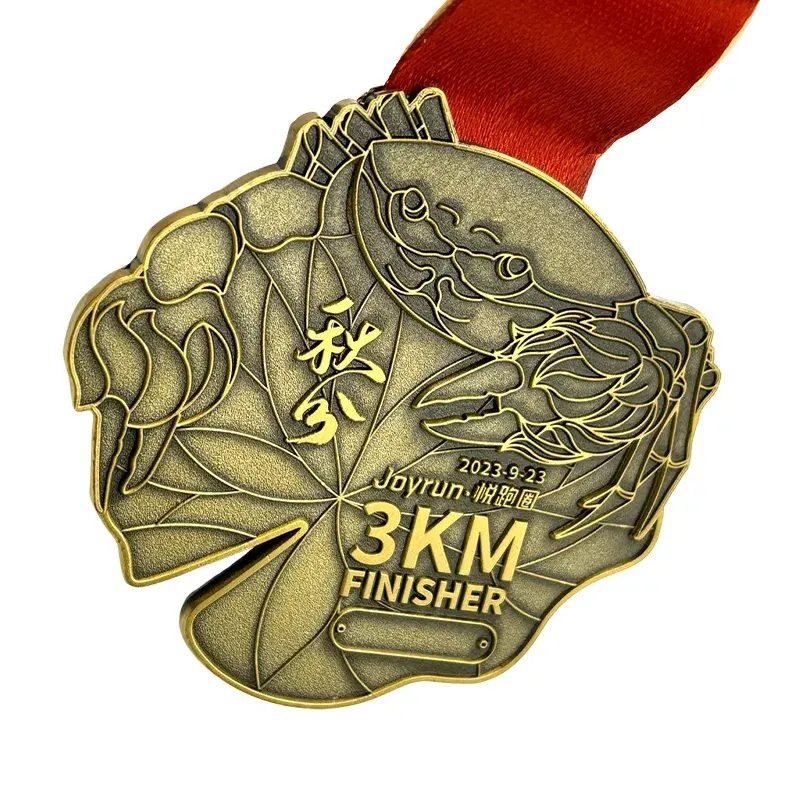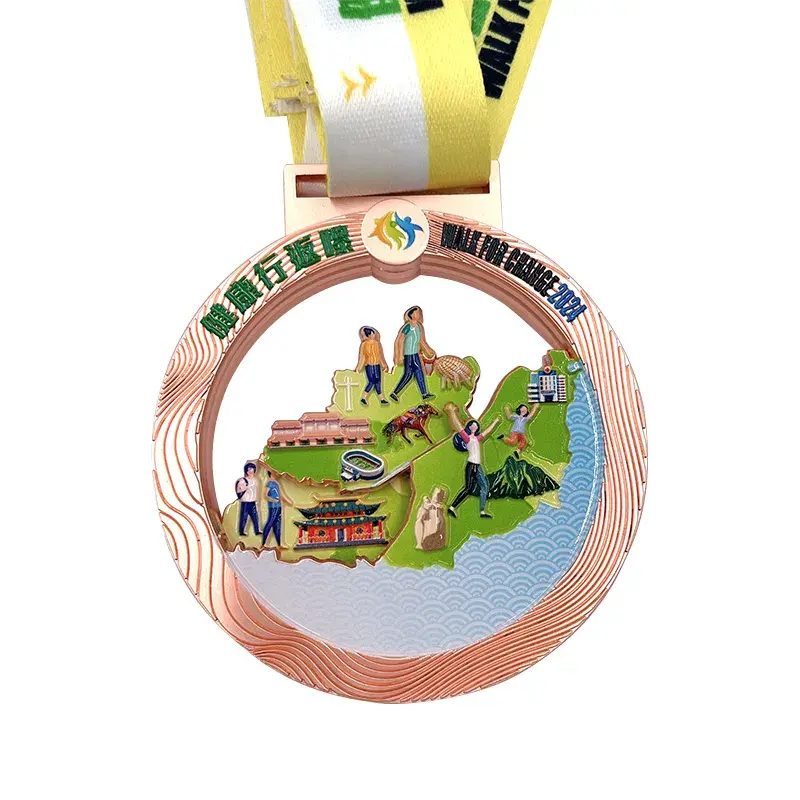
Niche competitions are the hardest sports medals to design and the least served by generic suppliers. A chess champion and a fishing derby winner both need a medal that a stranger can read, because there is no crowd, no announcer, and no shared visual language.
We make a steady run of custom sports medals for clubs and niche events. Here is how to approach them.
What we’ll cover:
- Why niche medals need stronger visual storytelling than mainstream sports
- Chess, fishing, archery, and general club design approaches
- Text layers that carry the specific achievement
- Size, weight, and why niche medals often run smaller
- Ordering for small, recurring club events
The Storytelling Requirement
In mainstream sports, a ball does the work. In a chess tournament, there is no ball. A king piece is the closest thing to a universal symbol, and half your audience may not recognize a bishop.
| Sport | Weak symbol | Strong approach |
|---|---|---|
| Chess | Detailed board position | King piece + club name, or checkerboard band |
| Fishing | Generic fish silhouette | Fish + lure/rod, or the catch size in text |
| Archery | Bow alone | Bow + target rings, or arrow in bullseye |
| Billiards | Ball cluster | Cue + ball, or a racked triangle |
| Darts | Dart alone | Dart + bullseye segment |
| Cornhole | Bag alone | Board with hole, angled view |
| Robotics / STEM | Gear alone | Robot silhouette + team number |
| Debate / academic | Lectern | Laurel + gavel or scroll |
The pattern: pair the ambiguous object with one contextual element. A fish alone is a fish. A fish with a lure reads as sport fishing. A bow alone could be archery or a decorative flourish. A bow with target rings reads as archery immediately.
Two elements is the ceiling. Add a third and the design fills in at production thickness. Our medal design guide covers the production limits that decide how much detail survives.
Chess Specifically
Chess medals are their own problem because the sport’s imagery is abstract and the audience is split between casual and competitive players.
| Design direction | Best for | Casting note |
|---|---|---|
| King piece, bold profile | Club championships | Reads as chess instantly, casts clean |
| Checkerboard band + text | Long-running club series | Clean, distinctive, very durable |
| Knight piece | Youth tournaments | Distinctive silhouette, slightly harder to cast |
| Board corner detail | Larger 50mm+ medals | Needs surface area to read |
| Piece + podium text | Place awards | Simple, focuses on achievement |
We steer most clubs toward the king piece or the checkerboard band. Both are bold shapes that die-cast cleanly at 2mm minimum wall thickness, and both are unmistakably chess to anyone who plays.
For a recurring club championship, the checkerboard band is particularly strong: it works as a series design where only the year and winner change, so you cut one mold and reuse it indefinitely.
Fishing and Outdoor Competitions
Fishing medals have a specific requirement that indoor sports do not: they often need to record a result, not just a place.
| Award type | Design approach | Text layer |
|---|---|---|
| Biggest catch | Fish + rod/lure | Species and weight |
| First place, derby | Fish + net | Place, event, year |
| Most species | Multiple fish silhouettes | Count and event |
| Youth division | Friendly fish, playful color | Place and age group |
| Club season award | Rod + water line | Club, season, category |
If your event records weight, decide whether it goes on the medal. Laser engraving or pad printing handles variable text, so you can carry species and weight on a shared mold rather than commissioning art per winner.
Outdoor medals face sun, water, and handling. An antique or matte finish holds up far better than a bright shiny one, which will show every handling mark and glare in outdoor photos. Our plating and finishes comparison breaks down how each treatment wears.
Size and Weight for Niche Events
Niche events often have smaller budgets and smaller fields, which pushes medal size down. That is the right instinct, and it has a design consequence worth knowing.
| Medal size | Detail budget | Best use in niche sports |
|---|---|---|
| 30-35mm | Very low, 1-2 elements | Club series, participation |
| 40-45mm | Moderate, 2 elements | Most niche tournament medals |
| 50-55mm | Higher, 2-3 elements | Flagship club championship |
| 60mm+ | High, full scene | Special occasions only |
Smaller medals do not mean worse medals. A 40mm chess medal with a bold king piece and clean enamel reads better than a cluttered 60mm one. What changes is the detail budget: at 40mm you have room for one strong symbol and one supporting element, and that is it.
The constraint is a plus if you use it. Niche sports are full of designs that tried to fit a full scene onto a 45mm disc and ended up illegible.
Ordering for Small, Recurring Club Events
Niche competitions are usually recurring: a club championship every year, a derby every season, a league that runs for decades. That changes the math.
| Consideration | Recommendation |
|---|---|
| Recurring design | Cut one mold, reuse with a changing text layer |
| Quantity per event | Combine multiple categories into one order |
| MOQ | 100 pcs per design at our factory |
| Tooling retention | Ask the factory to hold your mold for reorders |
| Series consistency | Same design each year, new year text |
If your club runs a championship with, say, six categories and 15 entrants each, that is 90 medals — close to our MOQ of 100. Ordering one design with category names as a text layer rather than six separate designs keeps tooling to a single mold and gets you over the threshold in one order.
That is the single biggest saving available to niche clubs, and it is the one most commonly missed.
Production timing follows the standard sequence: design proof within 24 hours of artwork, sampling 7-10 days, production 7-15 days after approval. For a recurring event, once your mold exists, a reorder skips tooling and runs faster.
We hold tooling on file for reorders, which turns an annual club championship into a low-effort, low-cost repeat order. If you are ordering several categories at once, our bulk custom medals page explains how combined runs affect your per-piece price, and the engraving guide covers variable text options.
Send us your category list and typical entrant numbers and we will quote a single-design, multi-category setup.
Data to confirm: Confirm current MOQ, tooling retention policy, and text-layer options with the factory before finalizing a club order.
FAQ
What symbol works for a chess medal? A bold king piece profile or a checkerboard band. Both read as chess immediately and cast cleanly. Avoid detailed board positions, which blur at production thickness.
Should fishing medals include the catch weight? If your event records it, yes. Variable species and weight text can be applied by laser engraving or pad printing onto a shared mold, so you do not need separate artwork per winner.
What size medal suits a niche sport club? 40-45mm handles most niche tournament medals with one strong symbol and one supporting element. 50-55mm works for a flagship club championship. Larger sizes are rarely needed.
How do clubs with small events meet the minimum order? Combine categories into one order using a single design with category names as a variable text layer. A club with six categories and 15 entrants each reaches the 100-piece MOQ in one run.
Can we reuse the same mold every year? Yes. Choose a design with a fixed symbol and a changing year and winner text. Ask the factory to retain your tooling, and each annual reorder skips tooling cost entirely.
Which finish is best for outdoor niche events? Antique or matte. Outdoor medals face sun and handling, and mirror-bright shiny finishes show every mark and glare badly in photographs.
Related: custom enamel medals with Pantone colour matching — hard enamel medals built on the same Zamak die-cast base — specs, MOQ 100 and production schedule.