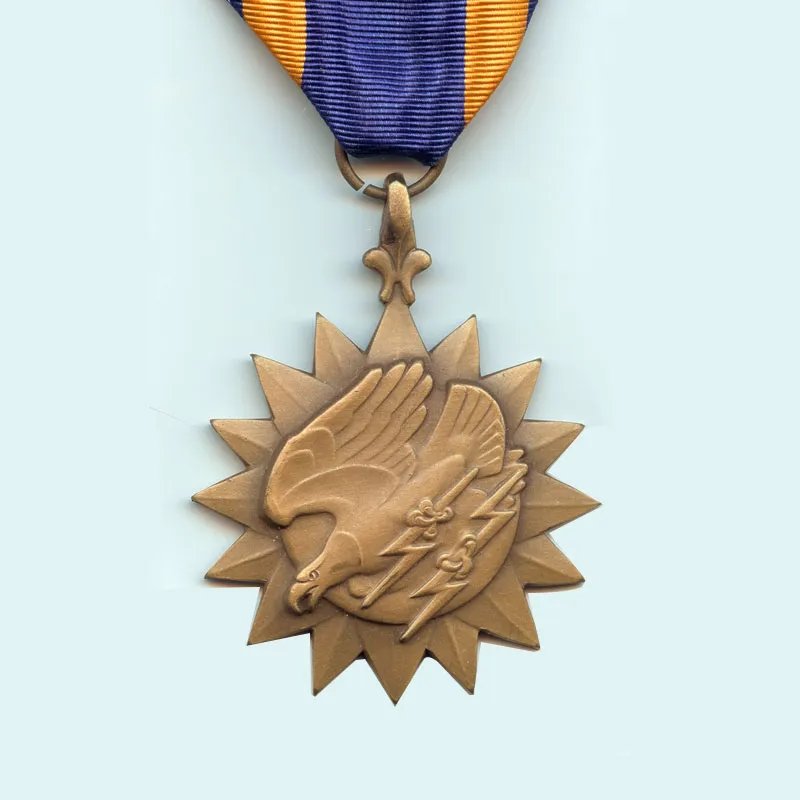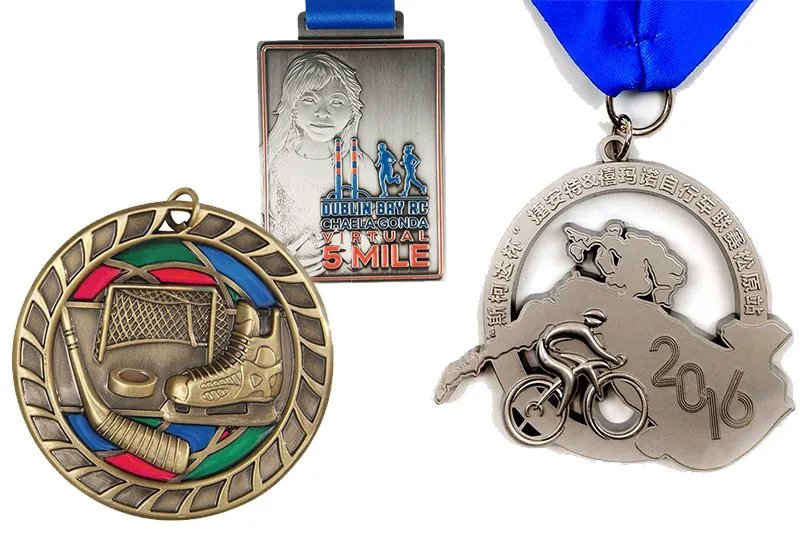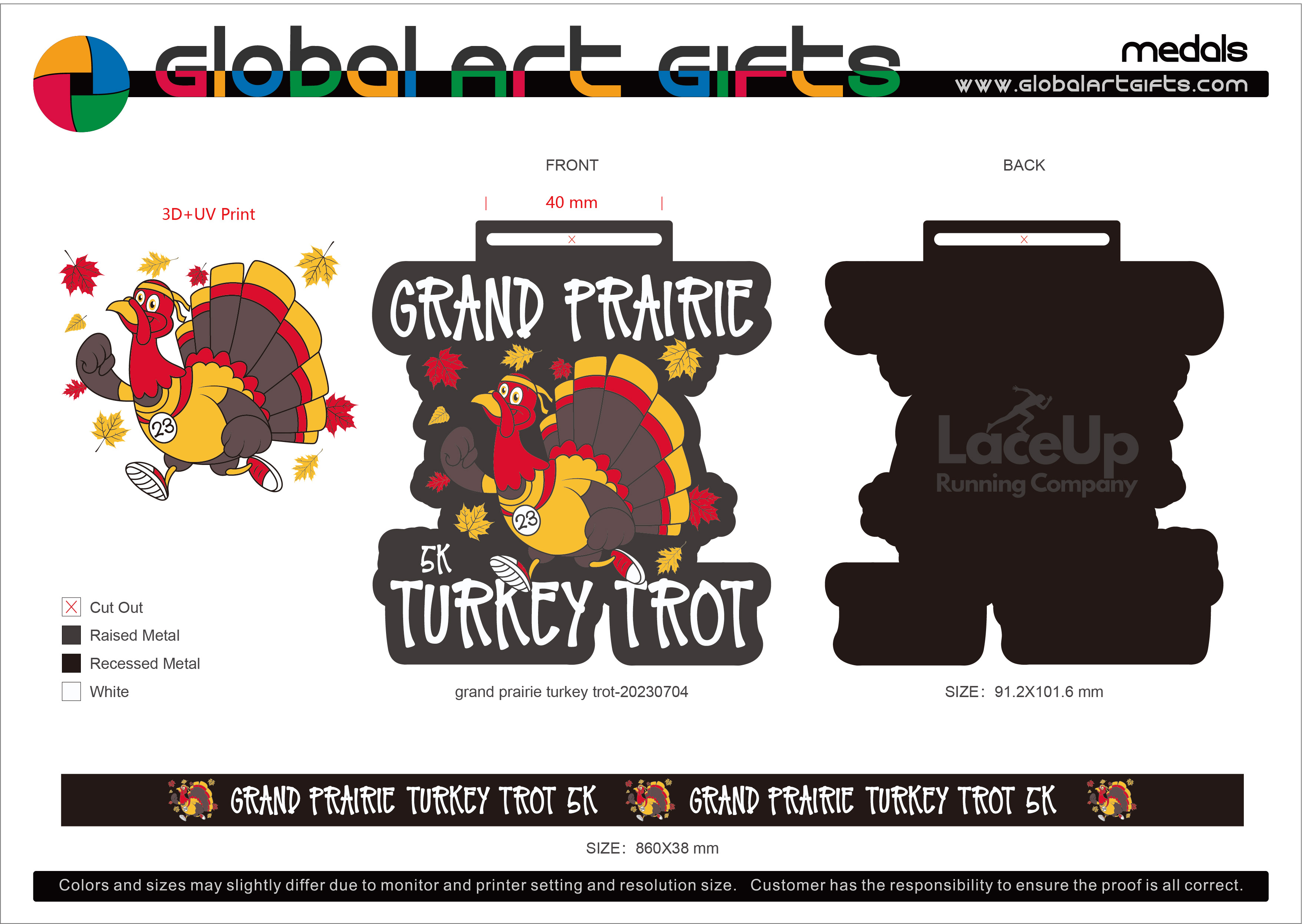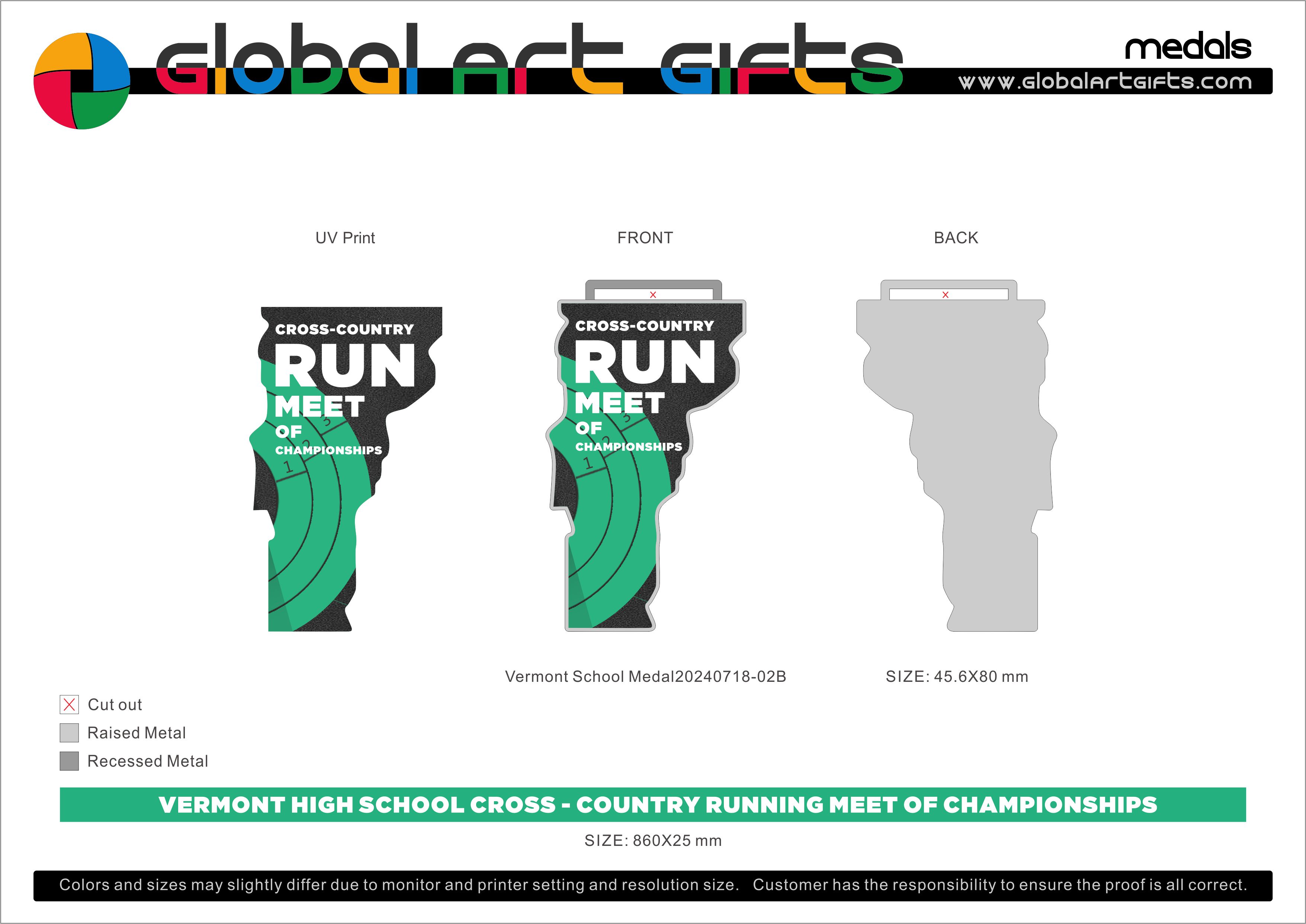
A graduation medal gets worn for one ceremony and kept for 40 years. That’s the design brief in one sentence. We’ve produced custom graduation medals for university departments, high school honor societies, and K-12 academies across 15 countries. The orders range from 100 pieces for a small private school’s eighth-grade commencement to 5,000 pieces for a university-wide honors convocation. Same production line. Very different specs.
What we’ll cover: the five medal types that match different academic recognition tiers, enamel color-matching against your school’s Pantone, the safety requirements that matter for K-12 (and why breakaway hardware isn’t optional), budget planning for institutional procurement cycles, and how to time your order around the academic calendar.
[Image: graduation-medals.jpg — Custom graduation medals with school-color enamel fill and ribbon displayed on a graduation gown]
Matching the Medal to the Achievement Tier
Not every academic award deserves the same medal. The graduating senior who earned summa cum laude should get something that looks and feels different from the participation medal handed to every eighth grader. Here’s how we see schools structure their tiers.
| Award Tier | Medal Spec | Material | Finish | Typical Budget | Example |
|---|---|---|---|---|---|
| Summa / Valedictorian | 3mm+ brass, dual-plated, engraved back | Brass | Antique gold + polished highlights | $8–$15 | University honors convocation |
| Magna / Department Honors | 3mm zinc alloy, soft enamel, engraved | Zinc alloy | Gold + school-color enamel | $3–$8 | Departmental award ceremony |
| Cum Laude / Subject Awards | 2.5mm zinc alloy, enamel fill | Zinc alloy | Gold or silver + enamel | $2–$5 | High school awards night |
| General Graduation | 2mm zinc alloy, single-color plating | Zinc alloy | Bright gold | $1–$3 | 8th grade / K-12 commencement |
| Participation / Spirit | 2mm zinc alloy or iron | Iron or zinc | Gold wash | $0.80–$2 | School-wide event, sports day |
Brass at 8.9 g/cm³ has a density that announces itself the moment someone picks it up. For a valedictorian medal — something that goes into a frame or a display case — that weight matters. We machine-engrave the recipient’s name and the award title onto the back, and the brass takes engraving cleaner than zinc alloy because it’s harder and doesn’t gum up the cutting tool.
For the broader tiers, zinc alloy with soft enamel fill in the school colors is the workhorse spec. At 385°C melt temperature, zinc alloy fills a mold cavity down to 0.3mm line width — enough for a university seal with Latin motto text around the perimeter. The enamel adds the school’s identity. More on that below.
School Color Matching: Pantone Isn’t a Suggestion
Every school has official colors. Maroon and gold. Navy and white. Crimson and cream. The enamel on your graduation medal needs to match those colors, not just be “close enough.”
We match enamel to Pantone numbers. The process: your school’s Pantone code goes to our color-mixing station, where enamel paste is tinted by hand against the physical Pantone chip under a 5000K color-corrected light booth. The enamel then goes through two cure stages — low-temperature at 60–70°C for 60 to 90 minutes to semi-set the fill, then high-temperature at 100°C for 60 minutes to fully cure.
Here’s what changes between the two main enamel types for academic medals:
| Soft Enamel (烤漆) | Imitation Hard Enamel (假珐琅) | |
|---|---|---|
| Surface feel | Recessed — you feel the metal lines between colors | Smooth, glass-flat surface |
| Minimum fill width | 0.3mm | 0.5mm |
| Color vibrancy | Excellent — deeper saturation | Slightly muted by the overcoat polish |
| Durability | Very good — baked enamel bonds to metal | Better — the flat surface resists scratching |
| Cost at 500 pcs | $–$$ | $$–$$$ |
| Best for | K-12, high school, broad distribution | University honors, framed display medals |
Soft enamel is the default for most school orders. It’s cost-effective, the colors pop, and the recessed metal lines give the medal a tactile quality that photographs well. Imitation hard enamel is what we recommend for university-level honors — the smooth ceramic-like surface and added durability match the prestige of a summa cum laude or departmental distinction award. If you’re not sure which to pick, our enamel medals guide has the full breakdown.
Safety Standards for K-12: Breakaway Hardware Is Non-Negotiable
A neck ribbon on a child is a strangulation hazard. That’s not our opinion — it’s the reason CPSIA (Consumer Product Safety Improvement Act) compliance exists in the US, and why the EU’s EN 71 standard mandates breakaway mechanisms on children’s products.
For any medal going to a student under 13, we specify a breakaway clasp that releases at 2–5 kg of pull force. The mechanism is simple: a plastic snap barrel that separates under tension, with the two halves remaining attached to the ribbon so the medal can be reassembled. It adds about $0.15 per unit.
For high school and university, a standard split ring or lobster claw attachment on a grosgrain or satin neck ribbon is fine. Our standard ribbon spec is 860–900mm length by 20–30mm width — long enough to drape comfortably over a graduation gown, with enough real estate for a custom sublimated print of the school name and graduating year.
One more thing on kids’ medal safety: avoid small glued-on components. Rhinestones, glued acrylic gems, glued pin backs — they come off. A three-year-old finds it, puts it in their mouth, and you’ve got a problem. Every decorative element on a kids’ medal should be either cast as part of the medal body or mechanically attached (riveted, not glued). We cover the full safety checklist in our kids’ medals guide.
Institutional Procurement: Budget Cycles and Order Timing
Schools and universities buy on academic calendars, not factory production schedules. Here’s the alignment that prevents last-year’s-graduation-medals-arriving-in-July situations.
For May/June graduation: place your order by late February or early March. That gives you March for design and sampling, April for production, and early May for air freight delivery with a two-week buffer. Our production lead time is 7–15 days for the main run, but the design phase — back-and-forth on proofs, enamel color matching, engraving list verification — is what eats the calendar.
For December commencement: order by late September.
Budget line items schools typically miss:
- Mold fee: $50–$80 per design (one-time, not per-order)
- Air freight on a 20 kg box: $200–$400 to North America, $150–$300 to Europe
- Engraving setup per name list: included in our pricing, but not universal — ask
- Presentation boxes: $1.50–$3.00 per unit for velvet; less for cardboard
Our MOQ is 100 pieces per design, which works for most departmental orders. Need to split an order across multiple award tiers (100 summa, 300 magna, 500 general)? Each tier with a different spec is a separate design with its own mold. The bulk ordering page covers the tiered pricing structure.
Why Zinc Alloy Dominates Academic Medals
We run brass, iron, and zinc alloy through the same factory floor. For academic medals, zinc alloy wins on three counts that matter to schools.
First, detail resolution. A university seal with a Latin motto in 6-point type around the circumference needs a minimum line width of 0.3mm. Zinc alloy at 385°C and 800–1,200 bar injection pressure fills that cavity. Stamped brass or iron struggles below 0.5mm — the metal flows around fine recesses instead of into them.
Second, plating quality. Zinc alloy takes an alkaline copper strike — roughly 500 seconds in the bath — before the gold or nickel finish layer. That copper base is why a properly plated zinc medal still looks bright five years later hanging on a student’s wall. Skip the copper strike — which budget suppliers do — and the plating starts lifting at the edges within 12 months.
Third, cost at scale. A 500-piece order of zinc alloy medals with two-color enamel fill and a custom sublimated ribbon lands around $2–$4 per unit all-in. The same spec in brass would run $5–$8. For a school ordering across five award tiers, that difference buys the ribbon upgrades and the velvet boxes.
[Image: process-09-color-filling.jpg — Factory worker hand-filling enamel into medal recesses using a syringe, matching school Pantone colors]
FAQ: Graduation Medal Procurement
How early should we start the design process for June graduation medals? Late February. The design and sampling phase — proof revisions, enamel color matching, engraving template approval — takes 2–3 weeks. Production takes 7–15 days. Air freight to the US takes 5–10 days. That puts delivery in early-to-mid May with a comfortable buffer. Start in April and you’re paying rush fees.
Can you match our exact school colors on the enamel? Yes — we match to Pantone numbers. Send us your school’s official Pantone codes and we mix the enamel paste by hand against the physical chip. The match is verified under 5000K lighting before curing. Slight variations (±5%) can occur due to the baking process darkening certain pigments, but we adjust for that in mixing.
What’s the minimum order for graduation medals? 100 pieces per design. If your department only needs 40 honors medals, we can do it — but the per-unit price goes up because the mold amortization cost is spread thinner. Combine orders across departments if possible.
Do you engrave student names on the back? Yes — laser engraving for variable content. You send us a spreadsheet with names and award titles; we laser-engrave each medal individually. The engraving is included in our standard pricing for orders over 200 pieces. Under 200, there’s a small setup fee.
How do we handle medals for kids under 13 vs. high school seniors? Breakaway safety clasps for K-8 (releases at 2–5 kg pull). Standard split rings or lobster claws for high school and above. Same medal body, different hardware attachment. Tell us the age group in the brief and we’ll spec the right hardware — a detail we cover in depth in our kids’ medals safety guide.
Can we get a sample before committing to a full order? Yes — and we recommend it. A pre-production sample takes 7–10 days and costs $30–$50 (refundable against the main order). You’ll see the actual enamel color on actual metal, not a digital mockup. Colors render differently on screen vs. on a plated zinc alloy surface under room lighting. The sample is the only way to verify.
Recommended Reading
- Kids Medals: Safety Standards, Design Tips & What Parents Want — safety specs that apply to K-12 awards
- Soft Enamel vs Hard Enamel: How to Choose the Right Finish — enamel comparison for school-color decisions
- How to Order Custom Medals in Bulk: MOQ, Pricing & Timeline — procurement process for institutional buyers