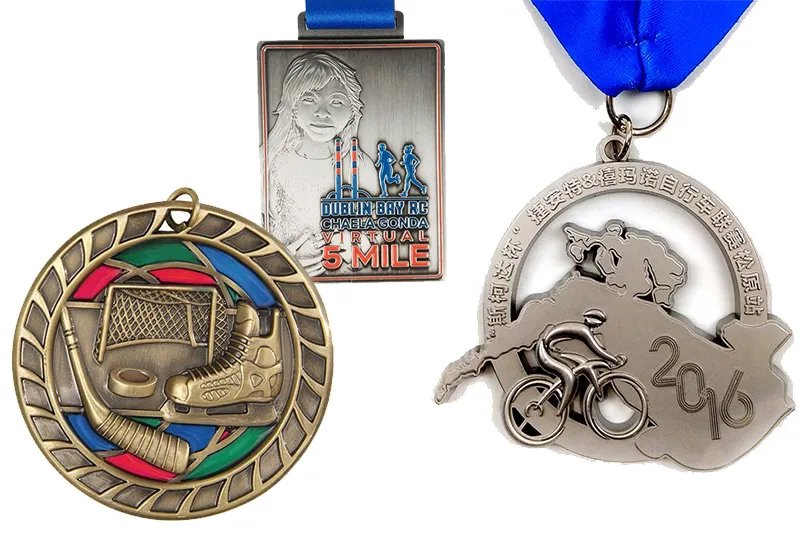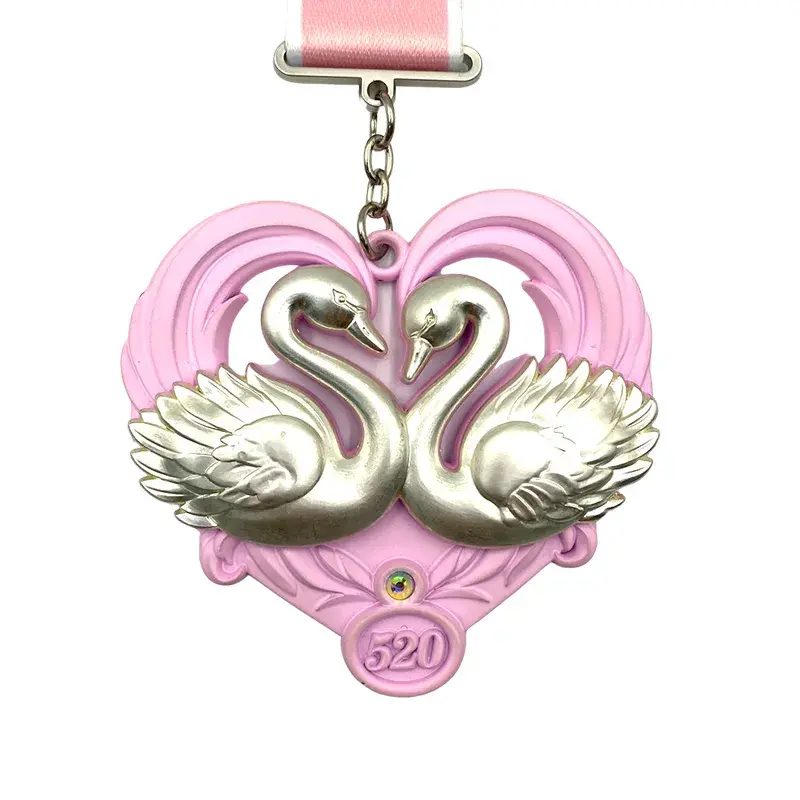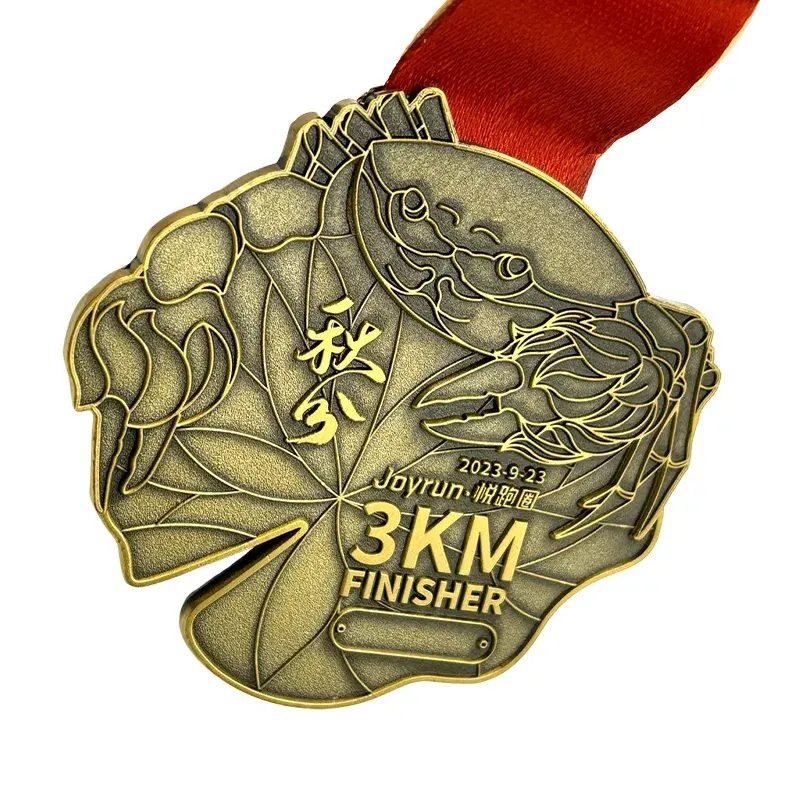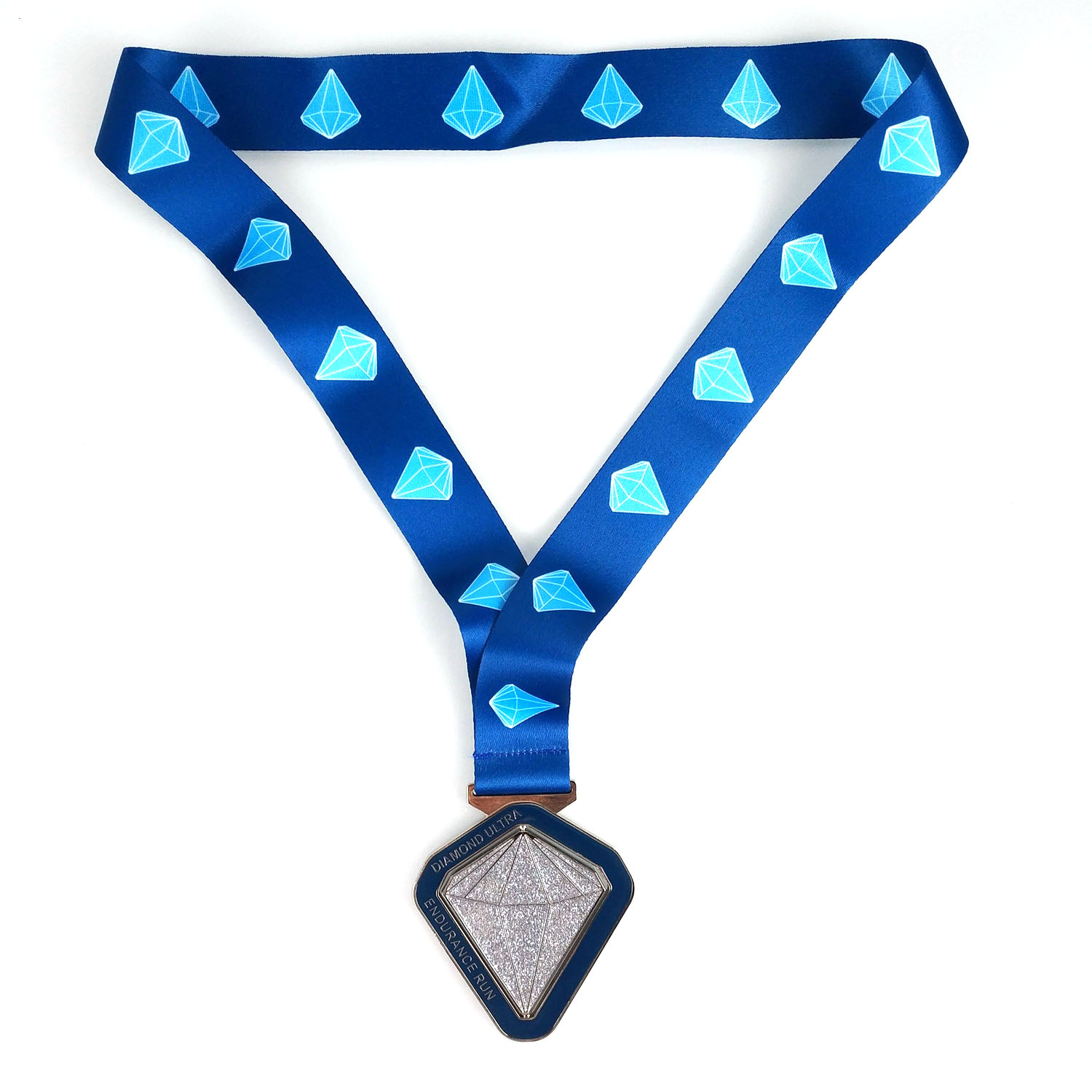
A cosplay contest is not a marathon. The judging is subjective, the audience is there for the spectacle, and the winner is going to post a photo of the award within the hour. That changes what the medal has to do — it needs to photograph well, feel collectible, and ideally do something. We cast custom medals for events of every kind, and convention awards are the category where creativity pays off most. Here is how to brief one.
What we’ll cover:
- Why convention medals are designed differently from race medals
- Interactive options: spinning, LED, cut-outs and shaped edges
- Small-batch ordering without paying a premium
- Materials and finishes that survive being handled all weekend
- Budget ranges for fan-run and commercial conventions
[Image: spinning-medals.jpg — Custom spinning medals with cut-out centre elements and multi-colour enamel, designed for convention awards]
Why Convention Medals Are a Different Brief
Race medals are produced in thousands and worn once. Convention awards are produced in tens or hundreds, handled constantly, and photographed from every angle. The design priorities invert.
| Priority | Race medal | Convention / cosplay medal |
|---|---|---|
| Quantity | 500–5,000+ | 20–300 |
| Primary audience | Every finisher | Winners and judges |
| Design driver | Legibility at distance | Photographability up close |
| Shape | Usually round | Often custom-shaped |
| Interactive features | Rare | Common — spinning, LED, cut-outs |
| Colour palette | Event branding | Character / fandom palette |
| Retention | Kept or discarded | Almost always kept and displayed |
The retention point matters commercially. A convention award that gets photographed and posted is free marketing for the next edition, which makes it worth spending more per unit than a finisher medal. When the audience is small, the per-unit budget can be higher without hurting the total.
Interactive Options That Suit Fandom Events
This is where convention medals separate from everything else. Several features we run as standard production options are tailor-made for this audience.
| Feature | What it does | Relative cost | Best for |
|---|---|---|---|
| Spinning centre | Inner disc rotates independently of the frame | +$$ | Character medals, “hero” awards |
| Cut-out shapes | Metal removed to create windows or silhouettes | +$ | Logo marks, symbols, eyes, moons |
| Custom silhouette | Medal profile follows a character or object outline | +$ | Fandom-specific awards |
| LED insert | Battery-powered light element | +$$$ | Best-in-show, night events |
| Glitter enamel | Sparkle powder sealed under the finish | +$ | Magical / fantasy themes |
| Glow in the dark | Luminescent paint applied after full cure | +$ | Horror, sci-fi, night programming |
| Two-tone plating | Contrasting plated finishes on one medal | +$$ | Premium best-in-show awards |
Spinning medals are the standout for conventions. The movement makes the medal feel like a prop rather than an award, and it photographs well because the inner disc catches light differently at each angle. We cover the mechanics in our spinning medals guide.
Cut-outs and custom silhouettes are the second big win, and they cost relatively little because they are built into the mould rather than added afterwards. A cat-ear profile, a star, a shield, a keyhole — all achievable in a die-cast zinc mould with no extra finishing stage.
LED medals are the premium option and the one to be careful with. They add real cost, need battery consideration, and can complicate shipping. Our LED medals guide covers when they are worth it — for a cosplay best-in-show at a headline convention, often yes; for a small fan-run meetup, usually not.
[Image: process-09-color-filling.jpg — Hand-filling enamel colour into a cut-out shaped medal during production]
Small Batches Without the Premium
Most conventions cannot order 1,000 medals. The good news is that the industry’s standard minimum is lower than most buyers expect.
Our MOQ is 100 pieces per design for a fully custom die-cast medal. That is the same threshold as the rest of the industry, and it exists because of the mould: a steel mould costs the same whether you run 100 pieces or 100,000 through it, so 100 is roughly where the fixed cost stops being unreasonable per unit.
For conventions that need fewer than 100, there are three realistic routes.
| Route | Minimum | Trade-off |
|---|---|---|
| Stock shape + custom print | Very low | You choose from existing shapes; artwork is printed or engraved |
| Consolidate categories | 100 per design | One design covers several award categories with different ribbons |
| Order for multiple editions | 100+ | Run two or three years of the same design at once |
The consolidation route is the one most conventions should take. Instead of a different medal per category, design one strong medal and differentiate by ribbon colour or an engraved category line. The mould cost amortises across a single order, and the awards still look like a deliberate set rather than a compromise.
The multi-edition route works well for annual events. Order two or three years’ worth at once, hold the stock, and the per-unit price drops sharply because the mould is paid for once. Medals do not expire — the only thing to watch is tarnish, which is why our line finishes with an oil seal coat and packaging includes moisture control. Our packaging guide covers storage.
Materials and Finishes for a Weekend of Handling
Convention medals get passed around, dropped, photographed and worn. That favours certain specs over others.
| Spec | Recommendation | Why |
|---|---|---|
| Material | Zinc alloy die-cast | Best 3D detail and cut-out capability at 2mm minimum wall |
| Thickness | 2.5–3mm | Thick enough to feel substantial, light enough to wear |
| Diameter | 50–65mm | Photographs well without dominating a costume photo |
| Finish | Soft enamel or hard enamel | Enamel resists the abrasion that UV print absorbs |
| Plating | Gold, silver or rose gold | Reads clearly against most costume colours |
| Effects | Glitter or glow for themed awards | High visual impact for low added cost |
| Ribbon | 20mm woven, 860–900mm | Standard length; wide enough to read a category name |
Enamel is the right finish here, not UV printing. The reason is wear: UV ink sits on the outermost surface and takes contact directly, while enamel colour is held inside the metal with raised lines absorbing the abrasion. A convention medal that gets handled for three days straight is exactly the case where that difference shows. Our UV vs enamel comparison breaks down the mechanism.
One practical warning: if your design uses a lot of fine linework or small text, check it against the 0.3mm minimum fill width for soft enamel. Cosplay designs often start as detailed illustrations, and illustration detail does not always survive the scale down to a 55mm medal. Simplify before you approve artwork, not after the sample arrives.
Budget Ranges for Convention Awards
Convention budgets vary enormously, from fan-run meetups to commercial expos. Here is the practical range at 100 pieces.
| Tier | Per-unit range | What it buys |
|---|---|---|
| Fan-run / small meetup | $1.50–$3.00 | 50mm zinc, 2.5mm, single-plate, soft enamel, paper card |
| Regional convention | $3.00–$6.00 | 55–60mm, cut-out or spinning centre, glitter enamel, velvet box |
| National / commercial expo | $6.00–$15.00 | 60–70mm, spinning + custom silhouette, two-tone plating, acrylic case |
| Best-in-show / headline award | $15.00+ | Large format, LED insert, premium packaging, low quantity |
These are ballpark factory-direct figures at 100 pieces and shift with size, finish and quantity. The lever that moves price most is not the material — it is the interactive feature and the quantity. A spinning centre adds more to unit cost than stepping from 50mm to 60mm.
If you tell us your award categories, expected attendance and budget, we will propose a spec that fits and show you where the money goes — before you commit to a mould.
Data to confirm: Confirm current MOQ, interactive-feature costs and battery shipping restrictions with the factory before finalising an LED or electronic design, as shipping regulations for batteries vary by destination.
FAQ
What is the minimum order for cosplay medals? 100 pieces per design for a fully custom die-cast medal. That is the industry standard and reflects the steel mould cost. If you need fewer, choose a stock shape with custom printing, or consolidate several award categories into one design differentiated by ribbon colour.
Can medals have a spinning centre for convention awards? Yes, and it is one of the most popular options for fandom events. A spinning centre adds an inner disc that rotates independently of the frame, which makes the medal feel like a prop and photographs well from every angle. Expect a meaningful per-unit cost increase over a flat medal.
Are cut-out or shaped medals more expensive? Only slightly. Cut-outs and custom silhouettes are built into the mould rather than added as a finishing stage, so the cost is mostly in tooling rather than per-unit production. That makes them one of the best value ways to make a convention medal distinctive.
Which finish is better for a medal that gets handled a lot? Enamel. Soft or hard enamel holds colour inside the metal, with raised lines absorbing abrasion. UV printing places ink on the outermost surface where it takes contact directly, so it wears faster on a medal that is passed around all weekend.
How many medals should a convention order? Order for your award categories plus a buffer, and consider consolidating. A typical approach is one design covering several categories, differentiated by ribbon colour or an engraved category line. Annual events can order two or three years at once to spread the mould cost.
Do LED medals work for convention awards? They can, particularly for a headline best-in-show award where the visual impact justifies the cost. They add significant per-unit expense and introduce battery shipping considerations that vary by destination, so they are usually not worth it for small fan-run events.
How far ahead should a convention order medals? Allow 4–6 weeks: about 7–15 days for production, 3–7 days for sample approval, and transit on top. For a convention with a fixed date and a multi-day programme, order 6–8 weeks out and keep a buffer — the schedule is as unforgiving as any other event. See our lead time guide.
Related reading: spinning medals for sports programmes — our spinning medal range: a moving inner disc on a die-cast body, 100-piece minimum.