You have probably searched for custom race medals and found dozens of options. Some look great on screen. Some arrive looking nothing like the mockup. After manufacturing race medals for events across 50+ countries — from local 5Ks to major city marathons — we know exactly what makes the difference. This guide covers everything you need to make an informed decision.
Race Medal Materials: Zinc Alloy vs the Alternatives
The material decision shapes everything else — design detail, weight, cost, and durability.
Zinc alloy is what we use for over 90% of race medals. Die-cast at 385°C under 88 tons of pressure, it captures the kind of 3D detail that makes a skyline medal or a runner silhouette look sharp. Density: 6.7 g/cm³ — substantial in the hand without being heavy around the neck after a 3-hour race.
Brass (8.9 g/cm³) is heavier and more expensive. Some premium marathons choose it for the perceived value. But brass is stamped, not die-cast — you sacrifice 3D depth for weight.
Iron is the budget option. It’s stamped and costs the least, but the 3D detail is limited and it rusts if the plating wears. We rarely recommend iron for race medals that people will keep for years.
For more detail on choosing materials, see our medal materials guide.
| Decision Factor | Zinc Alloy | Brass | Iron |
|---|---|---|---|
| 3D Detail Quality | Excellent (die-cast) | Good (stamped) | Basic (stamped) |
| Weight Feel | Medium (6.7 g/cm³) | Heavy (8.9 g/cm³) | Medium (7.8 g/cm³) |
| Relative Cost | $$ | $$$ | $ |
| Best For | Most race distances | Premium marathons | High-volume budget events |
| Durability | Excellent | Excellent | Good (if plating intact) |
Size and Thickness: What Works at Each Distance
Race medal sizes have settled into predictable norms:
- 5K / Fun Run: 1.5-2.5 inches. Compact, colorful, cost-effective. These medals need to look great in photos but the per-unit budget is usually tighter because participant counts are higher.
- 10K / Half Marathon: 2.5-3.5 inches. This is the sweet spot. Enough real estate for event branding, sponsor logos, and detailed artwork without being oversized.
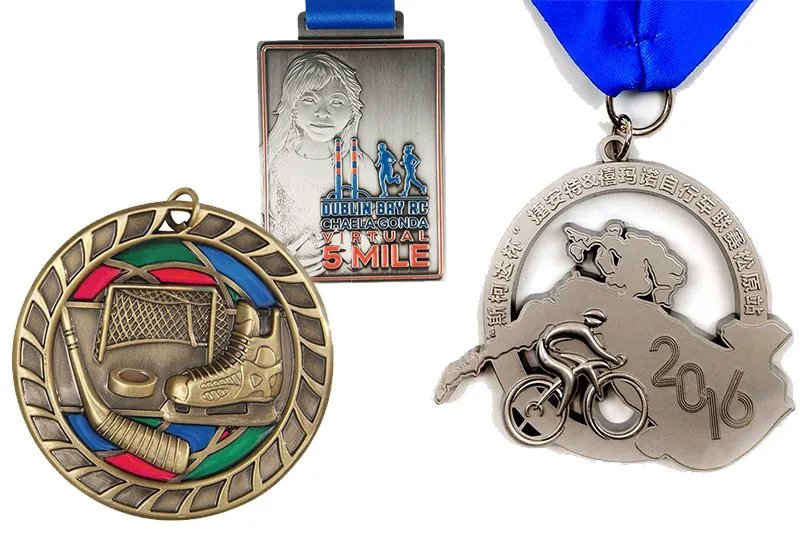
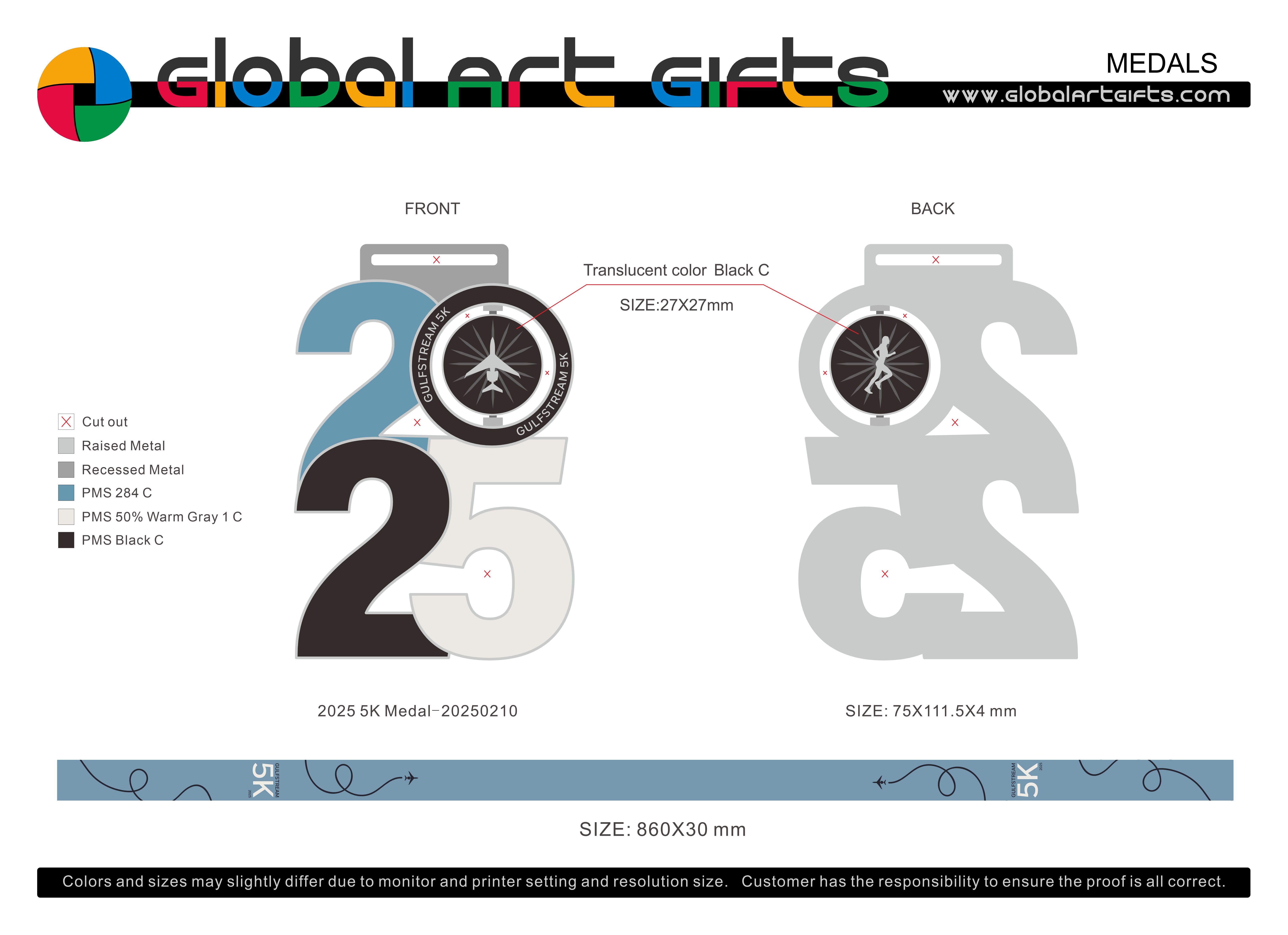
- Marathon / Ultra: 3-5 inches (sometimes larger). Marathoners earn their medal. Go big. 3D relief skylines, spinning center elements, bottle opener features — marathon medals are keepsakes.
Minimum thickness for zinc alloy die-casting is 2mm. Standard race medals run 2.5-4mm. Giant medals (5+ inches) run 4-6mm for structural integrity.
Enamel Colors: Making Your Brand Pop
Race medals typically use 1-3 enamel colors. The most iconic combinations: gold plating with red and black enamel (classic), nickel plating with blue and white (clean, modern), or antique gold with deep green and burgundy (premium, traditional).
We match colors to Pantone standards. Need your race brand’s exact shade of blue? Send us the Pantone code. No Pantone code? Send a logo or reference image — our designers will match it.
For events that want extra pop: glitter enamel on semi-dried paint creates sparkle effects (popular for night runs and holiday races). Glow-in-the-dark powder can be added to specific design elements. Translucent enamel over a textured base creates water effects perfect for coastal or lakefront races.
More color and finish options in our custom enamel medals page.
Ribbon Design: The First Thing People See
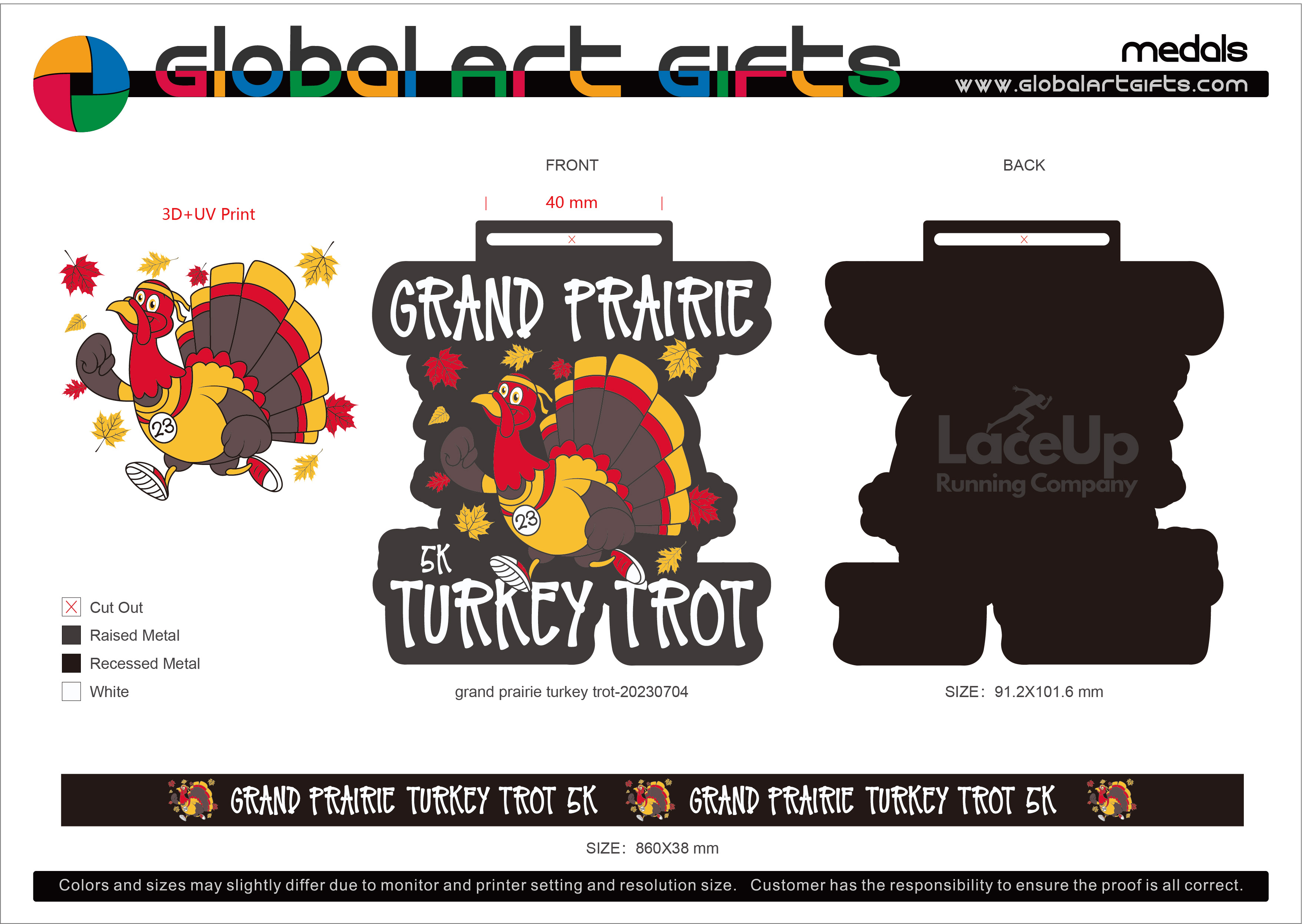
The ribbon is what people notice when your medal is worn. Standard adult ribbon size: 860-900mm long × 20-30mm wide. Children’s events: 800mm × 20mm with safety breakaway.
Heat-transfer printing produces full-color logos, event names, and dates on polyester ribbon. It’s the most popular choice — vibrant, durable, and cost-effective. Sublimated ribbon offers even more color intensity for complex designs. Woven ribbon provides a classic, textured look.
Ribbons attach via ultrasonic welding (clean, strong, invisible bond) or sewn joints (4-fold or 3-fold). Both are durable. Ultrasonic welding looks cleaner. See our custom medal ribbons page for full specifications.
Production Timeline: When to Order
Here is the timeline every race director needs to know:
- Design: 24 hours (free, unlimited revisions)
- Sample production: 7-10 days
- Sample shipping: 3-5 days (express)
- Bulk production: 7-15 days after sample approval
- Bulk shipping: 5-10 days (air), 20-30 days (sea)
Count backwards from your event date. For a race on October 1st, you want to start the design process by August 1st at the latest. That gives you 8 weeks — comfortable for standard production plus buffer. Rush orders are possible but add cost.
If you are ordering bulk custom medals for a large event (1,000+ participants), add an extra week for production and consider sea freight to save significantly on shipping.
What Separates Quality Race Medals from Disappointing Ones
After manufacturing over a million race medals, here are the failure points we see:
Bad plating shows up as bubbles, uneven color, or rapid tarnishing. Cause: insufficient cleaning before the plating bath. Our alkaline copper base layer runs 500 seconds minimum — skip this step and the plating fails within months.
Enamel overflow happens when paint bleeds outside its designated area. Cause: rushing the filling process or using paint that’s too thin. Our minimum fill width of 0.3mm for soft enamel is an industry-standard spec that prevents bleeding between adjacent colors.
Broken attachments (ribbon rings that snap, pins that fall off). Cause: poor riveting or undersized hardware. We rivet attachment hardware before surface treatment so the plating covers and secures the connection.
Blurry 3D detail. Cause: worn molds or insufficient casting pressure. Our 88-ton machines maintain consistent pressure. Molds are inspected after every production run and replaced when detail quality drops.
FAQ
How much do custom race medals cost? Pricing depends on four factors: material (zinc alloy is standard), size (2.5-3 inches is the sweet spot), number of enamel colors (1-3 is cost-effective), and quantity (100-300 = entry pricing, 1,000+ = significant volume discount). Contact us with your design for a detailed quote.
What is the minimum order for race medals? 100 pieces per design. This is standard across the industry — driven by the fixed cost of mold making.
Can you match our race brand colors? Yes. We use Pantone color matching for enamel and can print your logo on the ribbon in full color. Send us your brand guidelines.
How far in advance should I order? 8 weeks minimum before your event. This allows for design, sampling, production, and shipping with buffer time. Rush orders in 4-5 weeks are possible.
Do you offer bottle opener race medals? Yes. Bottle opener medals are our most popular race medal add-on. The opener is integrated into the medal design — not an add-on — and works smoothly. See our bottle opener medals page.