Military medals are different from race medals. The weight matters. The finish matters. The tradition matters. We have produced custom military medals and challenge coins for armed forces units, veterans’ organizations, and defense contractors — and we learned early that military customers inspect every detail. Here is what you need to know about manufacturing standards for military awards.
Brass vs Zinc Alloy for Military Applications
Military customers often ask for brass, and for good reason. At 8.9 g/cm³, a brass medal feels substantially heavier in the hand — and in military tradition, weight signals value. Brass also has a natural warm gold tone, which means scratches and wear are less visible than on plated zinc alloy.
But brass has limitations. It is stamped from sheet metal — you cannot achieve the deep 3D relief or openwork (cut-out) designs possible with die-cast zinc alloy. And brass costs 20-40% more.
Our recommendation: Zinc alloy for medals with complex insignia, 3D relief, or openwork designs. Brass for traditional challenge coins where weight and the natural metal color are priorities. Both materials take antique finishes beautifully.
For a complete comparison of materials, see our medal materials guide.
| Requirement | Best Material | Why |
|---|---|---|
| Deep 3D relief (eagle, anchor, insignia) | Zinc Alloy | Die-casting captures detail stamping cannot |
| Traditional heft and feel | Brass | 8.9 g/cm³ vs 6.7 for zinc alloy |
| Challenge coins (1.5-2.5”) | Brass or Zinc | Both work; brass preferred for tradition |
| Openwork / cut-out designs | Zinc Alloy | Only die-casting can do this |
| Budget-conscious orders | Zinc Alloy | 20-40% less expensive than brass |
Antique Finishes: The Military Standard
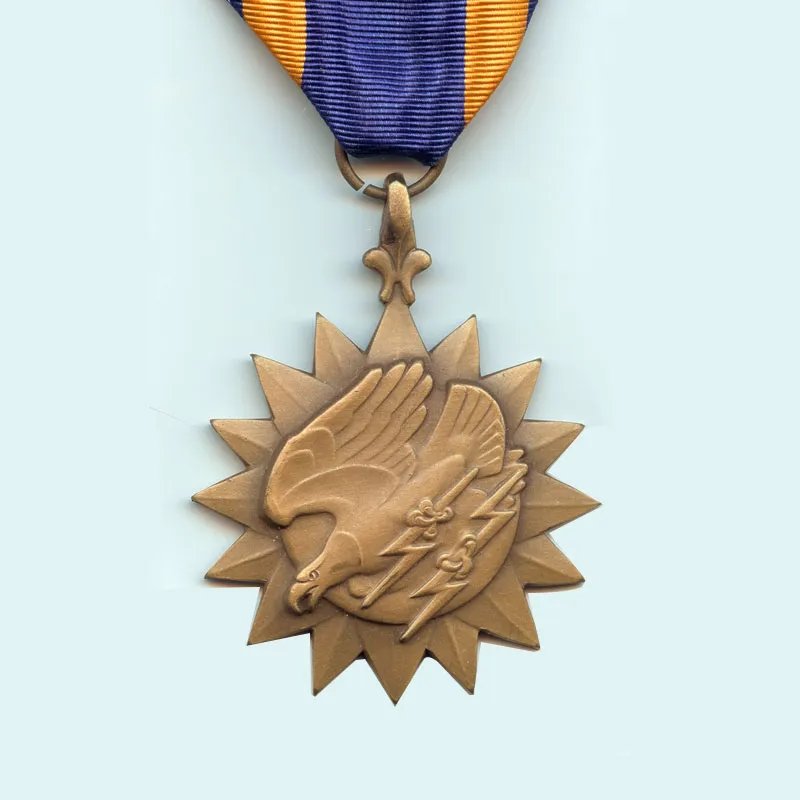
Military medals almost never use bright, mirror-polished finishes. Antique finishes are the standard — they add depth, make details readable, and give the medal a time-honored look.
Antique gold is the most requested. The medal is plated gold, then brushed to create contrast between the raised metal (bright) and recessed areas (dark). The result: every detail of an eagle, anchor, or unit insignia reads clearly.
Antique silver and antique copper follow the same process with different base metals. Matte black with selective gold highlights is popular for special operations and commemorative units.
The antique process adds one extra production step — the brushing — compared to mirror finishes. It typically adds a day to production but makes an enormous difference in the final appearance.
Challenge Coins: Size, Edge, and Numbering
Challenge coins follow their own set of conventions. Standard size is 1.5-2.5 inches in diameter. Thickness runs 3-4mm for substantial feel. Edge options include: plain (smooth), reeded (like a coin), diamond-cut, or custom-shaped.
Sequential numbering via laser engraving is common — each coin receives a unique number on its edge or back. This is free on our standard orders, though it adds production time for high quantities (1,000+ coins).
Edge text — unit motto, founding date, location — is another popular feature. It requires custom mold work but creates a truly unique coin.
Ceremonial Presentation Requirements
Military medals are presented, not just handed out. Every medal we ship for military orders includes:
- Presentation-ready packaging: Velvet cases (black, navy, or burgundy) with satin interior. Metal foil stamping on the case exterior for unit insignia or text.
- Full-size ceremonial ribbons: Standard military ribbon dimensions, pin-back attachment, in unit or branch colors.
- Miniature medals: Optional reduced-size versions for formal dress uniform wear.
For challenge coins, we recommend clear acrylic capsules or velvet pouches. Both protect the coin while allowing it to be displayed.
Production QC for Military Orders
Military customers inspect every medal. Our three-stage QC process checks for the defects that matter most:
- Plating consistency across the entire batch — no color variation from piece to piece
- Enamel fill accuracy — no bleeding between colors, especially critical on detailed insignia
- Edge quality — no burrs, uneven spots, or casting marks
- Attachment security — pins and ribbons tested for strength
Each production batch includes spare pieces (typically 2-5% of the order quantity) at no extra charge. Because someone always needs an extra medal at the last minute.
FAQ
What material do you recommend for military challenge coins? Brass is traditional and preferred for its weight (8.9 g/cm³). Zinc alloy is a cost-effective alternative that still delivers excellent detail. Both accept antique finishes equally well.
Can you produce medals for all service branches? Yes — Army, Navy, Air Force, Marine Corps, and Coast Guard. We have produced unit-specific medals with authentic insignia for all five branches.
What is the standard size for a challenge coin? 1.5-2.5 inches diameter, 3-4mm thickness. Custom sizes are available. Larger coins (2.5”+) have more design real estate but cost more.
Do you offer sequential numbering? Yes, via laser engraving on the coin edge or back. Standard on challenge coin orders. No extra charge for typical quantities.
How long does a military medal order take? Design: 24 hours. Sample: 7-10 days. Bulk production: 10-15 days (antique finishes add a day). We recommend starting 6-8 weeks before your ceremony date.
Are velvet presentation cases included? They are available as an option. We offer black, navy, and burgundy velvet cases with satin interior and optional foil stamping. See our medal packaging page.