You have the event name. You have the logo. Maybe you have a sketch on a napkin. Now you need to turn that into a custom medal design that actually manufactures well. Here is what we wish every customer knew before submitting artwork — straight from our design team’s review checklist.
You Do Not Need Finished Artwork
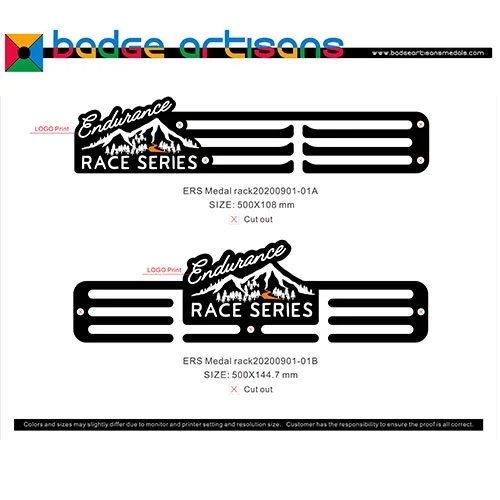
This is the single biggest misconception. You do not need a production-ready vector file to get started. Send us literally anything — a logo, a rough sketch, photos of medals you like, a description of your event — and our designers create the production file for free in 24 hours.
What you send determines how long the design process takes, not whether we can do it. A clear vector logo in AI or CDR format means the design might be ready in 4 hours. A napkin sketch and “make it look cool” means a couple of revision rounds. Both are fine. Both are free.
If you do have design files, here is what works best for custom medals production:
| File Type | Suitability | Notes |
|---|---|---|
| AI / CDR / EPS (vector) | Best | Production-ready, infinitely scalable |
| PSD (Photoshop, 300+ dpi) | Good | Works for most designs |
| PDF (vector-based) | Good | Preferred over raster PDFs |
| PNG / JPG (300+ dpi) | Acceptable | May need redrawing for very complex designs |
| Hand sketch / photo of idea | Works | Designers create vector file from scratch |
Text Size: The Rule Most People Break
Text that looks perfectly readable on your computer screen at 300% zoom may be too small to manufacture at actual medal size. Here are the minimums:
- Enamel text: 1.5mm minimum height. Below this, the paint may not fill cleanly and letters blur together.
- Engraved / laser text: 1mm minimum height. Laser can go smaller, but readability suffers.
- Raised metal text: 2mm minimum height. The casting process needs enough metal mass for clean letterforms.
Serif fonts at small sizes are problematic — the thin strokes may not cast or fill properly. Sans-serif fonts are more forgiving. If you need an elegant serif look, go larger.
Color Count Strategy
Every enamel color is a separate production step: fill, cure, inspect. The cost and time add up with each additional color. Here is the strategy:
- 1-3 colors: Standard pricing. This covers the vast majority of custom medal designs. Example: gold plating (color #1) + red enamel (color #2) + black enamel (color #3) = three colors, classic and clean.
- 4-6 colors: Small surcharge per additional color. Still reasonable for most budgets.
- 7+ colors: Noticeable cost increase. Each additional color extends production time by about half a day.
The plating counts as one of your colors. Use it strategically — gold plating with two enamel colors gives you three visual elements for the cost of two enamel steps.
For more on finishes and colors, see our medal materials guide.
3D Relief vs 2D Design: Know the Trade-Off
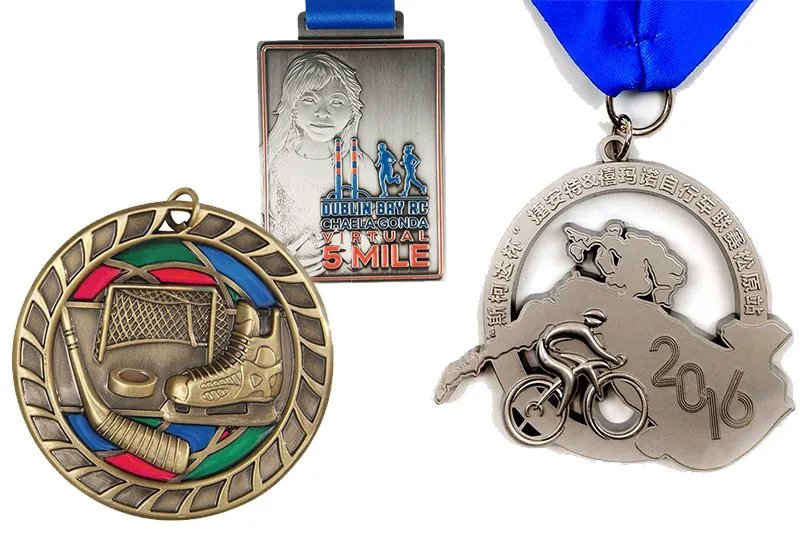
Zinc alloy die-casting can produce stunning 3D relief — runners mid-stride, building skylines, intricate logos. But 3D depth is not free.
Deep relief requires more metal, which means more weight, which means higher material cost. Very deep relief (more than 2mm of height variation) extends the die-casting cycle time. And the deepest parts of the relief will be slightly less polished than the highest points because polishing tools cannot reach as deeply.
The best 3D medals use moderate relief — 0.5-1.5mm of height variation — which gives strong dimensional effect without the cost and quality trade-offs of extreme depth. If you are unsure, our designers can show you a 3D rendering of your design at different relief depths so you can choose.
Common Design Mistakes That Increase Cost
Too many colors too close together: When two different enamel colors are separated by less than 0.3mm of metal, the paint can bleed across the border during filling. The fix: wider metal dividers or fewer colors.
Thin outer borders: The medal’s outer edge should be at least 1.5mm thick. Thinner borders warp during die-casting and make the medal feel flimsy. A substantial border also protects the enamel from edge chips.
Designing without considering the attachment point: The ribbon slot or pin attachment needs to be part of the design from the start. Adding it as an afterthought often means drilling through part of the artwork. Plan the top of your design with the attachment in mind — leave space for it.
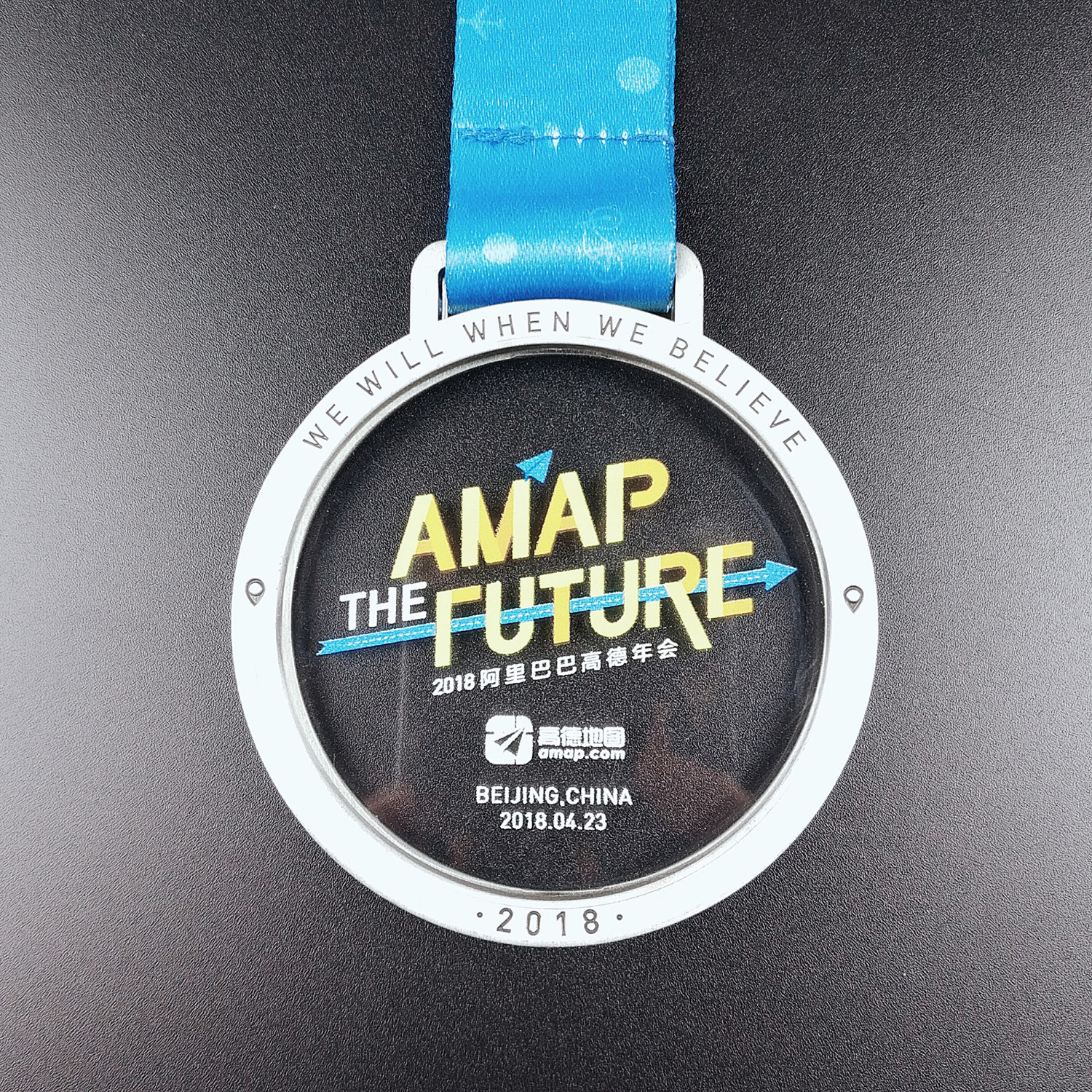
Expecting photo-quality gradients from enamel: Enamel is solid color fill. It cannot reproduce gradients, photographic images, or subtle shading. For those effects, UV printing or offset printing is the right choice. Our enamel medals page explains the difference.
The Medal Back Is Free Real Estate
Most event medals have a blank back. That’s a missed opportunity. The back of your medal can include: event date and location, sponsor logos, a motivational message, the participant’s achievement (“FINISHER”, “VOLUNTEER”, “5K”), age group or division.
Laser engraving on the back is the most cost-effective way to add event-specific details without changing the front design. It costs pennies per medal and adds meaningful personalization.
Ribbon Design: Don’t Forget It
The ribbon is the first thing anyone sees when your medal is worn — and it is the most commonly overlooked design element. A well-designed ribbon with your event name, date, and logo in full color turns a generic medal into YOUR event’s medal.
Custom printed ribbons via heat-transfer are standard. For premium events, woven or embroidered ribbons add texture and perceived value. Sublimated ribbons offer the most vibrant color reproduction.
Standard sizes: adult 860-900mm × 20-30mm, child 800mm × 20mm. Custom widths are available. See our custom medal ribbons page for full specifications.
FAQ
Do I need design experience to order custom medals? No. Our design team creates the production file for free. Send anything — a logo, a sketch, a description — and you will have a design within 24 hours.
What file format should I send my logo in? Vector files (AI, CDR, EPS, PDF) are best. High-resolution PNG or JPG (300+ dpi) works too. If you only have a small web-resolution logo, send it anyway — we can usually work with it.
How many revision rounds are included? Unlimited. We revise until you are satisfied. Most designs are approved within 1-2 revisions.
Can I see a 3D rendering before production? Yes, we provide 3D renderings of your design so you can preview it from every angle. This is included in the free design service.
How do I know if my design will manufacture well? Our designers review every design for manufacturability before sending it to you. If something in your concept will cause production issues (text too small, colors too close, border too thin), they will flag it and suggest alternatives.